Skip to contentGo to the list of all sages
Ozar Chachamim
  1. /
  2. Modern
  3. /
  4. Adolphe Franck
עבENРУ
Modern1810–1893Germany

Adolphe Franck

Kabbalah, philosophy, the history of religions

  • Kabbalah
  • Philosophy
  • The religions
  • Germany
  • Jewish studies
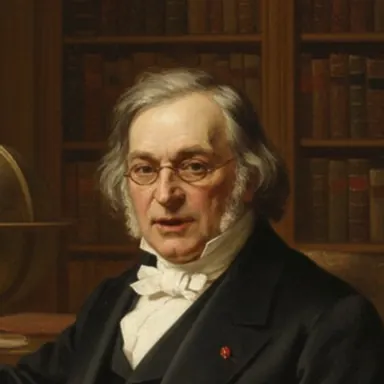
Illustration: Adolphe Franck
Illustration from the podcast episode
Read the research
· 28 min
Listen
Watch the video
⬡Show in the network
🌌Show in the Tower of Generations
🔗The path to another sage

Listen to the episode

Podcast episode · Adolphe Franck

Open in Spotify
The player loads from Spotify only when you click.
Open in Spotify

Watch the video

Adolphe Franck

Open on YouTube (opens in a new tab)

The Kabbalah: How Tradition Became a Meta-Map of Creation, and Redemption Adolf Franck’s Perspective

The video loads from YouTube only when you click.
Open on YouTube (opens in a new tab)

Core Concept

Kabbalah as a form of metaphysical thought with universal religious meaning.

Biography

A German-born scholar who sought to present Kabbalah as a profound philosophical theology – not an inferior mysticism.

Related sages3

Influenced by2

  • Rabbi Moses Mendelssohn (Rambeman)Modern
  • Solomon MunkModern

Influenced1

  • The Kabbalah as Adolphe Franck Saw ItModern

The Road to Sinai

48 stations on the road
  1. MosesGeneration 1
  2. 43 more generations
  3. Rav Shmuel ben Chofni GaonThe Epistle of Rav Sherira Gaon
  4. 1 more sage
  5. Solomon Munk1803–1867
  6. Adolphe Franck1810–1893

includes 3 inspiration linksThe generations follow the Rambam’s introduction to the Mishneh Torah. A dashed line is inspiration, not direct transmission.

✦Fly it in the TowerOpen the full path

Full research

2 documents·5,715 words· 28 min read

Contents28 min read

  1. Adolphe Franck in His Book "The Kabbalah"
    • The Historical and Intellectual Background to the Writing of the Book
    • Milestones in the Life of Adolphe Franck and the Publication of His Book
    • Analysis of the Foundational Texts: Sefer Yetzirah and the Book of the Zohar
    • A Comparison of Positions on the Antiquity of the Zohar
    • The Philosophical Core: Ein Sof, Sefirot and Emanation
    • Comparative Research: The Kabbalah versus the Philosophy of the World
    • Parallels between the Kabbalah and Zoroastrianism According to Adolphe Franck
    • Summary and Conclusions: The Eternal Importance of the Book
    • Sources
  2. The Scholarly Work, Torah Thought and Public Legacy of Adolphe Franck: A Synthesis of French Spiritualism, Legal Liberalism and the Study of the Kabbalah
    • His Torah Thought and the Study of the Kabbalah in the Light of Science
    • His Legal and Political Thought: Individual Rights, Social Self-Defense and the Conception of Nationalism
    • Historical Influence: The Transition to Esoteric Philosophy and the Modern Controversy
    • Summary and Conclusions
    • Sources
Contents· 26 sections
  1. Adolphe Franck in His Book "The Kabbalah"
    • The Historical and Intellectual Background to the Writing of the Book
    • Milestones in the Life of Adolphe Franck and the Publication of His Book
    • Franck's Methodology: The Eclecticism of Victor Cousin and the Kabbalah
    • Analysis of the Foundational Texts: Sefer Yetzirah and the Book of the Zohar
    • Sefer Yetzirah: The Metaphysics of Language and Numbers
    • The Book of the Zohar: The Anatomy of the Divinity and the World
    • The Claim of Antiquity and the Historical Controversy
    • A Comparison of Positions on the Antiquity of the Zohar
    • The Philosophical Core: Ein Sof, Sefirot and Emanation
    • Ein Sof and the Concept of "Ayin"
    • The Ten Sefirot as Vessels of Revelation
    • The Anthropology of the Kabbalah: Man as the Center of the Universe
    • Comparative Research: The Kabbalah versus the Philosophy of the World
    • The Kabbalah versus Plato and Plotinus
    • The Kabbalah and Gnosticism
    • The Revolutionary Thesis: The Zoroastrian Source and the Influence of Persia
    • Parallels between the Kabbalah and Zoroastrianism According to Adolphe Franck
    • The Influence of Adolphe Franck on Occultism and Western Thought
    • Modern Criticism: From Franck to Gershom Scholem
    • Summary and Conclusions: The Eternal Importance of the Book
    • Sources
  2. The Scholarly Work, Torah Thought and Public Legacy of Adolphe Franck: A Synthesis of French Spiritualism, Legal Liberalism and the Study of the Kabbalah
    • His Torah Thought and the Study of the Kabbalah in the Light of Science
    • His Legal and Political Thought: Individual Rights, Social Self-Defense and the Conception of Nationalism
    • Historical Influence: The Transition to Esoteric Philosophy and the Modern Controversy
    • Summary and Conclusions
    • Sources

Document 1/2

Adolphe Franck in His Book "The Kabbalah"

15 min read·3,055 words

Summary

Adolphe Franck's 1843 study constitutes a historiographical turning point, since it extracted the Kabbalah from its status as a collection of superstitious beliefs and presented it as a rational and coherent philosophical system. Franck sought to prove that Jewish mysticism is not a late forgery but an ancient tradition with a deep philosophical core, which grants man a central and exalted role in the structure of the universe. Using a comparative methodology, he identified the roots of the Kabbalah in the metaphysics of ancient Persia, drawing parallels between the concepts of the "Ein Sof" (Infinite) and the sefirot and Zoroastrian theology. Despite later criticism of his historical claims, his work remains a foundational creation that granted the Kabbalah academic legitimacy in the modern world and deeply influenced Western thought and various spiritual movements.

The Religious Philosophy of the Hebrews: A Comprehensive Study of the Thought, Research Methodology and Revolutionary Claims of Adolphe Franck in His Book "The Kabbalah"

Adolphe Franck's book, "The Kabbalah, or the Religious Philosophy of the Hebrews" (La Kabbale, ou la philosophie religieuse des Hébreux), which first appeared in Paris in 1843, is considered one of the foundational and most influential works in the modern historiography of Jewish mysticism.[1, 2] Franck, who was the first Jewish philosopher in France to win the lofty academic status of the "agrégation" and who served as a professor at the Collège de France, sought in this book to rescue the Kabbalah from the depths of oblivion and contempt that characterized the attitude of the maskilim of the nineteenth century toward mysticism.[2, 3, 4] Franck's central claims undermined the conception accepted in his time, which saw the Kabbalah as a collection of superstitious beliefs or a late forgery, and presented it as a profound, coherent and fundamentally rational philosophical system, which grants man the highest standing in the history of religious and philosophical thought.[1, 3, 5]

The Historical and Intellectual Background to the Writing of the Book

In order to understand Franck's claims, one must consider the historical context in which he worked. In the first half of the nineteenth century, the Jews of Western Europe, and especially France, were in the midst of an accelerated process of emancipation. The Jews sought to integrate into general society as individuals with rights, while defining their Judaism as a "religion" and not as a "mystical community" or a "nation."[3] Within this framework, rationalist currents in Judaism, identified with the "Chokhmat Yisrael" movement (Wissenschaft des Judentums), tended to suppress or reject the Kabbalah as a foreign, dark and irrational element that damaged the enlightened image of the modern Jew.[3, 6]

Franck took a stand against this trend. He argued that the Kabbalah is not a "jumble of the delusions of the imagination" (Thaumaturgical hugger mugger), but an enlightened and sophisticated philosophy capable of teaching even the most advanced cultures the distinction between knowledge and wisdom.[3] His book was the first to make the Kabbalah accessible and comprehensible to the educated public in Europe, using a rigorous comparative philosophical methodology.[1, 7]

Milestones in the Life of Adolphe Franck and the Publication of His Book

Franck's Methodology: The Eclecticism of Victor Cousin and the Kabbalah

Franck was deeply influenced by his teacher and patron, Victor Cousin, the father of the eclectic school in French philosophy.[4] Cousin held that truth is scattered among different philosophical systems throughout history, and that the task of the researcher is to synthesize the positive and eternal elements in them.[4] Franck applied this approach to the Kabbalah, seeing in it an expression of the "human spirit" in its struggle to understand the Divinity.[4]

This methodology led Franck to examine the Kabbalah not as an isolated revelation but as part of a sequence of collective intellectual development.[4] He did not separate philosophy from its history, and argued that understanding the kabbalistic system requires an analysis of the historical roots and the mutual influences with the cultures of the East and the West.[4] This approach enabled him to present the Kabbalah as an essential component of the "history of human thought" and not as an ethnic curiosity.[11]

Analysis of the Foundational Texts: Sefer Yetzirah and the Book of the Zohar

At the center of Franck's research stands a meticulous analysis of the two foundational texts of the Kabbalah: Sefer Yetzirah and the Book of the Zohar. Franck devotes extensive chapters to the internal analysis of these books, attempting to prove their essential antiquity.[1, 12]

Sefer Yetzirah: The Metaphysics of Language and Numbers

Franck sees in Sefer Yetzirah the oldest foundation of speculative Kabbalah. He argues that the book does not deal with a primitive cosmology, but presents a sophisticated philosophical system in which language and mathematics are the building blocks of reality.[1, 13] He analyzes the concept of the thirty-two wondrous paths of wisdom, which include the ten sefirot (the ideal numbers) and the twenty-two foundational letters.[14, 15] Franck argues that the sefirot in Sefer Yetzirah are not magical entities but metaphysical principles representing the "spirit of the living God," air, water and fire, and the six extremities of space.[14, 15] Franck's central claim regarding Sefer Yetzirah is that the system described in it lays the foundation for the doctrine of emanation, in which the world is created out of the gradual embodiment of the divine spirit in matter, and not in an arbitrary creation of "something from nothing" in the classical sense.[14, 15]

The Book of the Zohar: The Anatomy of the Divinity and the World

The Book of the Zohar constitutes for Franck the universal codex of the Kabbalah. In contrast to the criticism of his contemporaries, Franck argued that the Zohar is not a modern work of the thirteenth century, but preserves an ancient core of oral traditions attributed to Rabbi Shimon bar Yochai and his companions.[11] Franck analyzes the Zohar through three main prisms:

  • The allegorical method: The Zohar sees Scripture as merely a "garment" for the hidden truth. Franck argues that this hermeneutic approach attests to an attempt to free the spirit from the limitations of the literal text.[11, 12]
  • The nature of the Divinity: Franck emphasizes the concept of the "Ein Sof" as the center of Zoharic thought, representing God before He took on form or attribute.[15, 16]
  • The structure of the universe: A description of the various worlds and the relationship among them as one organic fabric in which "everything is one."[15]

The Claim of Antiquity and the Historical Controversy

One of Franck's central and most influential claims is that the kabbalistic system developed long before its official publication in the Middle Ages. Franck uses internal evidence from the Talmud and the Midrashim to prove that kabbalistic concepts such as "the work of creation" and "the work of the chariot" already contained the seeds of the Zoharic system.[3]

Franck argues that the fact that the Mishnah (Chagigah 2) imposes severe restrictions on the study of the secrets of creation and of the chariot attests to the existence of a developed esoteric teaching already in the period of the Tannaim.[3] He holds that this teaching was transmitted secretly among a select group of sages, and that Rabbi Shimon bar Yochai was the central figure who shaped the core of what would later become the Book of the Zohar.[11] Although Franck admits that a later editing may have been carried out in the thirteenth century, he insists that the metaphysical ideas are ancient and cannot be the product of the invention of a single author in the medieval period.[7, 11]

A Comparison of Positions on the Antiquity of the Zohar

The Philosophical Core: Ein Sof, Sefirot and Emanation

Franck presents the Kabbalah as a perfect metaphysical system that attempts to solve the question of the relationship between the absolute (God) and the finite (the world). His claim is that the Kabbalah offers a solution that combines transcendence and immanence.[15]

Ein Sof and the Concept of "Ayin"

According to Franck, the Divinity at its highest level is "Ein Sof"—a state of absolute perfection, without limits and incapable of definition.[16, 21] He emphasizes a profound point in the kabbalistic analysis: the term "Ayin" used to describe the Keter or the Ein Sof does not signify emptiness, but "the absence of limitation."[15] No name, attribute or action can be ascribed to God before the beginning of emanation, since every name constitutes a limitation, and God is the absolute Infinite.[16, 21]

The Ten Sefirot as Vessels of Revelation

The ten sefirot are, according to Franck, the vessels or "attributes" through which the infinite light contracts itself in order to allow the existence of the world.[15, 21] Franck describes the sefirot as a gradual process of the "thickening" of the spirit:

  • The circularity of the sefirot: They are attached to the Ein Sof as the coal is attached to the flame.[15]
  • Adam Kadmon: Franck sees in this concept the ideal model of the universe, in which the ten sefirot reflect the spiritual form of the supreme man.[15]
  • Unity within multiplicity: Although there are ten sefirot, Franck emphasizes the kabbalistic claim that "all is one." The sefirot are not separate from God but are the ways in which He reveals Himself to His creatures.[15]

The Anthropology of the Kabbalah: Man as the Center of the Universe

One of the most famous claims in Franck's book is that no other doctrine in the history of philosophy or religion has granted man a higher rank than the Kabbalah.[1, 7] Man, according to Franck, is not only a creature created "in the image," but is in the nature of a "divine presence on earth."[1]

Franck analyzes the structure of the kabbalistic soul and shows how it reflects the structure of the upper sefirot. He emphasizes the concept of "Adam Kadmon" and explains that the human form (the head, the arms, the body and the legs) corresponds to the letters of the Name of God (YHWH) when written vertically.[15] His central claims regarding the soul include:

  • Divine origin: The soul is a part of God above, and it existed before its descent into the body in the spiritual world.[15]
  • Lofty purpose: The role of man is to raise the world back to its divine source through his deeds and spiritual understanding.[15, 22]
  • The doctrine of reincarnation: Franck sees in the transmigration of souls a proof of divine compassion, which enables every soul to complete its rectification and attain its final perfection in union with the Absolute.[15, 23]

Comparative Research: The Kabbalah versus the Philosophy of the World

Franck devotes a considerable part of his book to a comparison between the Kabbalah and other systems of thought, with the aim of isolating its unique sources. He examines the relation between the Kabbalah and Platonism, Neoplatonism, Gnosticism and Philo of Alexandria.[1, 10, 12]

The Kabbalah versus Plato and Plotinus

Franck identifies similarities between Plato's theory of Ideas and the world of the sefirot, and between Plotinus' concept of "the One" and the Ein Sof.[1, 24] However, he argues that the Kabbalah differs from them in that it is not dualistic. Whereas among the Greeks there is sometimes a sharp separation between "evil" matter and "good" spirit, the Kabbalah sees in matter a low and dense stage of the divine spirit itself.[15]

The Kabbalah and Gnosticism

In contrast to scholars who saw in the Kabbalah a kind of Jewish Gnosticism, Franck argues that the Kabbalah succeeded in avoiding the errors of the Gnostics. Gnosis presented the creator of the world (the Demiurge) as an inferior or evil god, whereas the Kabbalah preserves the unity of God and explains the existence of judgment and might as a necessary part of the divine balance.[15, 25]

The Revolutionary Thesis: The Zoroastrian Source and the Influence of Persia

This is the central and most controversial claim in Franck's book: he concludes that the deepest source of the philosophical concepts of the Kabbalah is found in the Zoroastrian religion of ancient Persia.[1, 9, 12]

Franck carries out a "process of elimination" in which he rules out the Greek, Egyptian and Christian sources as primary sources of the Kabbalah, and points to the Babylonian exile (about 500 BCE) as the decisive period in which the sages of Israel were exposed to the teaching of Zoroaster.[1, 9, 26] He argues that in this period Zoroaster was active in the same geographic region, and that the encounter between Hebrew monotheism and Persian metaphysics gave birth to the kabbalistic foundations.[1, 9]

Parallels between the Kabbalah and Zoroastrianism According to Adolphe Franck

Franck argues that the Jews did not "steal" these ideas but "re-conceptualized" them within the monotheistic framework of the Torah, thereby turning Persian mythology into a profound Jewish philosophy.[1, 5]

The Influence of Adolphe Franck on Occultism and Western Thought

Paradoxically, Franck's book, which was written as a rational academic work, became one of the most important sources for the movements of occultism and Western esotericism in the nineteenth and twentieth centuries.[29, 30, 31]

Eliphas Levi, the father of modern French occultism, was deeply influenced by Franck's presentation of the Kabbalah as an ancient universal wisdom.[29, 30] Levi adopted the idea that the Kabbalah is "the key to all mysteries" and combined the concepts of the sefirot with Tarot cards and ritual magic.[29] Movements such as the "Golden Dawn" and the Theosophical Society of Helena Blavatsky also relied on Franck's research to establish their claims regarding the existence of a "hidden tradition" common to all religions.[27, 29, 32]

For these audiences, Franck was not merely a scholar but one who "deciphered" the Kabbalah and turned it from a closed Jewish system into a broad esoteric philosophy capable of explaining the structure of the universe to every person.[1, 7, 22]

Modern Criticism: From Franck to Gershom Scholem

Despite his historical importance, Franck's claims came under sharp criticism from later academic research, headed by Gershom Scholem. Scholem, who brought about a revolution in the study of Jewish mysticism in the twentieth century, regarded Franck as one who opened the gate to scientific research, but rejected many of his conclusions.[3, 6, 33]

Scholem criticized the tendency of Franck (and of other nineteenth-century scholars) to see the Kabbalah as an overly "enlightened philosophy." He argued that Franck tried to "tame" the Kabbalah and turn it into a clean rational system, ignoring the mythic, demonic and irrational foundations that are the heart of the Jewish mystical experience.[6, 25, 33]

Regarding the Zoroastrian thesis, Scholem argued that it lacks a solid philological and historical basis. He held that medieval Kabbalah (and especially the Book of the Zohar) developed as a result of internal processes within the Judaism of southern France and Spain, out of a polemic with Aristotelian philosophy and Maimonides, and not as a direct inheritance from the Babylonian exile.[29, 34] Scholem demonstrated that the Zohar is a work of the thirteenth century, thereby refuting one of Franck's central claims regarding the antiquity of the text.[6, 17, 20]

However, contemporary research (such as that of Boaz Huss) points out that Franck's paradigm—which saw the Kabbalah as a universal wisdom touching other cultures—is what enabled the Kabbalah to become a global cultural phenomenon in the modern era.[23, 30, 31]

Summary and Conclusions: The Eternal Importance of the Book

  • Adolphe Franck succeeded in his original mission: he made the Kabbalah a subject worthy of profound philosophical and historical research.[1, 4] His claims, even if some of them were refuted by later philological research, raised fundamental questions that continue to occupy the world of thought to this day:
  • The universalism of the Kabbalah: Is the Kabbalah a closed Jewish creation, or is it an expression of a broader human wisdom that was influenced by the East?.[1, 9]
  • The status of man: The kabbalistic conception of man as the center of creation and as a partner of the Divinity remains one of the most influential ideas on religious humanism.[1, 7]
  • The relation between rationality and mysticism: Franck proved that mysticism is not necessarily the enemy of reason, but can be a structured and coherent philosophical system.[3]

Franck's book remains an essential text for anyone who seeks to understand the way in which Jewish thought encountered modernity. He not only explained the Kabbalah, he granted it a "right to exist" in the enlightened world, thereby paving the way for the great flourishing of engagement with Jewish spirituality in the twentieth and twenty-first centuries.[1, 5, 22]

Sources34

  1. 1.The Kabbalah: The Religious Philosophy of the Hebrews by Adolphe Franck, Paperback, barnesandnoble.com/w/the-kabbalah-adolphe-franck/1115962488
  2. 2.Adolphe Franck - Wikipedia, en.wikipedia.org/wiki/Adolphe_Franck
  3. 3.The Kabbalah, ia803207.us.archive.org/23/items/x-the-kabbalah/x THE KABBALAH.pdf
  4. 4.Adolphe Franck, Philosophe juif, spiritualiste et libérale dans la ..., quest-cdecjournal.it/wp-content/uploads/file/Q07/Q7_ADORISIO_Franck.pdf
  5. 5.The Kabbalah: The Religious Philosophy of the Hebrews | Horizon Books, horizonbooks.com/book/9781396325588
  6. 6.Full text of "On the Kabbalah and Its Symbolism Gershom Scholem" - Internet Archive, archive.org/stream/OnTheKabbalahAndItsSymbolismGershomScholem/OnTheKabbalahAndItsSymbolismGershomScholem_djvu.txt
  7. 7.The Kabbalah: The Religious Philosophy of the Hebrews in the Kabbalist Books; the Sefer Yetzirah and the Zohar by Adolphe Franck, Paperback | Barnes & Noble®, barnesandnoble.com/w/the-kabbalah-adolphe-franck/1136768346
  8. 8.Adolphe Franck (1810-1893) - The Kabbalah, 1926 by gnosisclassics - Issuu, issuu.com/dirkjan2/docs/adolphe_franck_-_the_kabbalah___1926__kab-kab3__gg
  9. 9.The Kabbalah by Adolphe Franck | eBook | Barnes & Noble®, barnesandnoble.com/w/the-kabbalah-adolphe-franck/1100863347
  10. 10.The Kabbalah by Adolphe Franck - Global Grey Ebooks, globalgreyebooks.com/kabbalah-ebook.html
  11. 11.The Recanonization of the Zohar in the Modern Era | Cambridge Core, resolve.cambridge.org/core/services/aop-cambridge-core/content/view/DCEDAC7D747374327AFA3C49DC49AF07/9781789624861c8_p294-320_CBO.pdf/recanonization_of_the_zohar_in_the_modern_era.pdf
  12. 12.The Kabbalah Index, chirosung.net/theology/Religion/etc/The Kabbalah Index.pdf
  13. 13.Full text of "Abraham Abulafia: A Starter Kit" - Internet Archive, archive.org/stream/AbrahamAbulafiaAStarterKit/AryehKaplanSeferYetzirah_djvu.txt
  14. 14.Sefer Yetzirah - Wikipedia, en.wikipedia.org/wiki/Sefer_Yetzirah
  15. 15.nhantu.net, nhantu.net/TrietHoc/MonisticTheory/MT05.htm
  16. 16.Ein Sof - BahaiStudies.net, bahaistudies.net/asma/sophiel-hebrew.pdf
  17. 17.Sefer ha-Zohar and its Place in Jewish Literature - Istanbul University Press, iupress.istanbul.edu.tr/en/journal/ilahiyatjournal/article/sefer-ha-zohar-ve-yahudi-literaturundeki-yeri
  18. 18.The secret doctrine in Israel; a study of the Zohar and its connections, archive.org/download/thesecretdoctrin00waituoft/thesecretdoctrin00waituoft.pdf
  19. 19.CABALA - JewishEncyclopedia.com, jewishencyclopedia.com/articles/9107-kabbalah
  20. 20.גרשם שלום - ויקיפדיה, he.wikipedia.org/wiki/גרשם_שלום
  21. 21.Ein Sof - Wikipedia, en.wikipedia.org/wiki/Ein_Sof
  22. 22.Basic Concepts In Kabbalah - riomaisseguro.rio.rj.gov.br, riomaisseguro.rio.rj.gov.br/default.aspx/uploaded-files/LmOqbt/Basic_Concepts_In_Kabbalah.pdf
  23. 23.Kabbalah and Modernity – more than red strings and pop queens | Heterodoxology, heterodoxology.com/2013/01/23/kabbalah-and-modernity-more-than-red-strings-and-pop-queens/
  24. 24.Neoplatonism - Wikipedia, en.wikipedia.org/wiki/Neoplatonism
  25. 25.Kabbalah | Encyclopedia.com, encyclopedia.com/philosophy-and-religion/judaism/judaism/kabbalah
  26. 26.[PDF] The Kabbalah by Adolphe Franck | 9783849644536 - Perlego, perlego.com/book/1068887/the-kabbalah-pdf
  27. 27.Helena Blavatsky - Collected Writings - Part 15 (Index) - Scribd, scribd.com/document/255832136/Helena-Blavatsky-Collected-Writings-part-15-Index
  28. 28.זורואסטריות - ויקיפדיה, he.wikipedia.org/wiki/זורואסטריות
  29. 29.Hermetic Qabalah - Wikipedia, en.wikipedia.org/wiki/Hermetic_Qabalah
  30. 30.Kabbalah and Modernity: Interpretations, Transformations, Adaptations (review) | Request PDF - ResearchGate, researchgate.net/publication/254957490_Kabbalah_and_Modernity_Interpretations_Transformations_Adaptations_review
  31. 31.Kabbalah and Modernity – Interpretations, Transformations, Adaptations | Brill, brill.com/display/title/16484
  32. 32.The Kabbalah: The Religious Philosophy... book by Adolphe Franck - ThriftBooks, thriftbooks.com/w/the-kabbalah-the-religious-philosophy-of-the-hebrews_adolphe-franck/806640/
  33. 33.Philosophy and Kabbalah in Wissenschaft des Judentums: Rethinking the Narrative of Neglect. - UCLA Department of History, history.ucla.edu/wp-content/uploads/2023/09/philosophy_and_kabbalah.pdf
  34. 34.Origins of the Kabbalah | Kronadaran.am, kronadaran.am/wp-content/uploads/2014/12/G.-Scholem.-Origins-of-the-Kabbalah.pdf

Document 2/2

The Scholarly Work, Torah Thought and Public Legacy of Adolphe Franck: A Synthesis of French Spiritualism, Legal Liberalism and the Study of the Kabbalah

13 min read·2,660 words

Summary

This article surveys the life and thought of Adolphe Franck, a prolific Jewish-French intellectual of the nineteenth century, who combined a brilliant academic career in philosophy and law with a deep commitment to the leadership of the Jewish community. The text focuses on Franck's pioneering contribution to the study of the Kabbalah, presenting it as a lofty metaphysical philosophical system with Zoroastrian roots, a position that changed the negative scientific attitude toward the esoteric teaching that prevailed in his time. Alongside this, the source analyzes his liberal and legal thought, which emphasizes the rights of the individual and the role of punishment as a tool of social protection and not as moral vengeance. Ultimately, the article emphasizes Franck's broad historical influence, which went beyond the academic world and also nourished esoteric and occultist currents, thereby fixing his figure as a central bridge between rational modernity and the Jewish spiritual heritage.

Adolphe Franck (1810–1893) is one of the pillars of Jewish-French thought and of academic philosophy in nineteenth-century France [cite: 1, 2]. Franck was born in Liocourt in the Moselle department (formerly Lorraine) to a Jewish family of modest means with eight children, in which he grew up alongside his brothers and sisters Adèle, Gabriel who died young, Minette, and his twins Isidore and Jérôme [cite: 3, 4]. In his youth Franck was destined for the rabbinate and was educated by the distinguished rabbi Mordechai (Marchand) Henry, diligently pursuing studies of the Talmud and rich rabbinic literature [cite: 2, 5]. However, owing to difficulties in obtaining a study scholarship to continue his rabbinic training, he turned temporarily to medical studies, and from there continued to the world of general philosophy, in which he found his main professional calling [cite: 2, 5, 6].

In 1832 Franck achieved an unprecedented historic accomplishment when he became the first French Jew to win first place in the prestigious "agrégation" examinations in philosophy, and in the same year completed his doctorate [cite: 1, 3, 6]. This success opened doors for him in the leading educational institutions of France; he taught in Douai, Nancy and Versailles, and was later appointed professor at the Collège Charlemagne in Paris [cite: 5, 6]. Franck enjoyed the full support of the renowned philosopher Victor Cousin, who served as his spiritual and academic patron and assisted his early election, at the age of only 33, as a member of the Académie des Sciences Morales et Politiques in 1844 [cite: 1, 5, 7, 8]. In 1856 he was appointed professor of natural law and the law of nations at the Collège de France, a chair he held until his retirement in 1887, when he was succeeded by the modern psychologist Théodule Ribot [cite: 1, 3, 5, 9].

Franck did not limit his work to the academic ivory tower, but was deeply involved in Jewish and general public life in France, which experienced a demographic and intellectual surge following the emancipation of 1791 [cite: 8, 10]. He served as vice president of the Central Jewish Consistory in Paris [cite: 5, 11, 12], and was a central co-founder in establishing the "Kol Yisrael Chaverim" organization (Alliance Israélite Universelle) in 1860 [cite: 13, 14]. He also served as president of the "Society for Jewish Studies" (Société des Études Juives) from 1888 [cite: 1, 5, 7], and served as president of the National League against Atheism, within which he edited the journal "La Paix Sociale" out of a deep commitment to defending the spiritual conception of morality [cite: 5, 6, 15]. His broad social involvement was also expressed in his role as rapporteur of a committee on behalf of the Institut de France that dealt with examining the teaching and education methods of deaf-mutes in 1861 [cite: 16].

His Torah Thought and the Study of the Kabbalah in the Light of Science

Franck's most famous work, which established his standing in the world of historical research, is "La Kabbale ou la philosophie religieuse des Hébreux" (The Kabbalah, or the Religious Philosophy of the Hebrews), which first appeared in 1843 [cite: 1, 5, 7]. At that time, the prevailing attitude among the scholars of "Chokhmat Yisrael" (Wissenschaft des Judentums) in Germany and France toward the Kabbalah was one of contempt and rejection; they tended to see it as a mixture of superstitious beliefs and black magic that hindered the integration of the Jews into the modern world [cite: 17]. Franck proposed a bold scholarly and theological alternative, presenting the Kabbalah as the "heart and soul" of Judaism, and as a lofty philosophical-metaphysical system created out of an inner drive of Jewish thinkers toward intellectual freedom and independence of thought against the rigid rabbinic establishment [cite: 7].

However, modern research has presented a more complex and critical picture of the working methodology of Franck in this book. As emerges from later analyses, Franck's original acquaintance with the Jewish kabbalistic sources in the original language (Hebrew and Aramaic) was rather limited [cite: 7]. Franck based most of his knowledge on translations and the study of Christian kabbalistic writings and on the studies of Christian Hebraists of previous centuries, such as Baron Knorr von Rosenroth and the author of the monumental work Kabbala Denudata [cite: 2, 7]. A comparison of his work with the works of his contemporaries shows that it did not carry the same rigorous scientific-philological weight that characterized, for example, the monumental research of the German Franz Joseph Molitor, who delved much more extensively into the primary sources [cite: 18].

Franck devoted a large part of his book to the question of the authenticity and dating of the foundational kabbalistic texts [cite: 17, 19, 20, 21]. He set out to defend the antiquity of Sefer Yetzirah and the Book of the Zohar, while developing a comprehensive comparative theory regarding their sources [cite: 19, 21, 22]. According to him, the foundational ideas of the Kabbalah were shaped during the seventy years of the Babylonian exile, where the Jews absorbed the deep influence of the Persian theology of the faith of the Magi and Zoroastrianism, which was then at the height of its flourishing [cite: 19, 22, 23, 24]. Franck explained that the use of the allegorical and symbolic interpretation of the Kabbalah ("Kabbalah Symbolica") enabled the leaders of the exile to adopt complex cosmological ideas without creating a head-on collision with the plain meaning of the laws of Moses [cite: 22]. He emphasized that the Kabbalah is not a mere copy of the Persian religion, since the kabbalists replaced the extreme Persian dualism (the unceasing struggle between the forces of good and evil) with an absolute monistic conception that places God as the sole cause and the substance of all metaphysical emanation in the universe [cite: 22, 23, 25].

Another central distinction in Franck's Torah thought concerns his differentiating attitude between the early Kabbalah and the later one [cite: 2, 26]. While he admired the Book of the Zohar and saw in it an expression of a healthy and original religious philosophy, he treated with complete disdain the later kabbalists and especially the Safed school of the sixteenth century, headed by Rabbi Moshe Cordovero and Rabbi Yitzchak Luria (the Ari) [cite: 2, 26]. Franck saw them as commentators lacking flight and originality who weakened the force of the Zoharic text and added personal hallucinations to it [cite: 2, 26]. He went so far as to pathologize the Lurianic system, describing its complex cosmological ideas (such as the tzimtzum and the breaking of the vessels) as "dreams of a sick brain" (aegri somnia vana), which express a retreat from rational metaphysical thought toward a world of vague images [cite: 2].

His Legal and Political Thought: Individual Rights, Social Self-Defense and the Conception of Nationalism

Franck's legal thought, as expressed in his central book "Philosophie du droit pénal" (Philosophy of Criminal Law, 1864), presented a philosophical position that was progressive and particularly original relative to his time [cite: 5, 6]. Franck categorically rejected the principle of retribution and atonement (expiation) as the moral basis for criminal punishment, and rejected the traditional conception according to which the role of law is "to repay evil with evil" or to punish the sinner for the sake of moral vengeance [cite: 6]. Instead, he placed the principle of society's self-defense ("droit de conservation") as the only legitimate basis for punishment [cite: 6]. In his view, society has a vested right to defend itself against forces that threaten to destroy its social and moral structure, and this is the exclusive moral source for the deprivation of an individual's liberty [cite: 6]. The French philosopher Alfred Fouillée praised this theory, noting that it constitutes a bold and original breakthrough in comparison with the doctrines of Kant, Cousin, Guizot and the Duke de Broglie, and in comparison with the narrow utilitarian and medical approaches of that time [cite: 6].

Franck's political thought was deeply influenced by the liberalism of John Locke, who emphasized the value of the individual as master of his moral and political destiny [cite: 15]. As part of the second generation of the spiritualist philosophers in France, which also included Paul Janet and Jules Simon, Franck tried to balance the principles of individual liberty with the preservation of the moral-religious order [cite: 15]. This conception had a certain conservative character; Franck and his associates held that economic inequality should not be resolved through governmental coercion or infringement of the right to private property, but that the effort should be directed toward moral and voluntary solutions such as charity, compassion and spiritual education [cite: 15]. His aim was to shape a free society in which the individual acts out of inner moral recognition and not out of fear of the authorities [cite: 15].

This complex identity was also clearly expressed in Franck's attitude toward the question of Jewish nationalism and the Land of Israel [cite: 29]. In his late work "Nouvelles Études Orientales" (1896), Franck defined Jerusalem as an "ideal city that exists only in the past and the future, in memory and in hope" [cite: 29]. This position reflects the worldview of the French emancipation figures of the time, who saw in Judaism a moral-universal mission and not a defined political-territorial project [cite: 10, 33]. For Franck, the return to Zion was not perceived as a practical political plan of action (in contrast to the early nationalist movements that arose at that time), but as a spiritual symbol of the aspiration for universal justice and moral perfection that guides the Jewish people in the lands of its dispersion [cite: 29].

Historical Influence: The Transition to Esoteric Philosophy and the Modern Controversy

Franck's historical influence went far beyond the boundaries of academia and establishment theology, and reached into the world of Western esotericism of the late nineteenth century [cite: 34, 35]. Although Franck wrote his research from a distinctly rationalist and spiritualist position [cite: 17], his book La Kabbale became a foundational text for the occultist currents in Europe [cite: 7]. Prominent theosophists and esotericists, headed by the famous theosophist Helena Blavatsky and the Christian kabbalist Eliphas Levi, drew great inspiration from Franck's book [cite: 34, 35, 36, 37]. Blavatsky warmly adopted Franck's thesis regarding the Persian-Babylonian origin of the Kabbalah, and used it to argue that the Jewish Kabbalah is a late and corrupted incarnation of a much older and purer "Eastern Kabbalah," belonging to a global primordial tradition [cite: 36].

This process of conceptual appropriation was analyzed in depth in the twentieth century by the renowned scholar of the Kabbalah Gershom Scholem [cite: 35]. Scholem, who distanced himself from Western occultism and saw in it a distortion of the Jewish sources, pointed to a historical paradox embodied in the concept of "productive misunderstanding" [cite: 7, 35]. According to him, it was precisely out of the biased interpretations and the distorted readings by esoteric scholars of Franck's book that new cultural and creative directions arose that left an indelible mark on modern thought [cite: 35].

Summary and Conclusions

Adolphe Franck distinctly represents the complex attempt of the Jewish intellectual in the post-emancipation French era to hold a dual identity: on the one hand, a patriotic thinker and spiritualist integrated into the academic and legal elite of the Republic [cite: 1, 2, 38], and on the other hand, a passionate defender of the religious and philosophical heritage of his people [cite: 5, 27]. His pioneering investigation of the Kabbalah not only paved the way for establishing the academic discipline of the study of Jewish mysticism, but also opened an unexpected opening for mutual fertilization between the world of rational research and the esoteric revival currents in Europe [cite: 7, 34, 35]. Although his methodology—and especially his reliance on secondary Christian sources—was sharply criticized by later scholars [cite: 7], his intellectual work remains a fascinating testimony to a formative stage in the shaping of modern Jewish thought [cite: 27, 32].

Sources38

  1. 1.Adolphe Franck - Wikipedia, en.wikipedia.org/wiki/Adolphe_Franck
  2. 2.Zimzum: God and the Origin of the World 9781512824360 - DOKUMEN.PUB, dokumen.pub/zimzum-god-and-the-origin-of-the-world-9781512824360.html
  3. 3.Adolphe Franck - Wikidata, wikidata.org/wiki/Q365733
  4. 4.Adolphe Franck : philosophe juif, spiritualiste et libéral dans la France du XIXe siècle 9782503544717, 2503544711 - DOKUMEN.PUB, dokumen.pub/adolphe-franck-philosophe-juif-spiritualiste-et-liberal-dans-la-france-du-xixe-siecle-9782503544717-2503544711.html
  5. 5.FRANCK, ADOLPHE - JewishEncyclopedia.com, jewishencyclopedia.com/articles/6273-franck-adolphe
  6. 6.Adolphe Franck - Wikipédia, fr.wikipedia.org/wiki/Adolphe_Franck
  7. 7.(PDF) Academic Study of Kabbalah and Occultist Kabbalah - ResearchGate, researchgate.net/publication/351508574_Academic_Study_of_Kabbalah_and_Occultist_Kabbalah
  8. 8.« Adolphe Franck, juif, philosophe, libéral dans la France du XIXe siècle » | Les Podcasts de l'Institut, podcasts.institutdefrance.fr/emissions/en-colloque/adolphe-franck-juif-philosophe-liberal-dans-la-france-du-xixe-siecle
  9. 9.The seminal contributions of Théodule Ribot (1839-1916): The centenary of the passing of the founder of modern French psychology - Cairn, shs.cairn.info/journal-l-annee-psychologique1-2016-4-page-519?lang=en
  10. 10.PARIS - JewishEncyclopedia.com, jewishencyclopedia.com/articles/11912-paris
  11. 11.Jewish Art and Civilization | PDF | Muhammad | Medina - Scribd, scribd.com/document/387568520/JEWISH-ART-AND-CIVILIZATION
  12. 12.Jewish Emancipation and the Polish Insurrection of 1863: Jan Czyński's Letter of 1862 to Ludwik Królikowski, library.huc.edu/jer/39890.pdf
  13. 13.PHILOSOPHIE du DROIT PENAL de Adolphe Franck édité par, livres-anciens-neufs.com/livre/adolphe-franck-philosophie-du-droit-penal-germer-bailliere-1864/8281.html
  14. 14.French Jews of the 19th century. XNUMX Euphoria and disenchantment - Morashá, morasha.com.br/en/diaspora-communities/19th-century-French-Jews-euphoria-and-disenchantment.html
  15. 15.FRAUSTO, Obed - The Power of The Metaphysical Artifact | PDF | Positivism - Scribd, scribd.com/document/693458983/FRAUSTO-Obed-The-Power-of-the-Metaphysical-Artifact
  16. 16.Elements of French Deaf Heritage 1944838562, 9781944838560 - DOKUMEN.PUB, dokumen.pub/elements-of-french-deaf-heritage-1944838562-9781944838560.html
  17. 17.KABBALAH 101: An Introduction to Hebrew Mysticism and Philosophy - Studocu, studocu.vn/vn/document/truong-dai-hoc-bach-khoa-dai-hoc-quoc-gia-thanh-pho-ho-chi-minh/american-culture/kabbalah-101-an-introduction-to-hebrew-mysticism-and-philosophy/169976541
  18. 18.An Historical Assessment of the Narrative Uses of the Words “Kabbalah,” “Cabala,” and “Qabala/h” - Columbia Academic Commons, academiccommons.columbia.edu/doi/10.7916/D8TM7MKD/download
  19. 19.The Kabbalah: The Religious Philosophy... book by Adolphe Franck - ThriftBooks, thriftbooks.com/w/the-kabbalah-the-religious-philosophy-of-the-hebrews_adolphe-franck/806640/
  20. 20.The Kabbalah – Adolphe Franck | Free PDF, EPUB & Kindle - Global Grey Ebooks, globalgreyebooks.com/kabbalah-ebook.html
  21. 21.Die Kabbala - Franck, Adolphe - morawa.at, morawa.at/detail/ISBN-9783956975592/Franck-Adolphe/Die-Kabbala
  22. 22.The Kabbalah by Adolphe Franck - Read Online for free at Global Grey ebooks, globalgreyebooks.com/online-ebooks/adolphe-franck_kabbalah_complete-text.html
  23. 23.Origins of the Kabbalah [Course Book ed.] 9781400820429 - DOKUMEN.PUB, dokumen.pub/origins-of-the-kabbalah-course-booknbsped-9781400820429.html
  24. 24.The Trail of the Serpent - DOKUMEN.PUB, dokumen.pub/the-trail-of-the-serpent.html
  25. 25.The Kabbalah and the Monistic Theory - Nhantu.net, nhantu.net/TrietHoc/MonisticTheory/MT05.htm
  26. 26.The secret doctrine in Israel; a study of the Zohar and its connections, archive.org/download/thesecretdoctrin00waituoft/thesecretdoctrin00waituoft.pdf
  27. 27.Adolphe Franck, Philosophe juif, spiritualiste et libérale dans la France du XIX siècle. Actes du colloque tenu à l'Institut - Quest. Issues in Contemporary Jewish History, quest-cdecjournal.it/wp-content/uploads/file/Q07/Q7_ADORISIO_Franck.pdf
  28. 28.THE KABBALAH, ia803207.us.archive.org/23/items/x-the-kabbalah/x THE KABBALAH.pdf
  29. 29.DS 149 .G6 1914 Gottheil, Richard James Horatio, 1862-1936. Zionism, archive.org/download/zionism00gott/zionism00gott.pdf
  30. 30.Victor Cousin - New World Encyclopedia, newworldencyclopedia.org/entry/Victor_Cousin
  31. 31.Victor Cousin - Wikipedia, en.wikipedia.org/wiki/Victor_Cousin
  32. 32.The Good of Recognition : Phenomenology, Ethics, and Religion in the Thought of Levinas and Ricoeur [1 ed.] 9781481300643, 9781481300629 - DOKUMEN.PUB, dokumen.pub/the-good-of-recognition-phenomenology-ethics-and-religion-in-the-thought-of-levinas-and-ricoeur-1nbsped-9781481300643-9781481300629.html
  33. 33.Religious Differences in France: Past and Present 9780271090832 - DOKUMEN.PUB, dokumen.pub/religious-differences-in-france-past-and-present-9780271090832.html
  34. 34.Hermetic Qabalah - Wikipedia, en.wikipedia.org/wiki/Hermetic_Qabalah
  35. 35.THE BEGINNINGS OF OCCULTIST KABBALAH: ADOLPHE FRANCK AND ELIPHAS LÉVI Wouter J. Hanegraaff 1. Introduction: Misunderstandings a - Brill, brill.com/previewpdf/book/edcoll/9789004182875/Bej.9789004182844.i-436_007.xml
  36. 36.ORIENTAL KABBALAH AND THE PARTING OF EAST AND WEST IN THE EARLY THEOSOPHICAL SOCIETY Marco Pasi 1. The Problem of “Western” - Brill, brill.com/downloadpdf/book/edcoll/9789004182875/Bej.9789004182844.i-436_009.pdf
  37. 37.(PDF) A Pathless Land - Krishnamurti and the Tradition of No Tradition - ResearchGate, researchgate.net/publication/332383545_A_Pathless_Land_-_Krishnamurti_and_the_Tradition_of_No_Tradition
  38. 38.Metz - Brill - Reference Works, referenceworks.brill.com/display/entries/EJHC/COM-0540.xml?language=en

External Links

📜 Sefaria📖 Wikipedia (he)🏛 National Library of Israel

Data source

Ozar Chachamim — Jewish Sages Knowledge Base

ID 114