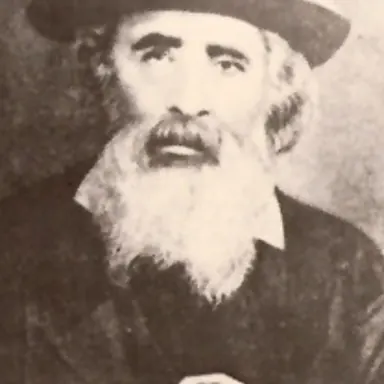
The Maharil Diskin: A Historical, Halakhic and Social Analysis of the "Father of the Old Yishuv"
16 min read3,152 words
Summary
This survey analyzes the figure of the Maharil Diskin as a formative rabbinic leader who laid the ideological and institutional foundations for conservative Haredi society in the 19th century. The text follows the stations of his life, from his extraordinary Torah genius in Lithuania to his becoming the "father of the Old Yishuv" in Jerusalem, stressing his uncompromising insistence on the purity of halakha in the face of the challenges of modernity and the Haskalah. The author of the article presents the rabbi's complex strategy, which combined ideological separatism with the establishment of practical alternatives, such as independent educational and welfare institutions intended to protect the community from outside influences. Ultimately, the source seeks to explain how the figure of the Maharil became a model of militant religious leadership, whose imprint is evident to this day in the social structure and the yeshiva world of Torah Jewry.
The Teaching and Leadership of the Maharil Diskin: A Historical, Halakhic and Social Analysis of the "Father of the Old Yishuv"
Moshe Yehoshua Yehuda Leib Diskin, known to the generations as the Maharil Diskin or "the Rav of Brisk," represents one of the most significant and complex figures in the history of Orthodox Judaism in the 19th century. His leadership, which extended over two continents and six decades, shaped to a great extent the ideological and social line of the conservative streams in Jerusalem and in Lithuanian Jewry. His figure combines phenomenal scholarly genius, a firm and uncompromising stand on the principles of halakha, and a far-reaching strategic vision in building communal institutions that protect religious society from the processes of modernity, Haskalah and secularization.[1, 2]
Chapter 1: The Roots of His Genius and the Formation of His Personality in Lithuania
The spiritual growth of the Maharil Diskin took place in the very heart of Lithuanian Jewry, at a time when the Lithuanian Torah world reached the height of its scholarly flowering. He was born on 10 Kislev 5579 (1818) in the city of Grodno, into a family that symbolized the rabbinic elite of the period.[1, 2] His father, Rabbi Binyamin Diskin, was a central figure in the rabbinic world and served as rabbi in the communities of Volkovysk and Lomza. The father, who was known for his public integrity and his erudition, was his son's principal teacher and shaped the foundations of his method of study and of his conception of leadership.[1, 3]
Already in his early childhood years the boy Moshe Yehoshua displayed exceptional cognitive abilities. The historical reports describe a photographic memory that enabled him to master the texts of the Babylonian and Jerusalem Talmud, the Rishonim and the Acharonim, at a level of complete command by heart.[3] This genius was not only quantitative but also qualitative; he was endowed with a sharp and rapid analytical ability, which enabled him to break down intricate sugyot (Talmudic discussions) into their most basic components with lightning speed.[4] At the age of 18 he was ordained to the rabbinate, a step that marked the beginning of a stormy public career in which his absolute commitment to halakhic truth would collide head-on with the complex social and political reality of the Russian Empire.[1]
He married first Hinda Rachel Broida, the daughter of the rabbi of Volkovitz, and moved to live in his father-in-law's house, where he continued his intensive studies.[1] This period laid the infrastructure for his future leadership, in which the combination of theoretical genius and public courage would become his hallmark.
Chapter 2: The Wandering Rabbinate and the Confrontation with the Establishment in Europe
The rabbinic path of the Maharil Diskin in Europe was marked by struggles and frequent moves between communities. Unlike many rabbis of his period who sought compromises in order to ensure communal stability, the Maharil adopted a firm and uncompromising line of action.[1] His conception was that the rabbi is not merely a communal official but the guardian of the walls, entrusted with the purity of halakha and morality, even at the price of direct confrontation with the men of wealth and power.
These wanderings were not accidental. In each of the communities the Maharil identified the weak points of the traditional leadership in the face of modern pressures. In Lomza and in Kovno, his confrontations were not only over dry points of halakha but over the moral structure of the community. He refused to turn a blind eye to the conduct of the city's rich or of those close to the authorities, out of an understanding that internal corruption is the opening to total spiritual disintegration.[3] His readiness to leave a high-ranking post time after time underscored his commitment to "Truth springs from the earth," a trait that made him a figure admired by the masses of the people and suspect in the eyes of the governing establishment.
Chapter 3: The Brisk Affair: Rupture and Renewal
The period of his tenure in Brisk (Brest-Litovsk) is regarded as the most significant in his European career. Brisk was a Torah and spiritual center of the first rank, but also an arena of hard struggle between the supporters of the Haskalah and the Orthodox camp. In Brisk the Maharil married a second time, Sarah Sonia (née Rattner), an opinionated, educated and shrewd woman, who later became known by the epithet "the Rebbetzin of Brisk" and became an active partner in his leadership.[1, 3]
The event that closed the European chapter of his life was the affair of the imprisonment. It was a tangled divorce dispute in which the husband tried to extort the wife and demand enormous sums of money in return for a get (bill of divorce). The Maharil and his wife saw this as an intolerable injustice and a forced aginut (the state of a chained wife). Rebbetzin Sonia, in coordination with the rabbi, secretly returned to the woman the money that had been deposited with them as a security, in order to enable her release from the destructive marital bond. The husband, in response, informed on them to the Russian authorities on a charge of "breach of trust" and theft of money.[3, 4]
The Maharil was arrested and put on trial before the Russian system, which often tended to act against the traditional rabbinic leadership. The period of imprisonment was unbearably hard, and he faced a real danger of exile to Siberia to hard labor.[3] In the end, only through tremendous diplomatic efforts and the payment of large bribes to government officials did the members of the community succeed in getting him out of prison and smuggling him beyond the borders of Russia.[3] This affair left a deep mark on him: it strengthened his suspicion of governmental systems and of Jews who use the tools of government to harm Torah authority, and hastened his decision to go up to the Land of Israel and find there "rest and inheritance."[3]
Chapter 4: The Jerusalem Revolution: Fortifying the Old Yishuv
On 29 Tammuz 5637 (1877) the Maharil Diskin arrived in Jerusalem.[2] The reality of Jerusalem at that time was far from tranquil. The Old Yishuv was composed of various communities and kollelim, while the Ashkenazi leadership ("the Perushim") was in the hands of Rabbi Shmuel Salant, who led a more moderate and pragmatic line. The Maharil's entry into the city changed the balance of power immediately.[1, 3]
He was accepted as the natural leader of the most conservative and zealous streams among the Ashkenazim. Although he did not officially hold the office of rabbi of the city (an office identified with Rabbi Salant), the Maharil maintained an independent beit din of his own and enjoyed supreme spiritual authority that was at times stronger than that of the official establishment.[1, 3] His position was resolute: Jerusalem must remain a fortress of Torah and holiness, free of the influences of European "culture" and "Haskalah," which he saw as the greatest enemy of the Jewish people.[1]
The Struggle against the Mission and Modern Education
The Jerusalem of the end of the 19th century was a very active arena for the Christian mission, which operated among the poor and weakened Jewish population. At the same time, organizations such as the German "Ezra Society" and the French "Kol Yisrael Chaverim" began to establish schools that included secular studies, foreign languages and productive trades. The Maharil Diskin saw these two, the mission and modern education, as two sides of the same coin threatening the integrity of the Jewish home.[1, 5]
He led a line of bans against schools that included secular studies, and coined the notion that any change in traditional education is in the category of "be killed rather than transgress" for the Jerusalem community.[3] This struggle created constant tension with figures such as Yechiel Michel Pines, who tried to bridge between the Old Yishuv and modernity. Pines attacked the Maharil's circle sharply in the pages of the press, but the Maharil, backed by a zealous group of young scholars, succeeded in fortifying the walls of separation.[2]
Chapter 5: The Institutional Enterprises: A Strategy of Preservation
One of the fascinating characteristics of the figure of the Maharil Diskin was his understanding that ideological opposition alone is not enough; there is a need to establish strong institutional alternatives that will meet the physical and spiritual needs of the community.
The Diskin Orphanage: A Stronghold of Rescue
The establishment of the orphanage in 1881 was a direct response to the activity of the mission and of the agents of the Haskalah. The Maharil saw how Jewish orphans, left without family support in a Jerusalem stricken by poverty and disease, were being taken to Christian institutions or to the orphanage of Dr. Herzberg, which he considered a center of dangerous Haskalah.[2, 6]
The process began modestly: at first the Maharil gathered the orphans into his private home. When the place became too small, he rented buildings in the Old City and established the institution officially.[6] The aim of the institution was to provide the orphans with a warm home, adequate nutrition and a meticulous Torah education, in order to prevent any possibility of abandoning the religion.[4, 6] Rabbi Shmuel Hominer assisted in the initial fundraising, and the institution became one of the pillars of charity in Jerusalem.[6]
The influence of the institution was so great that even after the Maharil's death it continued to expand and to be a formative factor in the lives of orphans in the Land of Israel. The move to the monumental building at the entrance to Jerusalem (in Givat Shaul) symbolized the victory of the Old Yishuv in its ability to establish splendid institutions that are in no way inferior to those of "modernity."[6]
The "Ohel Moshe" Yeshiva
In parallel with the charitable institution, the Maharil established the "Ohel Moshe" yeshiva and served as its first rosh yeshiva.[1] The yeshiva was not an institution intended for the masses, but a hothouse for the prodigies among the Torah scholars of the city. The Maharil gave daily classes in it in Gemara, which were considered particularly deep and innovative.[1] His method of study, which combined broad Lithuanian erudition with profound logical-legal analysis, drew to him the most brilliant minds of Jerusalem and laid the foundations for the "Brisk" method in the Land of Israel.[1, 4]
Chapter 6: His Torah Teaching and Method of Study
To understand the work of the Maharil, one must delve into the depths of his Torah teaching, which forms a bridge between the old Torah world of Lithuania and the halakhic challenges of the Land of Israel. The Maharil was not only a halakhic decisor but a "creator" in the Torah sense: a person who redefines the boundaries of halakha and thought out of absolute fidelity to the sources.
Standing Firm on Truth and Halakhic Stringencies
The figure of the Maharil is identified with a line of halakhic "stringencies," but according to his disciples, this was not an inclination to excessive strictness but the result of "a discernment of genius."[4] The Maharil held that in situations of doubt or of an external threat to religion, halakha must be a fortified wall. His firm stand did not stem from personal rigidity, but from the understanding that any slight fluctuation in the halakhic standard could lead to a total collapse.[4]
A prominent example of this is his position in the shemitah controversy in the year 5649 (1889). While other rabbis sought ways to ease matters for the new settlers by means of the "heter mechira" (sale permit), the Maharil Diskin opposed it resolutely. He held that one must rest in the Sabbatical year "in its plain sense," and that the blessing of the Land of Israel depends on meticulous observance of the commandment without clever devices.[4] This position placed him at the head of the conservative camp against Rabbi Yitzchak Elchanan Spektor and, later, Rav Kook.
The Connection to the Land of Israel and the Identification of Biblical Sites
Contrary to his image as one shut up within the four cubits of halakha, the Maharil showed a great and exceptional interest in the geography and archaeology of the Land of Israel as they are reflected in the sources. He used to go on tours in the surroundings of Hebron and Jerusalem in order to identify holy places and examine their correspondence with the descriptions of Scripture and of the Sages.[7]
He identified "the oaks of Mamre" as the ruin called in Arabic "Ramat el-Khalil," north of Hebron.[7] According to the testimony of his disciples, he explained on the spot the importance of the historical identification and the significance of the revelation of the angels to Abraham our father in its precise geographical context.[7] This approach attests that his zealotry was not detached from the reality of the land, but stemmed from a deep bond to its ancient roots.
His Works and Books
The Maharil Diskin did not succeed in publishing all his writings in his lifetime, but the books that were published became classic assets of Lithuanian and Land-of-Israel Torah literature:
- Responsa of the Maharil Diskin: a book of questions and answers covering all parts of the Shulchan Arukh. The responsa excel in extreme brevity and in penetration to the heart of the sugya, using varied sources.[2, 4, 7]
- The Maharil Diskin on the Torah: novellae and commentaries on the Five Books of the Torah, combining deep plain meaning with ethical and practical insights.[4]
- Rulings of the Maharil Diskin: a booklet collecting his rulings and practical customs, which serve as the basis for the customs of Jerusalem in certain circles to this day.[7]
Chapter 7: The Attitude to the New Yishuv: The Complexity of Leadership
A central and less well-known point in the leadership of the Maharil is his complex attitude to the New Yishuv and to the commandment of settling the Land. Despite being the leader of the zealous stream, he did not reject wholesale going out beyond the walls and productive labor, provided that these were done under close rabbinic supervision.
In the year 5641 (1881), when the moshava of Petach Tikva faced collapse because of disease and economic difficulties, the Maharil Diskin agreed to head the "Association of the Founders of the Settlement."[3] He served as a spiritual authority for the settlers in Petach Tikva and saw religious and security importance in this enterprise for the people of Israel.[1] However, when he perceived that the spirit of the New Yishuv was inclining toward secularization and detachment from tradition, he sharpened his positions and separated himself from them. This duality characterizes his approach: support for the deed itself (settling the Land) while sharply opposing the liberal spirit that accompanied it.[3]
Chapter 8: Rebbetzin Sonia and the Leadership of the "Court"
It is impossible to understand the work of the Maharil without reference to Sarah Sonia Diskin, his second wife. Rebbetzin Sonia was an exceptional figure in the Jerusalem landscape of the 19th century. She was an educated woman who commanded several languages and was endowed with a developed political and organizational sense.[3]
In Jerusalem she was known as the one who managed the "policy" of the Maharil's court with energy and wisdom. She saw to it that the rabbi could devote himself to his studies and Torah work without disturbance, while she navigated between the various disputes of the communities and kollelim.[3] Her role in the Brisk affair and her influence on the establishment of the institutions in Jerusalem highlight the fact that the Maharil, despite his asceticism and zealotry, was aided by a sophisticated support system, modern in its way, that enabled him to achieve his conservative goals within a changing world.[3]
Chapter 9: His Legacy and Passing
The Maharil Diskin passed away at the conclusion of Shabbat, on the night of 29 Tevet 5658 (22 January 1898).[1, 2] His death aroused heavy mourning throughout the Jewish world and especially in Jerusalem. For fear of a disaster because of a mass funeral at night in the alleys of the Old City, Rabbi Shmuel Salant ordered that the deceased be kept overnight until the morning, a highly unusual instruction in the custom of Jerusalem, which is particular about immediate burial, which attests to the enormous respect that the parallel stream too held for him.[1]
He was buried in the cemetery on the Mount of Olives, and his tombstone became a focus of pilgrimage.[2, 4] His legacy continued through his son, Rabbi Yitzchak Yerucham Diskin, who continued the management of the institutions and was one of the founders of the "Edah HaCharedit."[4]
Summary and Long-Term Implications
The Maharil Diskin was a founding figure who created the model of "militant Haredi leadership." He taught the religious public how to preserve its identity amid the storms of modernity by means of:
- Institutional independence: the establishment of systems of charity and education that do not depend on the government or on liberal elements.[6]
- Total commitment to halakha: placing the halakhic standard as all-important, without regard to economic or political considerations.[4]
- Ideological separatism: the creation of a clear barrier between the Orthodox community and the streams of the Haskalah and the mission.[1]
His Torah genius provided the intellectual justification for his zealous positions, turning them from "stubbornness" into an ordered "method" that influences to this day the yeshiva world and the Haredi streams in Israel and around the world.
The teaching of the Maharil Diskin remains alive and present in his writings, in his institutions and in all the practices of Haredi Judaism, which sees him as one of its greatest luminaries and defenders in recent centuries.[1, 4]
Sources7
- 1.המהרי"ל - משה יהושע יהודה לייב דיסקין - remember.bio, remember.bio/he/remember_pages/המהריל-משה-יהושע-יהודה-לייב-דיסקין/
- 2.משה יהושע יהודה לייב דיסקין - ויקיפדיה, he.wikipedia.org/wiki/משה_יהושע_יהודה_לייב_דיסקין
- 3.565 | Encyclopedia of the Founders and Builders of Israel, tidhar.tourolib.org/tidhar/view/2/565
- 4.רבי יהושע לייב דיסקין – ויקישיבה, yeshiva.org.il/wiki/index.php/רבי_יהושע_לייב_דיסקין
- 5.Untitled, rabbidiskinschools.org.il/המהריל-דיסקין/
- 6.בית היתומים דיסקין - ויקיפדיה, he.wikipedia.org/wiki/בית_היתומים_דיסקין
- 7.אנציקלופדיה יהודית דעת - אלוני ממרא ;, daat.ac.il/encyclopedia/value.asp?id1=3555