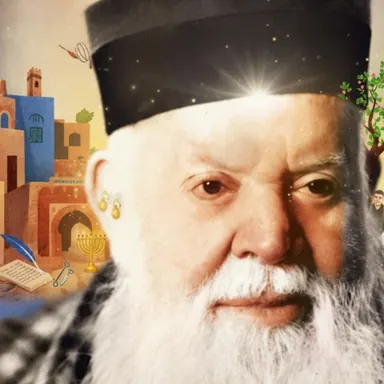
Creative Halakhic Leadership, Sephardic Rationalism and the Comprehensive Torah Teaching of the Gaon Rabbi Yosef Messas, of Blessed Memory
21 min read4,144 words
Summary
This text surveys the powerful figure of Rabbi Yosef Messas, one of the most prominent spiritual leaders of Moroccan Jewry in the twentieth century, emphasizing the Sephardic rationalism that characterized his rulings. The article traces his life through its main stations in Morocco, Algeria and Israel, and presents his meta-halakhic worldview, which seeks a harmonious balance between the law, reason and the times. Through an analysis of famous cases, such as the permission to use electricity on a festival day and the question of head covering, it illustrates his lenient and inclusive approach, known as "the Torah of the actual" (torat ha-matzui), which strives to bring the broad public closer to tradition without giving up intellectual integrity. Finally, the source highlights the rabbi's fervent Zionist attitude toward the State of Israel as the beginning of the Redemption, and his extensive literary legacy, which serves as a model of creative halakhic leadership combining loyalty to roots with openness to modernity.
Jewish history in the twentieth century is marked by a charged, and often crisis-ridden, encounter between the world of tradition and halakha and the processes of modernization, secularization and sovereign nationalism [cite: 1, 2]. At the heart of these upheavals stands out the majestic figure of Rabbi Yosef Messas (known by his acronym HaYoM), one of the greatest sages and halakhic decisors of Morocco in recent generations [cite: 1]. As a rabbinic judge, decisor, preacher, poet, writer and painter, Rabbi Messas presented a unique model of leadership that combined deep loyalty to the halakhic tradition with Sephardic-Maimonidean rationalism, boldness in ruling, and exceptional intellectual and artistic openness to the challenges of a changing reality [cite: 1, 2]. His Torah activity spanned five decades and three different countries: Morocco, Algeria and the State of Israel [cite: 1, 2]. In each of these stations he left an indelible mark on the shaping of the boundaries of the community and of halakha [cite: 1, 2].
The Stations of His Life and the Shaping of His Identity as a Leader and Decisor
The geographical and cultural path of Rabbi Yosef Messas's life directly influenced his independence of thought and his readiness to grapple with a dynamic social reality [cite: 1, 2].
Childhood and Growth in Meknes
In biographical and historical research there is some disagreement regarding Rabbi Messas's year of birth; while some public and communal sources point to 1900 (5660) as the year of his birth [cite: 1], well-founded academic studies establish that he was born in the city of Meknes in Morocco in 5652 (1892) [cite: 2, 3]. He was born to a distinguished rabbinic family whose roots lay in Spain, the son of Rabbi Chaim Messas and Mrs. Simcha née Gano [cite: 1, 2]. His mother died when he was only about three years old, and his father, who was one of the prominent leaders of the community, a rabbinic judge and a pious man, acquired a reputation as a saint, and his grave became a site of pilgrimage [cite: 2].
Although he was compelled from a young age to help support his family by writing deeds and contracts at the rabbinic court, he devoted most of his time to Torah study [cite: 2]. At the age of twenty he took part in establishing the yeshiva "Beit El ve-Etz HaChaim," founded on the initiative of Rabbi Ze'ev Halperin (known as "Mari HaChazak MiTzion"), where he studied under the foremost sages of Meknes, among them the brothers Rabbi Aharon and Rabbi Makhlouf Asudri, Rabbi Mordechai Amar, Rabbi Yedidia Toledano and Rabbi Yitzhak Sabbag [cite: 2]. At the age of 32 he was formally ordained as a rabbinic judge by Rabbi Raphael Encaoua, the first Chief Rabbi of Morocco [cite: 2]. The Sephardic-rationalist tradition of Meknes laid the foundations for his independent and unfettered approach as a halakhic decisor [cite: 2].
Rabbi Messas was endowed with a distinctly poetic and artistic soul, and was well versed in linguistics, poetry and painting [cite: 4, 5]. A unique expression of these talents can be seen in his ornate signature, in which he used to sign his name in rhyme: "Eved El Dok ve-Chug Ashash, Yosef Messas" [cite: 4]. The rabbi himself explained the meaning of the signature in his letters, explaining that the term "dok" refers to the heavens (following Isaiah 40, "who stretches out the heavens like a curtain [ka-dok]"), the term "chug" refers to the earth ("who sits above the circle [chug] of the earth"), and the verb "ashash" means "founded" (following Isaiah 16, "for the foundations [ashishei] of Kir-hareseth") [cite: 4]. Thus he defined himself as a servant of the God who created the heavens and founded the earth [cite: 4]. His many-sided personality won enormous admiration among his contemporaries; his father's cousin, the Chief Rabbi of Jerusalem, Rabbi Shalom Messas, lavished praise on him and described him as "one of the Ramatayim... an elder of judgments... the judge, the keen-witted, the decisor, the scholar, the diligent, the teacher, the preacher, the homilist, the poet, the distinguished writer, the great master of rhetoric, the painter" [cite: 1, 5, 6].
His Tenure in Tlemcen, Algeria
In 1924 Rabbi Messas was called to serve as Chief Rabbi and rabbinic judge of the community of Tlemcen in Algeria [cite: 1, 2, 3]. This community was under deep French influence and was grappling with accelerated processes of secularization and the casting off of the yoke of the commandments [cite: 1, 2]. The physical distance from the great Torah centers of Morocco intensified his sense of isolation and the challenge of leadership, but on the other hand it gave him a free field of action for shaping original and independent rulings [cite: 2]. In this period he found spiritual support in the figure of his predecessor in the post, Rabbi Chaim Bliah, a Torah scholar with a distinctly rationalist approach and a moderate openness to secular learning and to modernity [cite: 2].
The Return to Meknes and the Immigration to the State of Israel
With the outbreak of the Second World War in 1939, Rabbi Messas was called back to Morocco to serve as rabbi and chief rabbinic judge in his native city of Meknes, alongside Rabbi Yehoshua Berdugo and Rabbi Raphael Baruch Toledano [cite: 1, 2]. There he was appointed president of the High Court for matters of authority and was an active participant in the Council of the Rabbis of Morocco, which enacted innovative social and halakhic ordinances aimed at bridging the law of the Torah and the changing reality [cite: 2].
In 1962, out of a deep Zionist aspiration to cherish the dust of the Land and to build it in the light of the vision of the prophets, Rabbi Messas immigrated to Israel [cite: 1]. At first he did not take on any public office and devoted his time to writing and editing his books [cite: 1]. However, in 1963 he was appointed Chief Rabbi of the city of Haifa and the entire Northern District [cite: 1]. In this role he dealt with the challenges of secularization in the sovereign State of Israel, worked to draw closer the new immigrants in the periphery, and led a unifying and inclusive line of ruling based on viewing "Klal Yisrael" (the entire Jewish people) as one family [cite: 1, 2].
His Meta-Halakhic Teaching: "The Law, Reason and the Times"
The meta-halakhic foundation of Rabbi Yosef Messas rests on three pillars that he defined himself: the law, reason and the times [cite: 2, 7]. In his view, a halakhic decision cannot be made in complete detachment from the circumstances of the period and from human understanding; rather, it must reflect a harmonious synthesis between the dry sources of the law and the economic, social and psychological conditions of the generation [cite: 2, 7].
The Torah of the Actual versus the Torah of the Desirable: The Three-Circle Model
In contrast to the tendencies toward separatism, stringency and insularity that characterized Orthodoxy in Europe and that had begun to take root in the Land of Israel as well, Rabbi Messas presented an inclusive halakhic worldview based on "the Torah of the actual" [cite: 2, 8, 9]. He refused to set a utopian religious bar that would alienate the overwhelming majority of the public, and preferred to focus on drawing hearts closer and on the gradual observance of the commandments [cite: 2, 8]. Within this framework, he divided the system of commandments into three concentric circles [cite: 2]:
- The basic circle: intuitive commandments and customs that flow from the "Jewish spark" and the bond between generations, which the public observes of its own accord without any need for enforcement or coercion [cite: 2].
- The second circle ("bread and cooked dish"): the fundamental core commandments on which the very existence of the Jewish home rests: faith, basic Sabbath observance, kashrut, family purity and the education of children [cite: 2]. This is the central domain in which the leader must invest most of his educational and explanatory efforts [cite: 2].
- The third circle ("dessert"): the fine points of the laws, secondary stringencies and minor details intended only for exceptional individuals, which are not the daily bread of the masses in the modern era [cite: 2].
Rabbi Messas sharply criticized rabbis who raised an uproar over negligible details of the law belonging to the "dessert" circle, while endangering the public's attachment to the "bread and cooked dish" circle [cite: 2]. He held that in a generation of such profound cultural upheavals, the external temptations are so strong that Jews who do not fully observe the commandments should be regarded as "coerced" (anusim) and not as wicked people or as those who transgress out of spite [cite: 2, 3]. This approach prevented the splintering of the community and preserved its integrity [cite: 7, 8].
The Test Case of the Butchers of Tlemcen
His famous ruling in the affair of the butchers of Tlemcen illustrates in practice the application of his meta-halakhic model [cite: 3, 7]. The rabbi discovered that the city's butchers were publicly desecrating the Sabbath by opening their shops on the day of rest, but on the other hand were scrupulously careful about the kashrut of the meat and the slaughtering [cite: 3, 7, 10]. According to the ruling of the Shulchan Arukh, one who publicly desecrates the Sabbath loses his halakhic credibility, and one may not rely on the kashrut of the meat he sells [cite: 3, 7].
Whereas stringent decisors would immediately have revoked the kashrut certificates of those butchers [cite: 7], Rabbi Messas understood that such a step would bring a communal disaster: the broad public would continue to buy meat from them and would stumble into eating non-kosher food, the community would split into rival groups, and the processes of assimilation would accelerate [cite: 7]. After personal conversations with the butchers, the rabbi chose to grant them kashrut certification and to permit buying meat from them [cite: 7].
His halakhic and psychological explanation was based on the assumption that those butchers accepted upon themselves the heavenly responsibility for their personal sins on the Sabbath, but were in no way prepared to harm others and to feed other Jews non-kosher meat [cite: 3, 7]. By placing trust in their inner integrity, the rabbi prevented a deep religious and social rupture and established communal compromise as a religious ideal of the first order [cite: 7, 8].
Prominent Halakhic Rulings and the Controversies They Aroused
Rabbi Messas's rationalist and independent approach led him to issue a series of revolutionary rulings, some of which aroused a great storm among his fellow decisors in his own generation and in subsequent generations [cite: 1, 7, 11].
Exempting Married Women from Head Covering in the Modern Era
One of Rabbi Messas's most original and daring rulings concerns the obligation of married women to cover their heads [cite: 2, 11, 12]. In his well-known responsum in his book "Otzar HaMikhtavim" (vol. 3, section 1884), the rabbi determined that in our day there is no longer a genuine halakhic obligation for married women to cover their hair when going out into the public domain [cite: 11, 12].
Rabbi Messas based his novel ruling on an analysis of the sources in Tractate Ketubot (page 72a), where the Gemara distinguishes between "dat Moshe" (the law of Moses, a Torah obligation) and "dat Yehudit" (Jewish practice, the modesty customs of the daughters of Israel) [cite: 11]. He demonstrated that by Torah law ("dat Moshe") the original obligation is only that a woman's hair not be loose, disheveled and unkempt, and this requirement is fulfilled when the hair is gathered, braided and neatly arranged (similar to a partial covering called "kaltah") [cite: 11]. On the other hand, the obligation to cover all of the hair derives from "dat Yehudit", a halakhic category based entirely on social conventions and on the changing modesty customs of Jewish women in each and every generation [cite: 11, 12].
Rabbi Messas argued that since in our day most Jewish women, including respectable and observant women, have agreed to go about with uncovered heads and do not see in this any licentiousness or lack of modesty, the social custom has changed fundamentally [cite: 11]. The hair of married women has become similar to the hair of unmarried maidens, which is not considered ervah (nakedness) because the public is accustomed to seeing it uncovered [cite: 11]. Therefore, in his view, the prohibition has lapsed at its root, and women who go about with uncovered heads should not be condemned [cite: 11].
This responsum aroused a sharp controversy [cite: 11]. His cousin, Rabbi Shalom Messas (in his book Tevuot Shemesh), utterly rejected this distinction and determined that the obligation of head covering is an absolute Torah prohibition that does not depend on changing social custom [cite: 11]. Other decisors argued that Rabbi Messas had confused the definition of hair as ervah with respect to the recitation of the Shema with a woman's instinctive obligation of modesty [cite: 11, 12]. Nevertheless, Rabbi Uri Sherki and others noted that although one should not rule this way in practice, this ruling serves to justify the many rabbis' wives and women who were lenient in this matter, and in a time of great need there is someone to rely on [cite: 11, 12].
Permission to Use Electricity on a Festival Day
Another famous halakhic ruling of Rabbi Messas concerns permitting the switching on and off of electric light and the lighting of a match on a festival day (Yom Tov) [cite: 7, 13]. In Morocco many Jews were accustomed to be lenient in this matter, but upon their immigration to the Land of Israel they encountered fierce opposition from local decisors, who saw it as an outright desecration of the festival [cite: 7, 13].
Rabbi Messas did not content himself with studying the literary sources but acted with scientific method: he met with electricians and professionals in order to understand the physical mechanism of the electric current [cite: 7]. After satisfying himself that switching on electricity does not involve the creation of a new fire (molid) but only the continuation of an existing current, and that switching it off does not produce charcoal, he determined that it is entirely permitted on a festival day [cite: 7, 13]. He stressed that preventing the use of electricity directly harms "the joy of the festival" [cite: 13].
Unlike other decisors (such as Rabbi Shalom Messas and Rabbi Yitzhak Hazan) who feared a "slippery slope" in which the broad public would not distinguish between a festival day and the Sabbath and would come to desecrate the Sabbath, Rabbi Yosef Messas expressed full trust in the public's ability to distinguish between one degree of holiness and another and not to err into desecrating the Sabbath [cite: 13].
A Systematic Summary of Rulings and Daily Halakhic Practices
From his writings, and especially from the work Yalkut ShaMaSh, which collects his rulings, there emerges a detailed, moderate and rationalist halakhic teaching that gives the highest priority to the original custom of the sages of Spain and Morocco over later stringencies [cite: 5].
Below is a summary of his notable rulings in the various areas of life:
Zionism, Jewish Sovereignty and the Redemption of Israel
For Rabbi Yosef Messas, the establishment of the State of Israel was not merely a safe haven for persecuted Jews, but a perfect prophetic fulfillment of the vision of redemption: "atchalta de-geula" (the beginning of the Redemption) [cite: 1, 14, 15]. His warm and fervent attitude toward Zionism and the State found expression in a series of bold rulings and public practices [cite: 14, 16].
Independence Day and the Blessing over Hallel
Rabbi Messas ruled that Independence Day should be celebrated as a full festival day with Hallel and its blessing, establishing a festive order of prayer [cite: 5, 16]. He even created parallels and mnemonic signs in the calendar between the days of the Passover festival and the days of the Independence festival, in order to give this day the status of a fixed Torah festival [cite: 2]. Rabbi Yosef Messas's ruling on this matter (as published in Otzar HaMikhtavim, vol. 3, section 1769) served as a central halakhic source for his relative, Rabbi Shalom Messas, who also tended to rule that the blessing over Hallel should be recited on Independence Day, although he later moderated his ruling for the broad public because of the rulings of Rabbi Ovadia Yosef [cite: 5].
Shortening the Lamentations on the Night of Tisha B'Av
A dramatic event illustrating his redemptive outlook took place in his synagogue in Haifa on the night of Tisha B'Av [cite: 15]. As was customary in the communities of Morocco, the worshippers sat on the floor in darkness and began reciting the long lamentations (kinot) over the destruction of the Temple [cite: 15]. A short time after the prayer began, Rabbi Messas rose from his place and declared resolutely:
"Enough lamentations. We are in the beginning of the Redemption (atchalta de-geula)" [cite: 15].
In the rabbi's view, in a reality in which the people of Israel had returned to its land, gathered in its exiles and established independent Jewish sovereignty, it is not fitting to go on wallowing in an existential and total mourning suited to the darkness of exile [cite: 15]. He did not abolish the mourning of Tisha B'Av altogether, since the redemption is still in progress and not yet complete, but he demanded that the measure of grief be adjusted to the miraculous reality of our days [cite: 15].
The Sanctity of IDF Soldiers and the Integrity of the Land
Rabbi Messas held the soldiers of the Israel Defense Forces in enormous esteem and saw them as holy men who devote their lives to the defense of the whole [cite: 14]. At one meeting with a group of soldiers who asked for his blessing, the rabbi went to the mezuzah at the entrance of his home and, instead of blessing them in the usual formula, placed his hand on the mezuzah and recited a blessing with God's name and kingship: "Blessed are You, Lord... who has granted us life, sustained us and brought us to this time," seeing the Hebrew soldier as a living and tangible miracle of the return to Zion [cite: 14].
At the same time, the rabbi held a firm national position regarding the integrity of the Land [cite: 5, 16]. When asked about the possibility of a territorial withdrawal from parts of the Land of Israel within the framework of diplomatic agreements, he replied categorically that there is an absolute Torah prohibition against handing over even a single inch of the soil of the homeland to foreign rule [cite: 5, 16].
The Complete Literary Œuvre
Rabbi Yosef Messas left behind an extensive written legacy comprising 33 books that cover all fields of Torah and of the spirit [cite: 1]. Below is a detailed survey of his literary work:
- Responsa Mayim Chayim ("Living Waters", two volumes): his central halakhic work, containing his principal halakhic responsa from the periods of his tenure in Algeria, Morocco and Israel, arranged according to the order of the Shulchan Arukh, Orach Chayim [cite: 1, 4, 17].
- Responsa Mayim Kedoshim ("Holy Waters"): the volume of questions and answers on the Yoreh De'ah section, dealing with the laws of the forbidden and permitted, kashrut, vows and mourning [cite: 4, 17].
- Responsa Mayim Tehorim ("Pure Waters"): the volume of questions and answers on the Even HaEzer section, dealing with the laws of marriage, betrothal and marriage contracts (ketubot) [cite: 4, 17].
- Responsa Mayim Karim ("Cool Waters"): the volume of questions and answers on the Choshen Mishpat section, dealing with monetary law, damages and civil disputes [cite: 4, 17].
- Otzar HaMikhtavim ("Treasury of Letters", three volumes): a monumental collection containing 1,949 letters and responsa, halakhic, philosophical and public, which constitutes a historical document of the first order for the life of the Jewish communities in North Africa and in Israel [cite: 1, 4, 18].
Nachalat Avot ("Inheritance of the Fathers", eight volumes): a wide-ranging commentary on Tractate Avot, combining sermons for Sabbaths and festivals with parables and stories from the Sages and from everyday life [cite: 1, 4, 18].
Minchat Yosef / Meged Shamayim / Toldot HaDerashot: collections of sermons and exegetical thought that the rabbi delivered over the years of his tenure [cite: 1, 2, 4].
- Ner Mitzvah: a comprehensive work on the festival of Hanukkah and its customs in halakha and aggadah, incorporating original liturgical poems and songs [cite: 2, 4, 18].
- Zevach Todah: a detailed halakhic work dealing with the laws of ritual slaughter and inspection [cite: 4, 17].
- Gerash Yerachim: an in-depth halakhic-historical study dealing with the writing of personal names in bills of divorce (gittin) in Algeria and Morocco [cite: 1, 4, 17].
- Shevet Sofer ve-Et Sofer: a collection gathering the formulas of legal deeds and marriage contracts and the laws governing them [cite: 4, 17].
- Va-Yizkor Yosef: a commentary on the Passover Haggadah, including historical accounts of miracles of deliverance in the community of Meknes and sermons for the month of Nisan [cite: 1, 4].
- Bigdei Yesha: sermons and commentaries for the festival of Sukkot, for the Hoshanot and for the prayers for dew and rain [cite: 4].
- Magen Avraham: a theological work intended to defend the approach of Rabbi Abraham ibn Ezra against the criticisms of Nahmanides (Ramban) [cite: 4].
- Tiferet Banim Avotam: a comprehensive genealogical study of the rabbi's family lineage through the generations [cite: 4].
Summary
The Gaon Rabbi Yosef Messas, of blessed memory, represents a unique type of halakhic leadership that connected the world of tradition and community with the changes of the times and with modernity [cite: 1, 2]. His independent and courageous rulings, which give the highest priority to common sense, to the original custom and to the needs of the hour of the public, set forth an alternative model to religious extremism and separatism [cite: 2, 7, 8]. His Torah path teaches that halakha is not a frozen system of detached stringencies, but a living and embracing language capable of containing all parts of the people, of celebrating the miracle of Jewish sovereignty in the Land of Israel, and of preserving the integrity of society and of the family out of deep inner faith [cite: 2, 8, 14, 15].
Sources18
- 1.הרב יוסף משאש – החכם השלם - שערים, shearim.org.il/yosef-mashah-homepage/
- 2."הדין, השכל והזמן": מנהיגות, הלכה ומטא-הלכה בתורת הרב יוסף משאש, idi.org.il/media/16192/rabbi-yosef-mashash.pdf
- 3.ההלכה כשפה דתית לא-פונדמנטליסטית: הרב יוסף משאש ופרשת קצבֵי תלֵמסַאן / צבי זוהר, toravoda.org.il/כתבה/ההלכה-כשפה-דתית-לא-פונדמנטליסטית-הרב-י/
- 4.רבי יוסף משאש | שו"ת מים חיים | כל ספריו במהדורה חדשה, textratz.co.il/product/שות-מים-חיים/
- 5.הרב משאש ומנהגי מרוקו - ישיבת הר ברכה, yhb.org.il/shiurim/revivim-1428/
- 6.שלום משאש - חב"דפדיה, chabadpedia.co.il/wiki/שלום_משאש
- 7.הרב משאש: מודל למנהיגות דתית נחוצה עכשיו - ראיונות - משב - מה שיהודי בישראל, mashav.tv/interviews/religious-leadership/
- 8.הרב יוסף משאש והיחס למסורתיים - סרוגים, srugim.co.il/293189-הרב-יוסף-משאש-והיחס-למסורתיים
- 9.פסיקתו של הרב עובדיה יוסף לנוכח תמורות הזמן, asif.co.il/wp-content/uploads/2021/04/10-151.pdf
- 10.הצעה למעשה: המהפכה המסורתית או מחלל שבת ונאמן בכשרות - מיתרים | רשת קהילות וחינוך יהודי משלב, meitarim.org.il/the-traditional-revolution/
- 11.חיוב כיסוי שער ראש האישה – עיון ביקורתי בתשובתו של הרב יוסף משאש, והערה על מקומה של המגמתיות בפרשנות ההלכתית, mikyab.net/כתבים/מאמרים/חיוב-כיסוי-שער-ראש-האישה-עיון-ביקורתי/
- 12.כיסוי ראש - דעת הר"י משאש זצ"ל - אתר הרב אורי שרקי, ravsherki.org/index.php/2013-02-13-14-25-06/26-26/807-q-q-807807-807
- 13.האם יהודי מרוקו נהגו להדליק חשמל בחגים? - מקור ראשון, makorrishon.co.il/judaism/article/274134
- 14.הסיפור מה מברכים על חייל? - אגדה - בית סיפורי העם היהודי, agadah.org.il/story/מה-מברכים-על-חייל/
- 15.הסיפור לא להגזים באבל - אגדה - בית סיפורי העם היהודי, agadah.org.il/story/לא-להגזים-באבל/
- 16.יוסף משאש - ויקיפדיה, he.wikipedia.org/wiki/יוסף_משאש
- 17.זה ספר מים חיים / של הרב יוסף משאש ; יוצא לאור בהשתדלות אריאל שלום אלקובי - הספרייה הלאומית, nli.org.il/ar/books/NNL_ALEPH990050301630205171/NLI
- 18.חכם יוסף משאש - החכם היומי, hyomi.org.il/חכם-יוסף-משאש-