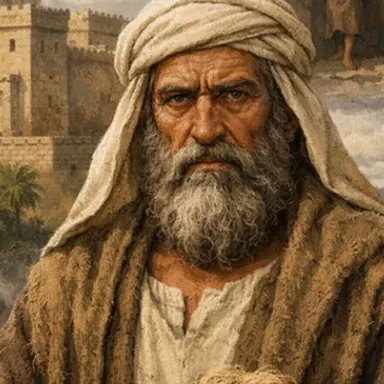
Rabbi Shimon ben Shetach: Architect of the Halakhic and Social Restoration in the Days of the Second Temple
16 min read3,216 words
Summary
This article surveys the figure of Rabbi Shimon ben Shetach, a spiritual and political leader in the Second Temple period, who reshaped Jewish society by restoring the halakhic authority of the Pharisees against the Sadducees. The text details a series of far-reaching institutional and social reforms, among them the institutionalization of a public education system for children, the securing of women's rights through the refinement of the ketubah, and the fortification of the independence of the judiciary vis-à-vis the monarchy. Through an analysis of his actions, the source presents his complex teaching, which combines uncompromising legal rigor with a judicious use of the "emergency measure" (hora'at sha'ah) to correct reality. Ultimately, the article seeks to show how Shimon ben Shetach acted as a social architect who laid the foundations that made possible the continuity of Jewish existence and of the Oral Torah for the generations to come.
The Work and Torah Teaching of Rabbi Shimon ben Shetach: Architect of the Halakhic and Social Restoration in the Days of the Second Temple
The processes by which the Oral Torah took shape and became the backbone of Jewish existence after the destruction of the Second Temple draw their strength from the key figures of the period of the "Pairs" (Zugot). Among these figures, Rabbi Shimon ben Shetach stands out not only as a halakhic decisor and as Nasi (president) of the Sanhedrin, but as a political and sociological leader who knew how to steer the Jewish ship through one of the stormiest periods of the Hasmonean monarchy.[1, 2] The work of Shimon ben Shetach, who lived in the first century BCE, took place against the background of an existential struggle between the Pharisees and the Sadducees, a constant tension between the judicial and the executive authorities, and an urgent need for social reforms that would ensure the stability of the family unit and the continuity of the generations.[3, 4] Shimon ben Shetach, who is identified in tradition as "the restorer of the Torah," brought about revolutions in the fields of education, law and personal status, combining in his path uncompromising halakhic rigor with a deep understanding of the needs of the hour.[5, 6, 7]
Historical Context: Judea under the Rule of Alexander Jannaeus and Queen Salome Alexandra
To grasp the depth of Shimon ben Shetach's influence, one must analyze the political map of his days. He was active in the period of the third Pair, alongside Yehuda ben Tabbai, at the time when Alexander Jannaeus (Yannai) and his wife Queen Salome Alexandra (Shlomtzion) reigned in Jerusalem.[8, 9] King Yannai, the great-grandson of Mattathias the Hasmonean, represented a stage in the Hasmonean kingdom in which the leadership had moved away from the original values of the revolt and adopted Hellenistic manners and a centralization of power.[2] Yannai leaned toward the Sadducean side, abandoned the Oral Torah and persecuted the Pharisaic sages with cruelty.[2, 4]
In this reality Shimon ben Shetach found himself in a two-sided position: he was among the leaders of the Pharisaic sages, but at the same time he was the brother of Queen Salome Alexandra and the brother-in-law of King Yannai.[1, 10] This family closeness gave him a certain immunity, but it did not spare him periods of hiding and flight while his colleagues were murdered or exiled.[3, 6] The struggle between the Pharisees and the Sadducees was not merely theological; it concerned the question of legal sovereignty and of the democratization of Torah knowledge. The Sadducees, who were mostly wealthy priests and members of the aristocracy, advocated a literal interpretation of the Written Torah and centralized control of the institutions of government.[2] The Pharisees, led by Shimon ben Shetach, sought to make the Torah accessible to all strata of the people and to establish the authority of the sages as the authorized interpreters of the tradition.[2, 11]
Timeline and Political Connections of the Period of Shimon ben Shetach
The Institutional Revolution: Returning the Sanhedrin to the Hands of the Pharisees
One of Shimon ben Shetach's central achievements was the structural upheaval in the Sanhedrin. The sources describe a situation in which the Sanhedrin was controlled by the Sadducees, who sat alongside the king and queen but did not know how to ground their rulings in the sources of the Torah.[11] Shimon ben Shetach, with political and legal sophistication, began a process of replacing the Sadducean judges with Pharisaic Torah scholars.[11, 13]
The method Shimon ben Shetach used was the demand for "proof from the Torah." Whenever a halakhic question arose and the Sadducean judges uttered "empty chatter" without a scriptural basis, he demonstrated their incompetence.[11] The 28th of Tevet, the day on which the process of removing the Sadducees and establishing a Sanhedrin based on the Oral Torah was completed, was fixed as a historic festive day.[11, 13] This move was not merely a political victory of one sect over another, but an assurance that Jewish law would be subject to interpretive scrutiny and to the dynamics of study, and not to the arbitrary will of a narrow aristocracy.[2]
The Social Reform: The Revolution in Public Education
Rabbi Shimon ben Shetach is regarded as the father of the public education system in Israel. His famous enactment, "that the children should go to school," brought about a deep anthropological change.[3, 5] Until his day, responsibility for education was entirely private: the father would teach his son, and if the father was not a Torah scholar or if the child was an orphan, Torah knowledge was withheld from him.[5, 6]
The enactment established that education is a public matter incumbent on the community. Its influence was far-reaching on two levels:
- Democratization of knowledge: the education of children was no longer left to the discretion or ability of the father alone.[5] This created a society in which Torah literacy became the common possession of all, which strengthened the resistance to Hellenism and to ignorance.
- Social equality: the community also cared for orphans and the children of the poor, and paid the tuition from the communal fund.[6] This approach made education an engine of social mobility and of the preservation of national identity even under conditions of exile and distress.
Fortifying the Family Unit: The Development of the Institution of the Ketubah
Shimon ben Shetach's work in the field of personal status focuses on the shaping of the ketubah deed. His overarching aim was to protect the wife and to prevent hasty divorces that might leave the wife destitute.[5, 14] According to the Sages, the enactment was intended "so that it should not be a light matter in his eyes to divorce her."[14]
The legal change that Shimon ben Shetach brought about was the transition from depositing money in cash to placing a lien on property. He established that "all the husband's property shall be pledged for the payment of the ketubah."[5, 6] This means that instead of the husband depositing a sum of money in his father-in-law's house or at the inn (where the money might disappear or be used up), the money remained within the business turnover of the household, but became a secured debt whose collection takes precedence over every other debt.[14, 15]
Stages in the Development of the Ketubah in the Light of Halakhic History
A Legal Doctrine: The Search for Truth versus "the Needs of the Hour"
Shimon ben Shetach's legal doctrine rests on a fascinating tension between strict formalism and governmental pragmatism. His famous teaching in Tractate Avot, "Examine the witnesses thoroughly, and be careful with your words, lest from them they learn to lie," is a cornerstone of judicial ethics.[17, 18]
Caution in Examining Witnesses and the Avoidance of Circumstantial Evidence
Shimon ben Shetach was aware that judges might, without intending it, lead witnesses to supply the answers needed to convict or to acquit.[18] According to the interpretation of Maimonides (Rambam) and of the Tosafot Yom Tov, the warning "be careful with your words" is addressed to the judge, that he should not express his opinion or the legal possibilities before the testimony is completed, so that the witnesses or the litigants should not adapt their version to the "utterance of the mouth" of the judge.[18]
His adherence to the laws of testimony was so extreme that it is told of him that he saw a man chasing his fellow into a ruin, went in after him and found the pursuer standing with a knife dripping blood over the slain man, who was still writhing.[3, 9] Shimon ben Shetach turned to the murderer and told him that he knew with certainty that he was the murderer, but since there were no two witnesses who had seen the deed itself (direct eyewitness testimony), he could not sentence him to death.[6, 9] He left the judgment to the Creator of the world, and indeed it is told that a snake bit that man and he died.[3] This case illustrates Shimon ben Shetach's conception that the court is an instrument for applying the exact divine law, and not a tool for vengeance based on conjectures, however strong they may be.
The Affair of the Eighty Witches in Ashkelon: The Exception as a Safeguard
In complete contrast to his rigor in the case of the murder in the ruin stands the hanging of the eighty witches in Ashkelon on a single day.[7, 19] From a halakhic point of view, this act departed from the ordinary rules of law on three levels:
The prohibition "two are not tried on one day": to ensure the full composure of the judges, halakha forbids sentencing more than one person to death on the same day.[7, 19]
- The hanging of women: according to ordinary Torah law, women are not hanged (unlike men).[7]
- Rules of procedure and evidence: Maimonides notes that in this case none of the usual procedures of inquiry, examination and warning were carried out.[7]
The Gemara explains that this was a "need of the hour" (an emergency measure).[7, 19] At that time the daughters of Israel were "steeped in witchcraft," and a spectacular and drastic action was needed to eradicate the phenomenon and to make a fence around the Torah.[7, 17] The aggadah describes the operation as a military-intelligence maneuver: Shimon recruited eighty strong young men, gave them jars with clean cloaks inside, and instructed them to lift the witches off the ground in order to neutralize their magical power.[20, 21] The use of "the power of the king" by the Sanhedrin (as the Ran explains in his Derashot) enabled Shimon ben Shetach to depart from the law in order to set the social order right.[7]
The Struggle for the Independence of the Judiciary: Shimon ben Shetach and King Yannai
The complex relationship between Shimon ben Shetach and King Yannai represents the first attempt in Jewish history to subject the monarchy to halakhic law. Shimon ben Shetach, despite being the king's brother-in-law, did not hesitate to confront him in the supreme legal forum.[9, 10]
The Trial of King Yannai: "It Is Not Before Us That You Stand"
The foundational story in Tractate Sanhedrin describes how a slave of King Yannai killed a man, and Shimon ben Shetach summoned the king himself to the court as the slave's owner.[17, 22] When Yannai arrived and sat down, Shimon ben Shetach ordered him to stand on his feet so that the witnesses could testify before him, emphasizing that the king was standing not before flesh and blood but before "He Who spoke and the world came into being."[17, 23]
Yannai refused to stand unless all the members of the Sanhedrin joined in the demand.[23] At the moment of truth, the other judges looked down at the ground out of fear of the king.[9, 17] Shimon ben Shetach, left alone in his moral stand, cursed the judges for their weakness, and it is told that the angel Gabriel came and struck them to the ground and they died.[9, 17] This event led to the historic halakhic ruling that the kings of Israel (who are not of the House of David and who do not subject themselves to the Torah) neither are judged nor judge, in order to prevent a situation in which the court is humiliated by the executive authority.[17]
The Affair of the 300 Nazirites and Shimon's Integrity
In the economic-halakhic sphere, too, Shimon confronted the king. In the story of the 300 Nazirites who came up to Jerusalem and needed 900 sacrifices, Shimon proposed to Yannai an arrangement whereby the king would fund half of the sacrifices and Shimon would fund the other half.[3, 19] In practice, Shimon ben Shetach spent no money from his own pocket, but found a halakhic opening that annulled the Naziriteship of 150 Nazirites, thereby removing the need for their sacrifices.[19]
When Yannai learned that Shimon had ostensibly "deceived" him by using his wisdom and not his money, the king grew angry and Shimon was forced to flee.[19] Later, when Persian guests asked about "that wise old man" who used to sit beside the king, Yannai restored Shimon to his position.[19] This story highlights Shimon ben Shetach's conception that a Torah scholar need not fund the public from his private money (which he did not have, since he was poor and worked in flax), but should use his Torah power to resolve social hardships.[5, 19]
Tragedy and the Price of Leadership: The Execution of His Son
The dramatic climax of Shimon ben Shetach's life is the episode of his son, which is a tragic mirror image of the affair of the witches in Ashkelon.[7] Relatives of the witches who sought revenge on Shimon ben Shetach set up false witnesses who testified that his son had committed a capital offense.[7, 19]
According to the rule "once he has testified, he cannot retract and testify again," testimony that has been accepted in court cannot be annulled even if the witnesses admit that they lied.[7] When the son was being led to execution and the witnesses admitted on the way that they had lied "out of hatred because of the witches," Shimon ben Shetach sought to bring him back and annul the sentence out of fatherly feeling.[7] Here is recorded one of the most powerful moments in Jewish aggadah: the son turned to his father and said: "Father, if you wish salvation to come about through you, make me as a threshold."[7] The son understood that if the Nasi of the Sanhedrin bent the law to save his son, the entire legitimacy of the Pharisaic legal system would collapse.[7] The son was executed, and Shimon ben Shetach sanctified the Name of Heaven and the rule of law at the dearest price of all.
His Moral Character: Sanctification of the Name and Personal Integrity
Despite his political power, Shimon ben Shetach remained a modest working man. His name "ben Shetach" is derived, according to estimates, from his occupation of spreading out flax to dry.[5] His integrity was proverbial, as described in the story of the pearl on the donkey's neck.[1] His disciples bought him a donkey from an Ishmaelite and found a precious stone on it, but Shimon refused to keep it, arguing: "I bought a donkey; I did not buy a pearl."[1]
The return of the pearl to the Ishmaelite brought about so great a sanctification of the Name that the Ishmaelite exclaimed: "Blessed be the Lord, the God of Shimon ben Shetach."[1] For Shimon ben Shetach, halakha was not merely a set of technical laws but a tool for creating a moral exemplar that would radiate to the whole world.
Long-Term Halakhic Influence and the Decrees of Purity
Apart from his social enactments, Shimon ben Shetach took part in halakhic decrees that shaped daily life in Judea. Together with Yehuda ben Tabbai, he decreed impurity on glass vessels and on "the land of the nations."[8] These decrees were intended to preserve Jewish distinctiveness and the bond with the Land of Israel in the face of processes of assimilation and growing Hellenistic influence.[2]
In addition, he decreed impurity on metal vessels, a matter that raised a question in the Gemara, since the impurity of metals is of Torah law.[3] The explanation is that Shimon ben Shetach enacted rabbinic decrees intended to strengthen strictness about purity in cases of vessels that had been broken and repaired, in order to prevent breaches in the halakha.[3]
Summary and Conclusions: Architect of Jewish Identity
The work of Rabbi Shimon ben Shetach represents the transition from a society led by priests and aristocracy to a society led by sages and Torah literacy. His path of leadership was marked by a rare ability to combine opposites:
- Judicial independence versus the monarchy: he fortified the standing of the Sanhedrin as an independent authority not subject to the whims of the king.[9, 17]
- Social sensitivity versus adherence to the law: he reformed the ketubah and education to protect the weak, but was prepared to sacrifice his son for the integrity of the legal system.[5, 7]
- Use of the "emergency measure" versus formalism: he knew when to depart from the law in order to save the generation (the case of the witches) and when to hold fast to the law even at a painful price (the case of the murderer in the ruin).[7, 9]
Rabbi Shimon ben Shetach not only "restored the crown to its former glory" in the Sanhedrin, but laid the institutional and educational foundation that enabled the people of Israel to survive the physical destruction that was to come a hundred years later. Thanks to the enactment of the schools and of the ketubah, Judaism became a religion in which knowledge and the family are the invincible fortresses of the nation.[5, 6] His being "the restorer of the Torah" is not a rhetorical title, but an exact description of a man who built with his own hands the tools by which the Oral Torah passed from the generation of the Pairs to the Tannaim, and from them to all the generations to come.[2, 9]
Sources23
- 1.על שמעון בן שטח, sefaria.org.il/A_New_Israeli_Commentary_on_Pirkei_Avot.1.9.6-13
- 2.שמעון בן שטח ותקופתו, lib.cet.ac.il/PAGES/item.asp?item=16941
- 3.שמעון בן שטח | מקורות מתוך ספריית ספריא, sefaria.org.il/topics/shimon-b-shetach
- 4.רבי יהודה בן טבאי | טקסטים ודפי מקורות מן התורה, התלמוד וספריית המקורות של ספריא., sefaria.org.il/topics/yehudah-b-tabbai
- 5.שמעון בן שטח - מטח, lib.cet.ac.il/pages/item.asp?item=18229
- 6.על רבנים ומכשפות - Kabalove, kabalove.org/articles-hebrew/witches
- 7.שמעון בן שטח והמכשפות (סנהדרין מו ע"א) - פורטל הדף היומי, daf-yomi.com/DYItemDetails.aspx?itemId=5589
- 8.יהודה בן טבאי - ויקיפדיה, he.wikipedia.org/wiki/יהודה_בן_טבאי
- 9.שמעון בן שטח - ויקיפדיה, he.wikipedia.org/wiki/שמעון_בן_שטח
- 10.שמונים נשים באשקלון: ציד המכשפות היהודי - כישופים: הקדרה המבעבעת, witchcraft.co.il/?p=209991
- 11.מגילת תענית, טבת, sefaria.org.il/Megillat_Ta'anit,_Tevet
- 12.שמעון בן שטח – ויקישיבה, yeshiva.org.il/wiki/index.php/שמעון_בן_שטח
- 13.דמות באגדת חכמים: שמעון בן שטח והבקשה שהפתיעה את הצדוקים - הידברות, hidabroot.org/article/1190549
- 14.פרק ד - קידושין וכתובה - פניני הלכה, ph.yhb.org.il/category/משפחה/11-04/
- 15.משנת ארץ ישראל על משנה כתובות, מבוא ט׳, sefaria.org.il/Mishnat_Eretz_Yisrael_on_Mishnah_Ketubot,_Preface.9
- 16.התפתחות העקרונות המשפטיים בנוגע לכתובה ב קהילות אשכנז בימי הביניים בתקופת הראשונים, asif.co.il/wp-content/uploads/2021/04/24_2-18.pdf
- 17.לדמותו של שמעון בן שטח | Sefaria, sefaria.org/sheets/184781
- 18.משנה אבות א ט - ויקיטקסט, he.wikisource.org/wiki/משנה_אבות_א_ט
- 19.אנציקלופדיה יהודית דעת - שמעון בן שטח ;, daat.ac.il/encyclopedia/value.asp?id1=2889
- 20.שמונים המכשפות - אתר האגדה, agadastories.org.il/node/489
- 21.פשט ודרש - בן שטח ומכשפות אשקלון, sites.google.com/site/pshatudrash/home/bn-sth-wmkspwt-sqlwn
- 22.סיפורים על שמעון בן שטח - אגדה - בית סיפורי העם היהודי, agadah.org.il/person/שמעון-בן-שטח/
- 23.אתר מותאם - פרקי אבות - פרק א - משנה ט | אתר ערכים, mobile.arachim.org/?ArticleID=13849