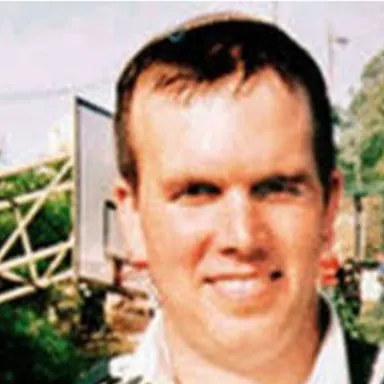
An Archetype of the Book and the Sword: An In-Depth Analysis of the Work, Torah Teaching and Legacy of Major Roi Klein, May God Avenge His Blood
11 min read2,151 words
Summary
This article sketches the portrait of Major Roi Klein, may God avenge his blood, presenting him as an exemplary model who merges the world of Torah and spirit with military and academic excellence. The text surveys the formative stations of his life, from his studies at the "Bnei David" institutions in Eli to his service as deputy battalion commander in Golani, and stresses that his heroism on the battlefield was not accidental but the result of continuous toil in Torah and inner work on the traits of the soul. The source seeks to commemorate not only the moment of his sacrifice in Bint Jbeil, but his educational legacy, which encourages a harmonious combination of loyalty to halakha with a meaningful contribution to the state. Through a description of study programs and memorial books, the article establishes Klein as an archetype of "the book and the sword" (sifra ve-sayfa), a figure who is a living bridge between the sacred and the secular for modern Israeli society.
The figure of Major Roi Klein, deputy commander of Battalion 51 of the Golani Brigade, is not only that of a military hero decorated with the Medal of Courage, but constitutes a wide-ranging spiritual and sociological phenomenon in Israeli society and in the Torah world of the modern era. Klein, who became known for his personal sacrifice in the battle of Bint Jbeil during the Second Lebanon War, represents the symbiotic fusion of the yeshiva world with military professionalism and academic excellence. An analysis of his figure requires a multidimensional look at his processes of growth, from his early years, through the shaping of his Torah identity at the "Bnei David" institutions in Eli, to the practical application of his worldview on the battlefield and in his personal life. His Torah teaching was not formulated in thick theoretical writings, but was written in his way of life, in his perseverance in study and in his final act of heroism, which was the distillation of an entire life of working on his character traits and of fear of Heaven.[1, 2]
The Biographical Foundation and the Shaping of His Personality
Roi Klein was born and raised in the city of Ra'anana, an environment in which he absorbed the values of Religious Zionism, which combines commitment to halakha with integration into the fabric of modern life.[1] Already at these early stages, character traits stood out in him that later became his hallmarks: exceptional gentleness, inner tranquility and a constant smile that never left his face even in moments of pressure and exertion.[1] These traits are not accidental; they testify to a foundation of inner work on character traits, in which a person masters his emotions and radiates security and calm around him.
The most significant transition of his adult life was his joining the "Bnei David" pre-military academy in the settlement of Eli. This institution, which was the pioneer in the field of pre-military academies, inscribed on its banner the building of the spiritual stature of the Jewish fighter.[3] For Klein, the academy was not merely a stage of physical preparation for the army, but a study hall in which his Torah-national worldview was shaped. His friends and acquaintances testify that it was there that he received the spiritual impetus that guided him throughout his life, and there that his transformation into a person for whom the Torah is the center of his being began.[1]
His Torah Teaching: Perseverance, Depth and Diligence
Roi Klein's Torah teaching was not the property of the world of theory alone. It was characterized by the concept of "toil": toil in Torah as a way of life. One of the formative stories about him, told by his friend Shulik Leshem, concerns his strictness about studying Gemara in the early hours of the morning. Klein would regularly get up at five in the morning, even when his military duties demanded tremendous physical effort of him, in order to study Gemara before the morning prayer.[1] This behavior is not merely a matter of time management, but an expression of a hierarchy of values in which the Torah is the spiritual nourishment that makes functioning in the other areas of life possible.
His studies at "Bnei David" included the study of Gemara in depth and in breadth, in the style accepted in the advanced hesder yeshivas.[3] In-depth Torah study demands precision, an understanding of the roots of concepts and the ability to analyze complex passages: tools that served him also in his professional world as an engineer and as a commander. Klein did not regard the books as something one "closes" after the period of study; he continued to be a Torah scholar with deep attentiveness, absorbing the spiritual content into his command personality.[1]
The Connection between Academia and the Sacred
Roi's excellence in his engineering studies at Ariel College is not a marginal biographical detail, but an integral part of his teaching. In the world of Religious Zionism in which he grew up, professional excellence is perceived as part of the service of God. The ability to complete demanding engineering studies with distinction, while maintaining a high Torah level and devotion to the values of the yeshiva, testifies to a holistic conception of life.[1] At a certain stage Klein hesitated between continuing an academic track and returning to the army, and his choice to return to combat service stemmed from a deep sense of mission nourished by his Torah study.[1]
His Military Work and Leadership out of Humility
As deputy battalion commander in Golani's Battalion 51, Roi Klein embodied a unique style of command. His comrades in the unit and in the settlement describe a quiet charisma: one that does not rest on an outward display of power, but on personal example, seriousness and uncompromising professionalism.[1] The combination of the gentleness that characterized him on the personal plane with the resilience he displayed on the battlefield created the figure of a commander who aroused admiration among his subordinates and his commanders alike.
The battle of Bint Jbeil in the Second Lebanon War was the supreme test of his teaching. When a grenade was thrown toward the force, Klein did not hesitate. He leapt onto the grenade to protect his soldiers, while calling out "Shema Yisrael" ("Hear, O Israel").[2] This act is perceived in the Torah world not only as an act of military heroism, but as an act of "sanctification of God's name" in its deepest sense. The cry "Shema Yisrael" at the moment of death is a declaration of the unity of God and of the fact that physical life is part of a greater spiritual continuum of the people of Israel.[2]
Spiritual and Educational Legacy: "Bekhol Levavkha" and the "Chai Roi" Program
After his fall, Roi's figure became a role model in the various educational systems. The book "Bekhol Levavkha" ("With All Your Heart"), written by Rabbi Yosef Karo (based on stories collected by Rabbi Kashtiel), became one of the central books for the study of working on character traits.[2] The book deals not only with heroism on the battlefield, but with "heroism in life": a person's ability to build his personality out of absolute commitment to values, to gentleness and to others.
The "Chai Roi" program, established at the "Bnei David" institutions in his memory, expresses his vision in the most tangible way. The program is intended for people who, like him, acquired a high level of Torah education and turned to academia, but do not want to abandon their Torah world. The program offers tracks of "Torah and State" and "Shabbat according to halakha," out of the understanding that combining the Torah with the life of the modern state requires in-depth and systematic study.[4]
A Phenomenological Analysis of the Cry "Shema Yisrael"
The use of the cry "Shema Yisrael" in Klein's last moments has become a symbol that crosses sectors. From a Torah standpoint, the recitation of Shema is the acceptance of the yoke of the kingdom of Heaven. For Klein, who was immersed in the study of Gemara and halakha, these words were not merely an expression of momentary emotion, but the essence of an ordered teaching. The book "Bekhol Levavkha" explains that the readiness to give one's life is the result of a life in which the private "I" is nullified before the community and before the will of God.[2]
The influence of this act on young people and students of pre-military academies is enormous. Roi's figure leaves a strong impression because it presents a heroism that is not detached from context: a heroism that grew out of yeshiva Torah study, out of gentleness and out of tranquility of soul.[2] This is the model of "the Jewish fighter": a person who does not love war, but when he is called to it, carries out his mission with professionalism and supreme self-sacrifice.
Working on Character Traits as a Key to Understanding His Personality
In the settlement of Eli, where Klein lived in the last four years of his life, he is remembered as one who excelled in everything he did, yet remained humble and quiet.[1] This contrast, between academic and military excellence and personal humility, is the very heart of working on character traits in Judaism. His friends tell of a person who was "one of the guys" with a sense of humor, but at the same time possessed a profound seriousness in everything concerning his moral and religious obligations.[1]
Klein's thirst for Torah never ceased. He was described as one who had a constant drive to look inward, to improve and to advance.[1] His fear of Heaven was not merely external or ritual, but one that was reflected in his diligence and perseverance. For him, the Torah was the compass that provided the moral clarity needed to make fateful decisions under fire.
The Influence of His Legacy on the World of the Pre-Military Academies and the Army
Roi Klein's work reshaped the concept of the "deputy battalion commander" in the IDF, especially in combat units such as Golani. He showed that one can be devoutly religious, a Torah scholar who gets up to study at five in the morning, and still be an operational and esteemed officer at the heart of the consensus of the fighting units.[1] This combination reduced the traditional tension between "religiosity" and "military life" and offered a model of harmony between the worlds.
His commemoration in the memorial room at the "Bnei David" academy and in the documentary film "U-vekhol Nafshekha" ("And with All Your Soul") serves as a first-rate educational tool.[5, 6] The film and the book reveal the "small stories," those moments in which his humanity and his devotion to values stood out, and thereby turn him from a mythical figure into a person whose way one can learn from and in whose footsteps one can walk.[2, 6]
Summary of Insights on His Figure and Work
Roi Klein, may God avenge his blood, left behind a living teaching of the combination of the sacred and the secular, of the book and the sword. His work does not amount only to the last minutes of his life, but to 31 years of self-building, diligence in Torah and human excellence.
- The Torah as an anchor: regular study and diligence were the basis of Klein's emotional resilience.
- Professionalism as a religious value: his excellence in engineering studies and in military command stemmed from a view of public service as a religious and national mission.
- Working on character traits: his gentleness and tranquility were the product of strenuous inner work, which made him a beloved and esteemed leader.
- Self-sacrifice: the act at Bint Jbeil was the practical expression of the acceptance of the yoke of the kingdom of Heaven, as he had learned and repeated in the study hall.
- Continuity: the "Chai Roi" program and the "Bnei David" institutions ensure that the model of the "Torah academic" will continue to develop and influence Israeli society.
The figure of Roi Klein will continue to inspire generations of fighters and Torah scholars who seek to find the way to combine absolute loyalty to the Torah with meaningful service and excellence in all areas of life.[1, 2, 3]
Sources6
- 1.רס"ן קליין רועי - יזכור - יזכור | מועצה אזורית מטה בנימין, binyamin.org.il/yizcor/?id=733
- 2.בכל לבבך - מהדורה שנייה מורחבת / על רועי קליין הי"ד, sefer.org.il/items/3727902-בכל-לבבך-מהדורה-שנייה-מורחבת-על-רועי-קליין-הי-ד-הוצאה-לאור-מכון-בניין-התורה
- 3.בני דוד - הישוב עלי, eli.muni.il/בני-דוד/
- 4.חי רועי – איגוד בתי המדרש, ibma.org.il/489/
- 5.רועי קליין הי"ד, ונזכור את כולם - חדר זיכרון מכינת "בני דוד" - YouTube, youtube.com/watch?v=TzRWZ2qNoLE
- 6.'ובכל נפשך' סיפורו של רועי קליין (תיעודי 40 דק', 2007) כתוביות עברית - YouTube, youtube.com/watch?v=f890fSmsUco