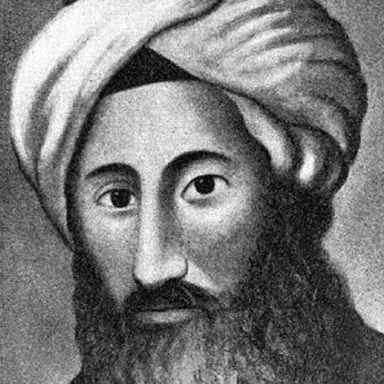
Rabbenu Chaim Yosef David Azulai (the Chida)
14 min read2,742 words
Summary
The text surveys the many-sided figure of Rabbi Chaim Yosef David Azulai (the Chida), a Jerusalem sage of the eighteenth century who served as a cultural and intellectual bridge between the world of tradition and the early modern age. The article describes how the Chida turned his journeys across the world as an emissary (shadar) into an unprecedented research opportunity, in the course of which he documented thousands of rare manuscripts and preserved Jewish memory through his monumental work "Shem ha-Gedolim." Alongside his work as a bibliographer and historian, the text emphasizes his halakhic innovation based on textual findings and his mystical depth as a Kabbalist who made the teaching of secrets accessible to the general public. Ultimately, the source presents the Chida as a "chakham kolel" (a comprehensive sage) who combined deep religious commitment with broad scientific curiosity, a figure whose influence on the world of Torah and scholarship remains decisive to this day.
Architect of Memory and Architect of Halakha: The Life, Thought and Scholarly-Torah Innovation of Rabbenu Chaim Yosef David Azulai (the Chida)
The figure of Rabbenu Chaim Yosef David Azulai, known by the acronym the Chida, stands as one of the most fascinating and influential intellectual junctions in the history of the Jewish people in the early modern age. The Chida was not only a halakhic decisor or a Kabbalist, but represented a new type of "chakham kolel" (comprehensive sage) – a figure combining traditional Torah depth with a historical, bibliographic and scientific consciousness that was ahead of its time.[1, 2] His work in the eighteenth century, a period in which the Jewish world underwent upheavals between East and West and between tradition and Enlightenment, served as a living bridge between the scattered communities of Israel and between the world of hidden manuscripts and the world of modern printing.[3, 4] This report will analyze in depth the layers of his work, from his roots in Jerusalem, through his intercontinental journeys, to the bibliographic and halakhic revolution he wrought in his monumental works.
Chapter 1: The Roots of Growth – Jerusalem as the Cradle of Creativity
The Chida's growth took place within the charged spiritual space of Ottoman Jerusalem in the eighteenth century. He was born in 5484 (1724) into a family with a long tradition of spiritual leadership, a descendant of Rabbi Avraham Azulai, author of the "Chesed le-Avraham."[1, 5] The circumstances of his birth, as preserved in family traditions, hint at the miracle that accompanied his life; the Chida was born a premature infant of seven months, and at first it was thought that he had not survived, until the resourcefulness of his grandmother restored his soul to him.[3]
The education he received in Jerusalem was multidisciplinary in essence. He was not content with standard Talmudic study but plunged into the depths of Kabbalah, grammar and history already in his youth.[1] The heavy poverty that characterized the community in Jerusalem did not prevent him from total devotion to study, as he abstained from the pleasures of the world and ate "lechem nekudim" (dry, crumbled bread) on weekdays.[3] At only 17 years of age, an age at which most of his contemporaries had not yet formed their method, he had already composed his first halakhic book, "Sha'ar Yosef" on tractate Horayot, a work attesting to phenomenal mastery of the sources of the Rishonim and the Acharonim.[3]
His Teachers and Their Influence on the Formation of His Thought
The Chida merited to study with figures who became pillars of the Sephardic and the all-Jewish Torah world. The influence of his teachers produced in him a synthesis of diverse methods of study, from Jerusalem casuistry to refined Lurianic mysticism.[1, 2]
These circles of influence created in the Chida a consciousness of being "a link in the chain." Study with the holy Or ha-Chaim instilled in him interpretive confidence, while the connection to the "Beit El" yeshiva of the Kabbalists under the leadership of the Rashash gave his thought the metaphysical dimension.[1, 2] This combination is what enabled him, later on, to write naturally about halakha alongside Kabbalah, and about bibliography alongside homiletics.
Chapter 2: The Institution of Emissaries (Shadarut) as an Engine of Historical and Bibliographic Research
The most significant part in shaping the Chida's image as a historian and bibliographer stemmed from his role as an emissary of the rabbis (shaliach de-rabbanan, "shadar"). This mission, which was originally intended to collect funds for the communities of Hebron and Jerusalem who were in distress, became in his hands a research journey encompassing the world.[3, 4, 6] The Chida set out on two main missions: the first began in 1755 toward Egypt and Tunisia, and the second in 1773, which encompassed most of Europe, including France, England, Holland and Italy.[3, 6]
During his wanderings, the Chida developed a methodology of visiting libraries. In every place he reached, he sought to examine the books and manuscripts found in the local collections.[1] His critical eye immediately identified rare writings that had never been printed. He used to copy passages, record the names of authors and document the historical chain of transmission of each work.[1, 4] This exposure to hidden treasures, whose very existence many of the sages of his generation did not know of at all, gave the Chida an enormous advantage in his halakhic and historiographical writing.[7]
Ma'agal Tov: A Travel Journal as Cultural-Social Documentation
His autobiographical work "Ma'agal Tov" is not merely a technical diary of stopping points, but a fascinating sociological document recording the encounter between the traditional rabbinic world and the Europe of the Age of Enlightenment.[3, 6] In his journal the Chida describes meetings with key political figures, foremost Louis XVI, king of France, alongside visits to cultural institutions such as the National Library of Paris and the palaces of Versailles.[6]
His descriptions include exceptional scientific curiosity; in Amsterdam he visits "cabinets of curiosities" containing stuffed animals and mummies, and records his impressions of these sights alongside profound halakhic discussions.[6] The contrast between the poverty of Jerusalem from which he sprang and the splendor of the royal courts of Europe did not shake his identity, but on the contrary – he used his standing as an ambassador of the Land of Israel in order to present the respectable face of Judaism to the nations of the world and to men of science.[2, 6] The travel journal also reveals the personal hardships entailed by the mission, such as the death of his wife in 5534 (1774) while he was in Tunis, an event that he sought to conceal in order to continue his mission without interruption.[3]
Chapter 3: The Bibliographic Revolution – Shem ha-Gedolim
The crowning achievement of his historiographical work is the book "Shem ha-Gedolim."[1, 4] Before the Chida, knowledge of the history of the sages of Israel and their works was scattered, partial and often corrupt. The Chida created for the first time an orderly bibliographic and biographical encyclopedia, based on eyewitness observation and on meticulous textual research.[4]
The work is built of two central parts:
- Ma'arekhet Sofrim: short biographies of the sages of Israel from the Geonic period up to the Chida's own generation, arranged in alphabetical order.[4, 8] This part is not content with dry details, but at times includes folklore, stories of the righteous and chronological corrections that refute historical errors that had taken root.[1, 3]
- Ma'arekhet Sefarim: a listing of thousands of Torah works, a description of their content, and an indication of the location of rare manuscripts.[4, 8] The importance of this part lies in the revelation of "hidden treasures"; the Chida mentioned works that saw the light of day only hundreds of years later, thereby ensuring their preservation in the national memory.[4, 7]
The Chida's methodology was dynamic. He did not see the work as a finished product, but added supplements and corrections to it over years, such as "Va'ad la-Chakhamim" and "Shulchan ba-Midbar."[4] In his work "Ha'alem Davar," he displayed intellectual daring when he pointed out errors in the identification of chronological sequences that had occurred among the great sages of Israel who preceded him, out of an understanding that accurate history is an essential tool for understanding halakha itself.[3]
Chapter 4: His Halakhic Thought – Between the Shulchan Arukh and the Textual Finding
The Chida's halakhic thought is characterized by a unique combination of conservatism and innovation. At the base of his method stands the principle of "accepting the rulings of Maran," which emphasizes the commitment to rule according to Rabbi Yosef Karo in the Shulchan Arukh as a decisive and final position.[9] However, the Chida's great innovation was the use of his bibliographic findings as an instrument of halakhic decision.
In his central halakhic books – "Birkei Yosef," "Machazik Berakha" and "Shiurei Berakha" – the Chida brings hundreds of citations from manuscripts of Rishonim and Acharonim that he saw in the libraries of Europe.[2, 3, 7] A prominent example of this is the bringing of the views of sages of earlier generations whose words were not known to the halakhic decisors who preceded him, which at times changed the accepted halakhic conception on that topic.[7] Thus, the Chida made bibliography the handmaid of halakha; knowledge of "Shem ha-Gedolim" enabled him to decide in "Birkei Yosef."[4]
Responsa Chaim Sha'al and Yosef Ometz: The Dynamics of Ruling
His books of questions and answers (responsa) reveal a decisor well aware of the changing reality of his generation. He deals with questions reaching him from all over the Jewish world, displaying exceptional mastery not only in the "revealed" but also in the "hidden."[3] In his rulings he often integrates the customs of the Kabbalists, but he is careful about the accepted rules regarding the relationship between halakha and Kabbalah: where the Talmud and the Shulchan Arukh are explicit, the words of Kabbalah cannot contradict them, but in a place of doubt or absence of decision, Kabbalah and the Zohar carry decisive weight.[9, 10]
Chapter 5: The Mystical Dimension – Kabbalah as a Compass of Existence
The Chida was a Kabbalist of the first rank, a member of the "Beit El" yeshiva of the Kabbalists and a disciple of the Rashash.[1, 2] For him, Kabbalah was not an esoteric field intended only for the chosen few, but an inner layer that should illuminate the service of God of every Jew. He worked to make Kabbalistic concepts accessible through prayer books and books of conduct.[1, 2]
His books "Petach Einayim" and "Marit ha-Ayin" are devoted to interpreting the aggadot of the Talmud by way of secret and Kabbalah.[1, 3] In these works, he uses letter combinations, gematriot and Kabbalistic allusions to lend metaphysical meaning to the simplest Talmudic texts.[1] His influence on the world of prayer is enormous; many prayer books were edited according to his rulings and intentions (the Siddur of the Chida), incorporating prayers that he himself composed, characterized by a poetic and moving language.[2, 3]
His mystical teaching is evident also in his books of ethics and conduct, such as "Avodat ha-Kodesh" and "Moreh ba-Etzba."[1, 3] In these works he outlines a course of daily spiritual conduct, combining halakhic precision with Kabbalistic intentions "for every soul." His approach was integrative: a person cannot be a Kabbalist without being well versed in halakha, and halakha is not complete without being illuminated by the light of the secret.[1]
Chapter 6: The Torah Encyclopedist – Devash le-Phi and Midbar Kedumot
The Chida's ability to organize knowledge is expressed also in his encyclopedic works "Devash le-Phi" and "Midbar Kedumot."[1, 3] In these works, he gathered hundreds of concepts from throughout the literature of the Sages, Kabbalah and Midrash, and arranged them in alphabetical order. Each entry includes a compilation of diverse sources, explanations and novel insights of the author.[1]
This work reflects the Chida's conception of the world of Torah as a single, comprehensive system in which all the pieces of the puzzle fit together.[1] The alphabetical order was not merely a technical tool, but an expression of a desire to make Torah knowledge accessible and organized in an era of information flooding. In these books he also incorporates "folk tales" and historical biographies, displaying a critical sense to distinguish between reliable tradition and one that "cannot be relied upon."[3]
Chapter 7: Writing Style and Book Titles – "The Human Body" as a Symbol
A unique hallmark of the Chida is his tendency to call his books by names connected with the organs of the human body, usually in combination with his name "Yosef."[1, 3] This phenomenon is not accidental; it expresses a profound conception in which the Torah is not merely a collection of external laws, but a "living organism" parallel to the human body.
- Birkei Yosef (literally "Yosef's knees"): hints at the bending of the knees before the Torah and halakha.[1, 3]
- Moreh ba-Etzba ("Pointing with the Finger"): direct and focused guidance in the daily deed.[3]
- Petach Einayim ("Opening of the Eyes"): opening of spiritual vision for understanding the inner dimension of the Torah.[1]
- Kesher Gudal ("A Large Knot"): tightening the bond between study and practice.[3]
- Zeroa Yamin ("The Right Arm"): demonstrating the strength of Talmudic and ethical study.[1]
His writing style is characterized by high informational density alongside personal modesty. He makes extensive use of acronyms and abbreviations, but his language is always fluent and clear. He is not afraid to admit when he does not know something, and frequently cites others with great respect, even when he disagrees with them.[2, 3]
Chapter 8: His Final Years and His Influence over the Generations
The Chida's last years were spent in Livorno in Italy, a city that became through him a worldwide Torah center.[1, 5] There he continued to write feverishly and to print dozens of his books, earning unprecedented admiration from Jews and gentiles alike.[2] He died on the 11th of Adar 5566 (1806) at the age of 82, leaving behind a literary legacy that few in the history of the Jewish people have equaled.[3, 5]
The Chida's influence did not fade over the years; it only grew stronger. In the nineteenth and twentieth centuries, his books became cornerstones of yeshiva study and of halakhic ruling. "Shem ha-Gedolim" became the central working tool of Jewish bibliographers and historians.[4] The bringing up of his bones to Jerusalem in 1956, 150 years after his death, was a national event that closed a historical circle: the emissary who went out from Jerusalem to save its community returned to it as a symbol of unity and memory.[3]
The Chida in Modern Scholarship
Contemporary scholars see in the Chida the harbinger of the "Torah Enlightenment." He proved that it is possible to be absolutely faithful to halakha and Kabbalah, and at the same time to be a polymath open to science, history and the culture of the world.[4, 6] The book of Oded Cohen, "Sovev Holekh ha-Ruach," emphasizes the cultural spaces in which the Chida operated and analyzes how his journeys shaped his global worldview.[4, 6]
Summary and Conclusions
Rabbenu Chaim Yosef David Azulai was a Renaissance figure within the boundaries of the Torah world. His work teaches that historical memory does not stand in contradiction to religious faith, but on the contrary – it grants it depth and validity. Through "Shem ha-Gedolim" he gave the Jewish people its spiritual genealogy; through "Birkei Yosef" he connected halakhic ruling to its earliest sources; and through "Ma'agal Tov" he showed how a Torah scholar can walk the corridors of Versailles and the libraries of Paris without losing one iota of his righteousness and his mission.
The Chida left behind a rich and varied Jewish bookcase touching every aspect of life – from personal conduct to national history. He remains an exemplary figure of scholarship, intellectual diligence and public devotion, constituting a bridge of light between generations and between cultures. His legacy is a constant call to combine erudition with criticism, and tradition with the unceasing search for the truth hidden between the pages of books and in the depths of history.
Sources10
- 1.חיים דוד אזולאי | מקורות מתוך ספריית ספריא, sefaria.org.il/topics/hayyim-joseph-david-azulai
- 2.חיים יוסף דוד אזולאי – ויקיפדיה, he.wikipedia.org/wiki/חיים_יוסף_דוד_אזולאי
- 3.רבי חיים יוסף דוד אזולאי – ויקישיבה, yeshiva.org.il/wiki/index.php/רבי_חיים_יוסף_דוד_אזולאי
- 4.שם הגדולים - ויקיפדיה, he.wikipedia.org/wiki/שם_הגדולים
- 5.מחבר:חיד"א - ויקיטקסט, he.wikisource.org/wiki/מחבר:חיד"א
- 6.מעגל טוב – ויקיפדיה, he.wikipedia.org/wiki/מעגל_טוב
- 7.שם הגדולים לחיד"א - 2 כרכים - הוצאת המאור, hamadaf-y.co.il/חנות/גמרא-ומשניות/עוד-במשניות-גמרא-ומפרשים/שם-הגדולים-לחידא-2-כרכים-הוצאת-המאור/
- 8.שם הגדולים, מערכת ספרים | ספריית ספריא, sefaria.org.il/Shem_HaGedolim,_Maarekhet_Sefarim
- 9.קבלת הוראות מרן - ויקיפדיה, he.wikipedia.org/wiki/קבלת_הוראות_מרן
- 10.משקל הזוהר והקבלה בהלכה - מנחת אשר, minchasasher.com/he/shiur/parsha-vort/משקל-הזוהר-והקבלה-בהלכה/