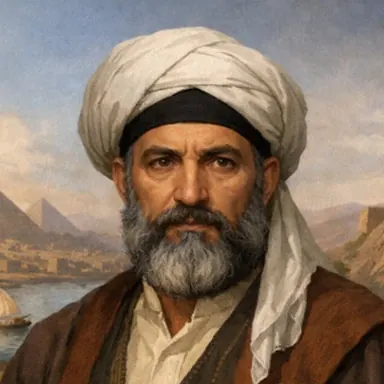
Rav Saadia Gaon: Architect of Rabbinic Judaism in an Age of Transition
14 min read2,727 words
Summary
The text describes the figure of Rav Saadia Gaon (Rasag) as the one who reshaped rabbinic Judaism in the tenth century, in a period of the decline of the old centers and of external threats from the Karaites and from rationalist philosophy. The source surveys his multidisciplinary Torah and intellectual enterprise, from establishing Hebrew grammar and translating Scripture into Arabic (the "Tafsir"), to composing the first halakhic monographs and the prayer book. A central axis of the text is the synthesis of Torah and philosophy in his book "Beliefs and Opinions," in which Rasag held that there is no contradiction between reason and religion, and thereby laid the foundation for medieval Jewish thought. Beyond his scholarly achievements, the author presents Rasag's combative leadership, as he worked to preserve national unity in the dispute over the calendar and defended the rabbinic tradition resolutely against its radical critics.
The Philosophy, Leadership and Torah Enterprise of Rav Saadia Gaon: Architect of Rabbinic Judaism in an Age of Transition
Introduction: The Tenth Century and the Collapse of the Old Order
In the tenth century CE the Jewish world stood before one of the most turbulent and complex periods in its history. The Torah centers in Babylonia, which had led the nation since the closing of the Talmud, began to lose their vitality and their influence. The social and political structure of the leadership of the "Exilarchs" and the "Geonim" suffered from internal erosion, while outwardly traditional rabbinic Judaism faced a multi-front assault. On the one hand, the rise of the Karaite movement threatened to undermine the authority of the Oral Torah; on the other, Muslim philosophy (the Kalam) and the Arabic translations of Greek philosophy put traditional faith to the test of rationalism; and thirdly, radical critics such as Hiwi al-Balkhi hurled piercing questions at biblical morality and at the reliability of the sacred text.[1, 2]
Within this leadership vacuum appeared the figure of Rav Saadia ben Yosef al-Fayyumi (Rasag). Rasag was not merely another Gaon in the chain of leadership, but a thinker and religious politician who redefined the boundaries of Judaism.[3] His work went beyond the narrow confines of the "four cubits of halakha" and extended over all fields of knowledge: linguistics, grammar, philosophy, biblical interpretation, poetry and prayer. He was the first to give Judaism a systematic, scientific structure, and in doing so became the architect of Jewish thought in the Middle Ages.[3, 4]
Chapter 1: The Formative Years and the Wanderings
Rasag was born in the Hebrew year 4652 (882 CE) in Fayyum in Egypt, a fact that gave him the epithet "al-Fayyumi."[3] His Egyptian origin was of great significance; unlike the sages of Babylonia who grew up within the closed atmosphere of the yeshivas, in Egypt Rasag was exposed to a rich cultural world that included Hellenistic, Islamic and Karaite influences.[1] His family was considered distinguished, and certain sources even link his lineage to the Tanna Rabbi Chanina ben Dosa.[3, 5]
Already in his youth Rasag revealed himself as an extraordinary prodigy. At the age of only twenty he composed the first edition of the "Egron," a comprehensive Hebrew dictionary intended to assist poets and paytanim.[6] At the age of twenty-three he had already published his first polemical works against the Karaites, a step that attested to his early sense of mission and to his readiness to confront the forces threatening the tradition.[7]
Rasag's life course is filled with wanderings, reflecting the dynamism of the Jewish world under the Abbasid caliphate. From Egypt he moved to the Land of Israel, where he studied with the sages of Tiberias, the leading center of the Masoretes at that time, headed by Aaron ben Asher.[3] This encounter was decisive for Rasag, for there he acquired the scientific tools for the study of language and the Masorah, tools that served him later in his translation of Scripture and in his struggle against the Karaites.[3, 8] After a stay in Syria, Rasag arrived in Babylonia, where he became the most central figure in Torah leadership.[3]
Chapter 2: The Ben Meir Controversy and the Rescue of National Unity
One of the most fateful hours in Rasag's career took place in the Hebrew year 4682 (922 CE), before he was appointed Gaon.[9] Rabbi Aaron ben Meir, head of the yeshiva of the Land of Israel, declared a change in the Jewish calendar, claiming exclusive authority of the sages of the Land of Israel over the sanctification of the new month.[9] This change threatened to split the Jewish people into two camps that would celebrate the festivals on different days—a situation that would have led to an irreparable rift in religious and social life.[9]
Rasag, who recognized the danger, took his place at the front of the campaign against Ben Meir. He conducted extensive correspondence with him and published letters to all the communities of Israel, in which he proved in mathematical and halakhic detail the correctness of the Babylonian calculation.[3, 9] The dispute centered on the question of the "postponement of molad zaken"—whether one must wait an additional 642 parts beyond midday in order to postpone Rosh HaShanah.[9]
Rasag's victory in this dispute was not merely a technical victory; it fortified the authority of the Babylonian yeshivas as the center of leadership of the Jewish world and proved that halakhic and scientific truth prevails over claims of geographical primacy.[9] This activity is what paved his way to his appointment as Gaon of the Sura yeshiva in 928 by the Exilarch David ben Zakkai.[3]
Chapter 4: The Struggle Against the Sects and the Critics of Scripture
Rasag's entry into the post of Gaon of Sura marked the beginning of a period of flourishing for the yeshiva, but also opened a broad polemical front. Rasag saw himself as the "guardian of the walls" of rabbinic Judaism, and he acted systematically against any element that was perceived in his eyes as threatening the continuity of the tradition.[1, 7]
The War on the Karaites
The Karaite movement, led by the successors of Anan ben David, gathered great strength in Egypt and in the Land of Israel.[1] The Karaites denied the Oral Torah and sought to return to the biblical text alone. Rasag understood that it was not possible to be content with condemnations, and that the Karaites had to be fought with their own tools: interpretation, grammar and philosophy.[7] He composed seven polemical books, among them the "Book of the Refutation of Anan," in which he proved that the Written Torah cannot be applied without an explanatory tradition (for example, the instructions for slaughter or the details of the commandments).[7, 10] His central claim was that language and tradition are an inseparable part of divine revelation.[2]
Confronting Hiwi al-Balkhi
Hiwi al-Balkhi was a radical figure who composed a book containing 200 objections to the Torah, based on logical and moral contradictions.[1] Hiwi proposed natural explanations for miracles (such as the splitting of the Red Sea as a result of the tides) and attacked the concept of divine justice.[1] Rasag answered him in the book "Responses to Hiwi," in which he refuted his claims one by one, using sharpened mockery and profound philosophical analysis.[1] In this way Rasag prevented rationalist skepticism from eroding traditional faith among the young educated people of the period.[1]
Chapter 5: "Ha-Nivchar ba-Emunot ve-De'ot" (The Chosen Book of Beliefs and Opinions)—The First Synthesis
Rasag's masterpiece, "Sefer HaEmunot veHaDe'ot" (Kitab al-Amanat wa-al-I'tiqadat), is the first systematic attempt in Jewish history to place the religion of Israel on philosophical foundations.[3, 4] The book, which was written in Judeo-Arabic and translated into Hebrew by Judah ibn Tibbon, was intended to resolve the perplexity of believers who had been exposed to foreign philosophical currents.[2, 11]
- Rasag established a revolutionary principle: "There is no contradiction between reason and the Torah."[2] In his view, God gave man reason so that he would arrive at the same truths that appear in the Torah, except that the Torah shortens the way and protects man from errors.[2] He developed a methodology based on four sources of knowledge:
- The senses: Knowledge that comes from direct observation of the world.[2]
- Reason: First intelligibles and logical inferences.[2]
- Logical necessity: Conclusions that are required in order to prevent a contradiction.[2]
- Reliable tradition: The revelation at Sinai and prophecy.[2]
The Ten Treatises and the Grounding of Faith
The book is structured as a complete circle of worldview, from creation to the end of days.[2] Rasag uses the method of the "Kalam"—proving the existence of the Creator from the createdness of the world.[2] He argues that since the world is finite, composite and subject to change in time, it must have an eternal Creator who is not corporeal.[2]
One of the central innovations in the Second Treatise is the use of Aristotle's ten categories to prove the unity of God.[14, 15] Rasag argues that God is not subject to the categories of time, place, quantity or quality, since all of these characterize only created beings.[2, 13] In this way he succeeded in negating the anthropomorphism (the attribution of a body to God) that appears in biblical verses, and in interpreting them as merely human modes of expression.[13]
Chapter 6: The Linguistic and Interpretive Revolution
For Rasag, the Hebrew language was not merely a tool of communication, but the basis of national identity and the cornerstone of understanding the Torah.[16] He is regarded as the first Hebrew grammarian of the Middle Ages who placed linguistic research on a comparative scientific basis.[8]
The "Egron" and the Science of Grammar
His book the "Egron" was the first Hebrew dictionary.[6] It was written in two editions: the first in Hebrew in Egypt, and the second in Arabic in Babylonia.[6] Rasag sought to protect the purity of the language from corruptions that had penetrated it as a result of the influence of Arabic and Aramaic.[8] He developed the theory of the root, investigated word endings and laid the foundation for the grammarians who came after him, such as Menachem ben Saruq and Yehuda Hayyuj.[8]
Another work, "Seventy Single Words," demonstrated his interpretive genius: Rasag interpreted words that appear once in Scripture by comparing them with the language of the Sages in the Mishnah and the Talmud, and thereby proved the inseparable connection between the Written Torah and the Oral Torah.[17]
The "Tafsir"—The Translation of Scripture into Arabic
His greatest interpretive enterprise is the "Tafsir"—the translation of the Torah and the Tanakh into Judeo-Arabic.[3, 11] Rasag understood that the Arabic-speaking masses of Jews needed a translation that would be accessible, but would also protect faith.[11] His method of translation included:
- Preferring meaning to the word: Rasag did not translate word for word, but preferred a conceptual translation that clarifies the intention of the verse.[7, 11]
- Removing corporealization: Changing verbs attributed to God in order to prevent errors of belief.[13]
- Integrating commentary within the translation: Adding connecting words and clarifications in the text itself.[7]
The "Tafsir" became an inalienable asset of the Jews of Islamic lands, and especially among Yemenite Jewry, where it serves to this day as the most authoritative translation.[7]
Chapter 7: Reform in Halakhic and Liturgical Literature
In the field of halakha, Rasag carried out a methodological revolution. Until his days, halakhic rulings were written as commentaries on the Talmud or as brief responsa to questions.[1] Rasag was the first to compose halakhic monographs—books devoted to a single subject and covering it from all sides in a systematic manner.[16] Among these works one finds the "Book of Inheritances," the "Book of Deposits" and the "Book of Testimonies and Documents."[16] This method directly influenced the structure of Maimonides' "Mishneh Torah" centuries later.[18, 19]
The Siddur of Rasag
Rasag compiled a comprehensive prayer book, differing from the prayer books that preceded it (such as the siddur of Rav Amram Gaon) in its linguistic and philosophical emphasis.[3] The siddur includes not only the text of the prayers, but also "bakkashot"—long philosophical piyyutim composed by Rasag himself, which combine praise of God with a description of the structure of the world and of the soul.[3] He took care to provide a short and precise text, and added instructions and explanations in Arabic for the worshippers.[3]
Chapter 8: The Political Crisis and the "Sefer HaGalui"
Despite his tremendous success, Rasag's path was not free of internal conflicts. In 930 a severe conflict broke out between him and the Exilarch David ben Zakkai.[7] The dispute began over a ruling in an inheritance matter in which Rasag suspected the Exilarch of bribery.[7] The confrontation escalated to the point that the Exilarch deposed Rasag, and Rasag for his part deposed the Exilarch and appointed his brother.[7]
During the seven years of his exile in Baghdad, Rasag composed the "Sefer HaGalui" (Kitab al-Alfat).[5, 20] This is an extraordinary polemical and personal work, written in biblical language with vocalization and cantillation marks.[20] In this book Rasag defended his positions, detailed his family lineage and attacked his opponents.[5, 20] The use of a biblical style aroused fierce criticism from the sages of Babylonia, who saw in it an improper prophetic pretension, but for Rasag it was a tool for expressing his supreme moral and Torah authority.[7, 20]
Chapter 9: His Legacy and Influence Across the Generations
Rasag's work changed the face of Judaism beyond recognition. He was the first to bridge the world of Torah and the science and philosophy of his time, without giving up a single jot of the tradition.[2] His famous declaration, "Our nation is a nation only through its Torahs" [2, 16], became a symbol of the capacity of the Jewish people to survive in exile through adherence to the spiritual heritage.[16]
His influence is evident in every field:
- In halakha: His order and systematic method laid the foundations for the great halakhic codes.[18]
- In philosophy: He opened the door to the rationalist Jewish thought that reached its peak with Maimonides (Rambam).[21]
- In language: He saved the Hebrew language from oblivion and made it a subject of scientific research.[8]
- In interpretation: His translation and commentary made the Tanakh a living book, accessible to millions of Jews.[7]
Rav Saadia Gaon died in the Hebrew year 4702 (942 CE), but his work continues to resonate to this day.[3] He was a figure of transition, "the chief of the speakers in every place," who succeeded in building a firm bridge between the Talmudic past and the scientific and philosophical future of the people of Israel.[1, 20]
Summary and Scholarly Assessment
Rav Saadia Gaon stands as an unprecedented figure in the history of Israel, a kind of "polymath" who preceded the Renaissance by centuries. His genius was expressed not only in the breadth of his knowledge, but in his ability to synthesize between worlds that were perceived as opposed: reason and faith, East and West, Torah and science.[1, 2] In a period of existential threats to the integrity of the nation, he knew how to use the most modern logical and linguistic tools in order to prove the eternity of Judaism.[1, 16] His work is testimony to the power of the Jewish spirit, capable of renewing itself without losing its roots.[2] Rasag did not merely defend Judaism; he redefined it for generations of believers and educated people, and thereby ensured the continuity of the rabbinic tradition in the face of the challenges of the time.[3, 7]
Sources21
- 1.אחרון הגאונים וראשון הפילוסופים: דמותו ופועלו של רבי סעדיה גאון - הידברות, hidabroot.org/article/1202924
- 2.ספר האמונות והדעות – ויקיפדיה, he.wikipedia.org/wiki/ספר_האמונות_והדעות
- 3.רב סעדיה גאון – ויקישיבה, yeshiva.org.il/wiki/index.php/רב_סעדיה_גאון
- 4.רב סעדיה גאון – ויקיפדיה, he.wikipedia.org/wiki/סעדיה_גאון#ספר_האמונות_והדעות
- 5.Saadia Gaon - Wikipedia, en.wikipedia.org/wiki/Saadia_Gaon#Works
- 6.האגרון - ויקיפדיה, he.wikipedia.org/wiki/האגרון
- 7.רב סעדיה גאון - ויקיפדיה, he.wikipedia.org/wiki/רב_סעדיה_גאון
- 8.תקופת הביניים של העברית - ויקיפדיה, he.wikipedia.org/wiki/תקופת_הביניים_של_העברית
- 9.מחלוקת רב סעדיה גאון ובן מאיר - ויקיפדיה, he.wikipedia.org/wiki/מחלוקת_רב_סעדיה_גאון_ובן_מאיר
- 10.ר' סעדיה גאון על בראשית, פתיחה | ספריית ספריא, sefaria.org.il/Saadia_Gaon_on_Genesis,_Foreword
- 11.Sa'adia Ben Joseph, Gaon | Encyclopedia.com, encyclopedia.com/religion/encyclopedias-almanacs-transcripts-and-maps/saadia-ben-joseph-gaon
- 12.Saadya [Saadiah] (Stanford Encyclopedia of Philosophy), plato.stanford.edu/entries/saadya/
- 13.Saadia Gaon - Wikipedia, en.wikipedia.org/wiki/Saadia_Gaon#Philosophy
- 14.What Are Aristotle's Categories? - YouTube, youtube.com/watch?v=OFL8KoHvoSw
- 15.הקטגוריות - ויקיפדיה, he.wikipedia.org/wiki/הקטגוריות
- 16.אחד הגאונים הבולטים, החדשנים והמקוריים ביותר: הכירו את רבי סעדיה גאון - בית חבד, he.chabad.org/library/article_cdo/aid/3085086/jewish/-.htm
- 17.רבי סעדיה גאון – כ"ו באייר - המאיר לארץ, hameir-laarets.org.il/hilulots/רב-סעדיה-גאון/
- 18.כללי מניית המצוות של הרמב"ם* – הרב מיכאל אברהם, mikyab.net/כתבים/מאמרים/כללי-מניית-המצוות-של-הרמבם/
- 19.תרי"ג מצוות - ויקיפדיה, he.wikipedia.org/wiki/תרי"ג_מצוות
- 20.רב סעדיה גאון במוקד של פולמוס בי־-רבני בבגדאד : ספר הגלוי של הגאון ושני ספרי השגות של ר' מבשר עליו, ebooks.psik.io/book/10993/רב-סעדיה-גאון-במוקד-של-פולמוס-בי־-רבני-בבגדאד--ספר-הגלוי-של-הגאון-ושני-ספרי-השגות-של-ר'-מבשר-עליו
- 21.Untitled, biu.ac.il/js/tora/saadya_maimonides.html