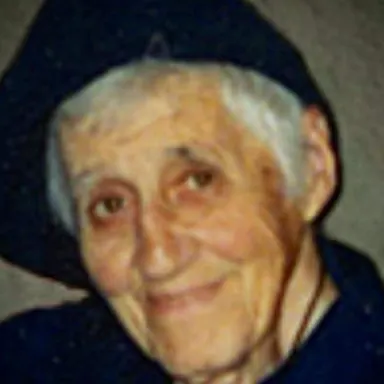
The Work, Torah Doctrine and Pedagogical Methodology of Professor Nechama Leibowitz: An In-Depth Analysis of the Revolution in Bible Study in the Modern Generation
16 min read3,117 words
Summary
The text surveys the revolutionary work of Professor Nechama Leibowitz, an exemplary figure who succeeded in bridging the world of academia and the Jewish tradition and reshaped the teaching of Scripture in the twentieth century. The source details her unique pedagogical methodology, based on making the learner active through the "Gilyonot" (study sheets) enterprise and the "What's Bothering Rashi?" method of analysis, alongside her insistence on interpretive principles of fidelity to the text and to the tradition of the generations. Through a survey of her life, the prizes she received and her personal letters, the text charts her image as a "talmidat chakham" (a female Torah scholar) who won appreciation across sectors, while emphasizing her conservative positions on halakha and feminism on the one hand, and her intellectual openness on the other. Finally, the article presents her extensive literary legacy and her continuing influence on the construction of a modern Jewish identity that combines intellectual depth with a deep religious and Zionist commitment.
Professor Nechama Leibowitz (1905–1997) reshaped the modes of study and teaching of Scripture and of traditional Jewish interpretation in the twentieth century.[1, 2] As a scholar, a commentator and a teacher, she succeeded in bridging the gap between the academic-philological world and the Orthodox world of Torah and state religious education.[1, 3] Her work spanned decades of teaching, writing and active correspondence with thousands of learners in Israel and the Diaspora, and gave her an exceptional standing as a supreme spiritual and educational authority.[2, 4, 5]
Introduction: Stations of Her Life, Her Education and Prizes of Recognition
Nechama Leibowitz was born on the 3rd of Elul 5665 (3 September 1905) in the city of Riga in Latvia.[1, 2] She grew up in a rich intellectual environment, and acquired a higher academic education at leading universities in Germany, among them the Humboldt University of Berlin and the University of Marburg, and later at Tel Aviv University.[1] In 1930, at the age of 25, she immigrated to the Land of Israel, settled in Jerusalem and devoted her life to teaching Torah, Prophets and Writings.[2] In that same year she married her uncle, Lipman Leibowitz, who was 29 years older than she.[1] The couple had no children, and Leibowitz later testified about him that he understood her deeply and that without him she would not have reached her tremendous achievements.[1, 6]
Throughout her life Leibowitz received unprecedented public recognition, reflected in a long series of prestigious prizes awarded to her for her scientific and educational contribution.[1]
Leibowitz died in Jerusalem on the 5th of Nisan 5757 (12 April 1997) at the age of 92.[1, 2] Her personal archive was deposited in the National Library in September 2021, thus opening another window onto the study of her methods and her correspondence.[1]
Her Torah Doctrine, Hermeneutics and the Controversies That Accompany It
Nechama Leibowitz's Torah doctrine is characterized by deep fidelity to the biblical text and to the Jewish interpretive tradition, alongside the use of modern philological and literary tools.[1, 3, 6] Her interpretive conception rests on the ability to uncover the peshat (plain meaning) through careful study of the derash (homiletic interpretation) and of the commentary of the Rishonim and Acharonim.[6, 7]
Her Attitude to Biblical Criticism and to the Translation of Languages
Leibowitz categorically rejected the approach of biblical criticism, in which she saw "an attempt to take from the people of Israel what is theirs."[6] She argued that these scholars and critics suffer from a basic misunderstanding of the text, since many of them do not even master the Hebrew language thoroughly.[6] In a conversation with Dr. Yochanan Breuer about his father, Rabbi Mordechai Breuer, Leibowitz wondered what he had found in these biblical critics, and noted that after reading them in their original language, German, she had realized that their words were "sheer nonsense."[6]
The Controversy over "Direct Reading" versus Mediated Reading
One of the central principles in Leibowitz's doctrine is that the biblical text must not be approached directly, without the mediation of the interpretive tradition.[3] This principle stood at the center of a sharp controversy between her and Rabbi Yoel Bin-Nun, who accused her of having no direct reading of the text but only through intermediaries.[3] Leibowitz answered him resolutely: "If you read without commentaries, then you are the commentator, and are you better than all the commentators?!"[3] In her view, the pretension of reading the Torah detached from the great commentators who preceded us was perceived as arrogance and even as impudence.[3]
This outlook is closely related to the broad controversy over the study of Tanakh "at eye level."[8] Rabbi Shlomo Aviner, head of the Ateret Yerushalayim yeshiva and rabbi of the settlement of Beit El, explained that a conception of Tanakh "below eye level" creates the illusion that the modern reader stands above the figures of Scripture and can criticize them as if they were ordinary people with weaknesses similar to his own.[8] According to Leibowitz's approach, which was echoed in the words of her supporters, the aspiration to study the greatest figures of the nation must be directed at raising the eyes upward, out of an understanding that even a criticism that the Sages direct at figures of Scripture springs from their pure and holy heart, and not from a modern egalitarian comparison.[8]
Intellectual Openness versus Halakhic Devotion
Despite her religious conservatism and her opposition to reforms, Leibowitz displayed astonishing methodological openness.[6] She integrated into her writings and teaching insights of non-Orthodox scholars when she found in them an interpretive truth that defends the integrity of Scripture.[6] A prominent example of this is her attitude toward the commentator Benno Jacob, who was an extreme Reform Jew, anti-Zionist, and who transgressed many commandments.[6] Leibowitz declared openly that she had learned from his books more than from books written by devout and wholehearted people, because his arguments and proofs against biblical criticism were the best and the most well-founded ever written.[6] She emphasized that together with her colleagues, such as R. David Carlebach, who taught with her at the seminary in Jerusalem, and Yissachar Jacobson, they had opened their eyes to see "the Torah in its truth" thanks to Jacob's studies.[6]
Her Pedagogical Work and the Methodology of the Gilyonot
Nechama Leibowitz's educational revolution did not take place only in the academic halls, but reached every home in Israel through the innovative method of study that she developed.[1, 2] Leibowitz left a deep imprint on the teaching of Tanakh in schools and among adults, emphasizing making the learner active and developing meaningful memory and understanding.[3]
The Weekly Gilyonot Enterprise
In 1942 Leibowitz began distributing weekly stencil sheets that included complex and challenging questions on the weekly Torah portion.[1, 4] These sheets, popularly called "gilyonot" or "pages," were sent to hundreds and thousands of students from every part of the social spectrum.[1, 2, 4] Study through the gilyonot was based on a model of active learning and two-way correspondence: the learners answered the questions in writing, sent their answers back to her, and she read them, corrected them, and returned the pages with personal comments and corrections.[1, 4] This enterprise became her trademark and made the study of Tanakh and commentary accessible to the masses of the House of Israel.[1] The gilyonot were born, among other reasons, out of a need felt by her students, who sensed at the end of the school year that they had not learned enough from her; in response, Leibowitz sent them personal envelopes with questions, which developed over the years into a large-scale distribution enterprise.[4]
The "What's Bothering Rashi?" Method
The most famous methodological question in her writings and gilyonot is "What's bothering Rashi?"[1, 6] This question was intended to uncover Rashi's interpretive motive, on the basic assumption that Rashi brings homilies or explanations only in order to resolve a genuine difficulty that arises in the plain meaning of Scripture.[1, 6] This way of study required learners to compare verses, to examine the syntactic structure and to identify the gaps in the text that the commentator seeks to reconcile.[1, 7]
The Dynamics of the Frontal Lesson and Her Opposition to Passive Lectures
In her frontal lessons Leibowitz implemented a pedagogy of participation and activity.[9] She categorically rejected the concept of a "lecture," defining a lecturer as one who states his ideas to an audience that has come to listen to him passively.[9] Leibowitz demanded two strict threshold conditions of her students: to arrive on time and to come with a Tanakh.[9] At the beginning of each series of lessons she used to question her students about their place of residence, their occupations and mutual acquaintances, in order to create a warm, participatory and caring space of discourse, in which the learners express their opinions and discover the Torah for themselves.[9]
The Status of Women in the Beit Midrash: Between "Talmidat Chakham" and Feminism
The rise in the status of women in the world of Torah study encountered, throughout history, significant halakhic difficulties and objections.[10, 11] The Mishnah in tractate Sotah presents the position of Rabbi Eliezer that "whoever teaches his daughter Torah teaches her tiflut" (explained by Maimonides (Rambam) as something devoid of sense, and by other commentators as licentiousness).[10, 11] The Jerusalem Talmud tells of a wealthy matron who asked Rabbi Elazar a question about the reason for the incident of the Golden Calf, and he refused to answer her, saying "A woman's wisdom is only in the spindle."[10, 11] When his son Hyrcanus remarked to him that he had lost a great deal of money because of her anger, Rabbi Elazar replied: "Let the words of Torah be burned, but let them not be delivered to women."[10, 11]
Maimonides (Rambam) ruled that a woman who has studied Torah has a reward, but it is less than the reward of a man because she was not commanded, and he added that the Sages commanded not to teach girls Torah because most of them are not inclined to learn but turn the words of Torah into foolishness.[10] Rabbi Yehuda HeChasid, in Sefer Chasidim, distinguished between the depth of the Talmud, the secrets of the Torah and the reasons for the commandments, which should not be taught to women and minors, and practical laws and rulings (such as the laws of Shabbat) which must be taught so that they know how to observe the commandments.[10, 11]
Modern developments led to a deep conceptual change. Yeshayahu Leibowitz, Nechama's brother, argued that keeping women away from Torah study in our times removes Judaism from the shared spiritual reality and may destroy religious society.[10] Today, the Torah education of girls should be equal in weight to their broad scientific education.[10, 11]
Nechama Leibowitz in practice became the most revered female model of the "talmidat chakham," a figure to whom the Torah seminaries for women cling to this day.[6] Her recognition as a Torah authority crossed sectors:
- Rabbi Zvi Yehuda Kook, when asked whether she could be invited to teach at the yeshiva, answered affirmatively and respectfully: "Nechama, certainly, she is a talmidat chakham."[6]
- Prof. Ephraim Elimelech Urbach declared that she was the only personality in our generation worthy and capable of taking upon herself the task of writing a new commentary on the Torah.[6]
Adina Bar-Shalom testified that her father, Maran Rabbi Ovadia Yosef, used to listen to Leibowitz's Torah lessons on the radio during his meals and urged his daughter to learn from her and from her ways.[6]
Despite her revolutionary standing, Leibowitz categorically rejected the feminist label and attempts to change halakha in a declarative manner.[6] When asked "What do the feminists want? What is their problem?", she responded with astonishment at the desire of women to adopt commandments they are not obligated in, such as putting on tefillin, and explained this in terms of halakhic and moral priorities: "If I have a short while free in the morning, should I put black cubes on my forehead, something I am not commanded to do, or hop over to my sick neighbor, to fulfill the commandment of visiting the sick, which I am commanded and obligated to fulfill?"[6, 11]
Family Landmarks, Zionist Outlook and Personal Relationships
Understanding Leibowitz's character requires an in-depth look at her family relationships and her sharp Zionist views.[6]
The Relationship with Her Brother, Prof. Yeshayahu Leibowitz
Alongside their mutual esteem as prominent thinkers in Riga and in Jerusalem, Nechama strongly distanced herself from some of her brother's extreme political statements.[6, 10] When Yeshayahu Leibowitz spoke out and described IDF soldiers as "Judeo-Nazis," Nechama responded with pain and sharpness: "He is indeed my brother, but a Jew must not speak this way."[6]
Uncompromising Territorial Zionism
Leibowitz's Zionist outlook was resolute, and she regarded living in the Land of Israel as a supreme moral and existential duty.[6] This position was expressed in a sharp and piercing letter she sent to a student of hers who had gone on an educational mission abroad.[6] Leibowitz sharply criticized the choice to leave the Land for the sake of economic or intellectual comfort overseas: "What will a person not do for a livelihood, especially if at that price he can sit abroad, as long as he does not sit in his own land among little Jews like us... Whatever you do there does not atone... All my hope is that your children will feel bad there... If only you would leave and return midway in disgust."[6] This letter illustrates the absolute negation of the Diaspora that she held, and her conception that there is no substitute for the spiritual and educational life of a Jew other than on the soil of the Land of Israel.[6]
The Literary Enterprise of Nechama Leibowitz
Leibowitz's writings, most of which were published by the Bialik Institute (Mossad Bialik), became foundational books in every beit midrash and in every Torah and academic library.[12, 13]
International recognition of her work was expressed, among other ways, in academic conferences held in her memory.[15] In January 2006, on the 100th anniversary of her birth, an international conference was held in cooperation with Yeshiva University in New York and Tel Aviv University, which dealt with study, interpretation and research in her doctrine, and presented parallel lessons in her method for the study of chapters of Prophets and Writings.[15]
Systemic Analysis and Deeper Meanings
1. Bridging the Hermeneutic Gap between Peshat and Derash
Leibowitz's Torah doctrine offers a sophisticated solution to one of the great challenges of biblical interpretation: the relationship between the historical-linguistic peshat and the derash of the Sages.[6] Whereas the academic world tended to see the derash as a late creation detached from the text, Leibowitz argued that the derash reveals "the depth of the plain meaning of Scripture."[6] This way of working does not cancel philology, but uses it to prove that the Sages and the Rishonim were sensitive to every letter, double expression or grammatical deviation in the text.[1, 7] The combination of biblical science (such as the use of the studies of Benno Jacob) with traditional interpretation created a unique hermeneutic synthesis that allows the modern learner to feel reverence for the tradition of the generations without giving up his intellectual tools.[6]
2. Active Pedagogy as a Tool for Constructing Identity
The gilyonot enterprise is not only a technical solution for the dissemination of knowledge, but a deep philosophical-educational conception.[1, 4] In an era in which knowledge flowed in one direction from the teacher to the passive student, Leibowitz turned things upside down.[4, 9] The demand that learners answer in writing, and the fact that she herself corrected thousands of sheets, turned the learners into active partners in the interpretive creation.[1, 4] This process developed in the learner independent thinking, originality and creativity.[4] Leibowitz's active pedagogy served as a powerful tool for constructing a meaningful Jewish identity, since it made the learner feel that the Torah belongs to him personally, and that his interpretive voice is heard and examined by the great figures of the generation.[3, 9]
3. Female Leadership Grounded in Conservative Halakhic Commitment
Leibowitz's image as a spiritual leader poses a complex challenge both to religious-conservative society and to the modern feminist movement.[6, 10, 11] She succeeded in breaking through the historical walls that prevented women from studying and teaching Torah at the highest levels, and won the appreciation of clearly conservative halakhic decisors such as Rabbi Zvi Yehuda Kook and Rabbi Ovadia Yosef.[6] This breakthrough was not made out of defiance or a demand for liberal equal rights, but out of a deep inner devotion to the study of Torah and the acceptance of the absolute yoke of the commandments.[6, 11] Her rejection of the demand for formal ritual equality (such as putting on tefillin) underscores her conception that religious value is measured by practical halakhic commitment and by the repair of society (such as visiting the sick), and not by adopting external symbols.[6, 11] In this way Leibowitz set a model of a quiet yet revolutionary "practical feminism," based on excellence and uncompromising intellectual labor.[6]
Summary
Professor Nechama Leibowitz left behind an extensive Torah and educational legacy, which continues to influence the shape of Tanakh study today.[1, 2] The unique combination of broad academic education and absolute fidelity to the interpretive tradition, together with the development of active teaching methods and the weekly gilyonot enterprise, enabled her to impart the love of Scripture to the masses.[1, 4] In her walk along the path between religious conservatism and sharp Zionism on the one hand, and intellectual openness and pedagogical excellence on the other, Leibowitz set a model of the "talmidat chakham" that became a cornerstone in shaping the modern world of Torah study.[6, 10]
Sources15
- 1.נחמה ליבוביץ - ויקיפדיה, he.wikipedia.org/wiki/נחמה_ליבוביץ
- 2.נחמה ליבוביץ, meyda.education.gov.il/files/hemed/rabanim/nec83.pdf
- 3.ומה נחמה לייבוביץ היתה אומרת על לימוד תנ"ך חדש? - סרוגים, srugim.co.il/34831-ומה-היתה-אומרת-נחמה-לייבוביץ-על-תכנית-ה
- 4.שיעור שני: שאילת שאלות אצל נחמה ליבוביץ' - לב לדעת, levladaat.org/materials/שיעור-שני-שאלת-שאלות-אצל-נחמה-ליבוביץ/
- 5.נחמה ליבוביץ' - כאן 11, kan.org.il/content/kan/podcasts/p-8183/684924/
- 6.נחמה ליבוביץ - ויקיציטוט, he.wikiquote.org/wiki/נחמה_ליבוביץ
- 7.נחמה ליבוביץ - מוסד ביאליק, bialik-publishing.co.il/Nehama-Leibowitz
- 8.פולמוס לימוד התנ"ך: הרב שלמה אבינר והרב אמנון בזק - מוסף "שבת", musaf-shabbat.com/2012/07/06/פולמוס-לימוד-התנך-הרב-שלמה-אבינר-והרב/
- 9.שיעור ראשון: נחמה ליבוביץ' כלומדת וכמלמדת - לב לדעת, levladaat.org/materials/שיעור-ראשון-נחמה-ליבוביץ-כלומדת-ומלמד/
- 10.לימוד תורה לנשים | חיבורים בספריא, sefaria.org.il/sheets/216373
- 11.לימוד תורה לנשים | Voices on Sefaria, sefaria.org/sheets/216373
- 12.תנ"ך - מוסד ביאליק, bialik-publishing.co.il/Bible
- 13.עיונים חדשים - סדרה מלאה (5 ספרים) - מוסד ביאליק, bialik-publishing.co.il/index.php?dir=site&page=catalog&op=item&cs=6308&langpage=heb
- 14.ללמוד וללמד תנ"ך - מוסד ביאליק, bialik-publishing.co.il/index.php?dir=site&page=catalog&op=item&cs=5878
- 15.תלמוד תורה - שיטת נחמה ליבוביץ: לימוד פרקי נביאים וכתובים - YouTube, youtube.com/watch?v=lRAST8citp4