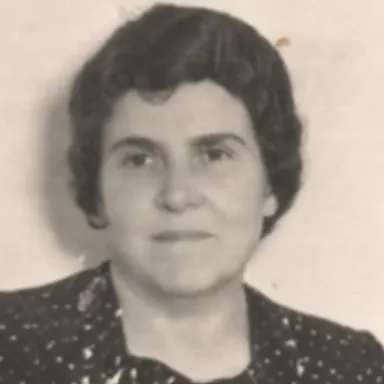
Leadership, Kindness and Religious-Zionist Teaching: The Work, Thought and Historical Influence of Rebbetzin Sarah Herzog
19 min read3,704 words
Summary
The text surveys the life story and the wide-ranging legacy of Rebbetzin Sarah Herzog, presenting her as a key figure who shaped the public and social sphere in Israel. The survey opens with her biographical background as the daughter of a prestigious rabbinic family and as the wife of the Chief Rabbi, and goes on to analyze her Religious-Zionist teaching, which advocated combining fidelity to halakha with active involvement in the modern state. A central axis of the text is her revolutionary contribution to the status of the religious woman, with an emphasis on encouraging higher education, national service and public leadership not confined to the domestic sphere. In addition, the source details the founding of significant educational and welfare institutions, such as the "Emunah" movement and the Herzog Medical Center, which remain to this day pillars of professional kindness. In sum, the text establishes her standing as an independent and diplomatic leader who succeeded in blending "the wisdom of leadership" with spiritual nobility, and for this reason was chosen as an educational role model.
The Roots of Her Upbringing, Her Personality and the Early Stations of Her Life
Rebbetzin Sarah Herzog (née Hillman) was born in the summer of 1896 in the city of Riga within the Russian Empire (today in Latvia), to a family that was an inseparable part of the Torah and scholarly elite of Eastern European Jewry [cite: 1, 2, 3]. Her mother was Sheina (née Feikempner) and her father was the gaon Rabbi Shmuel Yitzchak Hillman, one of the prominent spiritual leaders of British Jewry, author of the "Ohr HaYashar" series of books, who later founded the "Ohel Torah" yeshiva in Jerusalem and served as a judge on the rabbinic court in London and in Glasgow [cite: 1, 4]. Shortly after Sarah's birth, the family moved to the town of Berezino near Minsk following the father's appointment to the local rabbinate, and in 1908 (5668) the family moved to Glasgow in Scotland, where her father began to serve in the city's chief rabbinate [cite: 2].
The period of her residence in Glasgow profoundly shaped the intellectual and cultural horizons of the young Sarah. She studied at a prestigious local school, where she was one of only four Jewish pupils, a process that enabled her to acquire a broad general education, an in-depth familiarity with Western culture and complete command of the English language [cite: 2]. These skills later proved to be a strategic asset in her diplomatic and public activity [cite: 3]. During the First World War, her father moved to serve as a judge in London, and her family's home became a lively center of Jewish public activity and of aid to refugees [cite: 1, 2].
In 1917, in the midst of the war, Sarah met Rabbi Dr. Yitzchak Isaac HaLevi Herzog, who was serving at the time as rabbi of Belfast in Ireland [cite: 2, 3]. The meeting took place in her father's home; he had invited Rabbi Herzog to a special conference that dealt with resolving halakhic problems surrounding the laws of kosher food during the wartime period of rationing [cite: 3]. According to family tradition, when Sarah saw Rabbi Herzog for the first time, she recoiled with excitement and dropped the tea tray from her hands, an event that led to an immediate and deep bond between the two [cite: 3]. In August 1917 the two were married, and Sarah stepped naturally into her highly influential role as a rabbi's wife [cite: 3].
In Ireland their two sons were born, who were educated in the spirit of the distinct combination of Torah excellence with scientific and general education: Chaim Herzog (later the sixth President of the State of Israel), who was named after the gaon Rabbi Chaim Soloveitchik of Brisk, who had ordained Sarah's father, Rabbi Hillman, for the rabbinate; and Yaakov Herzog (later an esteemed statesman and Israel's ambassador to Canada), who was named after the gaon the Ridbaz, Rabbi Yaakov David Willowski [cite: 1, 2, 4]. In 1919 the family moved to Dublin, and in 1925 her husband was appointed Chief Rabbi of Ireland [cite: 2, 3]. Her son Chaim later described her as the dominant and leading figure within the home [cite: 3]. Despite her small stature, she was endowed with a noble, regal and graceful appearance, and turned her home into a social and cultural center that drew intellectuals, leaders and key figures from all over the Jewish world [cite: 3].
Alongside her nobility and the breadth of her horizons, Rebbetzin Sarah Herzog was endowed with deep and uncompromising devotion to her family. A clear expression of this came in 1933, when she temporarily left her husband and children in Ireland for six consecutive weeks and traveled to London in order to nurse and care for her sick father in his home [cite: 2]. Her willingness to sacrifice her personal comfort for the sake of her family duties reflected the depth of her commitment to the halakhic values of honoring father and mother. In 1936, with the election of Rabbi Herzog to serve as the Ashkenazi Chief Rabbi of the Land of Israel, the family immigrated to the Land and made its home in Jerusalem, where the Rebbetzin began her historic public activity, which lasted more than four decades [cite: 2, 3].
Her Torah Teaching and Her Religious-Zionist Worldview
The Torah teaching of Rebbetzin Sarah Herzog was not formulated as a series of abstract halakhic essays, but found expression as an applied and living thought, which challenged old social conventions and charted an innovative path for Religious Zionism [cite: 7, 8]. Her religious conception was based on the premise that the Torah is not a factor isolating man from the world, but constitutes a driving force for public action, for building a moral society and for active integration into the Zionist enterprise and into the sovereign State of Israel [cite: 2, 9].
Rooted Education in the Spirit of "Yisrael Saba"
The Rebbetzin believed that the spiritual survival of the people of Israel, especially in an era of transition from exile to redemption and sovereignty, depends on its ability to preserve its special character out of a deep connection to tradition [cite: 2]. She emphasized that the Torah of Israel preserved the people of Israel in all its exiles, and that the only way to shape the character of a healthy and moral Jewish society in the Land and in the Diaspora is by fostering the education of the younger generation in the spirit of the tradition of the forefathers [cite: 2, 10]. This conception of "Yisrael Saba" ("Grandfather Israel," the ancestral tradition) was not conservative in the narrow sense of the word, but inscribed on its banner a rooted, open and broad-minded education, capable of meeting the future tests of the modern state [cite: 2, 10].
The Status of Women, Going Out of the Domestic Sphere, and National Service
Rebbetzin Sarah Herzog's most significant contribution to Religious-Zionist thought concerns the status and role of women in society [cite: 1, 8]. She utterly rejected the exilic conception according to which a woman's role is confined within the doors of her home [cite: 2]. She wrote that the days had passed when a woman sat with folded hands and contented herself with everyday domestic tasks [cite: 2]. In her eyes, the birth of the sovereign State of Israel opened all paths and fields before the woman—socially, professionally, educationally and in the family [cite: 2].
The Rebbetzin emphasized that religious girls cannot and must not be excluded from this rule [cite: 2]. She wondered why they should not give of themselves for the community as well, and vigorously advocated that religious women go out to higher studies, acquire a productive profession and engage in deep social involvement [cite: 2, 8]. Out of this view, the Rebbetzin expressed public and unequivocal support for national service for religious girls [cite: 2]. She saw national service as a vital tool that enables the young religious woman to make a real contribution to the state and to society, while strictly preserving her halakhic identity and her moral values [cite: 2].
On a personal level, the Rebbetzin combined in her way of life devout halakhic fidelity with cultural breadth [cite: 2]. She read widely, attended the theater and concerts of classical music, and displayed openness to the world of general culture [cite: 2]. Even after her husband's death in 1959, she continued to act as a community leader and inspired others by holding a social kiddush every Shabbat morning at her home in Jerusalem, a home that continued to be a magnet for Torah, kindness and diplomacy [cite: 2].
Political Activism, Public Diplomacy and National Struggle
Rebbetzin Sarah Herzog's energetic character did not allow her to remain outside the political and national struggles that accompanied the establishment of the state [cite: 1, 3]. She saw public activity as a supreme religious mission and took courageous positions before the British Mandate authorities and before the international community [cite: 1, 3, 9].
The Struggle against the "White Paper" and the Question of the Kindertransport
In May 1939, with the publication of the (MacDonald) "White Paper," which drastically restricted Jewish immigration to the Land of Israel and the purchase of land, the Rebbetzin took her stand at the forefront of the public struggle [cite: 3, 4]. She understood that British policy amounted to a death sentence for many Jewish refugees in burning Europe [cite: 3].
In parallel with the political activity of her husband the Chief Rabbi, Sarah Herzog, together with Rachel Yanait Ben-Zvi and Ita Yellin, led mass women's demonstrations and protest marches in Jerusalem [cite: 1, 3, 4]. These demonstrations focused on a sharp protest against the cruel British policy, which allowed Jewish children to be rescued from Nazi Germany in the framework of the "Kindertransport" operations, but refused to allow them to immigrate to the Land of Israel and transferred them to Britain or to other destinations, cutting them off from their families and their homeland [cite: 3]. Letters and books from that period, such as Rachel Yanait Ben-Zvi's book "Anu Olim" ("We Are Ascending"), which bore a warm dedication to Rebbetzin Herzog, testify to the close and groundbreaking cooperation that crossed ideological sectors for the sake of saving the people [cite: 11, 12].
Unofficial Diplomatic Leadership
After the establishment of the state, and especially in the decades after her husband's death, Rebbetzin Sarah Herzog functioned as a kind of unofficial diplomat and liaison of the State of Israel and the Jewish world [cite: 3]. Thanks to her excellent English, her impressive appearance and her Torah lineage, she maintained an extensive network of connections with leaders and politicians in Israel and around the world [cite: 2, 3]. The Israel State Archives holds dozens of correspondence files testifying to letters, postcards and greeting cards that she exchanged with the President of the State Yitzhak Ben-Zvi and his wife Rachel Yanait, the Mayor of Jerusalem Teddy Kollek, and the Members of Knesset Tova Sanhedrai and Sarah Stern-Katan [cite: 12].
In 1954 the Rebbetzin set out on a long and complex journey to Montreal in Canada in her capacity as president of the World Mizrachi Women's Organization, where she worked to raise political and economic support for the young State of Israel and for its educational and welfare institutions [cite: 3, 4]. In 1968, at the time of the first World Conference of Ashkenazi and Sephardi Communities, she served as the chief hostess of the wives of the leaders and of the diplomat rabbis, thereby contributing greatly to strengthening national cohesion and the bond between the sovereign State of Israel and Diaspora Jewry [cite: 3].
The "Ezra" Society and the Founding of Mother's Day
Rebbetzin Sarah Herzog's civic activity also touched on the everyday welfare of women in the Land [cite: 6, 9]. She headed the "Ezra" society—a unique society intended to assist women in childbirth of limited means—alongside public figures such as M. Hoofien [cite: 6]. Out of a modern conception that sees motherhood as a national value deserving public recognition, the Rebbetzin, together with the society, initiated the celebration of the first "Mother's Day" in Jerusalem on 6 April 1947, similar to the tradition customary in Western countries, with the aim of encouraging the purchase of gifts made in the Land and strengthening the status of women in the Jewish Yishuv [cite: 3, 6].
Enterprises of Kindness, Medicine and Welfare: Institutionalizing Practice
Rebbetzin Sarah Herzog's conception of kindness was not content with occasional charity, but strove to establish professional, large-scale institutions that would provide long-term solutions for the most disadvantaged populations in Israeli society [cite: 1, 4, 9].
┌──────────────────────────────────────────────────────────┐
│ Rebbetzin Sarah Herzog: Executive Arms │
└────────────────────────────┬─────────────────────────────┘
│
┌────────────────────┼────────────────────┐
▼ ▼ ▼
Medicine Education Welfare
and mental health and women's empowerment and child protection
- Herzog Medical Center - The "Emunah" movement - The children's home in Afula
- Rehabilitation and drug department - Neve Sarah ulpana - Achuzat Sarah in Bnei Brak
The Herzog Medical Center (Ezrat Nashim)
The "Ezrat Nashim" hospital was founded at the end of the 19th century, in the Ottoman period in Jerusalem, as a small community initiative [cite: 13, 14]. With Rebbetzin Sarah Herzog's joining of the hospital's board of directors, and her tenure as president of the institution for nearly forty years, the institution underwent a veritable revolution [cite: 3, 14]. The Rebbetzin identified the severe neglect and the social stigma that surrounded the mentally ill and the elderly in Israel, and devoted the best of her energy to turning the hospital into an advanced medical institution of world renown [cite: 1, 4, 13].
After the Six-Day War, the Rebbetzin led the relocation of the hospital from its old premises on Jaffa Road to a modern and spacious campus in the Givat Shaul neighborhood of Jerusalem [cite: 14, 15]. She worked tirelessly to open new research and treatment departments, and in 1975 initiated the opening of a special department, the first of its kind, for the treatment and rehabilitation of victims of drugs and addictions [cite: 2, 16]. In 1986, in recognition of her devotion and of four decades of active management and volunteering, the institution's name was changed to "the Herzog Medical Center" [cite: 13, 14]. Today the institution numbers more than 500 inpatient beds and is a national and international center of knowledge in the fields of geriatrics, rehabilitation, mental health and prolonged ventilation [cite: 14].
The "Emunah" Sarah Herzog Children's Home in Afula
In 1943, in the midst of the Holocaust, the Rebbetzin initiated the establishment of a special children's home in the town of Afula [cite: 3, 5]. The home was intended to serve as a safe refuge for orphaned children who had survived the horrors of Nazism and managed to reach the Land of Israel without family [cite: 3, 5]. Over the years the place developed and became the "Emunah Sarah Herzog Children and Youth Center" [cite: 5].
The center, operated by the "Emunah" movement and supervised by the Ministry of Welfare, today provides full residential care and day care for about 150 at-risk children and youth aged 6–18 who lack family support [cite: 5]. The institution has gained a national reputation thanks to the warm family atmosphere and the innovative therapeutic programs it runs, such as art projects ("Melekhet Emunah"), musical bands, parent guidance and advanced emotional therapies, which continue the vision of care for the individual that the Rebbetzin charted [cite: 5].
The Founding of the "Emunah" Movement and the "Neve Sarah Herzog" Ulpana
Rebbetzin Sarah Herzog understood that in order to bring about real change in the status of the religious woman, organized political and social power was needed [cite: 1, 4]. She initiated the unification of the "Mizrachi Women's Organization in the Land of Israel," which she had founded upon her immigration, with other religious women's organizations [cite: 1, 4]. This unification came to fruition on Chol HaMoed Sukkot 5720 (1959) with the founding of "Emunah – The Religious-National Women's Movement" [cite: 1, 2]. The Rebbetzin served as the movement's first president and led it until her last day [cite: 1, 2]. In 1977 she founded the "World Emunah" organization in order to connect religious and Zionist women from all over the world to social action in Israel [cite: 3, 4].
As part of the educational commemoration of her work, the "Neve Sarah Herzog" ulpana was established on a green campus in Bnei Brak (Kiryat Herzog) [cite: 7, 17]. The ulpana operates as a six-year Torah-and-science educational campus that provides education in the values of the Torah, fear of Heaven, love of the Land and Religious Zionism [cite: 7, 18]. The uniqueness of the ulpana, in keeping with the Rebbetzin's spirit, is the existence of a supportive boarding school that provides a family, academic and emotional framework for girls coping with learning difficulties, family complexities and situations of risk, while promoting intercultural encounter, tolerance and the absorption of immigrants [cite: 7, 18].
Assessment of Her Figure and Her Historical Legacy
The depth of Rebbetzin Sarah Herzog's influence is expressed not only in the physical institutions she left behind, but also in the broad public recognition she received [cite: 1, 2, 3]. In 1975 she was awarded honorary doctorates by the Hebrew University of Jerusalem and by Bar-Ilan University—degrees that reflected Israeli academia's appreciation of her exceptional medical and social work [cite: 2].
After her death, Rabbi Shlomo Goren, the Chief Rabbi of Israel, eulogized her and her husband in words that sharpen the unique synergy created in the leadership home of the Herzog family:
"Rabbi Goren, when he eulogized my grandfather and grandmother, said that Rabbi Herzog imprinted on the home genius in Torah and in science, and the Rebbetzin the wisdom of leadership and the beauty of life, nobility" [cite: 22].
This testimony emphasizes that Rebbetzin Sarah Herzog was not a secondary or apologetic figure in the shadow of her great husband, but an independent leader in her own right, who brought with her "the wisdom of leadership" and an understanding of the needs of the hour of the nation [cite: 3, 22]. She connected Rabbi Herzog's halakhic and scientific genius with its practical application in society, in welfare and in the institutional structure of the young state [cite: 2, 22].
In the school year 5785 (2024–2025), the State Religious Education Administration (Chemed) of the Ministry of Education chose Rabbi Dr. Yitzchak Isaac HaLevi Herzog and Rebbetzin Sarah Herzog as the annual "role models" according to whom the sector's boys and girls would be educated [cite: 2, 23, 24]. The decision was made out of the understanding that their life and work offer a guiding model of deep Torah scholarship interwoven with national responsibility, service to the state, institutionalized kindness and the shaping of a modern Jewish consciousness capable of facing the challenges of the hour [cite: 10, 24, 25]. Posters and learning materials produced for the role-model year emphasize the value of national unity that the two championed, as well as the importance of building a moral Jewish society connected to its roots on the one hand, and open to progress and science on the other [cite: 10, 22, 24].
Summary
Rebbetzin Sarah Herzog stands in the history of the Yishuv and of the State of Israel as a role model who redefined the boundaries of religious women's action in the public sphere [cite: 2, 8]. Out of a rooted Torah teaching that saw the Torah as an active engine for improving society, the Rebbetzin succeeded in establishing and running groundbreaking institutions of medicine, welfare and education that continue to be pillars of the modern State of Israel [cite: 1, 7, 14].
Her historical contribution goes beyond the bounds of her institutional activity: she laid the conceptual and practical foundations for the growth of influential Religious-National women's leadership, led courageous political struggles, and created a practical and noble synthesis between preserving the values of "Yisrael Saba" and active and equal integration into the building of the nation and the state [cite: 2, 8, 22]. Her legacy, commemorated today in the medical, educational and social centers that bear her name, is triumphant testimony to her vision of leadership and to her deep commitment to the future of the people of Israel in its Land [cite: 5, 9, 10, 13].
Sources25
- 1.הרבנית שרה הרצוג - עמותת יד חיים הרצוג, yadchaimherzog.org.il/sara-herzog/
- 2.שרה הרצוג - ויקיפדיה, he.wikipedia.org/wiki/שרה_הרצוג
- 3.Sarah Herzog - Wikipedia, en.wikipedia.org/wiki/Sarah_Herzog
- 4.Rabbanit Sarah Herzog - עמותת יד חיים הרצוג, yadchaimherzog.org.il/en/rabbanit-sarah-herzog/
- 5.מרכז הילדים והנוער אמונה ע"ש שרה הרצוג – תנועת האישה הדתית הלאומית, emunah.org.il/-/מרכז-הילדים-והנוער-על-שם-שרה-הרצוג/
- 6.יום המשפחה - ויקיפדיה, he.wikipedia.org/wiki/יום_המשפחה
- 7.אולפנת נווה שרה הרצוג – תנועת האישה הדתית הלאומית - אמונה, emunah.org.il/-/אולפנת-נווה-שרה-הרצוג/
- 8.Full text of "Hetsuveh , 1988, Israel, Hebrew" - Internet Archive, archive.org/stream/Hetsuveh1988IsraelHebrew/Jan 08 1988%2C הצופה (Hetsuveh)%2C %2314580%2C Israel (he)_djvu.txt
- 9.רחוב משלה | מאגר המרכז נשים משפיעות, הראויות להיות מונצחות בשמות הרחובות, נוסח פניה שימושי, וכן פרטי הקשר של העיריות להגשת הצעות | עמוד 120 - WordPress.com, herstreet.wordpress.com/page/120/?archives-list&archives-type=cats
- 10.הרב והרבנית הרצוג - תשפ"ה - מינהל החינוך הדתי, hemed.education.gov.il/libat-hemed/leoram-nelech/hertzog/
- 11.אנו עולים : פרקי חיים / מאת רחל ינאית-בן-צבי | Book | בן צבי, רחל ינאית, nli.org.il/en/books/NNL_ALEPH990018511180205171/NLI
- 12.אוסף הרבנית שרה הרצוג - רעיית הרב יצחק הרצוג - קטלוג ארכיון המדינה |, catalog.archives.gov.il/catalog#!/Catalog/0b071706800228c0/Unit/0b07170680024756/Deposit/0b0717068035eb2c#anchor0b07170680024756
- 13.75 Years of Ezrath Nashim - Herzog Medical Center, herzoghospital.org/75-years-of-ezrath-nashim/
- 14.אודות - המרכז הרפואי הרצוג, herzoghospital.org.il/אודות/
- 15.עזרת נשים בי"ח ע"ש הרבנית הרצוג (ע"ר) | גיידסטאר - אתר התאגידים של ישראל | משרד המשפטים, guidestar.org.il/organization/580082303
- 16.לוחמות מחתרת, אמניות וחוקרות: 10 נשות מופת יונצחו ברחובות ירושלים - כיפה, kipa.co.il/חדשות/1154365-0/
- 17.אולפנת נוה שרה הרצוג בני ברק - עמינדב | שירות לאומי, portal.aminadav.info/visit/a2j4K000002LNTxQAO/אולפנת+נוה+שרה+הרצוג+בני+ברק/
- 18.אולפנת נווה שרה הרצוג | עמינדב | שירות לאומי, aminadav.org.il/mosad-detail/?id=0014K000003AC5cQAG¤t
- 19.עזרת נשים בי"ח ע"ש הרבנית הרצוג (ע"ר) - בעלי תפקידים, guidestar.org.il/organization/580082303/people
- 20.חשיפת כיפה: תנועת האישה הדתית לאומית "אמונה" סירבה להביע תמיכה במרים פרץ, kipa.co.il/חדשות/1111380-חשיפת-כיפה-תנועת-האישה-הדתית-לאומית-אמונה-סירבה-להביע-תמי/
- 21.אמונה בחינוך – תנועת האישה הדתית הלאומית, emunah.org.il/אמונה-בחינוך/
- 22.794 מצב הרוח פנחם. - Calaméo, calameo.com/books/0026270470703d2ee501a
- 23.ליבת החמ"ד - מינהל החינוך הדתי, hemed.education.gov.il/libat-hemed/
- 24.דמויות החמ"ד - יסודות, yesodot.org.il/דמויות-החמד/
- 25.אחריות אחדות "שמע ישראל" - תפילה - טיפוח זהות ציונית דתית לאור דמויות החמ"ד - משרד החינוך, meyda.education.gov.il/files/hemed/Rabanim/herzog/kishurey-haim-al-yesodi.pdf