Document 1/2
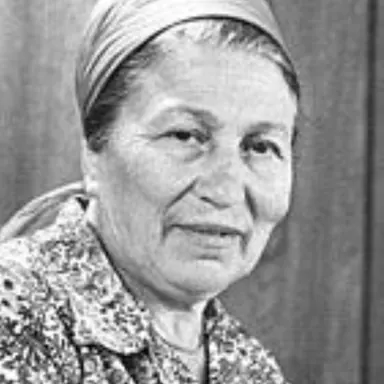
Sarah Stern-Katan: Leadership, Welfare and Social Contribution
11 min read2,224 words
Summary
A Life's Work of Torah, Labor and Welfare: The Torah Teaching and Public Work of Sarah Stern-Katan
This text surveys the life story and teaching of Sarah Stern-Katan, a key figure who connected halakhic fidelity with social justice and women's leadership in the State of Israel. The source presents her personal development, from youth leadership in the inferno of the Holocaust, through pioneering fulfillment in Kibbutz Yavne, to her national activity as a Member of Knesset and chairwoman of the "Emunah" movement. The central axis of the text emphasizes how Stern-Katan turned the traditional Jewish concept of chesed (kindness) into a modern and professional welfare system, while charting a unique path of Religious-National feminism based on communal responsibility and on fortifying the resilience of the state. Ultimately, the article seeks to commemorate her legacy as one who proved that the striving for equal opportunity for women is not an external appendix to Judaism, but a national and moral duty that flows from the heart of the Torah.
A Life's Work of Torah, Labor and Welfare: The Torah Teaching and Public Work of Sarah Stern-Katan
Introduction: The Intellectual Fusion of Kindness, Gender Equality and Halakha
Sarah Stern-Katan represents a unique and groundbreaking model of religious women's leadership in the State of Israel in the second half of the twentieth century.[1] Her teaching and public work present a deep synthesis between an uncompromising commitment to Jewish halakha and to the values of the "Torah va-Avodah" movement, and the development of modern models of welfare, social work and gender equality of opportunity.[1, 2, 3] Stern-Katan, who divided her life between pioneering partnership in Kvutzat Yavne and the corridors of government and parliamentary work, offered a practical interpretation of the Torah as an engine of social justice.[1, 4] Her worldview did not see social work or the advancement of women's status as an external appendix to her religious identity, but as a religious and national duty flowing directly from the moral core of Judaism.[1, 3]
Whereas the general feminist trends of that period relied on an individualistic and liberal discourse of rights, Stern-Katan built a teaching of "Religious-National feminism" based on mutual responsibility, communal duty and the fortification of the resilience of the modern state.[1, 3] Her life and work trace a course of turning traditional Jewish kindness into a tool of institutionalized state welfare, while paving new paths for the integration of religious women into the centers of decision-making in Israel.[1, 3]
Formative Stations of Life: The Rupture of the Holocaust and the Sprouting of Religious Pioneering
Stern-Katan's personal and ideological growth took place amid the dramatic historical upheavals of the Jewish people in Europe.[1] She was born in Łódź, Poland, on 4 June 1918, and grew up in a home that succeeded in harmoniously combining religious piety with active Zionism.[1] Her education at the Hebrew gymnasium, alongside her lively activity in the youth movements "Bnei Akiva" and "HaShomer HaDati," shaped in her the awareness that Religious-National fulfillment demands physical partnership in building the Land.[1, 4]
With the outbreak of the Second World War and the confinement of her family in the Łódź Ghetto between the years 1940–1944, these values were put to an extreme existential test.[1] In conditions of hunger, disease and abject poverty, Stern-Katan stood out in her ability to convert the physical rupture into exceptional spiritual and educational work.[1] Together with her friends from the youth movement she set up cultural and educational frameworks intended to give the youth in the ghetto a moral and spiritual anchor in the spirit of the values of the Land of Israel.[1] The group's flagship project was the initiation and establishment of agricultural training farms within the narrow confines of the ghetto.[1] This work carried a deep theological meaning: developing agriculture in the heart of destruction and death was not only a tool of survival, but an active religious declaration expressing faith in a future redemption and a physical and mental preparation for immigration, precisely when Jewish Poland was being destroyed around them.[1]
At the end of the war Stern-Katan was sent to the Auschwitz extermination camp, and from there was transferred to various labor camps, where she survived grueling forced labor.[1] Immediately upon her liberation by the Red Army, she turned to the immigration organizations and devoted her strength to the rehabilitation of the survivors and to helping bring them to the Land.[1] For her, this stage was a direct continuation of the duty of mutual responsibility; the rehabilitation of the individual survivor was a necessary stage in the rehabilitation of the collective and in building the national enterprise in the Land of Israel.[1]
Pioneering Fulfillment and Social Work as Halakhic Practice
In 1947 Stern-Katan immigrated to the Land of Israel and decided to settle in Kvutzat Yavne, where she lived and worked until the day of her death.[1] Her choice of the religious kibbutz was not accidental; the religious kibbutz was at that time the pinnacle of the fulfillment of the values of "Torah va-Avodah," a cooperative space in which halakha is translated into a life of productive partnership and equality.[1, 4]
Out of the understanding that building a sovereign state requires scientific and professional tools and not only good intentions, Stern-Katan turned to acquiring a higher academic education.[1] She completed studies in social work at the Hebrew University of Jerusalem, and afterwards traveled to the United States and received a master's degree at Simmons University in Boston.[1] On her return, she joined the public system as a regional supervisor in the Ministry of Health and the Ministry of Welfare, and specialized in guiding girls and in their vocational and social rehabilitation.[1]
This professional activity represented a new stage in the evolution of the concept of "chesed" in religious society.[1] Stern-Katan led a process of professionalization of the commandments of charity and acts of lovingkindness.[1] She replaced the private and local philanthropy that had been customary in the communities of the Diaspora and in the Old Yishuv with a modern, research-based and state social system.[1] In her eyes, caring for the welfare of the individual and the vocational training of a youth on the margins of society are not only an act of specific assistance, but the realization of the Torah's command to honor the image of God in man and to give him the tools to stand on his own.[1, 3]
- Arena
- Roles and focus of activity
- Distinctive contribution and social legacy
- Sources
- The Łódź Ghetto (1940–1944)
- Educational and social leader in Bnei Akiva
Setting up cultural frameworks and agricultural training farms; reviving the pioneering spirit in conditions of hunger and distress
Immigration and Kvutzat Yavne (1947 onward)
Kibbutz member, social worker and regional supervisor
Combining agricultural fulfillment with professional work in the Ministry of Welfare and Health; rehabilitation of at-risk girls
- The Ninth Knesset (1977–1981)
- Member of Knesset for the Mafdal (National Religious Party)
- Membership in the Labor and Welfare, Education and Culture, and Interior committees; focused social legislation
- The "Emunah" movement (1984–1990 and after)
- Chairwoman and president of the movement
- Expanding the welfare institutions of the Religious-National women's movement; promoting halakhic women's leadership
[1]
Parliamentary Activity and the Internal Political Struggle in the Mafdal
Stern-Katan's entry into political life in 1977 marked a turning point in the ability of religious women to break into the centers of influence of the Religious-Zionist parties, which were characterized by an especially male and conservative structure.[1] In March 1977 she took part in the internal elections in the Mafdal to determine the women's representative on the list for the Knesset.[1] This contest was complex and stormy, since facing her were key female figures of great influence among the religious public, including representatives of distinguished rabbinic families and representatives of the younger generation.[1]
- Candidate
- Factions and streams that supported her
- Competing candidates in the first round
- Political and gender significance
- Sources
- Sarah Stern-Katan
- The "LaMifneh," "Rafael" and "Central Faction" factions
Zehava Malkiel (representative of the young), Miriam Meir, Yehudit Pollak, Leah Adini, Rebbetzin Tzfiya Goren and Rebbetzin Ayala Gliksberg
A victory in the first round reflecting a broad coalition supporting a professional and social approach over rabbinic or family lineage
[1]
Stern-Katan's sweeping victory already in the first round proved that her power base rested on a broad coalition of the center and settlement factions in the Mafdal, which preferred a figure with a professional background in social work and kibbutz fulfillment over other candidates.[1] During her tenure in the Ninth Knesset (1977–1981) she served as an active member of the Labor and Welfare, Interior and Environment, and Education and Culture committees.[1] Her activity in these committees was characterized by a holistic view connecting education, welfare and a healthy social environment, out of the understanding that poverty and environmental neglect weaken the moral and religious resilience of the entire state.[1]
Out of these positions she formed her influential position on the issue of gender equality in the public and state sphere.[3] Stern-Katan firmly held that equal opportunity for women cannot be regarded as a one-off initiative, a temporary program or a voluntary gesture of the establishment.[3] In her eyes, this equality constitutes "part of the infrastructure on which the state rests, and a national task and responsibility."[3] This outlook demanded the partnership and coordinated work of all sectors of the economy and society, and thereby turned concern for the status of women from an isolated gender struggle into an inseparable part of the general national interest of the State of Israel.[3]
Leading the "Emunah" Movement and Developing the Model of Religious Feminism
After the end of her term in the Knesset, Stern-Katan continued to translate her Torah-social teaching into large-scale institutional action within the "Emunah" movement (the Religious-National women's movement), which she headed as chairwoman between the years 1984–1990, and later as president of the movement.[1] Under her leadership, the "Emunah" movement became a leading executive arm in the fields of welfare, day-care centers and vocational education for religious women and families.[1]
Stern-Katan championed a conception according to which the empowerment of religious women must take place from within the community and the family and not at their expense.[1, 3] Unlike radical feminist streams that saw the family as an oppressive institution, Stern-Katan saw the family as the core of communal and religious resilience, but demanded a structural change that would enable the woman to develop her skills, acquire an education and work in an independent and respectable way.[1, 3] The development of the movement's network of day-care centers was intended precisely for this purpose: providing a quality solution for children that enabled religious mothers to go out to study and work with peace of mind and halakhic security.[1]
The contest for a second term at the head of "Emunah," in which she lost to Yehudit Hibner, reflected the internal tensions in Religious Zionism in those years.[1] Whereas Stern-Katan represented the settlement-kibbutz wing and the world of practical social work, Hibner brought with her experience from the senior civil service and from the diplomatic world.[1] Despite the loss, Stern-Katan's appointment as president of the movement testified to the unprecedented moral and Torah standing she had acquired among her fellow members of the movement and the public at large.[1] In her last years she devoted her public work to passing on the memory of the Holocaust within the framework of the "Yad Vashem" institution, out of the understanding that transmitting the memory to future generations is a necessary layer in fortifying the historical and spiritual identity of the Jewish people in its Land.[1]
Summary and Legacy: The Meeting of Social Justice and Tradition
The teaching and work of Sarah Stern-Katan left an indelible mark on the character of Religious Zionism and on the welfare system of the State of Israel.[1] Her life, which ended on 23 September 2001 with her death and burial in Kvutzat Yavne, was a tangible and everyday expression of the connection between the vision of historical redemption and daily care for the weak, the worker and the woman.[1]
Stern-Katan proved that the struggle for social justice and for equal opportunity for women is not foreign to the tradition of Israel, but is a direct continuation of the way of the Torah as it should be realized in a sovereign Jewish state.[1, 3] Her ability to navigate between different worlds—between the Łódź Ghetto and the religious kibbutz, between the academy in Boston and the Knesset committees, and between conservative halakha and the development of women's status—placed her as one of the central figures in shaping the social character of the state.[1, 3, 4]
In 1998 (5758) Stern-Katan received the highest national recognition when she was awarded the Israel Prize for special contribution to society and the state for her life's work and her extensive public activity.[1] This prize was testimony to the importance of the leadership she represented—a leadership that does not seek rifts or power struggles, but acts out of deep fidelity to the halakhic sources in order to bring about comprehensive and long-term social repair for the benefit of Israeli society as a whole.[1, 3]
Sources4
- 1.שרה שטרן-קטן - ויקיפדיה, he.wikipedia.org/wiki/שרה_שטרן-קטן
- 2.Sara Stern-Katan - Wikipedia, en.wikipedia.org/wiki/Sara_Stern-Katan
- 3.נאום מנכ"לית הרשות לקידום מעמד האישה, הגב' מירב שטרן בטקס אות השרה לשוויון חברתי וקידום מעמד האישה: - YouTube, youtube.com/watch?v=u0VsBoRXdwg
- 4.השומר הדתי - ויקיפדיה, he.wikipedia.org/wiki/השומר_הדתי