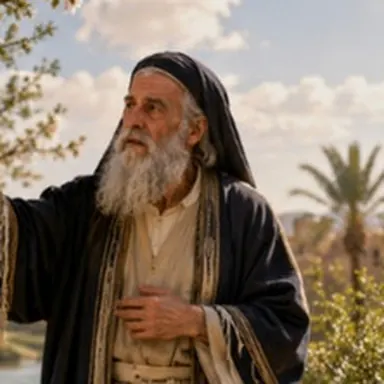
Leadership, Torah Teaching and the Shaping of the Babylonian Center: The Figure and Work of Rav Yehuda bar Yechezkel
21 min read4,144 words
Summary
This source surveys the life and work of Rav Yehuda bar Yechezkel, one of the greatest Amoraim in Babylonia, who laid the spiritual and organizational foundation for the Torah center in Pumbedita. The text emphasizes his forceful leadership and his conscious choice to focus on monetary law and civil law, out of the conception that social fairness is the key to true piety. Beyond the shaping of liturgy and halakha, the source highlights Rav Yehuda's revolutionary geopolitical outlook, which sought to establish the independence of Babylonian Jewry and forbade leaving it for the Land of Israel. In conclusion, it is emphasized that his religious power stemmed not only from encyclopedic knowledge, but above all from moral refinement and good deeds, which made him a revered leader who combined intellectual acuity with a commitment to justice.
Biography, Family Roots and the Stages of a Leader's Training
Rav Yehuda bar Yechezkel, usually known in the Babylonian Talmud by the unqualified name "Rav Yehuda", was counted among the greatest Amoraim of the second generation in Babylonia and served as the chief shaper of the Babylonian world of Torah at the end of the third century CE.[1] He was born in 220 CE and died in approximately 299 CE.[1] The foundations of his Torah and moral upbringing were laid first and foremost in the home of his father, Rav Yechezkel, a distinguished sage known for his good deeds and his exceptional righteousness.[2] The father's fear of Heaven was so great that Shmuel, the head of the Nehardea yeshiva, used to rise before him to pay him honor.[2, 3] Although Rav Yehuda surpassed his father in Torah knowledge, his teacher Shmuel instructed him to rise before his father, out of the conception that the father's moral virtues and good deeds placed him on an exalted level that demanded special honor.[2] Rav Yehuda's family produced further Amoraim, among them his famous brother Rami bar Yechezkel, who was also active among the sages of Babylonia.[1, 2]
In his youth Rav Yehuda acquired his Torah from Rav in the Sura yeshiva, who was his principal teacher.[3] He accompanied Rav on his travels and served as a central channel for the transmission of his teaching, as hundreds of halakhic and aggadic sayings are cited in the Talmud in Rav's name by Rav Yehuda.[3] With the death of Rav in approximately 247 CE, Rav Yehuda moved to the town of Huzal and studied in the yeshiva of Rav Assi, and from there continued to Nehardea to learn from Shmuel, who also became his principal teacher.[3] This unique combination of the teaching of Sura (the study house of Rav) and the teaching of Nehardea (the study house of Shmuel) made Rav Yehuda a halakhic authority who united the two principal schools of Babylonia.[3]
Shmuel's attitude toward his student Rav Yehuda was characterized by deep intellectual esteem. Shmuel called him by the nickname "Shinena", which according to the book of the Arukh means keen, sharp and incisive as an arrow, while some explain that the nickname alludes to his large and prominent teeth.[3, 4] Shmuel even went so far as to say of him on various occasions that "this one is not born of woman", an expression of wonder and admiration for Rav Yehuda's boundless diligence, as he used to review all of his learning anew every month.[3] In addition to his principal teachers, Rav Yehuda also acquired Torah from Rav Yirmeya bar Abba and Ze'iri.[3] Rav Yehuda's network of Torah connections included the greatest Amoraim of the generation, and he raised a long line of students who led the third and fourth generations in Babylonia and in the Land of Israel.[3]
The Pumbedita Yeshiva and the Civil-Legal School
In 259 CE, with the destruction of the great Torah center in the city of Nehardea and the death of Shmuel, the Babylonian world of Torah faced the danger of dispersal and loss of direction.[3] Rav Yehuda averted this crisis by moving the focus of activity to the city of Pumbedita and founding a new yeshiva that bore the city's name.[1, 3] The yeshiva, whose joint leadership by Rav Yehuda and Rav Eina earned them the Talmudic title "Savei de-Pumbedita" (the Elders of Pumbedita), survived and led the Jewish world of the spirit for about 800 years.[1, 3] It offered an institutional and conceptual alternative to the great Sura yeshiva.[3] The method of study in Pumbedita was characterized by exceptional intellectual acuity, comprehensive erudition and extensive use of pilpul and subtle logical reasoning, to the point that the sages of the generation used to say of them ironically that they were capable of bringing an elephant through the eye of a needle by sheer pilpul.[3]
Under Rav Yehuda's leadership, study in the yeshiva concentrated mainly on monetary law and civil law, subjects of a practical character that are arranged in the Order of Nezikin.[3, 7] This pedagogical and conceptual choice was not accidental; it reflected the conception that regulating the legal and economic relations between one person and another is the basis for establishing a moral and just society.[3, 8] The yeshiva's high level of analysis in these fields found expression in the development of central legal rules, among them the famous rule laid down by Rav Yehuda: "A path that the public has taken possession of may not be spoiled".[9] This rule, which appears in the tractates Bava Kamma and Bava Batra, establishes that a road or path that the public has taken possession of and used for passage may not be blocked or altered for the worse by the private owner.[9]
An analysis of this halakha reveals a deep interpretive dispute among the great commentators, which illuminates the balance of power between the right of private property and the public interest. The Rashbam explains that the rule applies only in a case where the public repaired and prepared the passage for walking, and the owners knew of this and kept silent, which points to a conscious and explicit waiver by the owners in favor of the public.[9] The Rema, by contrast, qualifies the rule and establishes that the public's possession is effective only when it was made from the outset "with permission" and not by robbery, although in cases of doubt, as the Sma clarifies, the court argues in favor of the public and assumes that the original possession was made lawfully and with permission.[9] The application of these principles in Pumbedita attests to the development of advanced legal thinking that balances the rights of the individual against the needs of the community.[9]
On the organizational side, Rav Yehuda ran the yeshiva in a highly centralized and institutionalized manner. Evidence of this is the "shofar ha-nedavah" (the donation chest), a dedicated collection box that served to gather the aid money sent from all the lands of the diaspora for the support of the sages and the students.[3] As Rav Sherira Gaon and the Tosafists explain, this chest was kept physically in Rav Yehuda's house by virtue of his position as head of the yeshiva, and it symbolized the economic sovereignty of the institution.[3] After his death, the chest passed to the management of his student Rabbah, and from there to Rav Yosef, thereby ensuring the continuity and financial stability of the Torah enterprise in Pumbedita for generations.[3]
Legal Firmness, the Defense of the Judiciary's Standing and the Clarification of Lineage
Rav Yehuda's public leadership was characterized by extreme and uncompromising firmness, with strict insistence on the honor of the judiciary and the rule of law, without favoritism or fear of men of power.[3] Already in his youth, as a student before Shmuel, he displayed this trait when he protested to his teacher about his ignoring a woman who was crying out before him in the court, quoting in rebuke the verse "Whoever stops his ears at the cry of the poor, he also shall cry and not be answered".[3, 4] His readiness to confront the centers of legal and political power reached its peak in the famous confrontation with Rav Nachman, who was the son-in-law of the Nasi and a senior judge close to the house of the Exilarch in Nehardea.[3, 5]
The affair began when Rav Yehuda placed a ban of excommunication on a man who had insulted the messenger of the sages' court, and publicly declared him a "slave".[3, 6] That man, who prided himself on his supposedly royal descent from the Hasmonean house, turned to Rav Nachman, and the latter sent a summons to judgment ("tasqa de-hazmanuta") to Rav Yehuda.[3, 6] Before setting out for Nehardea, Rav Yehuda went to consult Rav Huna, the head of the Sura yeshiva, on whether he must respond to the summons.[5] Rav Huna replied that by virtue of his Torah standing and his headship in Pumbedita he was not obliged to go, since he was greater than Rav Nachman, but advised him to go nonetheless in order to show respect to the house of the Exilarch.[5]
During the hearing held in Nehardea, Rav Yehuda displayed complete scholarly and cultural superiority, which left Rav Nachman helpless. At the outset Rav Yehuda presented to Rav Nachman the original summons form, which he had kept in his bosom, saying "Ha gavra veha disqa" (here is the man and here is the document), thereby forcing Rav Nachman to apologize for the very sending of the summons.[6] Throughout their conversation, Rav Yehuda replaced every Aramaic term Rav Nachman used with correct and precise Holy Tongue (Hebrew), such as correcting the word "gundrita" to "ma'akeh" (parapet) and "karpita" to "safsal" (bench).[5] Yalta, Rav Nachman's wife, who was listening to the exchange, immediately understood the balance of power and sent her husband an urgent message: settle with him quickly and do what he asks, so that he does not make you look like an ignoramus before the public, for every word you say he contradicts and brings a halakhic source for it.[6, 10]
When Rav Nachman demanded explanations for his legal steps, Rav Yehuda presented a consolidated and reasoned judicial method. Regarding the ban, he explained that the man had distressed a messenger of the sages and insulted him.[6] Rav Nachman wondered why he had not made do with lashes, as was customary for one who distressed a messenger of the court, and Rav Yehuda replied that he had applied a more severe sanction since in his view a ban is a harsher and more deterrent punishment than lashes.[6] Regarding the declaration of the man as a slave, Rav Yehuda presented two crushing proofs: first, the man used to disqualify people and call them "slaves", and about this Shmuel laid down the psychological-halakhic rule "Whoever disqualifies others disqualifies them with his own blemish", which teaches that a person who constantly casts aspersions on others does so out of his own personal defect.[5, 6] Second, Rav Yehuda quoted Shmuel's historical halakha according to which anyone who claims today to be of the Hasmonean house is nothing but a slave, since Herod destroyed all the distinguished descendants of the house and only slaves remained of them.[3, 6]
Rav Yehuda's firmness in guarding the purity of lineage was not confined to this individual case; he was known for publicly declaring unfit whole families and communities in Pumbedita to which a stain of defective lineage clung, such as families from the villages of Bala'i, Dana'i, Tala'i, Mala'i, Zaga'i and Guba'i.[10] His uncompromising adherence to the law also found expression in the punishment of offenders; he flogged a man who had had relations with a gentile woman, and the man died as a result of the flogging.[7] Although informers denounced him to the governing authorities for having put a man to death, Rav Yehuda stood bravely against the threats.[7] Even in his old age, he showed favor to no one and placed under a ban a respected Torah scholar about whom bad rumors had spread, even though the yeshiva needed him at that time, in order to prevent a desecration of God's name.[3]
Halakha, Liturgy and Practical Piety
Rav Yehuda's contribution to shaping Jewish religious life and prayer is among the most influential of the Talmudic period, and it goes far beyond the narrow legal field.[3] He composed and shaped a series of fundamental blessings that accompany the cycle of the year and the life of the individual, among them the blessing of the moon recited every month, the Birkat HaGomel in thanksgiving for rescue from dangers, and the betrothal blessing and the seven blessings (Sheva Berakhot) of marriage.[3] In connection with the Sheva Berakhot, Rav Yehuda introduced the condition that they are not to be recited during the days of the wedding feast unless "panim chadashot" (new faces), people who were not present at the wedding canopy, take part in the meal.[3]
An especially notable liturgical contribution is the "blessing of the trees", based on his saying: "One who goes out in the days of Nisan and sees trees in blossom says: Blessed is He who has left nothing lacking in His world and created in it good creatures and good trees for people to enjoy".[11, 12] The Ritva clarifies that this blessing, recited with God's name and kingship, is not due to mere gladness of heart but is a blessing of praise for the renewal of creation and the kindnesses of God, who makes dry trees bloom anew.[12, 13, 14] The decisors discussed whether the month of Nisan is a necessary condition for the blessing; the Ritva, and following him the "Chayei Adam" and the Mishnah Berurah, ruled that the mention of the days of Nisan in the Gemara is only because of "orcha de-milta" (the usual course of things, since that is when the blossoming occurs in Babylonia and in the Land of Israel), but by law one may recite the blessing at any time and in any country according to the local blossoming season.[13, 14] In practice it was established that the blessing is said over fruit trees only, preferably at least two trees, and as long as the fruit has not fully grown.[14]
Rav Yehuda's insistence on the purity of the Hebrew language directly influenced his attitude toward prayer. He forbade praying in the Aramaic language, and even rebuked Rav Nachman for using that language, out of the conception that language is a tool that unites thought and the national spirit.[1, 3] He himself used to pray with deep intention, wrapping himself in splendid garments in honor of prayer.[3] Because of his enormous diligence, he used to pray the Shemoneh Esreh prayer only once in thirty days, and therefore he would review the text beforehand so as not to err.[3]
Rav Yehuda's definition of piety reflects his legal and social worldview. Whereas Rava held that "one who wishes to be pious should fulfill the matters of Avot (milei de-Avot)" and other sages proposed "the matters of Berakhot (milei de-Berakhot)", Rav Yehuda uniquely established that one who wishes to be pious should fulfill the matters of Nezikin (milei de-Nezikin).[8] The meaning of this is that true piety is not measured only by asceticism or religious ceremonies, but by complete avoidance of harming another's property, by preserving public order and by meticulous care in the laws of legal integrity.[8]
This conception of moral uniformity found expression in the famous rule he transmitted in Rav's name, according to which wherever the Sages forbade something because of appearances (mar'it ha-ayin), it is forbidden even in the innermost chambers.[15, 16] This rule, much discussed among the Rishonim, establishes that the prohibition is not conditioned only on the concern that the public might suspect a person of having committed a transgression, but creates an absolute norm that prevents an inner split in a person's soul.[17] Rav Yehuda's personal piety was characterized by exceptional modesty; he never removed his cloak with its tzitzit threads during the entire day, and he even took care to attach tzitzit threads to his wife's garments in order to include her in the fulfillment of the commandment.[1, 3]
In addition, his most famous saying, which appears seven times in the Babylonian Talmud and three times outside it, expresses a realistic view of the human soul: "A person should always engage in Torah and commandments even if not for their own sake, for out of [doing them] not for their own sake he comes to [do them] for their own sake".[1, 3] As proof of this he brought the story of Balak king of Moab, who in reward for the forty-two sacrifices he offered out of political motives and not for the sake of Heaven merited that Ruth the Moabite should descend from him, from whom descended King Solomon, who offered a thousand burnt offerings in the Temple for the sake of Heaven.[1, 3]
Rav Yehuda's practices of loving-kindness also found expression in care for the weak and for the dead.[1, 3] When a man with no family died in his neighborhood and had no relatives to mourn him, Rav Yehuda gathered a quorum of ten people who sat in the place of the deceased throughout the seven days of mourning.[1, 3] After seven days the deceased appeared to Rav Yehuda in a dream and thanked him for having set his mind at rest.[1, 3] His student Rachava transmitted in his name the stringent halakha that "whoever sees a dead person and does not accompany him transgresses 'Whoever mocks the poor blasphemes his Maker'", a ruling that illustrates the absolute moral duty to treat with human dignity one who can no longer repay kindness.[1, 3]
The Geopolitics of Torah and the Status of the Babylonian Exile
One of the most revolutionary and daring moves led by Rav Yehuda was the reshaping of the geopolitical relationship between the Torah center in Babylonia and the Land of Israel.[3] Although Rav Yehuda had enormous respect for the sages of the Land of Israel and even directed difficult halakhic questions to Rabbi Elazar, who resided there, he resolutely opposed the physical emigration of Torah scholars from Babylonia to the Land of Israel.[3] He issued a precedent-setting ruling that "whoever goes up from Babylonia to the Land of Israel transgresses a positive commandment", relying on the verse in the book of Jeremiah: "They shall be carried to Babylon, and there they shall be until the day that I remember them, says the Lord".[3] This ruling was so binding and forceful that his principal student Rabbi Zeira, who was eager to go up to the Land of Israel, was forced to avoid and hide from Rav Yehuda so that he would not prevent him from leaving Babylonia.[3]
Rav Yehuda sought to establish the status of Babylonia not as a temporary and transient exile, but as a Torah and sovereign center standing in its own right and equal in its spiritual value to the Land of Israel.[3] He quoted in Shmuel's name the ruling that "just as it is forbidden to leave the Land of Israel for Babylonia, so it is forbidden to leave Babylonia for other lands", thereby granting Babylonia the status of a unique territorial holiness.[3] In addition he established that "whoever dwells in Babylonia is as though he dwells in the Land of Israel", relying on the verse in Zechariah: "Ho, Zion, escape, you who dwell with the daughter of Babylon".[3]
These moves reflected a profound strategic view of the needs of the generation.[3] Rav Yehuda understood that in order to develop and preserve the Babylonian Talmud, an enormous concentration of intellectual forces was needed, and the prevention of a drain of Torah minds to the Land of Israel.[3] By creating halakhic and ideological defenses around the Babylonian yeshiva, Rav Yehuda ensured the independence, flourishing and stability of the center in Pumbedita, which in the course of time became a halakhic beacon for the entire Jewish people for hundreds of years.[1, 3]
The Spiritual Dynamic: The Scope of Knowledge versus Practical Refinement
A comprehensive analysis of Rav Yehuda's figure reveals a unique dynamic that puts to the test the definition of Torah and spiritual greatness. Tractate Taanit describes an extraordinary gap between the formal scope of study and the spiritual level and capacity for metaphysical influence, between Rav Yehuda's generation and the later generations of Amoraim.[7]
In Rav Yehuda's generation, the curriculum in the yeshivot was relatively focused and limited, and concentrated mainly on the Order of Nezikin.[3, 7] When Rav Yehuda reached in his study especially complex and abstract tractates in the Order of Tohorot, such as tractate Uktzin, which deals with the subtle laws of impurity of the handles of foods (such as a woman who pickles vegetables in a pot, or olives pickled with their leaves), he would remark humbly that he saw here the depth attributed to "the deliberations (havayot) of Rav and Shmuel" and found it hard to fathom them.[7] By contrast, in the later generations the Amoraim studied all six orders of the Mishnah in comprehensive analysis, and established thirteen different yeshivot that dealt with the fine points of the difficult tractate Uktzin.[7]
Yet in moments of public crisis when the rains were withheld, a reverse and astonishing gap was revealed in the capacity to be answered from Heaven.[7] When Rav Yehuda would remove just one shoe from his foot as a first sign of submission and fasting, torrential rain would fall at once.[7] The sages even relate that he was shown in a dream that if he removed his second shoe he would bring a flood that would destroy the world.[7] On the other hand, in the later generations, despite the comprehensive and encyclopedic engagement with all parts of the Torah and the multitude of academies (metivtot), the sages and the public would cry out and fast all day long, and there was no one in Heaven to heed them.[7]
This finding leads to a profound theological and educational insight. The spiritual level and capacity for influence of a sage are not determined by the breadth of abstract theoretical knowledge or the encyclopedic quantity of material studied.[7, 8] Rav Yehuda's spiritual power stemmed from practical refinement, from complete obedience to the principles of morality and social justice, and from his complete focus on "milei de-Nezikin", insistence on civil integrity and the prevention of harm to others.[7, 8]
This coherence is closely reflected in his family tradition; just as Shmuel instructed Rav Yehuda to rise before his father Rav Yechezkel because the father was greater than he in "good deeds", so it has been proven historically that the good deed, civil integrity and practical compassion surpass in spiritual value detached theoretical pilpul.[2, 7] Rav Yehuda applied this insight in practice, and set up a model of leadership that combines incisive scholarship with a supreme moral commitment to others.[3, 8]
Summary and a View to the Generations
Rav Yehuda bar Yechezkel shaped the face of Babylonian Jewry through a winning combination of supreme intellectual acuity and forceful practical leadership.[1, 3] The founding of the Pumbedita yeshiva and its orientation toward the fields of law and social justice established a scholarly school that endured almost a thousand years and directly influenced the structure of the Babylonian Talmud.[1, 3] His daring geopolitical decisions, foremost among them the prohibition of emigrating from Babylonia, created an intellectual protective wall that allowed Torah creativity in Babylonia to reach its peak without fear of a brain drain.[3]
Alongside his institutional achievements, his model of piety, which places at its center the repair of society and the relations between one person and another, is an exemplar of the importance of practical integrity over detached theoretical scholarship.[7, 8] In a generation that needed stable anchors after the destruction of the old centers, Rav Yehuda served as a beacon of halakha, social justice and national identity, and left an indelible mark on the world of Torah for all its generations.[1, 3]
Sources17
- 1.רב יהודה - ויקיפדיה, he.wikipedia.org/wiki/רב_יהודה
- 2.רב יחזקאל - ויקיפדיה, he.wikipedia.org/wiki/רב_יחזקאל
- 3.רב יהודה – ויקישיבה, yeshiva.org.il/wiki/index.php/רב_יהודה
- 4.סדר הדורות - רב יהודה - ויקיטקסט, he.wikisource.org/wiki/סדר_הדורות_-רביהודה
- 5.קידושין ע א - ויקיטקסט, he.wikisource.org/wiki/קידושין_ע_א
- 6.ביאור שטיינזלץ על קידושין ע׳ ב | ספריית ספריא, sefaria.org.il/Steinsaltz_on_Kiddushin.70b
- 7.תענית כד ב - ויקיטקסט, he.wikisource.org/wiki/תענית_כד_ב
- 8."מילי דנזיקין, מילי דאבות, מילי דברכות" – מהי עצת חז"ל למאן דבעי למהווי חסידא?- המוסר היומי - דרשו, dirshu.co.il/מילי-דנזיקין-מילי-דאבות-מילי-דברכות/
- 9.זכויות בעל הקרקע מול החזקת הרבים- מיצר שהחזיקו בו רבים - מכון משפטי ארץ, dintora.org/Show_article/1247
- 10.קידושין ע ב - ויקיטקסט, he.wikisource.org/wiki/קידושין_ע_ב
- 11.מדוע מברכים את ברכת האילנות? - סולמות, sulamot.org/מדוע-מברכים-את-ברכת-האילנות/
- 12.ברכת האילנות | חיבורים בספריא, sefaria.org.il/sheets/393528
- 13.ברכת האילנות - מנחת אשר, minchasasher.com/he/shiur/פרשה-שיעורים/ברכת-האילנות/
- 14.שיעור בנושא ברכת האילנות | Voices on Sefaria, sefaria.org/sheets/167721
- 15.Babylonian Talmud Shabbat 146b - Jewish Theological Seminary, jtsa.edu/torah/babylonian-talmud-shabbat-146b/
- 16.שבת קמו ב - ויקיטקסט, he.wikisource.org/wiki/שבת_קמו_ב
- 17.מראית עין - עולמות, olamot.net/shiurim/מראית-עין/