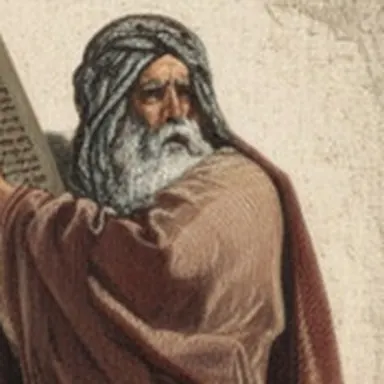
Ezra the Scribe at the Beginning of the Second Temple Period
15 min read2,919 words
Summary
This text is an in-depth study of the historical role of Ezra (Esdras) the Scribe, who in the middle of the 5th century BCE carried out a fundamental spiritual transformation of the Jewish people after the return from the Babylonian captivity. The author stresses that Ezra shifted the paradigm of leadership from prophetic inspiration to the authority of law and the interpretation of the text, turning the Torah from a closed code into a living foundation of everyday life through the reform of the script, translation into Aramaic and the creation of the Great Assembly. The source analyzes in detail Ezra's ten enactments, which integrated holiness into daily life, social hygiene and the judicial system, thereby creating an autonomous spiritual sovereignty that allowed the nation to survive without political independence. The text's concluding conception holds that Ezra became "the architect of the Second Temple," whose activity is comparable in significance to the legacy of Moses, since he saved the community from assimilation and laid the foundations of rabbinic Judaism.
The Re-establishment of Spiritual Sovereignty: The Figure, Work and Torah Teaching of Ezra the Scribe at the Beginning of the Second Temple Period
The Founding Paradigm of the Return to Zion and Ezra's Leadership
The ascent of Ezra the Scribe from Babylonia to Jerusalem, which took place in the middle of the fifth century BCE, does not mark merely a demographic event of migration, but constitutes the most dramatic turning point in the shaping of Jewish identity after the destruction of the First Temple. Ezra, who was a priest whose lineage went back to Aaron the High Priest [1, 2], came to the Land of Israel in the seventh year of the reign of Artaxerxes king of Persia, equipped not only with governmental powers on behalf of the Persian Empire, but above all with an orderly Torah teaching intended to turn the Torah from a limited book of laws into the foundation of the existence of the entire nation.[3, 4]
The period that preceded Ezra's arrival was marked by enormous fragility. The first return under Zerubbabel and Joshua son of Jehozadak had indeed succeeded in erecting the physical structure of the Second Temple, but the spiritual structure of the people remained breached. The Jewish settlement in Jerusalem and its surroundings suffered from deep assimilation, from foreign cultural influences of the Samaritans and the peoples of the land, and from an extremely low level of literacy.[5, 6] Ezra recognized that the building of the Temple alone, without the establishment of a legal, educational and ritual system rooted in the consciousness of every individual, could not ensure the survival of the nation over time.[3, 7]
Ezra's Torah teaching rests on the transition from prophetic-charismatic leadership to leadership based on wisdom and on the interpretation of the biblical text. He is called "a ready scribe in the Torah of Moses," a title that expresses his skill in copying the Torah, in its accuracy and in its dissemination.[3, 6] The Sages raised his standing to the rank closest to Moses our teacher, saying that "Ezra would have been worthy for the Torah to be given to Israel through him, had Moses not preceded him."[3, 8] This statement reflects the recognition that Ezra did not merely preserve what existed, but re-established the Torah among the people after it had been forgotten in exile.[7, 9]
The Educational Foundation in Babylonia and the Delay in the Ascent
One of the fascinating aspects of Ezra's teaching is the relationship between Torah study and practical activity in the Land of Israel. According to tradition, Ezra did not go up with Zerubbabel in the first return despite his standing, because he remained in Babylonia in order to acquire Torah from his teacher, Baruch ben Neriah.[3, 8] Baruch ben Neriah, the disciple of the prophet Jeremiah, was the direct link to the Torah tradition of the end of the First Temple period. Ezra understood that without a deep and precise acquisition of Torah, he would not have the spiritual ammunition needed to lead the revolution in Jerusalem.[1, 3]
The Sages used this case to emphasize that "Torah study is greater than the building of the Temple," since as long as Baruch ben Neriah was alive, Ezra did not leave him in order to go up and build the Temple.[3] This conception places literacy and Torah knowledge before any physical worship. Only after the death of his teacher, when Ezra felt that he held the tradition worthy of being taught, did he set out on his journey. This journey was not only physical but declarative: he went up from Babylonia after he had "made it like fine flour," that is, he clarified the lineages of the community in Babylonia and ensured that the core that went up with him would be pure of any suspicion of disqualification.[2]
Ezra's preparation of heart is described in the verse "For Ezra had prepared his heart to seek the Torah of the Lord, and to do it, and to teach in Israel statutes and judgments."[3, 6, 9] The order of actions here is critical: seeking (theoretical study), doing (personal application) and only then teaching others. This model became the prototype of Torah leadership for all generations: leadership whose authority stems from knowledge and fidelity to the text, and not only from the power of office or of the priesthood.[7]
The Existential Struggle against Assimilation and Absorption
Upon his arrival in Jerusalem, Ezra was exposed to a harsh social reality in which the earlier returnees from exile had intermingled with the peoples of the land. The intermarriages were not merely a matter of personal preference, but a strategic threat to the continuity of the nation. The children born of these marriages did not know how to speak the Jewish language (Hebrew) but spoke Ashdodite, which cut them off from the ability to understand the Torah and to observe its commandments.[4, 5, 6]
Ezra's response was deliberately emotional and ceremonial: rending his garments, tearing out the hair of his head and fasting publicly before the Temple.[5, 6] He chose not to use, first and foremost, the coercive power of the Persian king, but to act through explanation and persuasion in order to awaken the conscience of the community.[4, 6] He led the ceremony of making the "covenant" (amanah), a renewed covenant between the people and its God, in which the people undertook to separate from the foreign wives and to preserve its lineage.[3, 11]
The consequences of this struggle were far-reaching. Ezra created a clear distinction between the Jewish community, defined by its fidelity to the Torah, and the neighboring peoples. He thereby fortified the boundaries of the people and saved it from total absorption into the Samaritan and pagan environment.[5, 14] This action aroused fury among the Samaritans, who responded with terror attacks and the destruction of the walls of Jerusalem, but Ezra stood firm in his view that spiritual and linguistic purity is the sole guarantee of national existence.[5]
The Revolution of Script and Language: Making the Torah Accessible to the Masses
One of Ezra's boldest and most influential actions was the change of the script in which the Torah is written. According to the tradition of the Sages, the Torah was originally given in the ancient Hebrew script (Ketav Da'atz), but Ezra replaced it with the square Assyrian script, the script accepted today.[2, 15] This move was not merely technical, but a true cultural revolution.
The transition to the Assyrian script was intended to achieve several goals:
- Preventing a rift between the diasporas: the Jews who remained in Babylonia and Assyria were already accustomed to the square script. Continued use of the ancient Hebrew script would have created a literacy gap between the Jews of the Land of Israel and the Jews of the exile.[4, 16]
- Differentiation from the Samaritans: the Samaritans continued to use the ancient Hebrew script. The change of script created a clear visual barrier between the Torah scrolls of the Jewish community and those of the assimilating groups.[15]
- Accessibility for study: the Assyrian script was perceived as a "me'ushar" (upright) and straighter script, one that allows fluent reading and a deeper understanding of the words.[15, 16]
Alongside the change of script, Ezra instituted the office of the "meturgeman" (translator). Since many of the returnees had lost full command of Hebrew, he established that during the reading of the Torah a translator would stand and render the verses into Aramaic, the spoken language of the time.[4, 6, 8] Ezra thereby turned the Torah from a sealed book reserved for an elite of priests into a living text accessible to all strata of the people, including women and children.[6, 17]
The Ten Enactments of Ezra: Shaping the Jewish Daily Order
In order to make the Torah an inseparable part of communal life, Ezra instituted ten central enactments (takkanot) that affect the life of the Jew to this day. These enactments combine religious, social, family and economic needs, and demonstrate Ezra's conception that holiness must permeate gray everyday life.[12, 17]
Enactments Related to the Reading and Study of the Torah
Ezra instituted the reading of the Torah at the Minchah prayer on Shabbat, as well as on Mondays and Thursdays.[4, 17, 18]
- Minchah on Shabbat: intended for the "yoshvei keranot" (those who sit on street corners), people who are occupied with their work all week and do not study, so that they would hear words of Torah at least at the end of Shabbat.[4, 12, 18]
- Mondays and Thursdays: the reason for this is "so that three days should not pass without Torah," just as the Children of Israel in the wilderness went three days without water and grew weary.[6, 18] Ezra expanded the early enactment from the days of Moses: instead of one man reading three verses, he established that three men (a Kohen, a Levite and an Israelite) would be called up and read at least ten verses, corresponding to the ten batlanim (men of leisure) who form the core of the community.[17, 18, 19]
Legal and Social Enactments
Ezra established that the courts would sit on Mondays and Thursdays, the market days on which the villagers gathered in the towns.[4, 17, 19] This synchronization of market day, Torah reading and the activity of the court created a unified civil-religious center of gravity.[12, 17] A further social enactment is "that a woman should rise early and bake," so that bread would be available for the poor who go from door to door in the early morning hours.[4, 18, 20] Here Ezra's sensitivity to the weak in society is revealed as an inseparable part of fortifying the Torah.
Enactments of Modesty, Hygiene and Domestic Harmony
- Laundering on Thursday: so that on Friday the women would be free for the preparations for Shabbat.[4, 18, 19]
- Eating garlic on Shabbat eve: in the sources garlic is regarded as increasing seed and inducing calm, and this enactment was intended to foster relations between husband and wife on Shabbat nights.[4, 18, 19]
- The enactment of the peddlers: Ezra allowed peddlers selling jewelry and perfumes to move freely between the towns, despite a certain harm to local merchants, so that women could adorn themselves and find favor in the eyes of their husbands.[4, 12, 19]
- Combing and immersion: Ezra made stricter the obligation to examine and comb the hair before immersion, to ensure that there is no interposition (chatzitzah), and thereby strengthened the laws of purity.[4, 18, 19]
Ezra's Immersion for Ba'alei Keri
This enactment was revolutionary and was intended to create an attitude of seriousness toward prayer and Torah study. Ezra obligated a man who had had a seminal emission (ba'al keri) to immerse in 40 se'ah before engaging in Torah or prayer.[21] The aim was to prevent a situation in which Torah scholars would be found with their wives "like roosters," out of levity.[21] Although over the years this obligation was annulled for most of the public, it remained as a pious custom that emphasizes purity of thought.[21]
The Great Assembly: The Birth of the Institution of the Sages
Ezra did not act alone. He founded the "Great Assembly" (Knesset HaGedolah), a leadership institution composed of 120 elders, which included the last of the prophets and the sages of the generation.[3, 8, 13] This institution was the founding body that determined the character of Judaism in the transition from the era of prophecy to the era of the Oral Torah.
The Men of the Great Assembly, headed by Ezra, were responsible for:
- Formulating the text of the prayers: they instituted the blessings of the prayer, the sanctifications (kedushot) and the separations (havdalot).[8, 13] After the exile, the people's language was corrupted and not uniform. There was a need to create a fixed text that would allow every Jew, even one who is not a prophet, to address his God in orderly and clean language.
- The sealing of the Holy Scriptures: the Sages note that the Men of the Great Assembly "wrote" (that is, edited and sealed) the books of Ezekiel, the Twelve Prophets, Daniel and the Scroll of Esther.[13, 22] Ezra himself wrote his book and the Book of Chronicles up to his own generation.[22, 23]
- Creating fences around the Torah: as stated in the Mishnah in Avot, their policy was "Be deliberate in judgment, raise up many disciples, and make a fence around the Torah."[7, 8]
The transition from prophetic leadership to the leadership of "sages" marked the recognition that the Torah is no longer a one-time event of revelation, but an infinite interpretive space in which human wisdom, based on tradition and analysis, is decisive.[7] Ezra embodied this combination: he was a prophet (Malachi) but acted as a sage and a scribe.[1, 8]
A Comparison between Moses and Ezra: The Architect of the Second House
The parallel between Moses our teacher and Ezra the Scribe is not accidental. Both led the people through critical transitions from slavery/exile toward freedom in the Land of Israel.[3, 8] The Sages found a similarity in the language of "going up": Moses went up to God, and Ezra went up from Babylonia.[9, 24]
Nevertheless, there is an essential difference in the circumstances of their activity. Moses received the Torah in an era of open miracles, clouds of glory and manna from heaven. Ezra had to instill the Torah in a broken people living under Persian rule, in a reality of "the hiding of the Face" (hester panim).[2, 3, 9] Ezra's activity was heroic precisely because it was based on the power of education, legislation and daily perseverance, and not on the breaking of the order of nature.[3, 8]
Summary: Ezra as the Eternal Shaper of the Nation
According to tradition, Ezra the Scribe died on the 9th of Tevet, a date that was established as a day of distress and darkness for the nation.[6, 7, 25] Yet his spiritual enterprise left a light that illuminated the entire Second Temple period and the long years of exile that followed. Through the ten enactments, the sealing of Scripture, the formulation of prayer and the change of script, he ensured that wherever there is a Jew, he will have a book, he will have a language and he will have a community.[3, 4, 13]
Ezra's Torah teaching teaches that the existence of the nation is not conditional only on territory or political sovereignty, but on "a kingdom of priests and a holy nation" founded on deep Torah literacy. Ezra turned Judaism from a religion of Temple and sacrifices into a religion of book and study, and thereby gave it the flexibility and resilience to survive the vicissitudes of history.[3, 7] His figure as a "ready scribe" remains a model for leadership that combines deep knowledge with uncompromising social sensitivity, leadership that recognized that the only guarantee of national freedom is voluntary subjection to the laws of the Torah and to divine morality.[3, 6, 9]
Sources25
- 1.אנציקלופדיה יהודית דעת - עזרא ;, daat.ac.il/encyclopedia/value.asp?id1=1639
- 2.עזרא הסופר - חב"דפדיה, chabadpedia.co.il/index.php/עזרא_הסופר
- 3.עזרא הסופר – ויקימקדש, wiki.temple.org.il/wt/עזרא_הסופר
- 4.עזרא הסופר - ויקיפדיה, he.wikipedia.org/wiki/עזרא_הסופר
- 5.עזרא הסופר - הוביל את שיבת ישראל לארצו בשנת ג'תיג - 348 לפנה"ס - BeitChabad.com, he.chabad.org/library/article_cdo/aid/689204/jewish/-.htm
- 6.עזרא הסופר: 10 עובדות על מנהיגהּ של "שיבת ציון" - הידברות, hidabroot.org/article/180809
- 7.עזרא הסופר - חכם ונביא - Mercaz Harav | מרכז הרב, mercazharav.org.il/2019/07/עזרא-הסופר-חכם-ונביא/
- 8.שיעור לה - ראוי היה עזרא שתינתן תורה על ידו לישראל, asif.co.il/wp-content/uploads/2024/12/36.-500-516.pdf
- 9.ראוי היה עזרא שתינתן תורה על ידו | התנך, hatanakh.com/content/ראוי-היה-עזרא-שתינתן-תורה-על-ידו
- 10.תקציר: עזרא א - שיבת ציון - קמפוס אורט, campus.ort.org.il/mod/book/view.php?id=275&chapterid=34
- 11.אמנת נחמיה – ויקיפדיה, he.wikipedia.org/wiki/אמנת_נחמיה
- 12.פירוש שטיינזלץ - בבא קמא פב ע"א - פורטל הדף היומי, daf-yomi.com/Dafyomi_Page.aspx?id=2951&vt=5
- 13.אנשי כנסת הגדולה | אוצר התורה - לגלות את האוצר שבתורה, otzar.org.il/בית-מדרש/אוצר-מפרשי-התנ-ך/כתובים/עזרא/אנשי-כנסת-הגדולה/
- 14.נישואי תערובת באירופה / יחיאל וסרמן - נאמני תורה ועבודה, toravoda.org.il/כתבה/נישואי-תערובת-באירופה-יחיאל-וסרמן-למנ/
- 15.מהו הכתב המקורי של התורה? - על הא'-ב' המוכר לנו לעומת 𐤄𐤊𐤕𐤁 𐤄𐤏𐤁𐤓𐤉 𐤄𐤒𐤃𐤅𐤌 - בית חבד, he.chabad.org/library/article_cdo/aid/5970813
- 16.כתב עברי וכתב אשורי - ישיבת שעלבים - המעין, shaalvim.co.il/torah/maayan-article.asp?id=128
- 17.שלושה ימים ללא תורה? | תרבות יהודית-ישראלית, tarbuty.org.il/page/9038/1
- 18.מסכת בבא קמא דף פב - - הדף היומי ב15 דקות - שיעורי דף יומי קצרים בגמרא, sinai.org.il/daf-yomi-babakama-82/
- 19.בבא קמא פ״ב א עם מפרשים, sefaria.org.il/Bava_Kamma.82a?with=Commentary
- 20.ביאור שטיינזלץ על בבא קמא פ״ב א, sefaria.org.il/Steinsaltz_on_Bava_Kamma.82a
- 21.ט – תקנת עזרא - הרחבות לפניני הלכה - ישיבת הר ברכה, ph.yhb.org.il/plus/14-03-09/
- 22.בבא בתרא טו א - ויקיטקסט, he.wikisource.org/wiki/בבא_בתרא_טו_א
- 23.דברי הימים - ויקיפדיה, he.wikipedia.org/wiki/דברי_הימים
- 24.עזרא ה-ט: על הסופר - סביב דמותו של עזרא כ'סופר' | ספריא, sefaria.org.il/sheets/216322
- 25.י' טבת: עזרא הסופר - הרב יורם אברג'ל ובנו הרב ישראל | המאיר לארץ, hameir-laarets.org.il/hilulots/ט-טבת-עזרא-הסופר/