Skip to contentGo to the list of all sages
Ozar Chachamim
  1. /
  2. Modern
  3. /
  4. Rabbi Yosef Dov HaLevi Soloveitchik (the Rav)
עבENРУ
Modern1903–1993Eastern Europe; Berlin; Boston; New York

Rabbi Yosef Dov HaLevi Soloveitchik (the Rav)

Halakha, philosophy and Modern Orthodoxy

  • Brisk
  • Halakhic Man
  • The Lonely Man of Faith
  • "My beloved knocks"
  • Fate and destiny
  • Torah and science
  • Modernity
  • Yeshiva University
  • Confrontation
  • Zionism
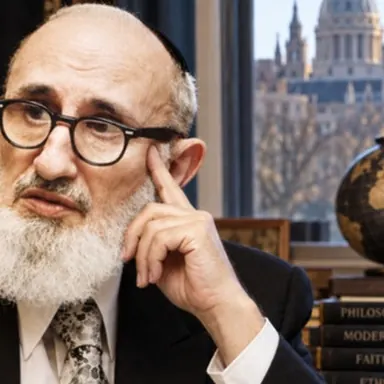
Illustration: Rabbi Yosef Dov HaLevi Soloveitchik (the Rav)
Illustration from the podcast episode
Read the research· 42 minListenWatch the video📜Sefaria⬡Show in the network🌌Show in the Tower of Generations🔗The path to another sage

Listen to the episode

Podcast episode · Rabbi Yosef Dov HaLevi Soloveitchik (the Rav)

Open in Spotify
The player loads from Spotify only when you click.
Open in Spotify

Watch the video

Rabbi Yosef Dov HaLevi Soloveitchik (the Rav)

Open on YouTube (opens in a new tab)

Rabbi Joseph Dov Soloveitchik - The Halakhic Man Who Lived Between Two Worlds

The video loads from YouTube only when you click.
Open on YouTube (opens in a new tab)

Core Concept

There is no need to resolve every tension between tradition and modernity. The believer can live with full force in both worlds – act, create and master reality, and at the same time stand in humility, covenant and responsibility before God.

Biography

A continuer of the Brisk method, a philosopher and head of a yeshiva who became a central figure of Modern Orthodoxy in the United States. He combined analytic halakhic scholarship with modern philosophy and dealt with the tension between human creativity, science and society on one side and covenant, prayer and faith on the other.

Writings on Sefaria

The writings of Joseph B. Soloveitchik can be read on Sefaria, a free library of Jewish texts. A title opens the text itself.

  • 📚Reshimot Shiurim on TalmudCollection(opens in a new tab)
  • 📖Kol Dodi Dofek(opens in a new tab)
📜All writings of Joseph B. Soloveitchik on Sefaria(opens in a new tab)

Content from Sefaria (sefaria.org) and Wikimedia projects, non-profit projects.

The Road to Sinai

The archive doesn’t yet record Rabbi Yosef Dov HaLevi Soloveitchik’s teachers, so the road to Sinai can’t be drawn yet.

See the generations from Sinai

Full research

2 documents·8,214 words· 42 min read

Contents42 min read

  1. The Halakhic and Philosophical Thought of Rabbi Yosef Dov HaLevi Soloveitchik: A Synthesis of Brisk Learning, Volozhin Kabbalah and Modern Thought
    • Introduction: The Intellectual and Halakhic World of the Rav
    • The Philosophical Foundations: From the Berlin Dissertation to Epistemological Pluralism
    • The Brisk Methodology and Its Affinity to the Esoteric Teaching of Volozhin
    • Phenomenology and Religious Existentialism: An Analysis of the Foundational Writings
    • His Attitude to Interreligious Dialogue: The Essay "Confrontation" and the Complexity of His Relation to Modernity
    • Zionism, the State of Israel and the Question of the Territories: The Brisk-Humanist Ruling
    • Conclusions
    • Sources
  2. The Soloveitchik Legacy: A Comprehensive Analysis of the Life, Thought, and Institutional Influence of Rabbi Yosef Dov HaLevi Soloveitchik
    • The Foundation of the Analytical School: Rabbi Yosef Dov HaLevi Soloveitchik (The Beis HaLevi)
    • The Conceptual Shift in Talmudic Analysis
    • The Development of the Brisk Rabbinate
    • The Philosophical Synthesis: Rabbi Yosef Dov HaLevi Soloveitchik of Boston
    • Intellectual Formation and the Berlin University Period
    • Immigration to America and the Leadership of Yeshiva University
    • The Existentialist Philosophy of Halakha
    • Zionist Thought and the "Six Knocks" of Providence
    • The Guardian of the Fortress: Rabbi Yosef Dov (Berl) Soloveitchik of Jerusalem
    • Early Life, the Holocaust, and the Flight to Mandatory Palestine
    • The Rebuilding of the Brisk Yeshiva in Jerusalem
    • The Methodology of "Living Witness"
    • Ideological Conflicts and Communal Leadership
    • The Brisk Method: Analytical Mechanics and Theoretical Innovations
    • Institutional Expansion and the Contemporary Brisk World
    • The Proliferation of Sub-Yeshivas
    • The Comparative Legacy: Two Models of Modernity
    • Concluding Synthesis: The Enduring Impact of the Soloveitchik Name
    • Sources
Contents· 47 sections
  1. The Halakhic and Philosophical Thought of Rabbi Yosef Dov HaLevi Soloveitchik: A Synthesis of Brisk Learning, Volozhin Kabbalah and Modern Thought
    • Introduction: The Intellectual and Halakhic World of the Rav
    • The Philosophical Foundations: From the Berlin Dissertation to Epistemological Pluralism
    • The Critique of Hermann Cohen's Scientific Idealism
    • Epistemological Pluralism and the Relation to the Exact Sciences
    • Philosophy, Mathematics and the New Physics
    • The Brisk Methodology and Its Affinity to the Esoteric Teaching of Volozhin
    • Conceptual Analysis: The Distinction Between Gavra and Cheftza
    • The Ontological Kabbalah of Nefesh HaChaim and the Doctrine of Study
    • Phenomenology and Religious Existentialism: An Analysis of the Foundational Writings
    • Halakhic Man: The Autonomy of Normative Creation
    • The Lonely Man of Faith: Adam I and Adam II
    • Kol Dodi Dofek: From Fate to Destiny and the Six Knocks
    • His Attitude to Interreligious Dialogue: The Essay "Confrontation" and the Complexity of His Relation to Modernity
    • The Stages of Existence and the Privacy of the Experience of Faith
    • The Distinction Between Civic Cooperation and Theological Dialogue
    • Zionism, the State of Israel and the Question of the Territories: The Brisk-Humanist Ruling
    • The Move from Agudath Israel to Mizrachi and Pragmatic Zionism
    • The Question of Territorial Concession: The Supremacy of Saving Life
    • Medical Ethics and Modern Halakha: The Brain Death Controversy
    • Conclusions
    • Sources
  2. The Soloveitchik Legacy: A Comprehensive Analysis of the Life, Thought, and Institutional Influence of Rabbi Yosef Dov HaLevi Soloveitchik
    • The Foundation of the Analytical School: Rabbi Yosef Dov HaLevi Soloveitchik (The Beis HaLevi)
    • The Conceptual Shift in Talmudic Analysis
    • The Development of the Brisk Rabbinate
    • The Philosophical Synthesis: Rabbi Yosef Dov HaLevi Soloveitchik of Boston
    • Intellectual Formation and the Berlin University Period
    • Immigration to America and the Leadership of Yeshiva University
    • The Existentialist Philosophy of Halakha
    • Zionist Thought and the "Six Knocks" of Providence
    • The Guardian of the Fortress: Rabbi Yosef Dov (Berl) Soloveitchik of Jerusalem
    • Early Life, the Holocaust, and the Flight to Mandatory Palestine
    • The Rebuilding of the Brisk Yeshiva in Jerusalem
    • The Methodology of "Living Witness"
    • Ideological Conflicts and Communal Leadership
    • The Brisk Method: Analytical Mechanics and Theoretical Innovations
    • The Chakira and the Bifurcation of Legal Reality
    • The Rejection of Pilpul and the Search for "The Simple Truth"
    • The Primacy of Maimonides (Rambam)
    • Institutional Expansion and the Contemporary Brisk World
    • The Central Yeshiva and its Global Influence
    • The Proliferation of Sub-Yeshivas
    • The "Brisk Identity" as a Social Class
    • The Comparative Legacy: Two Models of Modernity
    • The Model of Engagement and Synthesis (Boston)
    • The Model of Separation and Purity (Jerusalem)
    • Concluding Synthesis: The Enduring Impact of the Soloveitchik Name
    • Sources

Document 1/2

The Halakhic and Philosophical Thought of Rabbi Yosef Dov HaLevi Soloveitchik: A Synthesis of Brisk Learning, Volozhin Kabbalah and Modern Thought

23 min read·4,501 words

Summary

The source under review presents the multidimensional figure of Rabbi Yosef Dov Soloveitchik, a thinker who brought about an impressive synthesis between the world of analytical Brisk learning and modern Western philosophy. The text outlines his teaching as an epistemological pluralism, in which halakha operates as an abstract conceptual system similar to mathematics, one that gives order and normative meaning to physical reality. Through an analysis of his main works, the dialectical manifestations of religious existence are explained, an existence that moves between creative mastery of the world and absolute submission and loneliness before God. Ultimately, the article stresses how his humanistic and pragmatic outlook guided his rulings on questions of Zionism, interreligious dialogue and ethics, while giving the value of saving life (pikuach nefesh) supremacy over the sanctity of the land.

Introduction: The Intellectual and Halakhic World of the Rav

Rabbi Yosef Dov HaLevi Soloveitchik (the Rav; 1903–1993) is regarded as one of the central spiritual, philosophical and halakhic fathers of Modern Orthodoxy in the twentieth century [cite: 1, 2]. His public and Torah persona embodied a fusion, unique of its kind, between the summit of Eastern European Talmudic learning and the sharpest tools of Western philosophy [cite: 1, 3]. As a scion of the illustrious Brisk dynasty and the grandson of Rabbi Chaim Soloveitchik, the Rav carried with him the method of abstract conceptual analysis that turned Talmudic study into a considered analytical choice [cite: 2]. Alongside this, he developed a deep and wide-ranging philosophical outlook in constant dialogue with Neo-Kantian philosophy, existentialism and phenomenology [cite: 1, 3, 4].

Although he presented himself first and foremost as a "man of halakha" whose whole world is given over to the legal logic of the Torah, his studies and writings attest to a deep internalization of the kabbalistic-ontological conception of the Volozhin school, and in particular of the foundational work "Nefesh HaChaim" by Rabbi Chaim of Volozhin [cite: 5, 6]. Beyond that, his doctoral dissertation at the University of Berlin and his broad education demonstrated a profound command of mathematics and theoretical physics, which he turned into a central analogy for understanding halakhic cognition and the structure of religious consciousness [cite: 3, 7]. The Rav did not regard these spheres of knowledge as foreign or alien worlds, but as complementary mechanisms that operate within human and metaphysical reality and reveal different facets of divine revelation [cite: 7, 8].

The Philosophical Foundations: From the Berlin Dissertation to Epistemological Pluralism

The Critique of Hermann Cohen's Scientific Idealism

In 1932 Rabbi Yosef Dov Soloveitchik submitted his doctoral dissertation at the University of Berlin, which dealt with the epistemology and metaphysics of the Jewish Neo-Kantian philosopher Hermann Cohen, under the title "Pure Thought and the Constitution of Being in Hermann Cohen" [cite: 3, 9]. At the center of his analysis stood the critique of Cohen's "scientific idealism," which held that no object in reality is given in itself in advance, but is constituted purely by human thought, and in particular by mathematical-scientific thought [cite: 1, 3]. Cohen relied on the conception of the "fact of science" and sought to ground logic on the foundations of mathematical physics [cite: 1].

The Rav identified the inherent limitations of the Cohenian model, noting that reducing all being to quantitative scientific structures leaves outside the philosophical system individual existence, immediate sensation and subjective consciousness [cite: 3, 8]. This critique led him to formulate his own independent position, defined as "epistemological pluralism," which served as the foundation of all his later religious thought [cite: 8].

Epistemological Pluralism and the Relation to the Exact Sciences

According to the position of epistemological pluralism that the Rav developed, there exists one absolute ontological reality, but this reality cannot be fully captured by a single cognitive method [cite: 8]. The object under discussion is revealed to the subject in various ways, each mode of cognitive disclosure having its own corresponding telos (purpose), and the philosopher or the scientist may choose a particular aspect of reality in accordance with his aims [cite: 8]. Science, despite its decisive importance for understanding the world, can deal only with those aspects of reality that can be quantified, measured and atomized [cite: 8]. The experiential and spiritual qualities slip through the scientific net [cite: 8].

As an example, the Rav presented the concept of space: the physicist does not understand space as the mathematician conceives it, and the ordinary person experiences space in a way entirely different from both [cite: 8]. Although these definitions differ from one extreme to the other, none of them is mistaken, since each method has revealed a defined aspect of truth in reality [cite: 8]. This position led him to come out against scientific positivism, which holds that the empirical scientific method is the only way of understanding being, and to propose in its place a multiplicity of keys to ontological cognition [cite: 7, 8].

Philosophy, Mathematics and the New Physics

In his philosophical works, and especially in "Halakhic Man" and "The Halakhic Mind," the Rav pointed to the deep crisis into which Western philosophy had fallen at the beginning of the twentieth century [cite: 7]. This crisis stemmed from philosophy's failure to keep pace with the revolutionary developments and discoveries in modern mathematics and physics, such as the theory of relativity and quantum mechanics [cite: 7]. Kant created a philosophical system that constituted an apologetic for, and an integration of, Newtonian physics and the infinitesimal calculus of Newton and Leibniz, but the modern physics of the twentieth century is still waiting for the philosophical thinker who will formulate its metaphysical worldview [cite: 7].

Unlike philosophy, which struggled to adapt itself to the new discoveries, mathematics was seen by the Rav as a creative and unlimited inquiry into the work of creation, which begins in an a priori ideal world and ends with the application of relations between it and actual reality [cite: 7]. The mathematical model served him as the central analogy for understanding the consciousness of halakhic man, who likewise operates from an abstract a priori system imposed on reality [cite: 7].

Parameter of comparisonThe mathematical modelThe halakhic model (halakhic man)
Cognitive starting pointAxioms and abstract conceptual systems constructed a priori [cite: 7]Norms, laws and a priori rules given by the Torah [cite: 7]
Mode of relating to realityCreating an ideal world and projecting it onto experimental data [cite: 7]Applying the ideal conceptual system to the actual facts [cite: 7]
Mechanism of cognitionCreative cognition free of direct empirical shackles [cite: 7]Measuring and mapping cognition that organizes reality according to the law [cite: 1, 7]
Relation to the tangible worldQuantification, precise definition and arrangement of the data in formulas [cite: 7, 8]Setting boundaries, measures, domains and classifications of the forbidden and the permitted [cite: 1, 7]

The Brisk Methodology and Its Affinity to the Esoteric Teaching of Volozhin

Conceptual Analysis: The Distinction Between Gavra and Cheftza

The Rav's Talmudic methodology drew directly on the Brisk beit midrash, founded by his grandfather, Rabbi Chaim Soloveitchik [cite: 2]. The Brisk method replaces the attempt to find causal, psychological or historical explanations, or moral reasons, for the commandments with an abstract and precise conceptual analysis of the Talmudic legal structure [cite: 2]. The halakhic law is broken down into its basic components, with a meticulous definition of the legal categories that operate within it [cite: 2].

One of the central and most influential tools of this method is the strict distinction between the category of "cheftza" (the halakhic object) and the category of "gavra" (the acting subject) [cite: 2]. This conceptual analysis makes it possible to decide whether a particular halakhic status – such as a prohibition, sanctity, an obligation of fulfillment or an exemption – rests on the physical object, or whether it constitutes a personal obligation incumbent on the person of the one who acts [cite: 2]. The Rav expanded this method and turned it into a complete philosophical language, in which the local Talmudic discussion becomes a rigid and abstract ontological structure [cite: 2].

The Ontological Kabbalah of Nefesh HaChaim and the Doctrine of Study

Despite his public image as an academic and an analytical man of halakha, the Rav's spiritual roots draw deeply on the esoteric teaching of Rabbi Chaim of Volozhin, as formulated in the book "Nefesh HaChaim" [cite: 5, 6]. The Volozhin school's conception of "Torah lishmah" (Torah for its own sake) is understood not as an emotional experience or as practical pragmatism, but as a supreme ontological act in which the student binds himself to the divine wisdom and unites the worlds [cite: 5, 6].

The Rav used kabbalistic concepts to solve philosophical and epistemological paradoxes [cite: 7]. The Lurianic concept of "tzimtzum" (contraction), for example, was sketched by him as a mechanism that resolves the problem of multiplicity and non-infinity that had occupied philosophy for generations [cite: 7]. Unlike Hasidism, which translated Kabbalah into psychological terms of inner and emotional experience, the Volozhin school and the Rav translated the kabbalistic mystery into a cognitive-halakhic mechanism [cite: 5, 6]. According to this conception, scholarly thinking and abstract study of the law of the Torah are themselves the supreme mystical and ontological channel for creating contact with the Infinite [cite: 5, 7].

Phenomenology and Religious Existentialism: An Analysis of the Foundational Writings

Halakhic Man: The Autonomy of Normative Creation

In his seminal work "Halakhic Man," the Rav presented a subtle and unique human type, opposed both to the classical "man of religion" and to the modern "man of science" [cite: 7]. The classical man of religion yearns for mystical experience, for liberation from the shackles of physical reality and for escape to higher, transcendent worlds [cite: 1, 7]. The man of science, by contrast, is immersed in empirical reality and seeks to decipher its laws [cite: 7].

Halakhic man presents a double synthesis: he approaches the empirical world equipped with an a priori system of laws and statutes given in advance [cite: 7]. Unlike the man of religion, halakhic man does not seek the divine in heaven, but brings the Shekhinah down into earthly reality [cite: 1, 7]. He does this by setting boundaries, measuring, delimiting and ruling on the law within physical reality [cite: 1, 7]. Halakhic creation is a cognitive act that gives normative meaning to the material world and redeems it from transience and chaos [cite: 1, 7].

The Lonely Man of Faith: Adam I and Adam II

In his work "The Lonely Man of Faith," the Rav offers a phenomenological and existentialist analysis of the existence of modern man, based on the double analysis of the accounts of the creation of man in the Book of Genesis [cite: 1, 10, 11]. The work outlines two anthropological types through which man acts in the world [cite: 10, 11]:

Adam I is the man of majesty, splendor and creativity [cite: 10, 11]. He was created in the image of God and commanded "fill the earth and subdue it" [cite: 10, 11]. This man makes use of scientific and technological reason in order to master nature, to heal diseases, to create culture and to improve his material existence [cite: 10, 11]. He acts in a subject–object relation, and asks the practical question "How does the world work?" [cite: 10, 11].

Adam II is the man of covenant, submission and sacrifice [cite: 10, 11]. He was formed from the dust, placed in the Garden of Eden "to work it and to guard it," and seeks redemption for his lonely existence [cite: 10, 11]. This man does not seek to master nature but to submit himself before God, out of an experience of dependence, humility and a personal covenantal bond [cite: 10, 11]. He acts in a subject–subject relation, and asks the essential question "What is the meaning of existence?" [cite: 10, 11].

The Rav argues that modern religious man cannot confine himself to only one of these two identities, but is condemned to move, like a volcano, in a ceaseless dialectic between them [cite: 1, 11]. This movement between the will to cultural conquest and the duty of religious submission gives rise to a deep existential loneliness, since modern society, which sanctifies majesty and technology, finds it hard to understand the language of submission and covenant of the man of faith [cite: 1, 10, 11].

Kol Dodi Dofek: From Fate to Destiny and the Six Knocks

In his work "Kol Dodi Dofek" (The Voice of My Beloved Knocks), the Rav deals with the question of suffering, the Holocaust and the theological meaning of the establishment of the State of Israel [cite: 12, 13]. The work proposes a fundamental distinction between two states of human and national existence [cite: 12, 14]:

Existence of fate represents a passive existence of endurance, in which the person or the people is perceived as an object and as a victim of the forces of nature, history and the environment [cite: 12, 14]. In this state, the question asked in the face of suffering and evil is a barren metaphysical question: "Why did the suffering happen?" – a question that man has neither the ability nor the permission to decipher [cite: 12, 14].

Existence of destiny represents an active existence, in which man becomes a subject who shapes his fate and fulfills a moral and spiritual commitment [cite: 12, 14]. In this state, suffering shifts its focus to the halakhic-practical question: "What am I obliged to do in the wake of the suffering?" [cite: 12, 14]. The Rav enumerated six "knocks" (knockings) of divine providence in modern history – among them the political struggle, national consolation, the collective response and the deterrence of enemies – which call on the Jewish people to transform the shared covenant of fate (suffering and persecution) into an active spiritual and national covenant of destiny [cite: 12, 14].

The workThe central typologyThe existential tensionThe religious purpose
Halakhic ManHalakhic man versus the man of religion and the man of science [cite: 7]The gap between the abstract ideal world and experiential reality [cite: 7]Bringing the Shekhinah down into the empirical world through the setting of norms [cite: 1, 7]
The Lonely Man of FaithAdam I (majesty) versus Adam II (covenant) [cite: 10, 11]The loneliness of the man of faith within a technological culture [cite: 1, 10, 11]Dialectical movement between mastery of nature and submission to God [cite: 10, 11]
Kol Dodi DofekExistence of fate (passive) versus existence of destiny (active) [cite: 12, 14]The experience of suffering and the Holocaust versus national uprising and revival [cite: 12, 14]Transforming the shared fate into a spiritual destiny and halakhic commitment [cite: 12, 14]

His Attitude to Interreligious Dialogue: The Essay "Confrontation" and the Complexity of His Relation to Modernity

The Stages of Existence and the Privacy of the Experience of Faith

In 1964 the Rav published the essay "Confrontation" in the journal Tradition, as a direct response to the deliberations at the Second Vatican Council that led to the publication of the declaration Nostra Aetate [cite: 10, 15, 16]. The essay presents a philosophical anthropology that formulates three stages in the development of human existence [cite: 10, 11, 17]:

The first stage is unconfronted existence, in which man lives as an inseparable part of nature, without a distinct normative consciousness [cite: 10, 11, 17]. The second stage is confronted existence, in which man detaches himself from nature, discovers himself as an independent subject, and bends the physical environment by means of his reason and his creativity [cite: 10, 11, 17]. The third stage is doubly confronted existence, in which an encounter takes place between two subjects equal in status, who recognize their uniqueness, their loneliness and the untranslatability of their being [cite: 10, 11, 17].

At this level, man stands not only before his fellow but also before God, within a covenantal community [cite: 10, 11]. The Rav determines that the Jew is required to live in an existence of double confrontation: on the one hand, as a human being who shares the general fate of humanity in its struggle with nature; and on the other, as a member of a unique covenantal community with an exclusive and untranslatable relationship with God [cite: 10, 11].

The Distinction Between Civic Cooperation and Theological Dialogue

The practical implications of the essay "Confrontation" concern the delimitation of the boundaries of the encounter between the Jewish community and other religious communities, and in particular the Catholic Church [cite: 10, 15, 16]. The Rav drew a strict distinction between two planes of encounter [cite: 10, 11, 15, 16]:

On the universal and civic plane, Jews have a duty to cooperate with members of all religions for the sake of repairing the world (tikkun olam), upholding morality, fighting poverty, disease and social injustice, and defending human rights and freedom [cite: 10, 11, 15, 16]. This cooperation is based on Adam I and on the general human confrontation with the dangers of nature and society [cite: 10, 11].

By contrast, on the plane of theology and faith, the Rav absolutely rejected any dialogue, symposium or public debate dealing with principles of faith, worship, dogmas or the interpretation of Scripture [cite: 15, 16]. His philosophical reasoning holds that the language of faith of a covenantal community is private, unique and untranslatable into external terms [cite: 15, 16, 17]. An attempt to find a "theological common denominator" necessarily leads to the distortion of religious identity, to psychological pressure and to the blurring of the domains of truth of the rescued community [cite: 15, 16, 18]. This position was adopted as the official policy of the Rabbinical Council of America (RCA) and guided the Orthodox leadership [cite: 11, 16, 17].

Zionism, the State of Israel and the Question of the Territories: The Brisk-Humanist Ruling

The Move from Agudath Israel to Mizrachi and Pragmatic Zionism

In his youth the Rav was identified with the non-Zionist Haredi stream of Agudath Israel, in direct continuation of the tradition of Eastern Europe and of the house of Brisk [cite: 19]. But with the destruction of European Jewry and the establishment of the State of Israel, a central turn took place in his position, and he became the spiritual and ideological leader of the "Mizrachi" movement and of Religious Zionism in the United States [cite: 12, 14, 20].

His Zionist conception differed essentially from the messianic-mystical stream that grew up in the Merkaz HaRav yeshiva under the leadership of Rabbi Zvi Yehuda HaKohen Kook [cite: 14, 19, 21]. The Rav adopted a rational, humanistic and pragmatic Zionist approach [cite: 14, 21]. He did not see the state as an automatic messianic miracle beyond criticism, but as a vital national refuge, a great historical opportunity and a practical instrument for realizing the values of the Torah, justice and the covenant [cite: 12, 14].

The Question of Territorial Concession: The Supremacy of Saving Life

A further polar difference between the position of the Rav and messianic Religious Zionism found expression in the question of the conception of the whole Land of Israel and of negotiations over territories ("land for peace") [cite: 14, 21, 22]. The Rav ruled that the question of holding the territories of the Land of Israel is absolutely subordinate to the halakhic principle of pikuach nefesh (saving life) [cite: 14, 21, 22].

According to his ruling, the preservation of human life takes precedence over the sanctity of the land and overrides the commandment of settling the Land [cite: 14, 22, 23]. If holding a particular territory places the lives of soldiers and civilians in real danger, it is permitted and even obligatory to reach a territorial compromise in order to prevent bloodshed [cite: 14, 22]. Moreover, the Rav insisted that the question whether evacuating territories increases or reduces the danger is not a halakhic question entrusted to rabbis, but a professional security question [cite: 14, 22]. Therefore the security experts, the statesmen and the military commanders are the ones authorized to determine which step will prevent danger to life, and halakha accepts their professional assessment as a decisive factual given [cite: 14, 22].

Medical Ethics and Modern Halakha: The Brain Death Controversy

One of the most complex medical and halakhic challenges with which the world of halakhic ruling dealt in the second half of the twentieth century was the definition of the moment of death for the purpose of organ donation to save lives [cite: 24, 25]. The question revolved around whether a complete and irreversible cessation of the functioning of the brain and the brain stem (brain-stem death) is considered the moment of halakhic death, even when the heart continues to beat by means of artificial resuscitation devices [cite: 24, 25].

In 1991 the Rabbinical Council of America (RCA) published a medical directives form that approved organ donation on the basis of the brain-death criterion [cite: 25]. The organization's leaders relied on the testimony of Rabbi Binyamin Walfish, who testified that the Rav had determined in a private conversation in the eighties that brain-stem death constitutes halakhic death in every respect [cite: 25].

This publication aroused a fierce storm in the Torah world [cite: 25, 26]. Two weeks later, the Rav's brother (Rabbi Aharon Soloveitchik) and his son-in-law (Rabbi Yitzchak Twersky) sent an explicit official letter to the president of the RCA [cite: 25, 27]. In their letter they firmly denied the claim and made clear that the Rav had never issued an official or public halakhic ruling approving the brain-death criterion [cite: 25, 26]. They argued that the Rav had deliberately refrained from deciding this intricate question because of the gravity of a case of doubt involving life [cite: 25]. Following the letter, the Rabbinical Council withdrew from relying on the Rav's name and removed the reference from its official directive forms [cite: 25].

Party responding in the controversyThe position presentedReasons, evidence and implications
The Rabbinical Council of America (RCA) [cite: 25, 26]Adoption of the brain-stem death criterion as halakhic death [cite: 24, 25]Oral testimony about a private decision of the Rav, combined with medical positions [cite: 25]
Rabbi Aharon Soloveitchik and Rabbi Yitzchak Twersky [cite: 25]Denial that any authoritative halakhic ruling by the Rav exists [cite: 25, 26]The Rav's deliberate refraining from a public decision because of the gravity of the prohibition of bloodshed [cite: 25]

Conclusions

The thought, rulings and life's work of Rabbi Yosef Dov HaLevi Soloveitchik constitute one of the deepest and most comprehensive attempts in the history of Jewish thought to create an organic synthesis between classical Talmudic learning and philosophical and scientific modernity [cite: 1, 3, 28]. A comprehensive analysis of his teaching yields several fundamental conclusions:

Halakha is seen by the Rav as an autonomous and a priori cognitive system [cite: 7]. It needs no external apologetics, but operates like pure mathematics: it builds an abstract ideal world of laws, definitions and measures, and applies it to empirical reality in order to redeem it from chaos [cite: 1, 7].

Despite the Neo-Kantian and existentialist philosophical language, the Rav's religious world is deeply anchored in the kabbalistic ontology of the Volozhin school and of the book "Nefesh HaChaim" [cite: 5, 6, 7]. Analytical Torah study and the Brisk analysis of gavra and cheftza are not merely a logical exercise, but the highest ontological mechanism for creating direct contact with the Infinite [cite: 2, 5, 6].

Modern religious existence is defined by him as a dialectical and unresolved experience [cite: 1, 11]. The man of faith does not arrive at harmonious rest, but moves constantly between a human stature that creates and masters nature (Adam I) and a covenantal stature that submits before God out of humility and existential loneliness (Adam II) [cite: 10, 11].

On the public and political plane, the Rav presented a halakhic-humanist and pragmatic position [cite: 10, 14]. His analysis of interreligious dialogue, of Religious Zionism and of the question of the territories rests on rigorous conceptual analysis, on recognition of the limits of religious language, and on supreme priority for the preservation of human life and the principle of pikuach nefesh [cite: 14, 16, 22]. His legacy gives Modern Orthodoxy a theoretical foundation that allows full involvement in the scientific and cultural world while maintaining binding fidelity to the finest details of halakha [cite: 1, 3, 28].

Sources28

  1. 1.From Phenomenology to Existentialism : The Philosophy of Rabbi Joseph B. Soloveitchik, Volume 2 [1 ed.] 9789004243347, 9789004243330 - DOKUMEN.PUB, dokumen.pub/from-phenomenology-to-existentialism-the-philosophy-of-rabbi-joseph-b-soloveitchik-volume-2-1nbsped-9789004243347-9789004243330.html
  2. 2.Brisker method - Wikipedia, en.wikipedia.org/wiki/Brisker_method
  3. 3.Soloveitchik's PhD on Cohen - Pure Thinking and Being - YouTube, youtube.com/watch?v=yNaxxM9saws
  4. 4.Hermann Cohen and Rabbi Joseph Soloveitchik on Repentance | Request PDF, researchgate.net/publication/249573343_Hermann_Cohen_and_Rabbi_Joseph_Soloveitchik_on_Repentance
  5. 5.Tag: Joey Rosenfeld - The Seforim Blog, seforimblog.com/tag/joey-rosenfeld/?print=print-search
  6. 6.Kabbalah book and egg candle ritual - Facebook, facebook.com/groups/406389726178047/posts/3454321224718200/
  7. 7.Rav Soloveitchik's New World View - Hakirah, hakirah.org/Vol24Goldman.pdf
  8. 8.Full article: Rabbi Soloveitchik on Religion and Science – Where the Conflict Really Lies, tandfonline.com/doi/full/10.1080/14746700.2025.2514306
  9. 9.Das reine Denken und die Seinskonstituierung bei Hermann Cohen / von Josef Solowiejczyk | Scholarly Article | NNL_ALEPH990022182510205171 | The National Library of Israel, nli.org.il/en/dissertations/NNL_ALEPH990022182510205171/NLI
  10. 10.Soloveitchik's Interfaith Dialogue Critique | PDF - Scribd, scribd.com/document/877827603/Daniel-Rynhold-The-Philosophical-Foundations-of-Soloveitchiks-Critique-of-Interfaith-Dialogue
  11. 11.Revisiting "Confrontation" After Forty Years A Response to Rabbi Eugene Korn, torahleadership.org/categories/revisitingconfrontation.pdf
  12. 12.Areivut as the Conceptual Core of the Rav's Covenant of Fate and, thelehrhaus.com/jewish-thought-history/areivut-as-the-conceptual-core-of-the-ravs-covenant-of-fate-and-beyond/
  13. 13.Sacred silence: ritual containers and Yom Ha-Shoah - Taylor & Francis, tandfonline.com/doi/pdf/10.1080/17504902.2026.2680623
  14. 14."America is Israel. New York City is Jerusalem." Freddie deBoer says it's time to move Israeli Jews to the United States. - Comments, danielgordis.substack.com/p/america-is-israel-new-york-city-is/comments
  15. 15.Letters - Jewish Action, jewishaction.com/letters/letters-5/
  16. 16.From Confrontation to Cooperation: The Philosophical Foundations of the Joseph B. Soloveitchik-Irving Greenberg Schism on Jewish-Christian Dialogue | Harvard Theological Review - Cambridge University Press & Assessment, cambridge.org/core/journals/harvard-theological-review/article/from-confrontation-to-cooperation-the-philosophical-foundations-of-the-joseph-b-soloveitchikirving-greenberg-schism-on-jewishchristian-dialogue/705954316A2FAEC905EA612A704E52E1
  17. 17.Rabbi Joseph Soloveitchik's 'Confrontation': A Reassessment - Catholic Law Scholarship Repository, scholarship.law.edu/cgi/viewcontent.cgi?article=1102&context=scholar
  18. 18.Thoughts on Confrontation & Sundry Matters Part I - The Seforim Blog, seforimblog.com/2009/01/thoughts-on-confrontation-sundry/
  19. 19.HARAV TZVI YEHUDA - TEACHINGS, CHARACTER TRAITS, AND STORIES - Machon Meir, machonmeir.net/harav-tzvi-yehuda-teachings-character-traits-and-stories/
  20. 20.Review Essay Exposition as High Art I Ḥakirah 15 © 2013 - Hakirah, hakirah.org/Vol15Kaplan.pdf
  21. 21.Chapter 3 The People, the Land and the Law: Jewish-Israeli Religious Zionists in Dialogue Groups with Palestinians in - Brill, brill.com/display/book/edcoll/9789004425958/BP000016.xml
  22. 22.Rabbi Steinman and the Messiah, part 3 - The Seforim Blog, seforimblog.com/2021/01/rabbi-steinman-and-the-messiah-part-3/
  23. 23.Torah Queeries: Weekly Commentaries on the Hebrew Bible 9780814785249, dokumen.pub/torah-queeries-weekly-commentaries-on-the-hebrew-bible-9780814785249.html
  24. 24.The CommenTaTor, yucommentator.org/wp-content/uploads/2019/11/85.3.pdf
  25. 25.The Lost Letter: Rav Soloveitchik on Brain Death - Torah Musings, torahmusings.com/2011/03/the-lost-letter-rav-soloveitchik-on-brain-death/
  26. 26.Jewish history may be lying around in your baseme • Don't let it be lost to the world. - Agudath Israel, agudah.org/wp-content/uploads/2016/09/JO1991-V24-N05.pdf
  27. 27.Documents - HODS - Halachic Organ Donor Society, hods.org/halachic-issues/documents/
  28. 28.How the Young Rav Soloveitchik conquered the Boiling Crucible of German Philosophy, youtube.com/watch?v=8AZMteUWjJ0

Document 2/2

The Soloveitchik Legacy: A Comprehensive Analysis of the Life, Thought, and Institutional Influence of Rabbi Yosef Dov HaLevi Soloveitchik

19 min read·3,713 words

Summary

The text surveys the work of the Soloveitchik dynasty, a dominant rabbinic family that reshaped the world of Torah study through the analytical "Brisk method," based on the classification of legal definitions and on logical precision. The survey focuses on three key figures: the "Beis HaLevi", who laid the conceptual foundations of the method; his grandson, known as "the Rav" of Boston, who combined the Lithuanian tradition with Western philosophy and led Modern Orthodoxy in the United States; and his descendant "Rabbi Berl" of Jerusalem, who preserved the legacy with conservative devotion and in complete separation from the state. The aim of the work is to present the family's decisive influence on the contemporary yeshiva world, comparing models of intellectual synthesis with purist withdrawal in the face of modernity. At the center stands the insight that the Torah, in their view, is an autonomous logical system that allows a profound analysis of reality through pure halakhic categories.

The name Yosef Dov HaLevi Soloveitchik represents a transformative force in modern Jewish history, signifying a multi-generational shift in the methodology of Talmudic analysis, the structural organization of the Lithuanian yeshiva, and the philosophical articulation of Jewish identity in the face of modernity.[1] Within the annals of the "Brisk" dynasty, the name is primarily shared by three pivotal figures, each of whom served as a cornerstone for the tradition in their respective eras and locations. The first was the progenitor of the analytical school, the author of the Beis HaLevi; the second was the philosophical giant of the twentieth century in the United States, often referred to as "The Rav"; and the third was the uncompromising guardian of the tradition in Jerusalem, known colloquially as "Rabbi Berl".[1, 2] To understand the work and teachings of "Rabbi Yosef Dov Soloveitchik" is to engage with a lineage that moved the center of Jewish intellectual life from the expansive erudition of the nineteenth-century Lithuanian rabbinate to a sophisticated, conceptual system of logic that continues to dominate the contemporary yeshiva world.[3]

The Foundation of the Analytical School: Rabbi Yosef Dov HaLevi Soloveitchik (The Beis HaLevi)

The historical and intellectual trajectory of the Soloveitchik family begins in earnest with Rabbi Yosef Dov HaLevi Soloveitchik (1820–1892), famously known by the title of his primary halakhic work, Beis HaLevi.[1, 4] Born into the highest strata of the Lithuanian rabbinic elite, he was the great-grandson of Rabbi Chaim of Volozhin, the primary disciple of the Vilna Gaon and the founder of the Volozhin Yeshiva, which served as the "mother of all yeshivas".[3, 5] The Beis HaLevi’s early career as a Rosh Yeshiva in Volozhin was marked by a growing tension between his innovative analytical approach and the more traditional modes of study favored by his colleagues, leading to a pivotal transition when he accepted the rabbinate of the city of Brisk (Brest-Litovsk).[1, 3]

The Conceptual Shift in Talmudic Analysis

The Beis HaLevi is credited with planting the seeds of what would eventually become the "Brisk Method," a system characterized by the categorization of legal concepts rather than the mere resolution of local contradictions.[3, 4] Prior to this period, Talmudic study often focused on bekiyut (broad knowledge) and the use of pilpul (dialectical reasoning) to harmonize disparate texts. The Beis HaLevi introduced a more rigorous, quasi-scientific approach to the law, seeking to isolate the underlying legal essence of a commandment.[3]

A classic example of this nascent Brisk methodology can be found in his treatment of the commandment of Torah study.[4] In his responsa, he famously distinguishes between two distinct legal dimensions of the obligation. The first is Torah study as an "independent commandment," a constant duty for men to engage with the sacred text. The second is Torah study as a "preparatory act" (hekhsher mitzvah) for the proper fulfillment of other commandments.[4] This distinction carries significant practical implications: while women are exempt from the formal, constant commandment of Torah study, they remain obligated in the second category—learning the specific laws and regulations that they are required to fulfill.[4] By bifurcating the law into these conceptual components, the Beis HaLevi provided a logical framework that could explain complex halakhic exemptions and obligations without resorting to external social or historical explanations.[3]

The Development of the Brisk Rabbinate

When the Beis HaLevi moved to Brisk, he established a model of rabbinic leadership that was as socially uncompromising as it was intellectually rigorous.[5] He viewed the role of the rabbi as the supreme arbiter of communal standards and the defender of the Torah’s autonomy against the rising tide of secularism and political modernization.[5] This period saw the solidification of the "Brisk identity"—a persona defined by extreme precision in religious practice, a skepticism of "soft" or "homiletical" reasoning, and a fierce independence from external institutional control.[6] This legacy would be inherited and refined by his son, Rabbi Chaim Soloveitchik, and subsequently by the various Yosef Dovs who would carry the family name into the twentieth century.[3, 7]

The Philosophical Synthesis: Rabbi Yosef Dov HaLevi Soloveitchik of Boston

Perhaps the most internationally renowned figure to bear the name was Rabbi Yosef Dov HaLevi Soloveitchik (1903–1993), the grandson of Rabbi Chaim Soloveitchik and the son of Rabbi Moshe Soloveitchik.[1, 5] Known throughout the Jewish world as "The Rav," he served as the spiritual and intellectual architect of Modern Orthodoxy in the United States for over four decades.[5, 8] His life work represented a unique and high-level synthesis of the rigorous Lithuanian analytical tradition and the categories of Western existentialist and Neo-Kantian philosophy.[5, 9, 10]

Intellectual Formation and the Berlin University Period

Born in Pruzhan and raised in the town of Khaslavichi, the young Yosef Dov was a product of the internal Brisk world.[5] His primary teacher was his father, Rabbi Moshe, who delivered intense, private lectures to his son, instilling in him the precise logical habits of his grandfather Rabbi Chaim.[5, 8] However, the Rav’s upbringing also included a significant exposure to Chabad Hasidism, which predominated in Khaslavichi.[5] He spent years studying the Tanya, the foundational work of Habad philosophy, which introduced him to the psychological and emotive dimensions of the religious life—a "heart" to match the "mind" of Brisk.[5, 9]

In an unprecedented move for a scion of the Soloveitchik dynasty, he pursued secular academic studies.[5] After acquiring a high school education in his late teens, he enrolled in the University of Berlin at the age of 22.[5, 8] There, he focused on philosophy, mathematics, and physics, eventually earning a doctorate in 1932.[5] His dissertation focused on the thought of Hermann Cohen, the founder of the Marburg school of Neo-Kantianism.[5, 10] This academic training was not a departure from his Torah studies but rather a refinement of his analytical tools. He saw in the mathematical precision of Neo-Kantianism a parallel to the rigorous conceptual categorization of the Brisk method.[10]

Immigration to America and the Leadership of Yeshiva University

In 1931, the Rav married Tonya Lewit, herself a PhD from the University of Jena, and in 1932, the couple immigrated to the United States.[5, 8] Settling in Boston, the Rav immediately began modernizing Jewish education, founding the Maimonides School (Yashivat Rambam), the first Jewish day school in New England.[5, 8] He insisted that the school offer a top-tier secular and religious education to both boys and girls, reflecting his belief that the Torah could flourish in a modern, democratic society.[8]

Upon the death of his father in 1941, he assumed the position of Rosh Yeshiva at Rabbi Isaac Elchanan Theological Seminary (RIETS) at Yeshiva University in New York.[5, 8] For the next 42 years, he commuted weekly from Boston to New York, delivering lectures that were attended by hundreds of students.[5] In 1960, signaling his deep integration into the American Jewish experience, he began delivering his public lectures in English rather than Yiddish, a move that allowed his thought to reach a broader audience.[5, 8]

The Existentialist Philosophy of Halakha

The Rav’s primary intellectual contribution was his ability to articulate the internal logic of the Halakha (Jewish law) as an autonomous and self-contained cognitive system.[9, 10] In his seminal work, Halakhic Man (1944), he argued that the religious Jew does not look at the world through the lens of mystical ecstasy or simple faith, but through the lens of legal categories.[10] Just as a physicist looks at a rainbow and sees mathematical frequencies, the "Halakhic Man" looks at a sunrise and sees the parameters for the morning prayer.[10]

His later works, such as The Lonely Man of Faith and U-Vikashtem Mi-Sham (And You Shall Seek From There), shifted toward a more existentialist tone.[10, 11] He explored the profound loneliness of the modern believer, who must navigate the tension between "Adam I" (the majestic, creative man who seeks to conquer nature) and "Adam II" (the covenantal man who seeks a submissive, sacrificial relationship with God).[10] This duality reflected the Rav's own life, caught between the rigorous intellectualism of Brisk and the deep spiritual yearnings he encountered in Hasidic and Western thought.[5, 9]

Zionist Thought and the "Six Knocks" of Providence

The Rav’s relationship with Zionism was a significant departure from the anti-Zionist stance of his grandfather and father.[5, 12, 13] He became a staunch supporter of the State of Israel, serving as the honorary president of the Mizrachi (Religious Zionists of America).[5, 8] In his famous 1956 address, Kol Dodi Dofek (The Voice of My Beloved Knocks), he articulated a theology of the State of Israel based on "six knocks" of divine providence that occurred during and after the Holocaust.[12, 13]

He distinguished between two types of covenants: the "Covenant of Fate" (Berit Goral), which binds all Jews together through shared suffering and historical necessity, and the "Covenant of Destiny" (Berit Ye'ud), which binds the Jewish people to the Torah.[13] He argued that the State of Israel was a manifestation of the Covenant of Fate, providing a physical refuge and historical dignity for the Jewish people.[12, 13] However, his Zionism was not messianic; he deliberately avoided terms like "the beginning of the redemption" (Atchalta de-Geulah), preferring a realistic appraisal of the state's role in Jewish survival.[12, 13]

The Guardian of the Fortress: Rabbi Yosef Dov (Berl) Soloveitchik of Jerusalem

While his cousin in Boston was building intellectual bridges, Rabbi Yosef Dov Soloveitchik (1916–1981), known as "Rabbi Berl," was dedicated to the uncompromising preservation of the Brisk tradition in Jerusalem.[1, 2, 14] As the eldest son of Rabbi Yitzchak Zeev Soloveitchik (the "Griz" or "Brisker Rov"), Rabbi Berl became the primary institutional and methodological heir to his father’s legacy in the Holy Land.[2, 15, 16]

Early Life, the Holocaust, and the Flight to Mandatory Palestine

Rabbi Berl was born in the city of Brisk and grew up in the intense, insular shadow of his father’s rabbinate.[2, 14] He was a recognized child prodigy; he claimed that by the time of his Bar Mitzvah, he had already mastered his grandfather Rabbi Chaim’s complex Chidushim on Maimonides by heart.[2, 14] His relationship with his father was exceptionally close, and he served as the Griz's "right hand" in both communal affairs and in the transmission of the family’s Torah.[2, 6, 16]

The outbreak of World War II shattered their world. Following the Nazi invasion of Poland, Rabbi Berl fled with his father and several brothers from Warsaw to Vilna and eventually to Mandatory Palestine in 1941.[2, 14] His mother and younger siblings remained in Brisk and were murdered by the Nazis, a trauma that would further solidify the family’s commitment to reconstructing the "lost world" of Lithuanian Jewry in Jerusalem.[14]

The Rebuilding of the Brisk Yeshiva in Jerusalem

After the Griz settled in Jerusalem, he began delivering lectures in his home to a select group of advanced students.[7] Upon his father’s death in 1959, Rabbi Berl assumed the leadership of the family’s students, eventually formalizing the institution known as the "Brisk Yeshiva" on Peres Street in the Zikhron Moshe neighborhood.[2, 16]

Unlike many contemporary yeshivas that grew into mass institutions with hundreds of younger students, Rabbi Berl maintained the Brisk Yeshiva as an elite "Kibbutz"—a gathering of senior students who had already completed their primary education in other major yeshivas.[7, 17, 18] The curriculum was famously focused on Seder Kodashim (the laws of the Temple service), a subject often neglected in other yeshivas but central to the Brisk desire to study "pure Torah" devoid of immediate practical application.[3, 7]

The Methodology of "Living Witness"

Rabbi Berl’s pedagogical approach was defined by his role as a "living witness" to his father’s and grandfather’s logic.[6] He resisted the tendency of other yeshivas to "modernize" the Brisk method or to turn it into a form of intellectual gymnastics.[6] For Rabbi Berl, the goal of a lecture was not to offer a "clever" solution (teretz) but to reach a "precise definition" (hashdarah) of the law.[6]

He was famously resistant to publishing his teachings in book form, a stance rooted in the Brisk belief that the true analytical method could only be transmitted from mouth to ear.[2, 6] He feared that the "cold" logic of Brisk would be misunderstood if it were available to those who had not spent years immersed in the physical presence of a master.[6] Consequently, his primary legacy was transmitted through the notebooks of his students and his Saturday night "Chumash and Rashi" lectures, where he would weave together the weekly Torah portion with the family’s ideological and political worldview.[16, 18, 19]

Ideological Conflicts and Communal Leadership

In Jerusalem, Rabbi Berl served as a pillar of the anti-Zionist Haredi world.[2, 6] He was closely associated with the Edah HaChareidis and refused to accept any financial support from the Israeli government for his yeshiva, relying entirely on private donations.[7, 16] His uncompromising nature led to a high-profile rift with Rabbi Elazar Shach, the leader of the Ponevezh Yeshiva and the broader Lithuanian Haredi world.[2, 6, 20]

Following the 1977 Israeli elections, when Haredi political parties began joining the government coalition, Rabbi Berl issued fierce condemnations.[2] He viewed any level of cooperation with the secular state as a fundamental betrayal of the anti-Zionist principles established by his father.[2, 6] This conflict emphasized the Brisk commitment to an "absolute truth" that refuses to bend for political pragmatism, even when that pragmatism is advocated by other major rabbinic leaders.[2]

The Brisk Method: Analytical Mechanics and Theoretical Innovations

Across all branches of the family, the "Brisk Method" (Derekh Brisk) serves as the common denominator.[3] It is a system that treats the Talmudic text as a collection of mathematical-like laws that can be understood through rigorous conceptualization.[3]

The Chakira and the Bifurcation of Legal Reality

The hallmark of the Brisk method is the Chakira (inquiry), which typically seeks to divide a single legal concept into two distinct possibilities.[3] The most famous of these is the distinction between Cheftza (object) and Gavra (person).[3]

  • Cheftza (The Object): This refers to a law that changes the essential status of a physical item. For example, in the laws of forbidden foods, is the food itself "imbued with a status of forbiddenness," or is it simply that the person is forbidden to eat it?.[3]
  • Gavra (The Person): This refers to an obligation that rests upon the individual. Using the same example, if the prohibition is on the Gavra, it means the food is neutral, but the person has a personal duty to refrain from eating it.[3]

This analytical tool allowed the Soloveitchiks to resolve centuries-old contradictions in the writings of Maimonides and the Rishonim (medieval commentators).[3, 21] By identifying whether a particular rule applied to the person or the object, they could explain why the law functioned differently in various contexts.[3]

The Rejection of Pilpul and the Search for "The Simple Truth"

The Brisk method was a reaction against the expansive, often convoluted reasoning of the 18th-century pilpul.[3] Rabbi Chaim and his descendants sought to return to the "simple truth" (p'shuto shel mikra/gemara) by stripping away extraneous arguments.[3, 6] They focused almost exclusively on the text of the Gemara, Rashi, Tosafot, and the Mishneh Torah of Maimonides, viewing these as the pure data from which legal axioms could be derived.[3, 7, 18]

The Primacy of Maimonides (Rambam)

The study of Maimonides is central to the Brisk world.[3, 21] While other yeshivas use Maimonides as a source for practical law, Brisk treats his Mishneh Torah as a conceptual map of the Talmud.[3] A "Brisk lecture" often begins with a contradiction between two passages in Maimonides and resolves it by introducing a new conceptual definition that redefines the entire subject matter.[2, 5, 10] This approach transformed Maimonides from a codifier of laws into the ultimate philosopher of Talmudic logic.[3]

Institutional Expansion and the Contemporary Brisk World

Since the passing of Rabbi Berl in 1981, the Brisk world in Jerusalem has undergone significant institutional proliferation.[7, 15, 16] While his eldest son, Rabbi Avraham Yehoshua Soloveitchik, is the primary successor at the central yeshiva on Peres Street, several other branches have emerged, each led by different members of the family.[7, 17]

The Central Yeshiva and its Global Influence

The yeshiva led by Rabbi Avraham Yehoshua currently hosts approximately 1,200 students, a significant portion of whom come from the United States and Europe.[7, 16, 18] These students are often the "best and brightest" of other Lithuanian yeshivas, seeking a "polishing" in the Brisk method before entering the rabbinate or communal leadership.[6, 7]

The yeshiva maintains its strict standards: entry to the main lectures requires personal permission from the Rosh Yeshiva, and students are expected to follow a rigorous schedule that includes learning every word of the tractate in order, without skipping any sections.[6, 7, 16, 18]

The Proliferation of Sub-Yeshivas

Over the last few decades, the Soloveitchik family has expanded its institutional reach through various sub-yeshivas and specialized schools.[7]

The "Brisk Identity" as a Social Class

The proliferation of these institutions has turned "Brisk" into more than just a place of study; it is a social class within the Haredi world.[6] A "Brisker" is expected to be more than just a scholar; they are expected to be precise in their speech, meticulous in their religious practice (chumrot), and fiercely independent in their thinking.[6, 16] This social identity has allowed the Brisk method to remain influential even among those who do not officially study in a Soloveitchik-led yeshiva.[7]

The Comparative Legacy: Two Models of Modernity

When viewing the two main Yosef Dov Soloveitchiks of the 20th century—the Rav in Boston and Rabbi Berl in Jerusalem—one sees the two paths that Lithuanian Jewry took in the wake of the Holocaust and the rise of the State of Israel.

The Model of Engagement and Synthesis (Boston)

The Boston Rav argued that the Brisk method was robust enough to engage with the modern world.[9, 10] For him, a PhD from Berlin was not a contradiction to being a master of the Talmud; rather, it was a way of refining the intellect to better understand the Torah’s depth.[5, 9] He believed that the Halakhic system was a universal language that could speak to the existential condition of all human beings, regardless of their location or time.[10] His legacy is found in the thousands of students who serve as rabbis and educators in Modern Orthodox and Religious Zionist communities, living a life of synthesis.[5, 8]

The Model of Separation and Purity (Jerusalem)

Rabbi Berl argued that the only way to save the Brisk method was to isolate it.[2, 6] For him, any engagement with modern philosophy or secular politics was a dilution of the Torah’s absolute truth.[2, 6] He believed that the yeshiva must be a "holy fortress," a place where time stands still and where the logic of 19th-century Brisk remains as vibrant and relevant as ever.[6, 18] His legacy is found in the expansion of the Haredi yeshiva world, which looks to Brisk as the ultimate standard of intellectual purity and religious uncompromisingness.[7]

Concluding Synthesis: The Enduring Impact of the Soloveitchik Name

The work and teachings of Rabbi Yosef Dov Soloveitchik, in all his incarnations, represent the pinnacle of the Lithuanian intellectual tradition.[1, 3] Whether through the conceptual responsa of the Beis HaLevi, the philosophical existentialism of the Boston Rav, or the institutional traditionalism of Rabbi Berl, the family has ensured that the "Brisk Method" remains the primary engine of Talmudic study in the Jewish world.[3, 7, 10]

The Soloveitchik legacy teaches that the Torah is not a static set of rules, but a dynamic, logical system that can be used to categorize reality and define the human experience.[3, 9, 10] By moving the focus from "what" to "how," and from expansive knowledge to conceptual depth, the Soloveitchiks provided the tools for the Jewish people to maintain their intellectual autonomy in an ever-changing world.[3, 6] Whether in the libraries of Boston or the study halls of Jerusalem, the name Yosef Dov Soloveitchik continues to serve as a beacon for those who seek the "Truth of the Torah" through the clear, cold light of analytical reason.[3, 6, 9, 10, 16]

Sources21

  1. 1.יוסף דוב הלוי סולובייצ'יק - ויקיפדיה, he.wikipedia.org/wiki/יוסף_דוב_הלוי_סולובייצ'יק
  2. 2.יוסף דוב הלוי סולובייצ'יק (ירושלים) - ויקיפדיה, he.wikipedia.org/wiki/יוסף_דוב_הלוי_סולובייצ'יק_(ירושלים)
  3. 3.שיטת בריסק - ויקיפדיה, he.wikipedia.org/wiki/שיטת_בריסק
  4. 4.יוסף דוב הלוי סולובייצ'יק (בית הלוי) - ויקיפדיה, he.wikipedia.org/wiki/יוסף_דוב_הלוי_סולובייצ'יק_(בית_הלוי)
  5. 5.אנציקלופדיה יהודית דעת - יוסף דב סולובייצ'יק ;, daat.ac.il/encyclopedia/value.asp?id1=852
  6. 6.פרופיל: הכירו את הגאון הרב אברהם יהושע סולובייצ'יק • מיוחד - בחדרי חרדים, bhol.co.il/news/171815
  7. 7.ישיבות בריסק - ויקיפדיה, he.wikipedia.org/wiki/ישיבות_בריסק
  8. 8.יוסף דוב הלוי סולובייצ'יק (בוסטון) - ויקיפדיה, he.wikipedia.org/wiki/יוסף_דוב_הלוי_סולובייצ'יק_(בוסטון)
  9. 9.מי היה הרב יוסף דוב הלוי סולובייצ'יק - יח' ניסן - הרב פרופ' ג'פרי וולף - YouTube, youtube.com/watch?v=FQMU33s6chY
  10. 10.הרי"ד סולובייצ'יק - מוסד ביאליק, bialik-publishing.co.il/Soloveichik
  11. 11.ספרי הרב יוסף סולובייצ'יק - המדף היהודי, hamadaf-y.co.il/חנות/מוסר-ואמונה/ספרי-הרב-יוסף-סולובייציק/
  12. 12.דף לימוד 5 - היחס לציונות ולמדינת ישראל - Sefaria, sefaria.org/sheets/479523
  13. 13.אתחלתא דתקווה - נאמני תורה ועבודה, toravoda.org.il/אתחלתא-דתקווה/
  14. 14.רבי יוסף דוב הלוי סולובייצ'יק (ירושלים) – ויקישיבה, yeshiva.org.il/wiki/index.php/רבי_יוסף_דוב_הלוי_סולובייצ'יק_(ירושלים)
  15. 15.משפחת סולובייצ'יק – ויקיפדיה, he.wikipedia.org/wiki/משפחת_סולובייצ'יק
  16. 16.ישיבת בריסק – ויקישיבה - אתר ישיבה, yeshiva.org.il/wiki/index.php/ישיבת_בריסק
  17. 17.הרב אברהם יהושע סולובייצ'יק ראש ישיבת בריסק עורך תנאים כמנהג בריסק Rav Avrohom Yehoshua Soloveitchik - YouTube, youtube.com/watch?v=Q3IViX4rCPc
  18. 18.ישיבות בריסק - Wikiwand, wikiwand.com/he/articles/ישיבת_בריסק
  19. 19.אברהם יהושע סולובייצ'יק - ויקיפדיה, he.wikipedia.org/wiki/אברהם_יהושע_סולובייצ'יק
  20. 20.אלעזר מנחם מן שך - ויקיפדיה, he.wikipedia.org/wiki/אלעזר_מנחם_מן_שך
  21. 21.רב יוסף דוב הלוי סולובייצ'ק | טקסטים ודפי מקורות מן התורה, התלמוד וספריית המקורות של ספריא., sefaria.org.il/topics/joseph-dov-halevi-soloveitchik

External Links

📜 Sefaria📖 Wikipedia (he)🌐 Wikipedia🏛 National Library of Israel

Data source

Ozar Chachamim — Jewish Sages Knowledge Base

ID 608