The Torah Teaching, Public Work and Artistic Creation of Rabbi Yisrael Yitzchak Besançon: The Meeting of the Avant-Garde and Hasidism at the End of the 20th Century and the Beginning of the 21st Century
26 min read5,200 words
The Torah Teaching, Public Work and Artistic Creation of Rabbi Yisrael Yitzchak Besançon: The Meeting of the Avant-Garde and Hasidism at the End of the 20th Century and the Beginning of the 21st Century
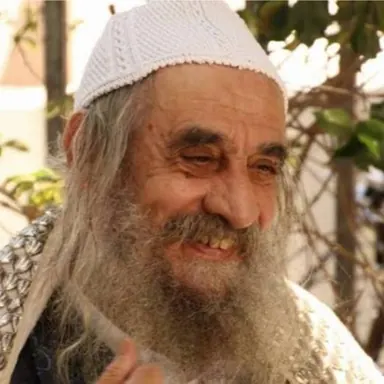
Rabbi Yisrael Yitzchak Besançon (Bezanson) represents a multidimensional and exceptional figure in the landscape of Breslov Hasidism in recent generations [cite: 1]. As a rabbi, thinker, prolific author, painter and composer, he acted as a living bridge between the world of modern art and the Western avant-garde and rooted Hasidic conservatism [cite: 1, 2, 3]. By developing methods of in-depth study of the central texts of Breslov Hasidism, creating an accessible psychological-spiritual language and founding the "Shir Chadash" community in the heart of Tel Aviv, he offered a unique model of Jewish spirituality that combines deep halakhic commitment with free artistic expression and somatic therapeutic tools [cite: 1, 3].
Biography and Historical Milestones
The life of Rabbi Besançon is marked by sharp geographical and cultural transitions, which left their stamp on his worldview and on the character of his writing and thought [cite: 1, 3].
Rabbi Besançon was born in the city of Nice in southern France [cite: 1, 2, 3]. In the sources there is slight uncertainty regarding his exact date of birth: some records point to 13 December 1944 (27 Kislev 5705), whereas other sources, mainly those relying on the French civil registry, give 27 December 1944 [cite: 1, 2]. Already in his childhood and youth he showed a deep affinity for painting and the plastic arts [cite: 1, 2, 3]. At the age of fifteen he experienced a spiritual awakening, following which he returned to religious practice, and went to study at several prominent Torah institutions in Europe [cite: 1, 3]. He studied at yeshivot in Lucerne, Switzerland and in Antwerp, Belgium, and also attended the yeshiva of the sages of France in Aix-les-Bains [cite: 1, 2, 3]. During his stay in Antwerp he drew close to Rabbi Moshe Yitzchak Gewirtzman (the Rebbe of Pshevorsk), who brought him close to the world of Hasidism and deeply influenced the beginning of his spiritual path [cite: 1].
After his studies in Aix-les-Bains, he married in New York Barbara (Bracha Basha) Rubin, a key figure and prominent creator in the experimental cinema and the New York avant-garde of the 1960s, who was close to the art scene of Andy Warhol and the band "Velvet Underground" [cite: 1, 3, 4]. The couple settled in France, in the town of Aix-les-Bains, where they raised a family and five children were born to them [cite: 1, 3]. In 1980 his wife died suddenly of medical complications after the birth of their fifth son, when she was only thirty-five years old [cite: 1, 2, 3]. This tragic loss was a personal and intellectual turning point for Rabbi Besançon, and out of bereavement and pain he began to formulate his teaching on coping with crises [cite: 1, 4]. Some months later he married again, Devorah Shapiro (who died in 2023), and she bore him another child [cite: 1, 2, 3]. His brother-in-law at this time was Rabbi David Nathan Shapiro, who served as the rabbi of the cities of Clermont-Ferrand and Vichy in France [cite: 1, 3].
In 1976, with the encouragement and blessing of Rabbi Levi Yitzchak Bender, Rabbi Besançon established a beit midrash and a center for disseminating the teaching of Breslov in Aix-les-Bains [cite: 3, 5]. This activity was pioneering and contributed greatly to the penetration of the Breslov vision into the French-speaking world, at a time when the movement was almost unknown in that country [cite: 3]. Among the students who studied with him at that time was Rabbi Avraham Yifrach, later one of the prominent teachers of Breslov Hasidism in France [cite: 3]. In 1994 (or 1995, according to some sources) Rabbi Besançon fulfilled his aspiration and immigrated to Israel [cite: 1, 3, 4]. He settled in Tel Aviv and established a vibrant community there [cite: 1, 3]. In his later years he drew very close to Rabbi Yisrael Dov Odesser ("the Ba'al HaPetek," "the man of the note"), who became his principal rabbi and greatly influenced the direction of the community's development [cite: 3, 5].
Rabbi Besançon passed away on 6 September 2026 (24 Elul 5786) at the age of 81, after a period in which his health deteriorated [cite: 1, 2, 3]. He was buried in the old Jewish cemetery in Safed [cite: 1, 3].
The following table presents the main stages in the life of Rabbi Besançon and the geography of his spiritual and artistic work:
| Period of life | Main geographical location | Influences and Torah activity | Artistic and musical activity | Sources |
|---|---|---|---|---|
| Childhood and youth (1944–1959) | Nice, France | Discovery of an initial attraction to Torah and tradition at age 15 [cite: 1, 3] | Early painting and drawing in a secular Western environment [cite: 1, 3] | [cite: 1, 2, 3] |
| The period of study (the 1960s) | Lucerne (Switzerland), Antwerp (Belgium), Aix-les-Bains (France) [cite: 1, 3] | Study at various yeshivot; drawing close to the Rebbe of Pshevorsk [cite: 1] | Exhibiting works at the "Denise" gallery in Antwerp [cite: 1] | [cite: 1, 3] |
| The Paris period | Paris, France | Deepening the bond with Breslov Hasidism; meetings with seekers | Establishing a studio-gallery; illustrating the Scroll of Ruth and focusing on Judaica; meeting with the patron Jack A. Gindi [cite: 1, 3] | [cite: 1, 3] |
| Communal activity in France (1976–1994) | Aix-les-Bains, France | Establishing a beit midrash and a center for disseminating Breslov with the blessing of Rabbi Bender; raising students such as Rabbi Avraham Yifrach [cite: 3, 5] | Developing a Hasidic-modern visual conception; initial work on the "Tel Yitzchak" Haggadah | [cite: 1, 3, 5] |
| The Israeli period (1994–2026) | Tel Aviv-Jaffa, Israel | Immigration to the Land; drawing close to Rabbi Yisrael Dov Odesser; founding the centers of the "Shir Chadash" community [cite: 3, 5] | Completion and publication of the "Tel Yitzchak" Haggadah (1997) [cite: 2, 3]; composing about 200 niggunim and recording the "Kulmus" albums [cite: 1, 6] | [cite: 1, 2, 3, 5] |
Spiritual Roots and the Chain of Transmission
Rabbi Besançon's spiritual method rests on a synthesis of four central Hasidic and ideological sources of influence, some of which seem on the face of it to be opposed to one another, but which merged in his personality into an ordered and harmonious teaching [cite: 1].
First, Rabbi Moshe Yitzchak Gewirtzman (the Rebbe of Pshevorsk) opened before him the gate to the heartfelt, relaxed and compassionate world of Hasidism, which emphasizes the value of simplicity and the service of the heart [cite: 1]. This influence softened Western scholarly rigidity and gave him the emotional foundation for Hasidism [cite: 1]. On the other side, his time in the presence of the leader of Neturei Karta, Rabbi Amram Blau, instilled in him a total and uncompromising commitment to halakhic truth and to separation from the corrupting spirits of the age, while developing spiritual resilience in the face of social conventions [cite: 1].
The third and central channel in shaping his identity as a distinct Breslov Hasid was Rabbi Levi Yitzchak Bender, one of the prominent leaders of Breslov Hasidism in Jerusalem [cite: 1, 3]. Rabbi Bender gave Rabbi Besançon the traditional and authorized Breslov chain of transmission, the demand for meticulous textual diligence, and the practical ways of service of the Breslov Hasidim of earlier generations [cite: 1, 3, 5]. Finally, in his later years in Israel, Rabbi Yisrael Dov Odesser ("Saba Yisrael") became his principal teacher and rabbi [cite: 3, 5]. Rabbi Odesser bequeathed to Rabbi Besançon the conception of radical dissemination, the duty to turn to the most distant places in Israeli society, and the focus on simple hitbodedut and on innocent faith free of theological complications [cite: 1, 5, 7].
The unique fusion of these paths allowed Rabbi Besançon to act as an entirely Orthodox halakhic leader, and at the same time to remain open, embracing and attentive to the soul of the secular young person or the post-modern spiritual seeker, without separatism or condescension [cite: 1].
His Torah Thought: Psychological Accessibility, In-Depth Study and Hasidic Somatics
Rabbi Besançon's Torah teaching is based on an existential-psychological translation of the mystical concepts of Breslov Hasidism [cite: 1]. He refused to see Hasidism as an abstract metaphysical doctrine, but saw it rather as an everyday working tool for healing the soul and attaining inner tranquility amid the storms of life [cite: 1].
In-Depth Study of Likutei Moharan and the "Pe'er HaLikutim" Project
One of Rabbi Besançon's most important methodological contributions to Breslov Hasidism is the demand for in-depth, systematic and structured study of the foundational book "Likutei Moharan," in contrast to the prevalent tendency of superficial or merely emotional reading [cite: 1, 8, 9]. His book "Mesilat HaKesharim" is based on the eighteen rules of study that Rabbi Avraham ben Rabbi Nachman of Tulchin revealed in the introduction to his book "Biur HaLikutim" [cite: 8, 9]. Rabbi Besançon took these complex rules, simplified them, and presented them by means of diagrams and practical examples that enable every learner to understand the inner structure, the theological connections and the logical course of Rabbi Nachman's teachings [cite: 8, 9].
The crowning glory of this enterprise is the "Pe'er HaLikutim" series, published under his guidance [cite: 1, 10]. The book is designed in the structure of a page of Gemara: the text of Likutei Moharan in the center, and around it columns of commentaries that gather biblical and rabbinic references, the commentaries of Moharnat and his disciples, practical counsels and prayers [cite: 10, 11]. This structure fulfilled the saying of Rabbi Nachman, who foresaw that a day would come when his book would be printed with commentaries around it, like the Talmud [cite: 10].
The Psychology of Crisis and the Spirit of "Courage"
Rabbi Besançon's thought was tested in the crucible of personal loss [cite: 1, 4]. The writing of his book "Ometz" (originally in French: Courage) during the days of mourning for the death of his first wife expressed a complete theological phenomenology of coping with bereavement and crisis [cite: 1, 4]. Rabbi Besançon argued that despair and depression are not merely harmful emotional states, but active forces that try to destroy a person's vitality [cite: 12]. The Breslov solution he offers is not ignoring the pain, but mobilizing spiritual "courage" based on the understanding that the Creator is present even within the deepest darkness, and that the descent itself is an inseparable part of the process of the soul's ascent and recovery [cite: 1, 13, 14].
Spiritual Somatics: Breath and Body in the Light of Hasidism
In his book "Neshama Neshima" (Soul, Breath), Rabbi Besançon made a bold move of integrating somatic (bodily) practices into Hasidic divine service [cite: 1, 15]. He presented a theory according to which breath is the direct mediator between the divine soul and the physical body [cite: 12, 15]. Whereas modern Western culture turns to the Far East to find breathing techniques and mindfulness, Rabbi Besançon showed that the roots of healing through breath lie in the Jewish prophetic tradition and in the writings of Rabbi Nachman [cite: 12, 16]. He explained that by conscious, calm and pure breathing a person can quiet the "imaginary creature" that dwells on the left side of the heart and wishes to destroy his tranquility [cite: 12], and thereby prepare himself for prayer, create inner quiet and heal anxieties and traumas without the need for mortifications and fasts [cite: 12, 16].
The Song of the Grasses and Hitbodedut as Urban Meditation
In his work "Shirat HaAsavim" (The Song of the Grasses), Rabbi Besançon presented Breslov "hitbodedut" – a person's personal conversation with his Maker – as a kind of deep Jewish meditation especially suited to modern man [cite: 17, 18, 19]. He described hitbodedut as a practice of temporary withdrawal from all the technological and social stimuli of the environment in order to create an intimate encounter with the self and with the Creator [cite: 17, 18, 19]. In his words, only the daily decision to withdraw from the bustle and to converse with God in simple language makes enormous kindnesses flow to a person and gives him an inner certainty that he is walking toward his psychological and spiritual recovery [cite: 17].
The Theology of "the Note" and the Figure of Saba Yisrael
In his book "Zeh Yenachameinu" (This One Will Comfort Us), Rabbi Besançon dealt with one of the controversial subjects in Breslov Hasidism: "the note" that Rabbi Yisrael Dov Odesser found, bearing the inscription "Na Nach Nachma Nachman MeUman" [cite: 1, 7, 20]. Rabbi Besançon offered a profound philosophical interpretation of the note, one that does not focus only on its mystical or miraculous aspects, but sees in it a message of cosmic consolation, hope and salvation intended for the parched and confused generation of the footsteps of the Messiah [cite: 17, 21, 22]. He sought to show how the simple message of the note opens a gate of connection to the flowing stream, the source of wisdom, for every Jew, wherever he may be [cite: 9, 22].
Map of the Works and the Literary Creation
Rabbi Besançon's literary enterprise is extensive and varied, and can be divided into five central conceptual categories that encompass all the needs of the learner's soul [cite: 1].
The following table offers a systematic and comprehensive catalogue of Rabbi Besançon's prominent books, according to a thematic division that clarifies the purpose of each work:
| Thematic category | Name of the book / work | Core subjects and content | Characteristics and target audience | Sources |
|---|---|---|---|---|
| Commentaries and methodology for Likutei Moharan | Mesilat HaKesharim | A guide to in-depth study according to the 18 rules of Rabbi Avraham of Tulchin | A foundational book for Breslov learners; includes illustrations and diagrams [cite: 8, 9] | [cite: 1, 8] |
| Kitzur Mesilat HaKesharim | An abridged and applied guide to the study of Likutei Moharan | A small, accessible pocket format for quick learning | [cite: 23, 24] | |
| Pe'er HaLikutim (series of volumes) | A comprehensive explanation of the teachings of Likutei Moharan | A unique layout in the style of a page of Gemara with commentaries around it [cite: 10, 11] | [cite: 1, 10, 11] | |
| Azamra | An in-depth explanation of Teaching 282 in Likutei Moharan | Focus on finding good points in oneself and in others | [cite: 1] | |
| HaNe'or BaLailah | An explanation of Teaching 52 in Likutei Moharan | Deals with the importance of night-time service and Tikkun Chatzot | [cite: 1] | |
| Or HaGanuz | An explanation of Teaching 15 in Likutei Moharan | An investigation of the concepts of light and concealment in divine service | [cite: 1] | |
| Even To'en | An explanation of Teaching 188 in Likutei Moharan | Deals with the search for the spiritual lost objects of the soul | [cite: 1] | |
| Kaf El Kaf | A booklet of sources for in-depth study of Teachings 44-45-46 | Intended for study groups and for delving into difficult texts | [cite: 16] | |
| Spiritual psychology and personal coping | Ometz (Courage) | Coping with crises, mourning and despair | Originally written in French; translated into 7 languages [cite: 1, 4] | [cite: 1, 4] |
| Click (2 volumes) | Questions and answers from the rabbi's internet forum | Direct and frank questions and answers on varied life topics [cite: 25, 26] | [cite: 25, 27, 28] | |
| Aderaba | A practical guide to developing a positive outlook | A method for developing optimistic thinking and a good eye | [cite: 1] | |
| Tovanot | A collection of sayings and insights from the rabbi's lessons | Edited by his disciple Rabbi Michi Yosefi [cite: 1, 29] | [cite: 1, 29, 30] | |
| Ga'agu'im | A collection of teachings and insights on divine service | A conceptual collection that awakens spiritual longings | [cite: 1] | |
| LeMishmeret Shalom | The importance and virtue of conversation between friends | A discussion of the power of spiritual friendship to repair the soul | [cite: 1] | |
| Somatics, health and practical practice | Neshama Neshima | A method for integrating breathing into body-soul healing | Integration of Hasidic sources with therapeutic tools [cite: 12, 15] | [cite: 1, 15] |
| Hitbodedut | A systematic guide to personal conversation with the Creator | Clear instructions and practical advice for applying the practice | [cite: 1] | |
| Shirat HaAsavim | Hitbodedut as meditation in nature | A guide that combines conversation, song and contemplation of creation [cite: 17, 19] | [cite: 17, 19] | |
| Lechem Abirim | Spiritual nutrition and eating | The relation of body and soul to food according to Hasidism [cite: 1, 31] | [cite: 1, 31] | |
| Marpe Lashon | Repairing speech and guarding the tongue | Deals with the healing power of positive and clean speech | [cite: 1, 32, 33] | |
| Dibbur LaEvarim | A somatic practice of dialogue with the body | Guidance in directing supportive and healing speech to the limbs of the body | [cite: 15, 32] | |
| Marriage and family | Lecha Dodi | A guide to spiritual marriage for men | Based on the Ten Commandments; guidance for domestic harmony [cite: 1, 9] | [cite: 1, 9] |
| Likrat Kallah | A guide to spiritual marriage for women | Based on the Ten Commandments; guidance for proper married life [cite: 1, 9] | [cite: 1, 9] | |
| Yehi Or | The virtue and secret of lighting the Sabbath candles | A booklet of guidance and study for the Jewish woman | [cite: 1] | |
| Breslov parables and children's books | HaOre'ach HaMistori (The Mysterious Guest) | An adaptation and interpretation of Rabbi Nachman's parables | Intended for children and adults; accompanied by illustrations | [cite: 11, 33, 34] |
| HaOtzar (The Treasure) | An adaptation of the story "The Treasure under the Bridge" | A parable about finding the inner treasure that dwells within a person | [cite: 27, 34] | |
| Svahalom (A Tale of a Diamond) | An adaptation of the story "The Pauper and the Diamond" | A visual parable for children about discovering the worth of the soul | [cite: 27, 34] | |
| Migdalor (Lighthouse) | An explanation of the story "The Treasure under the Bridge" | Intended for youth and adults seeking inner understanding | [cite: 1] | |
| HaYahalom (The Diamond) | An explanation of the story "The Pauper and the Diamond" | Short studies of the complex inner story | [cite: 1] |
Plastic Art and Judaica from His Brush
For Rabbi Besançon, painting and illustration were not a side occupation or an aesthetic hobby, but an essential part of his divine service and a channel of spiritual expression complementary to his writing [cite: 1]. He began to paint in his youth in Nice, and during his stay in Antwerp he exhibited his works at the "Denise" gallery [cite: 1, 3]. With his return to religious observance and his acceptance of the yoke of the commandments, his paintings underwent a deep thematic transformation and began to reflect contents from the Jewish sources, the stories of the Bible and the spiritual world of Hasidism [cite: 1].
During the seven years he lived in Paris, Rabbi Besançon established a personal studio-gallery in which he created and sold complex works of Judaica [cite: 1, 3]. During this period he illustrated a special book on the Scroll of Ruth and began to work on the "Five Scrolls" series [cite: 1, 3]. This series attracted the attention of the Jewish-American collector and patron Jack A. Gindi, who visited his studio in Paris and decided to support him artistically, a meeting that was a significant turning point in the rabbi's artistic career [cite: 1].
Rabbi Besançon's painting style is unique and recognizable: it combines strong brushstrokes influenced by the modern currents and by the painter Marc Chagall with rooted Kabbalistic and Hasidic symbolism [cite: 1]. His oil paintings present Hasidic figures floating in space, enchanted landscapes of Eastern European or Jerusalem towns, and biblical motifs rich in warm, vibrating colors that convey vitality, movement and longing [cite: 1].
His central artistic life's work was the writing and illustration of the "Tel Yitzchak" Passover Haggadah, a work that lasted about twelve years [cite: 1]. This Haggadah was written entirely in decorative hand calligraphy and designed by him, and it includes dozens of colorful oil paintings that express the cosmic and national drama of the Exodus from Egypt [cite: 1, 3]. The Haggadah was published in Jerusalem in 1997 by the publishing house P.M. Judaic'art International Publishers in a luxurious limited edition of 500 copies numbered and signed by the rabbi [cite: 3]. His paintings and prints of his works serve to this day as a means of funding the community's charitable activity, and are given as gifts to donors who dedicate their tithe money to the support of his institutions [cite: 13].
The Music of the Soul: The "Kulmus" Niggunim
Rabbi Besançon saw the niggun as a supreme spiritual instrument, in accordance with the teaching of Rabbi Nachman of Breslov, which attributes to music the ability to raise the soul from the lowest places and to heal it [cite: 1, 35]. He composed close to 200 niggunim, most of them of a quiet, solitary and yearning character [cite: 1, 36]. For many years the niggunim were preserved in simple home recordings on cassettes in his study [cite: 1].
In his later years in Tel Aviv, the members of his community decided to give these niggunim a professional musical garb accessible to everyone [cite: 1, 36]. The project was led by the arranger and music producer David Chacham Herson, who recruited the best musicians in the country for the purpose [cite: 36]. The ensemble that took part in the recordings included leading musicians:
- Amit Yitzchak on guitars [cite: 36].
- Achiya Cohen Eloro on piano and keyboards [cite: 36].
- Yoav Bontzel on drums [cite: 36].
- Yishai Mordechai on bass [cite: 36].
- David Chacham Herson on saxophones and flutes [cite: 36].
Within this project two exemplary albums were produced, named "Kulmus" (2019) and "Kulmus 2" (2021), both with a graphic design that places Rabbi Besançon's oil paintings on the covers [cite: 1, 6]. On these albums the rabbi himself performs the singing in his warm, cracked and emotion-filled voice, which expresses his teaching of longing and of thanksgiving [cite: 1, 36].
Among the prominent tracks on these albums are "Malachei HaShalom" [cite: 35, 36], "Yir'ah Nifla'ah" [cite: 35, 36], and a series of numbered niggunim (from Niggun 1 to Niggun 15) representing different movements of the soul – from anxiety and pain to supreme joy and rhythmic outburst [cite: 6, 36]. The album "Kulmus" received a warm and exceptional recommendation from the singer and songwriter Eviatar Banai, who saw in Rabbi Besançon's melodies a direct channel of sincere prayer that succeeds in touching the hearts of listeners from all shades of the Israeli spectrum [cite: 1, 35].
His Public Work and the Map of Institutions in Tel Aviv
Rabbi Besançon's immigration to Israel in the mid-1990s marked the beginning of a broad public life's work [cite: 1, 3, 4]. Inspired by the testament of Rabbi Yisrael Dov Odesser, who insisted on the need to spread the teaching of Breslov to the whole people of Israel out of unconditional love, Rabbi Besançon chose to establish the center of his activity precisely in Tel Aviv-Jaffa [cite: 5, 13]. He saw this city, so identified with secularism and modern Western culture, as fertile ground for thirsty souls seeking an authentic spirituality that does not require them to deny their artistic or intellectual identity [cite: 1, 5, 13].
Around his personality the "Shir Chadash" group took shape, which over the years established a network of educational, spiritual and social institutions in south and central Tel Aviv [cite: 3, 5]. These institutions constitute an independent community that is nevertheless entirely open to the general public [cite: 5].
The central institutions of the "Shir Chadash" community in Tel Aviv operate at several urban locations:
| Name of the institution / center | Location in Tel Aviv | Nature of the activity and target audience | Role in the rabbi's communal system | Sources |
|---|---|---|---|---|
| "Shir Chadash" center for outreach and dissemination | 86 Arlozorov Street (in the back courtyard) | Daily Torah classes for men and women, evenings of live music, personal chavruta conversation, a book and media shop | The community's public showcase; a first point of attraction for young people and seekers | [cite: 5, 13, 36] |
| Breslov beit midrash for Torah and prayer | 73 Har Zion Boulevard | A communal hall of prayer and study; operates around the clock in a traditional Hasidic atmosphere | The beating heart of the local community; the main place of prayer on Sabbaths and festivals | [cite: 5, 36] |
| Breslov Talmud Torah 'Cheder for Children' | 17 Schiller Street | An elementary school for boys in the spirit of conservative Breslov Hasidism; under the spiritual presidency of the rabbi | Educating the next generation of the community; emphasizes self-sacrifice, joy and pure love of Torah | [cite: 5, 37] |
| "Netzach Yisrael" yeshiva | 80 Yedidia Frenkel Street (Beit Marmorosh) | A yeshiva for young men and teenagers that combines classical Gemara study with the Breslov spiritual experience | Intended for boys who seek to live and breathe Rabbi Nachman's counsels out of joy and inner connection | [cite: 5, 13, 36] |
| "Shir Chadash" charity enterprise and gemach | South Tel Aviv | Distribution of weekly food baskets, financial support and existential assistance to needy families | The community's welfare arm, providing a social response to the needy without sectoral distinction | [cite: 5, 13] |
| "Shir Chadash" publishing house | Communal and nationwide reach | Editing, translation and printing of Rabbi Besançon's books in Hebrew, French and other languages | The logistical system responsible for disseminating the rabbi's teaching throughout the world | [cite: 5, 13] |
The educational quality of the community is expressed in regular communal events that create a connection between the educational staff and the parents, such as the traditional "Chumash Seudah" ceremony held at the Talmud Torah for children reaching the age of five [cite: 37]. At this event, in which neighborhood rabbis and public figures took part alongside the educational director Rabbi Itai Ben Zion Bachar, Chumashim were distributed to the children by Rabbi Besançon himself, who accompanied the occasion with warm blessings and with pieces of song and niggun performed by the Talmud Torah choir conducted by the teacher David Chacham Herson [cite: 37]. These events emphasized the conception that the educational institution is not a dry bureaucratic mechanism, but an extended family acting with self-sacrifice for the psychological and spiritual well-being of the children [cite: 37].
Summary and Assessment of Rabbi Besançon's Legacy
Rabbi Yisrael Yitzchak Besançon set forth a splendid modern model of Hasidic leadership, combining meticulous halakhic devotion, exceptional interpretive depth and complete artistic and cultural openness [cite: 1]. His Torah teaching did not remain within the walls of the beit midrash alone, but was disseminated to the general public in millions of copies of books that carried out a brilliant psychologization of the profound ideas of Rabbi Nachman of Breslov, and turned them into therapeutic tools available to every wounded or searching soul [cite: 1, 4].
His legacy divides into three central axes of influence that continue to operate after his passing as well:
- The interpretive-methodological axis: the development of "Mesilat HaKesharim" and the "Pe'er HaLikutim" series, which brought order and an almost academic systematicity into the complex in-depth study of Likutei Moharan, and thereby opened a gate for Torah scholars and working people alike to delve into these texts [cite: 8, 9, 10].
- The spiritual-therapeutic axis: the breakthrough of Hasidic somatics in his book "Neshama Neshima," alongside the clear teaching of hitbodedut as a healthy and liberating Jewish meditation in the book "Shirat HaAsavim" [cite: 15, 17, 19].
- The artistic and communal axis: the creation of a full, guilt-free integration between the painter's brush, the writer's pen and the musician's niggun on the one hand and a rooted life of holiness and Hasidism in the heart of secular Tel Aviv on the other [cite: 1, 5].
Rabbi Besançon proved that Breslov Hasidism need not express itself only in loud shouting or in separatist seclusion, but can be a lighthouse of refined art, respectful human dialogue and deep healing of the soul for all parts of Israeli and world society [cite: 1, 13].
Sources37
- 1.ישראל יצחק בזנסון - ויקיפדיה, he.wikipedia.org/wiki/ישראל_יצחק_בזנסון
- 2.Israël Isaac Besançon - Wikipedia, en.wikipedia.org/wiki/Israël_Isaac_Besançon
- 3.Israël Isaac Besançon - Wikipédia, fr.wikipedia.org/wiki/Israël_Isaac_Besançon
- 4.בשיבה טובה: הגה"ח רבי ישראל יצחק בזאנסון זצ"ל - ברסלב נייעס, breslevnews.net/בשיבה-טובה-הגהח-רבי-ישראל-יצחק-בזאנסו/
- 5.אודות - שיר חדש- הרב בזאנסון, breslevtlv.co.il/אודות
- 6.הרב ישראל יצחק בזאנסון - Apple Music, music.apple.com/us/artist/הרב-ישראל-יצחק-בזאנסון/1486065487?l=zh-Hans-CN
- 7.רבי ישראל דב בער אודסר מכונה גם “בעל הפתק” וסבא ישראל - זבורוב - יודאיקה ומתנות, zavurov.co.il/רבי-ישראל-דב-בער-אודסר/
- 8.מסילת הקשרים - הספרייה הלאומית, nli.org.il/he/books/NNL_ALEPH990025832860205171/NLI
- 9.מסילת הקשרים תמוז תשפה - smoove, lp.vp4.me/wxcg
- 10.פאר הליקוטים ז' כרכים - ליקוטי מוהר''ן מבואר - ספרי חיים, hbooks.co.il/product/פאר-הליקוטים-ה-כרכים
- 11.ליקוטי מוהר"ן - פאר הליקוטים חלק א' | מהדורה מבוארת ומפוארת | חנות ברסלב, breslovbooks.co.il/p/ליקוטי-מוהרן-פאר-הליקוטים-חלק-א/
- 12.נשמה נשימה – מסע לנשמה – הרב בזאנסון, breslev.co.il/product/נשמה-נשימה-מסה-לנשמה-הרב-בזאנסון/
- 13.שיר חדש- הרב בזאנסון, breslevtlv.co.il/
- 14.רוח הקודש • שיעור מפי רבי יצחק בזאנסון | - ברסלב נייעס, breslevnews.net/רוח-הקודש-שיעור-מפי-רבי-יצחק-בזאנסון/
- 15.נשמה נשימה - שיר חדש- הרב בזאנסון, breslevtlv.co.il/חנות-ספרים-1/נשמה-נשימה
- 16.נשמה נשימה - smoove, lp.vp4.me/esqx
- 17.שירת העשבים|הרב ישראל יצחק בזאנסון| הוצאת שיר חדש, breslev.co.il/product/שירת-העשבים-הרב-ישראל-יצחק-בזאנסון/
- 18.שירת העשבים - שיר חדש- הרב בזאנסון, breslevtlv.co.il/חנות-ספרים-1/שירת-העשבים
- 19.שירת העשבים : | בזאנסון,ישראל יצחק | Robinson Books - רובינזון ספרים, robinson.co.il/book/285253/
- 20.ישראל דב אודסר - ויקיפדיה, he.wikipedia.org/wiki/ישראל_דב_אודסר
- 21.זה ינחמנו - שיר חדש- הרב בזאנסון, breslevtlv.co.il/חנות-ספרים-1/זה-ינחמנו
- 22.זה ינחמנו הפתק הוא המכתב הניסי שקיבל רבי ישראל ... / ישראל יצחק בזאנסון - אינטלקט ספרים, intellectbooks.co.il/product/זה-ינחמנו-הפתק-הוא-המכתב-הניסי-שקיבל-ר/
- 23.קיצור מסילת הקשרים – מדריך לליקוטי מוהר”ן, הר' ישראל יצחק בזאנסון שליט”א, breslev.co.il/product/קיצור-מסילת-הקשרים-מדריך-לליקוטי-מוהר/
- 24.מסילת הקשרים : קיצור - הספרייה הלאומית, nli.org.il/he/books/NNL_ALEPH990034131040205171/NLI
- 25.קליק : שאלות ותשובות מתוך האתר אומץ ometz.co.il / ישראל יצחק בזאנסון | ספר - הספרייה הלאומית, nli.org.il/he/books/NNL_ALEPH990037662870205171/NLI
- 26.קליק ( 2 כרכים) - שיר חדש- הרב בזאנסון, breslevtlv.co.il/חנות-ספרים-1/קליק-2-כרכים
- 27.ספרי הרב בזאנסון - שיר חדש, breslevtlv.co.il/חנות-ספרים-1/ספרי-הרב-בזאנסון
- 28.קליק – הרב יצחק בזנסון | שאלות ותשובות | הוצאת שיר חדש | ברסלב ישראל – Breslev, breslev.co.il/product/קליק-הרב-יצחק-בזנסון/
- 29.תובנות : להתפתחות וצמיחה אישית על-פי משנתו של רבי נחמן מברסלב / כפי שנרשמו מתוך שעורי הרב ישראל יצחק בזאנסון על ידי יחיאל מיכאל (מיכי) יוספי | ספר - הספרייה הלאומית, nli.org.il/he/books/NNL_ALEPH990028853120205171/NLI
- 30.מאת יחיאל מיכאל (מיכי) יוספי - תובנות להתפתחות וצמיחה אישית - סימניה, simania.co.il/bookdetails.php?item_id=217676
- 31.אייר- ”אני ה' רופאך” – Breslev, breslev.co.il/4123690/
- 32.מסילת הקשרים - שיר חדש- הרב בזאנסון, breslevtlv.co.il/חנות-ספרים-1/מסילת-הקשרים-1
- 33.הרב בזנסון – עמוד 2 – Breslev, breslev.co.il/shop_author/הרב-בזנסון/page/2/
- 34.ארכיון הרב ישראל יצחק באזנסון - ספריית ברסלב, breslevbooks.co.il/product-category/כתבי-אנש/ספרי-משפיעי-ברסלב-בדורנו/הרב-ישראל-יצחק-באזנסון/
- 35.הרב בזנסון - YouTube, youtube.com/channel/UC61R-Pyo7HUxFItu6uAAEvA/videos
- 36.הרב יצחק בזאנסון | VOD לצפייה והאזנה - ברסלב פוריו, breslevforyou.co.il/vod/111
- 37.תל־אביב • 'חומש סעודה' בתלמוד תורה ברסלב 'שיר חדש', breslevnews.net/תל־אביב-חומש-סעודה-בתלמוד-תורה-ברסל/