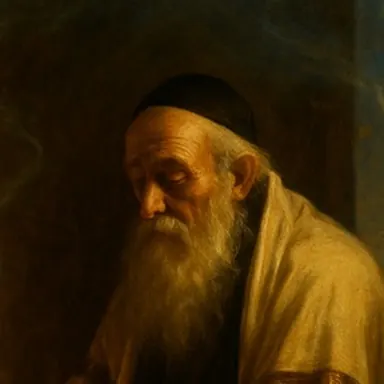
The Rabbinic and Mystical Synthesis of Rabbi Joseph Taitazak: Halakhic Authority, Maggidic Revelations, and the Post-Expulsion Sephardic Diaspora
11 דק׳ קריאה·2,100 מילים
תקציר
טקסט זה סוקר את דמותו רבת-האנפין של רבי יוסף טאיטאצאק (המהרי"ט), מגדולי חכמי יוון והאימפריה העות'מאנית לאחר גירוש ספרד, ומשרטט את השפעתו המכרעת על עולם ההלכה והקבלה. המאמר מתאר כיצד שילב טאיצאק חלוציות למדנית עם סגפנות קיצונית ועיסוק במדעים ומתמטיקה ככלים להבנת סודות אלוהיים, כל זאת תוך הנהגת ישיבה מרכזית בסלוניקי שהעמידה דור של גדולי עולם. לצד דיון בחיבוריו וביחסי הגומלין שלו עם דמויות כמרן יוסף קארו, המקור בוחן את הפן המיסטי בחייו, בדגש על גילויים מגידיים והפולמוס המחקרי סביב ייחוס כתיבת "ספר המשיב" לדמותו. מטרת הסקירה היא להאיר את הסינתזה הייחודית שיצר טאיצאק בין הדיסציפלינות השונות, סינתזה ששימשה גשר רוחני בין מורשת ספרד האבודה לבין הפריחה המחודשת של המרכזים היהודיים במזרח.
Biographical Trajectory and Geographic Migration
The forced expulsion of Jewish communities from the Iberian Peninsula in 1492 serves as the primary geopolitical backdrop for the dramatic reorganization of early modern Jewish life.[1, 2] Among the aristocratic families of Spanish Jews displaced during this crisis was the Taitazak lineage, also recorded in contemporary manuscripts as Tatasic, a prominent family of Castilian rabbinic authorities.[1] Rabbi Joseph ben Solomon Taitazak, widely referred to in subsequent rabbinic literature by the acronym Maharit, was born in Castile, Spain, in the year 1465 (5225 AM).[2, 3] Following the Edict of Expulsion, he fled his native land alongside his father, Solomon, and his brother, Rabbi Yehuda ben Solomon Taitazak.[1]
The family migrated eastward to the expanding territories of the Ottoman Empire, which actively absorbed the influx of Sephardic exiles. They eventually settled in the thriving Aegean port city of Salonica, situated in Ottoman Greece.[1, 2] Under Taitazak’s spiritual and academic stewardship, Salonica transformed into a preeminent center of Jewish legal scholarship and mystical contemplation.[1, 2] In his later years, Taitazak relocated from Salonica to the imperial capital of Constantinople (Kushta), where he spent his final days.[2, 3] He passed away in Constantinople in 1546 (5306 AM) at the advanced age of approximately eighty-one and was buried within the city's municipal limits.[2, 3]
Taitazak’s passing is traditionally commemorated on the 21st of Sivan, a date marked as his yahrzeit.[1] In traditional rabbinic circles, this anniversary is observed through the lighting of memorial candles and the recitation of specific biblical selections, notably the alphabetical verses of Psalm 119 corresponding to the letters of the soul, or neshama.[1, 4]
Acronym Confusion and the Turkish Rabbinic Nomenclature
Within Ottoman halakhic historiography, a notable point of textual clarification concerns the acronymic designation Maharit.[5] While this abbreviation is most commonly associated in subsequent centuries with the preeminent seventeenth-century legalist Rabbi Joseph di Trani (the son of the Mabit, who authored the foundational She'elot U'Tshuvot Maharit and talmudic novellae), Turkish rabbinic authorities originally applied this title exclusively to Rabbi Joseph Taitazak.[3, 5]
To prevent cross-generational confusion and distinguish Taitazak from his later namesake, Ottoman scholars introduced specific nomenclatural adjustments.[5] While Taitazak retained the primary designation of Maharit in older Turkish manuscripts, di Trani was often referred to as Maharimat (Morenu HaRav Yosef Mi-Trani) or vice versa in specific administrative and legal texts.[5] This terminological distinction underscores the high level of authority Taitazak commanded; his legal and mystical legacy was so pervasive that he remained the default "Maharit" in the region for decades after his death, establishing a high bar of scholarship against which subsequent generations of Ottoman decisors were measured.[2, 3, 5]
Ascetic Disciplines, Cognitive Regimen, and Secular Metaphysics
Taitazak’s leadership was characterized by an uncompromising commitment to ascetic self-mastery and relentless cognitive labor.[1, 3] Contemporaries and biographers documented an existential methodology that completely subordinated physical comforts to spiritual and intellectual pursuits. A primary account provided by the sixteenth-century Kabbalist Rabbi Eliyahu de Vidas indicates that, with the sole exception of Sabbath nights, Taitazak spent forty years without ever sleeping in a conventional bed.[1]
His brother, Rabbi Yehuda ben Solomon Taitazak, preserved further details of this ascetic regimen in his legal treatise She'erit Yehuda, testifying that Joseph restricted his combined daily intake of food and sleep to a maximum of six hours.[3] Whenever a complex legal query or communal emergency demanded his attention, he would actively reduce his sleep even further to draft his responsa.[3] This extreme self-discipline supported an academic routine in which he engaged in intensive Torah study for up to eighteen hours a day.[1]
Crucially, Taitazak's intellectual horizon extended beyond classical talmudic and midrashic boundaries to incorporate secular sciences, particularly mathematics and astronomy, which he integrated into his metaphysical framework.[1, 6] He wrote treatises on grammar and arithmetic, utilizing these disciplines to construct elaborate mathematical magic squares.[1, 6] In these matrices, the integers are arranged such that the sum of any row, column, or main diagonal yields a single magic constant, calculated via the formula:
M=
2
n(n
2
+1)
Taitazak posited that these mathematical arrangements were physical and cognitive representations of highly concealed divine configurations and celestial names.[1] His application of magic squares and mathematical tools for mystical purposes—including the formulation of defensive and meditative amulets—is extensively referenced in the writings of his contemporaries and successors.[1] These include the 1550 CE manuscript Shushan compiled by Rabbi Joseph Turisome, the kabbalistic treatise Toledot Adam, and Rabbi Isaiah Horowitz's monumental work, Shene Luhot HaBerit.[1]
Halakhic Prominence, Exegetical Works, and Published Legacy
Taitazak was recognized as a leading halakhic authority (posek) of the sixteenth century, corresponding on complex legal matters with the greatest contemporary scholars across the Mediterranean basin.[2, 3] His legal stature is preserved in the responsa collections of his peers, including the Responsa Binyamin Ze'ev (specifically Siman 423).[3] His most significant legal contemporary, Rabbi Joseph Karo, expressed unbounded admiration for him, addressing him in his collection Avkat Rokhel (Siman 51) with the following laudatory honorifics: "The light of Israel and its holy one, the crown of the sons of the exile who stands as a banner for the nations... head of our Torah academy, the eminent, complete, and all-encompassing sage".[3]
Taitazak’s literary corpus was diverse, encompassing biblical exegesis, talmudic analysis, and homiletics, though much of his work remained in manuscript form or was published posthumously.[1, 2]
Beyond these primary texts, Taitazak authored extensive commentaries on the Book of Psalms (Tehillim), the broader Hebrew Bible (Mikra), homiletical sermons (Derashot), and haggadic passages, solidifying his role as an all-encompassing scholar who navigated both the legalistic and literary facets of Jewish tradition.[1, 2]
The Yeshiva of Salonica and the Pedigree of Disciples
The yeshiva established by Taitazak in Salonica served as the intellectual incubator for the post-expulsion Sephardic rabbinate.[1, 2] His teaching methodology combined intense talmudic analysis with a comprehensive education in biblical exegesis, grammar, and mysticism, producing a class of leadership that defined Jewish life across the Ottoman Empire and Europe.[1, 2, 6, 10]
This pedigree demonstrates how Taitazak's academy functioned as a bridge between the lost intellectual culture of Spain and the emerging centers of Ottoman Greece, Turkey, and Palestine.[1, 2, 10] Through these disciples, Taitazak's dual emphasis on meticulous legal analysis and intensive mystical search became the institutional standard for the early modern Sephardic world.[1, 2, 10]
Maggidic Phenomena and the Sefer HaMeshiv Debate
Taitazak's spiritual profile was deeply marked by the phenomenon of maggidut—the reception of direct, auditory revelations from a celestial mentor or angel (Maggid).[2, 3] The Chida (Rabbi Chaim Joseph David Azulai) explicitly recorded in his bio-bibliographical work Shem HaGedolim that Taitazak merited regular visitations from such a heavenly guide.[2, 3]
This claim is supported by the contemporary testimony of Rabbi Joseph Karo’s personal mystical diary, Maggid Meisharim, wherein Karo's own celestial voice repeatedly references Taitazak.[2] In these instances, the Maggid instructed Karo to communicate celestial assessments to Taitazak, validating his legal conclusions or indicating where he had made subtle errors.[2]
Taitazak's study house in Salonica served as a gathering point for individuals experiencing intense spiritual visitations; most notably, in 1529 (5289 AM), he hosted the Portuguese Marrano visionary Solomon Molcho.[2, 7] Molcho, who had circumcised himself at great personal risk and escaped the Portuguese royal court to study Torah, was deeply supported by Taitazak before his ultimate martyrdom at the stake in Mantua in 1532—an act of self-sacrifice (Kiddush Hashem) that Karo famously envied throughout his life.[2, 7]
This maggidic context is central to a major debate in modern academic Jewish studies concerning the authorship of Sefer HaMeshiv ("The Book of the Responding Angel").[2, 11] This extensive Kabbalistic work, composed around the time of the 1492 expulsion, describes highly vivid, direct revelations concerning the ten Sefirot (divine emanations).[11]
Textual and Phenomenological Attributes of Sefer HaMeshiv
The text contains several unique characteristics that define its mystical system [11]:
Source of Revelation: The segments are presented as dictations from "the Mouth of Power" (the Divine voice itself, utilizing first-person phrases such as "My precious names" and "the secret of My divinity") or, in alternative manuscripts, are attributed to the Angel Azriel.[11] Other celestial entities, including the archangels Michael and Metatron, and demonic figures such as Samael and Amon Menoa, also appear.[11]
Method of Reception: Revelations occurred either while awake (be-hekit), where the divine or angelic entity allegedly manifested in a physical form resembling the prophet Elijah, or during sleep through formal dream inquiries (she'elat halom).[11]
Scribal Recording: The text rejects involuntary "automatic writing." Instead, the receiving Kabbalist listened to the voice of the angel and repeated the words aloud to a second person in the room, who recorded the dictation in real time.[11]
Ideological Hierarchy: The book places Kabbalah at the absolute center of human knowledge, while presenting a fierce demonization of Christianity and medieval rationalist philosophy.[11] It claims these systems originate from the demonic realm of Samael and actively delay the redemption, though it paradoxically asserts that at the end of days, Samael will turn to the side of good.[11]
The pioneer of academic Kabbalah studies, Gershom Scholem, hypothesized that Joseph Taitazak was the principal author of Sefer HaMeshiv, citing his documented ascetic lifestyle, his engagement with maggidic phenomena, and his status as a leading intellectual of the expulsion generation.[2, 11] However, this hypothesis was challenged by the preeminent scholar Moshe Idel, who identified significant linguistic and theological discrepancies between Taitazak’s undisputed commentaries and the radical, highly dualistic themes of Sefer HaMeshiv.[2, 11]
The current scholarly consensus aligns with Idel's view, identifying the text as the collaborative output of a distinct group of Iberian mystics active in Spain prior to the expulsion, historically designated as the "Sefer HaMeshiv Circle".[2, 11] Nevertheless, the deep thematic connections between Taitazak’s circle and Sefer HaMeshiv remain evident.[3, 11] In his introduction to Peskei HaGaon Maharit, Professor Meir Benayahu identified "four works of commentaries and revelations from a Maggid" associated with Taitazak.[3] These manuscripts are highly likely to be the same texts utilized by the seventeenth-century Kabbalist Rabbi Abraham Azulai (author of Hesed LeAvraham), as recorded by his grandson, the Chida, in Shem HaGedolim, thereby demonstrating the continuous transmission of Taitazak's revelatory teachings through subsequent generations of Kabbalists.[3]
Historical Synthesis
The legacy of Rabbi Joseph Taitazak lies in his successful synthesis of seemingly disparate intellectual currents during a period of acute crisis for the Sephardic world.[1, 2] At a time when the Jewish community faced the challenge of rebuilding its institutions from the ground up, Taitazak provided a model of leadership that was simultaneously legalistic, scientific, and mystical.[1, 2, 3] His halakhic decisions addressed the practical social and commercial challenges of the Ottoman Sephardic diaspora, while his yeshiva in Salonica trained the rabbinic leadership that would guide the next generation.[1, 2]
At the same time, his exploration of mathematics, his ascetic devotional practices, and his receptive attitude toward maggidic revelations and messianic visionaries helped cultivate the spiritual atmosphere that made the Safed kabbalistic revival possible.[1, 2, 10] Through his personal practice, his legal responsa, and his direct pedagogical influence on figures such as Moses Alshich and Solomon Alkabetz, Taitazak ensured that the intellectual inheritance of Spanish Jewry would not merely survive, but would develop into a dynamic force shaping early modern Jewish thought.[1, 2, 10]
מקורות11
1.Rabbi Taitazak Z'tl - רבי יוסף טאיטאצאק - היה פוסק, מקובל וראש ישיבה, זכה להערצה מגדולי דורו, youtube.com/watch?v=h05kwzly6PY
The Synthesis of Halakha and Ecstatic Kabbalah: Rabbi Yosef Taitatzak and the Early Modern Sephardic Renaissance
12 דק׳ קריאה·2,360 מילים
תקציר
מאמר זה סוקר את קורות חייו ופועלו האינטלקטואלי של רבי יוסף טאיטאצאק, מגדולי חכמי ספרד שלאחר הגירוש, אשר הפך את סלוניקי למרכז רוחני המשלב בין הלכה פסוקה לקבלה אקסטטית. הטקסט מדגיש כיצד הצליח המהרי"ט להעמיד דור של תלמידים מובילים תוך הקמת מערכת חינוכית שחיברה בין למדנות תלמודית מסורתית לבין עיסוק אינטנסיבי בנסתר, מתמטיקה מיסטית וגילויים שמימיים. המחבר מפרט את אורח חייו הסגפני של הרב, שכלל פרישות קיצונית במטרה לזכות בביקורי "מגיד", ומתאר את קשריו המורכבים עם דמויות מפתח כגון רבי יוסף קארו והמשיח שלמה מולכו. בסופו של דבר, המקור מבקש להציג את טאיטאצאק כגשר חיוני בין תור הזהב בספרד לבין הרנסנס הקבלי של צפת, תוך ציון השפעתו המכרעת על עיצוב עולם ההלכה והמיסטיקה היהודית לדורות.
Biographical Trajectory and the Geopolitical Realities of the Iberian Exile
The expulsion of Jewish populations from the Iberian Peninsula in 1492 constitutes one of the most destabilizing events in early modern Jewish history, setting in motion a massive realignment of rabbinic authority throughout the Mediterranean basin.[1, 2] At the center of this cultural and religious reconstruction stood Rabbi Yosef Taitatzak (c. 1465–1546), frequently referred to by the acronym Maharit or Mahari Taitatzak.[2, 3] Born into a prominent family of Spanish scholars in Castile during the twilight of Jewish life in Christian Spain, Taitatzak was reared in a rigorous scholastic environment.[1, 3] His early intellectual development occurred alongside other future giants of the Sephardic diaspora, including Rabbi Levi ibn Habib, with whom Taitatzak spent his youth.[2]
The decree of expulsion issued by the Catholic Monarchs forced the Taitatzak family—including Yosef, his father Solomon, and his brother Yehuda—to flee Castile.[1, 2] Their initial refuge in Portugal was short-lived, leading to a secondary migration that eventually brought them to Salonica, Greece, then under the expanding sovereignty of the Ottoman Empire.[1, 2] Ottoman Salonica provided a highly favorable geopolitical environment where the traumatized fragments of Iberian Jewry could consolidate.[2, 3] Taitatzak's leadership transformed Salonica from a mere refugee settlement into the premier intellectual capital of the Jewish world.[2, 3] Towards the end of his life, Taitatzak relocated to the imperial capital of Constantinople, where he died in 1546 at the age of eighty-one, leaving a legacy that bridged the medieval Spanish golden age and the early modern Ottoman kabbalistic renaissance.[2, 3]
The Salonican Yeshiva: Institutionalizing the Post-Expulsion Academy
Upon establishing himself in Salonica, Taitatzak founded a major yeshiva that functioned as an academic and spiritual crucible.[1, 2] Rather than simply replicating the curriculum of the lost Castilian academies, Taitatzak’s institution synthesized strict Talmudic legalism with speculative philosophy, systematic biblical exegesis, and advanced kabbalistic theory.[1, 2, 3] Taitatzak claimed to have raised over twenty premier disciples who achieved the status of fully independent legal authorities (posekim) and yeshiva heads in their own right.[2]
The network of scholars trained under Taitatzak's direct tutelage represented a major concentration of rabbinic authority in the sixteenth century.[2, 3] His students included:
Rabbi Shmuel de Medina (Maharashdam): He went on to serve as the supreme legal authority of Salonica, authoring over a thousand responsa that established the municipal and commercial legal codes of the Ottoman Jewish communities.[2, 3]
Rabbi Moshe Alshich (the Alshich HaKadosh): He migrated to Safed, where his homiletical and biblical commentaries became the standard for early modern Jewish preaching.[1, 2, 3]
Rabbi Shlomo Alkabetz: A preeminent kabbalist who composed the liturgical hymn Lecha Dodi, Alkabetz was instrumental in shaping the Friday night liturgy and mystical rituals of Safed.[1, 2, 3]
Rabbi Eliezer Ashkenazi: A brilliant scholar who traveled across Egypt, Italy, and Poland, Ashkenazi authored Ma'asei Hashem and modeled a cosmopolitan, highly independent style of rabbinic leadership.[1, 2, 3]
Rabbi Yitzhak Adarbi: The author of the responsa collection Divrei Rivot, Adarbi helped govern the complex municipal structures of the Salonican congregations.[2, 3]
Rabbi Yosef ibn Verga: A scholar who contributed to the classic historical and sociological chronicle of Jewish suffering, Shevet Yehudah.[3]
This educational network served as an intellectual transmission belt, exporting Salonican methodologies to the rising centers of Ottoman Palestine, Syria, and Egypt, and effectively shaping the religious practices of global Jewry.[1, 2]
Asceticism as an Epistemic Instrument: The Soma and Maggidic Revelation
A defining characteristic of Taitatzak's spiritual profile was his integration of rigorous intellectual labor with severe bodily discipline.[1, 2] In the early modern kabbalistic framework, physical asceticism was not understood merely as a penance for sin, but as a systematic somatic practice designed to purify the cognitive faculties and prepare the soul to receive celestial wisdom.[1, 2] Taitatzak's daily schedule was defined by tireless study; contemporary records indicate he dedicated eighteen hours each day to intensive Torah study.[1] His biological maintenance was reduced to six hours of sleep and eating combined per day, a quota he would further lower when engrossed in authoring pressing halakhic decisions.[2]
This somatic discipline is most clearly illustrated by his sleep hygiene, which was documented by the sixteenth-century kabbalist Rabbi Elijah de Vidas in his ethical work Reshit Chochmah.[1, 2] For forty years, with the sole exception of the Sabbath night, Taitatzak refused to sleep in a conventional bed.[1, 2] Instead, he slept on a simple wooden chest, keeping his feet suspended in the air.[1, 2] This extreme practice was maintained in absolute secrecy, known only to his wife.[2]
This systematic mortification of the flesh was believed to have facilitated states of ecstatic elevation and cleared the path for communication with a maggid—a heavenly mentor or angelic intermediary that spoke directly through him.[2, 3] According to the Chida (Rabbi Chaim Yosef David Azulai), Taitatzak compiled four volumes of mystical revelations and scriptural interpretations dictated to him by this celestial guide.[2] These texts are believed to have circulated in manuscript form and were later utilized by major kabbalists, including Rabbi Abraham Azulai in the composition of Chesed L'Avraham.[2]
The Mathematical-Esoteric Nexus: Amulets and Magic Squares
Unlike many of his contemporaries who focused exclusively on speculative or theosophical Kabbalah, Taitatzak developed a highly specialized methodology that utilized arithmetic, numerical grids, and mathematical "magic squares".[1] Within his intellectual framework, mathematical equations and spatial grids of numbers were not merely secular tools, but sacred structures that mirrored the divine hierarchy and alluded to the highest, most concealed realms of God's essence.[1]
This mathematical-kabbalistic approach was applied to both theoretical study and practical Kabbalah, notably in the design and validation of protective amulets.[1] Taitatzak argued that the precise mathematical arrangement of letters and numbers in a grid could channel specific divine energies to protect individuals or heal illnesses.[1]
This mathematical methodology left a distinct trace in the writings of other early modern mystics.[1] His theories and calculations are cited in Rabbi Yosef Terashim’s manuscript Shashon (often transcribed as Shasham), which was completed around 1550 CE.[1] Furthermore, references to Taitatzak's numerical and amuletic systems appear in the early modern kabbalistic anthology Toldot Adam ("The Generations of Adam"), as well as in the monumental ethical-mystical work Shenei Luchot HaBerit (the Shelah) authored by Rabbi Isaiah Horowitz.[1] This indicates that Taitatzak’s mathematical mysticism was integrated into the broader stream of mainstream Ashkenazic and Sephardic esotericism.[1]
Halakhic Dominance and Meta-Legal Interaction with Rabbi Yosef Karo
The relationship between Rabbi Yosef Taitatzak and Rabbi Yosef Karo, the principal codifier of the Shulchan Aruch, highlights the complex overlap of halakhic authority and mystical experience in the Ottoman era.[2, 3] Karo held Taitatzak in immense esteem, engaging in extensive legal correspondence with him on complex municipal and ritual matters.[2] In his responsa collection Abkat Rokhel (Siman 51), Karo addressed Taitatzak with titles of unmatched deference:
"The light of Israel and its Holy One, the crown of the exiles who stands as a banner for the nations and as a diadem of glory, the head of our Torah academy, the preeminent rabbi, the complete and all-inclusive sage".[2]
This high regard is also visible in other contemporary responsa collections, such as Binyamin Ze'ev (Siman 423).[2]
Beyond conventional legal discourse, their relationship extended into a shared, meta-legal mystical cosmos.[3] In Karo's mystical diary, Maggid Mesharim, which records the revelations of his own angelic mentor, Taitatzak is a central figure.[3] Karo's maggid repeatedly instructed him to communicate with Taitatzak, validating or critiquing specific legal opinions by stating whether Taitatzak had ruled correctly or erroneously on various delicate matters.[3] This dynamic suggests a unique early modern Jewish worldview where the legal authority of the Posek was spiritually integrated with the cosmic order, such that a posek's earthly legal opinions had direct ramifications in the celestial court, requiring angelic confirmation or correction.[3]
According to a tradition preserved by the Chida, the physical and spiritual stature of only three contemporary scholars made them capable of writing a universal code of Jewish law like the Beit Yosef: Rabbi Yosef Karo, Rabbi Yosef ibn Lev, and Rabbi Yosef Taitatzak.[2] Ultimately, the task was completed by Karo, a result traditional historians attribute to divine selection rather than differences in legal erudition.[2]
The "Sefer HaMeshiv" Controversy and Apocalyptic Patronage
In modern academia, Taitatzak's mystical legacy is deeply tied to the study of Sefer HaMeshiv (The Book of the Responding Angel).[3, 4] This highly influential work, likely composed shortly before or immediately after the 1492 expulsion, focuses on the interpretation of the ten Sefirot (divine emanations) and is characterized by its intense focus on automatic writing, angelic dictation, and demonology.[4] The text describes a unique revelatory methodology wherein the kabbalist would dictate aloud the words spoken by the maggid while a second person sat in the room to transcribe the speech, ensuring that the experience was documented without disrupting the trance state.[4] Sefer HaMeshiv is also notable for its dramatic narrative of celestial and demonic struggles, incorporating figures such as the angel Azriel, Michael, and Metatron, alongside the forces of cosmic evil, Samael and Amon Menoa—characters famously associated with the legendary, tragic mystical figure of Yosef della Reina.[4]
The founder of modern academic studies of Jewish mysticism, Gershom Scholem, hypothesized that Rabbi Yosef Taitatzak was the anonymous author of Sefer HaMeshiv.[3, 4] Scholem based this hypothesis on Taitatzak's well-documented experiences with maggidic phenomena and his central role in the post-expulsion mystical milieu of Salonica.[3] However, this theory was later challenged by the historian Moshe Idel, who raised significant chronological and textual objections, ultimately leaving the question of individual authorship open.[3, 4] Contemporary academic consensus has shifted away from attributing the text to a single author like Taitatzak, suggesting instead that Sefer HaMeshiv emerged from a collaborative group of pre-expulsion Spanish kabbalists known as the "Sefer HaMeshiv Circle".[3, 4] Nevertheless, the debate itself underscores the profound association of Taitatzak's name with the most radical, revelatory, and sophisticated mystical currents of the transition from the Iberian to the Ottoman era.[3, 4]
Taitatzak's intellectual openness also extended to the apocalyptic and messianic movements of his era, as demonstrated by his patronage of the charismatic messianic activist Shlomo Molcho.[3, 5] Molcho, a Portuguese New Christian who returned to Judaism and took up ecstatic Kabbalah, traveled to Salonica, where he entered Taitatzak's immediate orbit.[3, 5] In 1529 (רפ"ט), Molcho stayed and studied in Taitatzak's beit midrash, a period during which he composed his influential apocalyptic work, Sefer HaMefoar.[3, 6] This work focused heavily on the calculation of the messianic end of days, articulating a detailed framework for the roles of Messiah ben Yosef—whose duty was to prepare the geopolitical and spiritual ground—and the subsequent Messiah ben David.[6] Molcho’s presence in Taitatzak’s academy highlights a significant historical trend: the mainstream, highly formalist yeshivas of the early Ottoman Empire did not reject messianic pretenders but instead engaged with them.[3, 5] Taitatzak's patronage of Molcho indicates that the trauma of the expulsion had created a shared intellectual space where rigorous legal study and urgent, apocalyptic messianism could coexist, each validating the other in the pursuit of national redemption.[3, 5, 6]
Posthumous Literary Output and Bibliographical Clarification
While many of Taitatzak's legal responsa and kabbalistic diaries remained in manuscript form, his published works reflect his diverse scholarly focus.[1, 2] To construct an accurate academic profile of his literary output, it is necessary to distinguish his authentic works from those of his brother, Rabbi Yehuda ben Solomon Taitatzak, and from those of Rabbi Yosef di Trani, who also bore the acronym Maharit but lived a century later.[1, 3, 7]
His commentaries on Haggadic passages and his collection of legal responsa on contemporary matters were published across various volumes.[1] These works demonstrate a consistent intellectual effort to synthesize practical Jewish law with the hidden cosmic structures revealed through mystical contemplation.[2, 3]
Macro-Historical Legacy: From Ottoman Sanctuary to Modern Zionism
Rabbi Yosef Taitatzak played a major role in shaping the Sephardic diaspora during the transition to the early modern period.[2, 3] By establishing Salonica as a premier center of both Talmudic analysis and kabbalistic exploration, Taitatzak created the structural conditions necessary for the subsequent flourishing of Safed.[1, 2] His synthesis of rigorous halakhic authority, extreme physical asceticism, and receptive mystical revelation challenged the traditional boundaries between law and spirit, demonstrating that the codification of Jewish practice and the pursuit of mystical union were parallel, mutually reinforcing responses to the trauma of exile.[2, 3]
This historical trajectory contains a striking genealogical connection.[2] Centuries after the Taitatzak family fled Castile to rebuild Jewish life in the Ottoman Empire, one of their direct descendants, Benjamin Ze'ev (Theodor) Herzl, would organize the modern political Zionist movement.[2, 3] This structural connection bridges early modern religious exilic resilience with modern national self-determination, linking the efforts of a Castilian exile to reconstruct Jewish leadership in the Ottoman Empire to the physical reconstitution of a Jewish state.[2, 3] Taitatzak's legacy endures not only through his surviving texts but through the massive intellectual output of his disciples, who reshaped Jewish law, liturgy, and mysticism for centuries to come.[2, 3]
מקורות7
1.Rabbi Taitazak Z'tl - רבי יוסף טאיטאצאק - היה פוסק, מקובל וראש ישיבה, זכה להערצה מגדולי דורו, youtube.com/watch?v=h05kwzly6PY