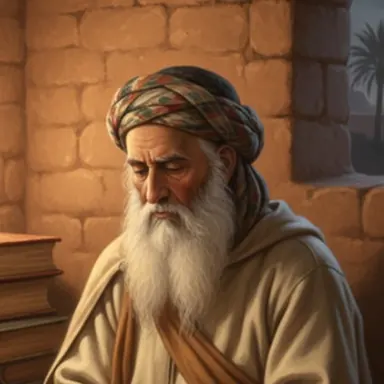
Rabbi Yaakov Abuhatzeira: The Abir Yaakov in the Mirror of the Generations
16 min read3,139 words
Summary
This text surveys the multidimensional portrait of Rabbi Yaakov Abuhatzeira, known as the **"Abir Yaakov," and describes him as a vital connecting link between pure halakha and the depths of Kabbalah. The survey sketches the history of his life in Morocco, stressing his model of social leadership as a spiritual shepherd who cared for the needs of the poor and combined personal holiness with public responsibility. A large part of the source is devoted to an analysis of his extensive Torah teaching**, which includes works on both the revealed and the hidden Torah and stresses the need for a firm scholarly foundation as a condition for engaging in esoteric teaching. Finally, the article discusses the legacy of the family dynasty he founded and his last journey to the Land of Israel, cut short in Egypt, where his grave became a focus of pilgrimage expressing the deep bond between the Diaspora and Zion.
The Torah Teaching, Public Work and Spiritual Legacy of Rabbi Yaakov Abuhatzeira: The Abir Yaakov in the Mirror of the Generations
The figure of Rabbi Yaakov Abuhatzeira, called by all "the Abir Yaakov," constitutes a historical and spiritual crossroads at which the depth of Sephardic Kabbalah, pure halakhic scholarship and uncompromising communal leadership met. Rabbi Yaakov was not merely a halakhic decisor or an abstract kabbalist; he was the founder of a spiritual dynasty that came to be identified more than any other with Moroccan Jewry and with the spiritual revival of Oriental Jewry in recent generations.[1, 2] His work, which spans most of the 19th century, reflects a constant struggle between the longing to settle in the Land of Israel and the moral duty to lead the community in the Diaspora, a struggle that ended in spiritual tragedy in Damanhur, Egypt, but gave birth to a center of holiness that pulses to this day.[3, 4]
The Historical Roots and the Cultural Environment in Tafilalt
Rabbi Yaakov Abuhatzeira grew up in the geographical and cultural space of the Tafilalt province in Morocco. This region, located at the northern edge of the Sahara Desert, was an oasis that served as a strategic commercial and spiritual center.[5] The Jewish community of Tafilalt carried with it an age-old tradition, linked according to local belief as far back as the days of the Exodus from Egypt and the station of "Elim" in the wilderness.[5] In the centuries preceding the appearance of the Abir Yaakov, the nearby city of Sijilmasa served as a Torah center that was in continuous contact with the academies of the Geonim in Babylonia, a fact that attests to the depth of the scholarly roots that Rabbi Yaakov absorbed in his father's house.[5]
Rabbi Yaakov was born in 5566 (1805 or 1806) to Rabbi Masoud Abuhatzeira, who was head of the rabbinic court and leader of the community.[1, 6] Rabbi Yaakov's birth is wrapped in wondrous traditions that stress his holiness from the very beginning of his life. It is told that his father married his mother following a shared dream in which it was revealed that from this union would come forth a righteous man, a foundation of the world, and this after the woman had come to the rabbinic court to receive a bill of divorce from her first husband.[7] This story reflects the communal conception that saw Rabbi Yaakov as a special soul destined to illuminate the generation.
Biographical and Leadership Milestones
The education Rabbi Yaakov received in his youth was comprehensive and included all the pillars of Jewish culture: the Bible with the cantillation marks, Mishnah, the Babylonian and Jerusalem Talmuds, and the books of the early and later halakhic authorities.[1] His diligence was legendary; it is told that from the close of the Sabbath until the onset of the next Sabbath he would remain in the study hall almost without sleep, engaged in Torah day and night.[1, 11] His powers of concentration and diligence enabled him to encompass the world of the revealed and the hidden alike, which made him an unchallenged religious authority already in his twenties.[6]
The Model of Leadership: The Rabbi as Shepherd and Parnas
The leadership of Rabbi Yaakov Abuhatzeira went beyond the traditional definitions of the role of a communal rabbi. He served as a "parnas," a title that indicates broad economic and social responsibility for the needs of the public.[5] In the Tafilalt community and its surroundings Rabbi Yaakov was perceived as a merciful father who saw to every want. He used to travel among the remote villages of the Atlas Mountains and the Sahara Desert to collect funds for orphans, widows and the needy.[6, 9] This activity was not merely technical; Rabbi Yaakov felt the pain of the members of his community personally, and the view prevalent among the people was that his blessings and wonders were a direct continuation of his sincere concern for their welfare.[6]
Alongside his social activity, Rabbi Yaakov established a large yeshiva in Tafilalt that bore his name, and there he raised up many disciples.[5] This institution became a spiritual center that drew students from all over the Maghreb. Rabbi Yaakov's educational conception stressed the need to combine scholarly excellence with moral integrity. He taught that judges and public figures must have completely clean hands, and warned that the danger of perverting justice or of wronging the weak in the community is graver than the danger of highway robbers.[9] His leadership combined lovingkindness with judgment, and his name was known among the local Muslim authorities as well as that of a holy man possessed of supreme spiritual power.[7]
Social Influence and Wonders
The wonders associated with the name of Rabbi Yaakov are not merely folklore tales, but an essential part of the interface between the rabbi and his community. Belief in the power of the tzaddik to work miracles served as an anchor of hope for the Jews of Morocco in times of persecution and economic hardship.[7, 12] The cases in which Muslim sheikhs came to receive his blessing attest to his special status in the Moroccan public sphere, a status that often enabled him to protect the community against harsh decrees.[7]
His Torah Teaching: Harmony among the PaRDeS of the Torah
Rabbi Yaakov's most significant contribution to the Jewish bookshelf is the varied scope of his writing, which covers all parts of the Torah. His teaching is characterized by a synthesis of the hidden Torah (Kabbalah) with the plain meaning and halakha. Although his personal and deep inclination was toward the world of the esoteric, he laid down an iron rule for his disciples and for future generations: one must not approach the study of Kabbalah without a firm foundation in Talmud and the halakhic codifiers.[9, 13] In his book "Alef Binah" he makes clear that without the Talmud a person cannot truly attain knowledge of the Torah, for the revealed is the "body" and the hidden is the "soul," and neither can exist without the other.[10, 13]
An Analytical Survey of His Major Works
Rabbi Yaakov's literary enterprise comprises more than ten major works, most of which were printed after his death by his sons in Jerusalem.[6, 10] His books are not merely a collection of novellae, but reflect an orderly system of study and thought.
Rabbi Yaakov's books serve to this day as a cornerstone of the library of kabbalists and preachers, especially in the communities of North African origin. In 2013 a new annotated edition of all his writings was published at the initiative of his grandson, Rabbi David Abuhatzeira of Nahariya, which made his teaching accessible to a wider public of learners.[10]
Ginzei HaMelech: The Physics of the First Word
The book "Ginzei HaMelech" ("Treasuries of the King") is considered one of Rabbi Yaakov's boldest and most complex creations. His choice to devote an entire book to interpreting the word "Bereshit" ("In the beginning") in 207 ways is not accidental. The number 207 is the gematria of the word "or" ("light"), and thereby Rabbi Yaakov hints that within the first word of the Torah is hidden the hidden light of Creation.[16] The book is divided into three "gates" or "rectifications," which reflect his conception of the role of man in the world:
- The Rectification of Repentance: Rabbi Yaakov explains 74 ways in which the word Bereshit alludes to the commandment of repentance. According to the Sages, repentance preceded the world, and Rabbi Yaakov shows how it is embedded in the structure of the letters of the beginning of Creation. Repentance is not merely the repair of sin, but a return to the spiritual root.[14, 16]
- The Rectification of the Shekhinah: 63 ways of explaining the exalted standing of the holy Shekhinah. Rabbi Yaakov discusses the pain of the Shekhinah in exile and her longing to be united with the Holy One, blessed be He. He stresses that every prayer and petition of the people of Israel passes through "the entrance of all the gates," which is the Shekhinah.[16]
- The Rectification of the Covenant: 70 ways linking the word Bereshit to the guarding of the covenant. For Rabbi Yaakov, guarding the covenant is the basis for holiness and for attaining the Torah. He describes the righteous as "guardians of the covenant" who draw down abundance to the world through the attribute of Yesod.[14, 16]
The book ends with the chapter "Likkutei Shoshanim" ("Gleanings of Roses"), in which he investigates the connection between the Congregation of Israel and the Sabbath, and the power of man to build the edifice of the Shekhinah through the commandments of the Sabbath, tefillin and circumcision.[16] This work demonstrates how Rabbi Yaakov sees in every letter of the Torah a whole world of intentions and meanings that affect metaphysical reality.
The Ethics of Repentance and Moral Teaching in His Thought
The world of repentance occupies a central place in Rabbi Yaakov's writings. In his book "Sha'arei Teshuvah" ("Gates of Repentance") he analyzes the word "teshuvah" in 28 different ways, corresponding to the 28 times that appear in Ecclesiastes. He sees repentance as a holistic process that includes thought, speech and deed.[14] Unlike approaches that stress only the pangs of conscience, Rabbi Yaakov stresses the joy of returning to the Holy One, blessed be He, and the ability of every person, in every situation, to find a path of repair.[14]
His book "Sha'arei Arukhah" ("Gates of Healing") complements this conception by offering practical and spiritual guidance for the days of Elul and Yom Kippur. He uses verses of Psalms to awaken the heart, and argues that the words of King David are the key to opening the gates of heaven for those who desire complete repentance.[14] For him, moral teaching is not merely a code of social conduct, but part of the inner service of God that purifies the soul and prepares it to attain the secrets of the Torah.
Psalm 119 as an Existential Allegory
Rabbi Yaakov's focus on Psalm 119, as expressed in his book "Ma'aglei Tzedek" ("Paths of Righteousness"), teaches the importance of the Torah in everyday life. The psalm, built according to the alphabet, symbolizes for him the way in which the Torah encompasses the whole of human existence from Alef to Tav.[10] He finds in this psalm allusions to all of man's spiritual struggles and offers ways to overcome the evil inclination through cleaving to the letters of the Torah and to its moral values.[10, 14]
The World of Piyyut and Melody as an Expression of Devekut
Poetry and piyyut were for Rabbi Yaakov not merely an ornament of prayer, but a spiritual instrument of the first order for awakening the heart and cleaving to the Creator. His book "Yagel Yaakov" is one of the best-loved and most widespread books of piyyutim among Moroccan Jewry. The songs that Rabbi Yaakov and his descendants composed are steeped in kabbalistic terminology, but also in deep human emotion of longing for the Land of Israel and for the redemption of the people of Israel.[6, 10]
The piyyutim are built according to esoteric intentions, with every stanza and every rhyme directed toward the supernal sefirot. Nevertheless, the melodies and rhythm of the songs made them accessible to all strata of the people. It is told of his son, Rabbi Yitzhak Abuhatzeira, that he composed the famous piyyut "E'ufa Eshkona" ("I Would Fly Away and Dwell") out of a storm of the soul and longing for the Shekhinah.[9] Rabbi Yaakov, on hearing the piyyut, immediately recognized its spiritual power and saw in it a faithful expression of his teaching, which combines burning religious emotion with a precise kabbalistic structure.[9]
The Journey to the Land of Israel and the Bitter End in Damanhur
Throughout all the years of his leadership, a fierce desire burned in Rabbi Yaakov to go up to the Land of Israel and prostrate himself on the graves of the righteous in the Galilee. On five different occasions he prepared for the journey, but each time the members of his community prevented him from leaving.[9, 17] For the community, Rabbi Yaakov was the pillar that protected them, and they felt that his departure would abandon them to spiritual and physical dangers. Only in 5640 (1879), after he had installed his son Rabbi Masoud as his successor and assured the community that his influence would continue to accompany them, did he manage to set out.[4, 9]
Rabbi Yaakov's journey was not merely a geographical passage, but a spiritual journey in which he passed through Jewish communities in North Africa, preached before them and strengthened their faith. When he reached Egypt, he stayed briefly in Alexandria and then moved to the city of Damanhur, near Alexandria.[4, 10] There, in the home of his host Moshe Serousi, Rabbi Yaakov fell gravely ill. 20 Tevet 5640 (January 4, 1880) became a day of national mourning for Moroccan Jewry, when the news arrived of the passing of the "Abir Yaakov" before he had merited to set foot on the Holy Land.[8, 10]
The Grave of the Abir Yaakov in Damanhur: A Focus of Tension and Faith
Rabbi Yaakov's burial in Egypt turned the city of Damanhur into a focus of pilgrimage. For decades thousands of Jews streamed to his grave, especially on the date of his passing, 20 Tevet. After the establishment of the State of Israel and the signing of the peace agreements with Egypt, the pilgrimage was renewed, but it was always accompanied by political and security tensions.[3] The Egyptian authorities, under pressure from extremist Islamic elements, often restricted access to the site, and in recent years the pilgrimage was even banned for reasons of "inability to secure" the visitors.[3] Nevertheless, the figure of Rabbi Yaakov continues to be a symbol of the connection between the Diaspora and the Land of Israel, and his tomb in Damanhur remains engraved in the collective consciousness as a stronghold of holiness in the Egyptian space.
The Continuing Legacy: The Abuhatzeira Dynasty
Rabbi Yaakov Abuhatzeira left behind not only books, but a dynasty of spiritual leaders who shaped the character of Moroccan Jewry in the following generations. His sons and grandsons continued his path in a combination of Torah, Kabbalah and wonders. The best known of them is his grandson, Rabbi Israel Abuhatzeira, the "Baba Sali," who became a figure revered by all the communities of Israel after his immigration to the Land and his settling in Netivot.[2, 8, 12]
The Dynasty's Ties with the Hasidic Movement
It is interesting to examine the affinity that developed between the Abuhatzeira dynasty and the Hasidic movement in Europe, and in particular with Chabad Hasidism. Despite the geographical distance and the differences in customs, a deep common language was found around the inner service of God and the emphasis on the figure of the tzaddik.[12, 17] The Lubavitcher Rebbe more than once expressed admiration for the "Abir Yaakov," and in a letter to Rabbi Meir Abuhatzeira described him as "a leader of communities in Israel on the wellsprings of the fear of Heaven and the inwardness of the Torah."[12] The "Baba Sali" himself was bound by ties of deep friendship with Chabad Hasidism, and used to study the books of the Baal Shem Tov and of the Alter Rebbe, while spreading the teaching of his grandfather the Abir Yaakov among Ashkenazi Hasidim.[17]
Summary and Assessment of His Historical Influence
Rabbi Yaakov Abuhatzeira represents a unique model of the "complete man" in the Jewish tradition. He succeeded in bridging the gap between abstract intellectual study and the existential needs of the simple person. In his writings he brought the secrets of Kabbalah down into the world of moral teaching and repentance, and in his public work he turned the rabbinate into an enterprise of lovingkindness and social justice.[6, 9]
His educational strategy, which made the study of the hidden conditional on mastery of the revealed, served as a brake against Sabbateanism or extreme mysticism, and preserved the balance necessary for proper communal life. The figure of the "Abir Yaakov" has remained a symbol of spiritual power that does not detach itself from reality, but seeks to sanctify it. The fact that his name is on everyone's lips, from children who learn his piyyutim to kabbalists who delve into "Ginzei HaMelech," attests that Rabbi Yaakov Abuhatzeira succeeded in his mission: to make the Torah a living light illuminating the path of the people of Israel both in the darkness of exile and in the light of revival in the Land of Israel.[2, 17] His legacy continues to resonate through the Torah institutions named after him and through the multitudes of the House of Israel who find inspiration in the story of his life and in his profound teaching.
Sources17
- 1.רבי יעקב אבוחצירא - אביטה, abita.co.il/lessons/רבי-יעקב-אבוחצירא/
- 2.שושלת משפחת אבוחצירא - טווין ארט - גלריית תמונות, twinart.co.il/שושלת-משפחת-אבוחצירא/
- 3.העלייה לקבר אבוחצירא: הצביעות והאביב המצרי - המרכז הירושלמי לענייני חוץ וביטחון, he.jcfa.org/העלייה-לקבר-אבוחצירא-הצביעות-והאביב-ה/
- 4.רבי יעקב אבוחצירא - סיפורים ומופתים - מוקד תהילים ארצי, tehillim-center.co.il/רבי-יעקב-אבוחצירא
- 5.קהילת יהודי תאפילאלת - ויקיפדיה, he.wikipedia.org/wiki/קהילת_יהודי_תאפילאלת
- 6.רבי יעקב אבוחצירא (אביר יעקב) - כל המידע על הרב יעקב אבוחצירא - המאיר לארץ, hameir-laarets.org.il/hilulots/כ-טבת-רבי-יעקב-אבוחצירא-האביר-יעקב/
- 7.לרגל יום ההילולה: לקט סיפורי ניסים על אודות רבי יעקב אבוחצירא - מוקד תהילים ארצי, tehillim-center.co.il/article/3096
- 8.סבו של ה"באבא סאלי": עובדות מרתקות על רבי יעקב אבוחצירא, ה"אביר יעקב" - הידברות, hidabroot.org/article/1149179
- 9.סיפורים על הרב יעקב אבוחצירא (אביר יעקב) - אגדה - בית סיפורי העם היהודי, agadah.org.il/person/הרב-יעקב-אבוחצירא-אביר-יעקב/
- 10.רבי יעקב אבוחצירא - ה"אביר יעקב" | Family Wiki | Fandom, danielventura.fandom.com/he/wiki/רבי_יעקב_אבוחצירא_-ה"אביריעקב"
- 11.אביר יעקב: תולדות חייו וקווים לדמותו של רבי יעקב אבוחצירא - מוקד תהילים ארצי, tehillim-center.co.il/article/3086
- 12.משפחת אבוחצירא – חב"דפדיה, chabadpedia.co.il/index.php/משפחת_אבוחצירא
- 13.יעקב אבוחצירא – ויקיפדיה, he.wikipedia.org/wiki/יעקב_אבוחצירא
- 14.ליומא דהילולא בעל האביר יעקב - דרשו, dirshu.co.il/502035-2/
- 15.כתבי משפחת אבוחצירא - ספרי חיים, hbooks.co.il/category/כתבי-משפחת-אבוחצירא
- 16.גנזי המלך / ר' יעקב אבוחצירא - אוצר הספרים, sefer.org.il/items/3732920-גנזי-המלך-ר-יעקב-אבוחצירא-הוצאה-לאור-עוז-והדר
- 17.ר' דוד אבוחצירא בראיון נדיר: כיצד התבטא הבבא-סאלי בערוב ימיו? - הידברות, hidabroot.org/article/230598