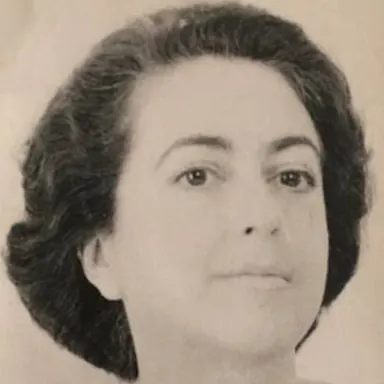
Éliane Amado Lévy-Valensi: A Multidisciplinary Analysis of Dialogue, Identity and Jewish Existence
17 min read3,378 words
Summary
This survey presents the spiritual world of Éliane Amado Lévy-Valensi, a central multidisciplinary thinker of the "Paris School" who worked toward a unique integration of classical philosophy, psychoanalysis and the sources of Judaism. The text highlights how her life experiences, from her activity in the French Resistance to her aliyah to Israel, shaped a teaching that seeks to heal the existential rupture after the Holocaust through dialogue and the acceptance of the "given" of identity. Her central ideas examine the conjugal and intimate model as a metaphysical basis for understanding the relationship between God and man, while she offers an original interpretation of biblical figures as an answer to modern psychological crises. Ultimately, the article sheds light on the importance of Jewish sovereignty and of Zionism as a space of "natural thought" in which the individual realizes his moral and historical vocation without self-alienation.
The Philosophy and Torah Teaching of Éliane Amado Lévy-Valensi: A Multidisciplinary Analysis of Dialogue, Identity and Jewish Existence
The intellectual revival of French Jewry in the second half of the twentieth century is marked by the bold attempt of a group of thinkers to bridge the abyss that opened in the wake of the horrors of the Holocaust, using both modern philosophical tools and the sources of the Jewish tradition. At the heart of this development stands the figure of Professor Eliana (Éliane) Amado Lévy-Valensi (1919–2006), a thinker who worked at the unique meeting point of classical philosophy, in-depth psychoanalysis and original Torah interpretation.[1, 2] Lévy-Valensi was not content with academic research alone; she sought to establish a "natural thought" (une pensée naturelle), one that does not separate ontological existence from moral action and historical identity.[3] As the first and only woman in the inner circle of the "Paris School of Jewish Thought," she contributed a unique voice that stressed the dialogical structure of reality, the importance of conjugality and intimacy as a metaphysical model, and the need to accept the "given" of identity as the basis of human freedom.[4, 5, 6]
Historical Roots and the Matrix of Life: From Salonica to Marseille and Jerusalem
Lévy-Valensi's life is a living testimony to the upheavals of the Jewish people in the twentieth century, and it forms the concrete foundation on which her abstract thought grew. She was born in Marseille in 1919 to a family of educated Sephardi Jews, who combined the ancient Mediterranean tradition with modern French humanism.[1, 4] Her family background reflects the cultural diversity of the Sephardi diaspora: her mother came from the famous Allatini family of Salonica, a family of notables with broad economic and cultural influence, while her father belonged to the Lévy-Valensi family of Algeria, which was part of the intellectual and social elite of North African Jewry.[4] This combination of "root and source" shaped in Lévy-Valensi a consciousness that recognizes the value of tradition as a vital force and not merely as a nostalgic memory.[7]
Activity in the Resistance and the Trauma of the Holocaust
Lévy-Valensi's adult years were marked by the war and the struggle against Nazism. She was not an onlooker, but took an active part as an agent in the French Resistance, especially within the "Combat" movement.[8] This activity demanded of her physical daring and deep moral commitment, values that were later expressed in her writing on "vocation" and on the responsibility of the subject toward history.[7, 9] The war struck her personally and harshly when her mother, Adma Lévy-Valensi, was arrested and deported in June 1944 in Convoy 77 to the Auschwitz extermination camp.[8] This event, alongside the destruction of European Jewry, confronted her with the question of evil at its most acute, and led her to develop a philosophy that seeks to understand Jewish self-hatred and the mechanisms of human destruction.[5]
The Paris School of Jewish Thought: The Feminine and Mediating Voice
In the second half of the twentieth century, Paris became a focus of Jewish-spiritual renaissance. Éliane Amado Lévy-Valensi was a key figure in this movement, alongside dominant thinkers such as Emmanuel Levinas, André Neher and Léon Askénazi (Manitou).[3, 13] This group sought to free Judaism from its definitions as merely a religion or as secular nationalism, and to present it as a comprehensive philosophical system capable of confronting the ontological crisis of modern man.[4, 14]
The Role of Mediator at the Intellectuals' Colloquia
Lévy-Valensi played a decisive institutional and intellectual role in organizing the "Colloquia of French-Speaking Jewish Intellectuals" (Colloque des intellectuels juifs de langue française).[4, 15] She was not content with presenting her own teaching, but served as the main editor of the colloquia's publications together with Jean Halpérin.[4, 16] In an environment that was at times saturated with intellectual power struggles, she was known for her ability to reconcile the different approaches, to sum up the complex discussions and to formulate openings toward a new understanding of the tradition.[4] This contribution of hers was critical to preserving the cohesion of the school over decades.
The Gender Perspective as an Existential Given
As the only woman in the hard core of the Paris School, Lévy-Valensi did not adopt a militant feminist position in the modern sense, but sought to go deeper into the meaning of "being a woman" as part of human wholeness.[3, 5] She saw femininity as an existential "given" (Donné): a fact that cannot be changed and from which one must grow.[5] In her book "Yes... I Am a Woman and a Jew," she examined the dynamic between gender and national identity, and argued that Western culture had failed to understand the deep conjugal dimension that exists in Judaism.[1, 12] In her view, the Bible does not focus on women as "mothers" alone, but stresses their role as "spouses": beloved figures who conduct a dialogue of equal standing with their partners, and through which spiritual history comes into being.[17]
Foundations of the Ontological Philosophy: The Levels of Being and Dialogue
Lévy-Valensi's early thought, which took shape during her work at the Sorbonne, focused on analysing the structure of being and consciousness. Her works "Levels of Being: Knowledge and Evil" (1962) and "The Psychoanalytic Dialogue" (1962) laid the foundations of her system, which combines classical philosophy with psychological insights.[7]
The Ontology of Knowledge and Evil
In the book "Les niveaux de l'être," Lévy-Valensi investigates the connection between different levels of existence and the way in which a person perceives reality.[7] She argues that evil is not an independent entity, but a distortion that occurs when there is a disconnection between the levels of being: when intellectual knowledge is not connected to concrete life, or when the drives take over consciousness without spiritual guidance.[5, 18] She identifies "knowledge" not only as a cognitive act, but as an act of union (similar to the biblical concept of "da'at"), which enables a person to rise above his limited existential condition.[7]
Psychoanalysis as the Vocation of the Subject
For Lévy-Valensi, psychoanalysis was not merely a clinical tool for treating symptoms, but a philosophical space for the realization of dialogue.[7] In her book "Le dialogue psychanalytique," she defines the encounter between analyst and patient as an arena in which the subject discovers his "vocation."[7] She sought to free psychoanalysis from the biological determinism of the early Freud and to charge it with questions of freedom, responsibility and relationship with the other.[4, 7] She founded the Centre for Psychoanalysis and Psychotherapy (CPPS) out of the belief that mental healing requires attention to the metaphysical dimension of the human being.[4, 19]
Her Torah Teaching: The Bible as a Psychological and Metaphysical Laboratory
Lévy-Valensi's distinctiveness as a Jewish thinker lies in her ability to read the biblical text as a living analysis of the soul of the individual and of the nation. She saw in the stories of the patriarchs and the prophets eternal models of existential struggles.[5, 20]
Job: The Jewish Answer to Jung
One of the high points of her Torah work is the book "Job: An Answer to Jung" (1991).[7, 21] The book was written as a sharp polemic with the thinker Carl Gustav Jung and his work "Answer to Job." Jung argued that Job is morally superior to God, whom he conceived as an amoral and unconscious force.[17] Lévy-Valensi rejects this conception utterly. She offers an interpretation in which Job's sufferings are not evidence of divine arbitrariness, but part of a covenantal dynamic.[17]
She stresses the conjugal dimension of the relations between God and man in the Bible. In her view, the relationship between the people of Israel and its God is not one of slave and master, but one of lover and beloved.[17] From this perspective, the sufferings and the silence of God are part of a process of spiritual maturation and of deepening the bond, and not an expression of evil.[17] She uses the figures of the women of the Bible, Sarah, Rebecca, Rachel and Leah, to show how the struggle with barrenness and hardship is part of the process of building the "heir" and the divine promise.[17]
Freud's Moses and the Struggle over the Source
In her book "Le Moïse de Freud ou la référence occultée" (1984), Lévy-Valensi confronts the attempt of the founder of psychoanalysis to dispossess the Jewish people of its greatest leader.[7, 22] Freud, in his book "Moses and Monotheism," argued that Moses was an Egyptian noble who gave the Israelites the religion of Akhenaten.[22, 23] Lévy-Valensi sees this thesis as an expression of a "denied reference" (référence occultée): a desperate attempt by the Jewish Freud to come to terms with his roots and with the antisemitism surrounding him.[7, 22]
She argues that Freud, in his attempt to make Judaism "scientific" and universal, sacrificed the unique dynamic of Jewish monotheism.[22] Lévy-Valensi shows that the claim that Moses was a "foreigner" does not diminish Judaism, but on the contrary: it stresses that the covenant is based not on biology but on the acceptance of the Torah and the law.[22] She analyses Freud's difficulty in recognizing the living Jewish "father," and sees in this a missed opportunity regarding the deepest spiritual dimension of psychoanalysis itself.[23]
The Concept of the "Given" and the Critique of Self-Alienation
A central part of Lévy-Valensi's teaching is devoted to analysing the failures of modern Jewish identity. She developed a theory based on the acceptance of the "given" (Le Donné) as the basis of mental health and authenticity.[5]
The Case of Simone Weil and Self-Hatred
Lévy-Valensi used the figure of the thinker Simone Weil as a kind of negative "mirror image" of her own approach.[5] Weil, who was born a Jew but sharply rejected Judaism and inclined toward Christianity, was seen by Lévy-Valensi as one suffering from deep "self-hatred."[5] In her view, Weil tried to escape her Jewish "given" through a distorted interpretation of the Bible, in which she saw only cruelty and evil.[5] Lévy-Valensi argued that the struggle against a person's basic identity, whether as a Jew or as a woman, is an act of self-destruction that alienates the person from his objective reality.[5]
Hannah Arendt and the Denial of the Subject
Lévy-Valensi's critique also extended to Hannah Arendt, especially following the publication of the book "Eichmann in Jerusalem." Lévy-Valensi saw in Arendt's description of the Jews as collaborators with their own fate an expression of "the Jew in self-negation."[24] She argued that Arendt, despite her wisdom, suffered from a lack of understanding of the psychological mechanism of the victim and of the unique dynamic of the Nazi murder, which sought to turn the Jew into "nothing."[24] For Lévy-Valensi, standing up to evil requires full acceptance of the attacked identity, and not an alienated intellectual distance.[5]
Conjugality, Fraternity and Conflict: Isaac, Ishmael and Abraham
Lévy-Valensi's political-Torah teaching dealt extensively with the possibility of peace and fraternity in the Middle East, drawing on the structural analysis of the stories of the patriarchs.[7, 25]
"The Eleventh Trial of Abraham"
In her book "La Onzième Épreuve d'Abraham" (1981), she proposes that beyond the famous ten trials of Abraham, there is an additional and ongoing trial: the trial of fraternity (fraternité).[26] She argues that the ability to live alongside the other, the Arab, without giving up one's unique identity, is the supreme test of Zionism and of Judaism in the modern era.[26] She sought to raise the Israeli-Palestinian conflict from the superficial political level to the level of a dialogue of cultures and a metaphysics of fraternity.[18, 25]
Isaac and the Question of Arab-Jewish Dialogue
In her work "Isaac, gardien de son frère?" (1968), written close to the Six-Day War, she investigates the unconscious consequences of the encounter between the sons of Isaac and the sons of Ishmael.[7, 12] She uses the expression "the Jews are the Arabs to one another" to point to the fateful and psychological closeness between the peoples.[18] In her view, modern Arab antisemitism is a kind of "Muslim intolerance" that denies the existence of the Jew as a subject, as Claude Lévi-Strauss described it in "Tristes Tropiques."[5] She believed that only mutual recognition of the "otherness" of each side can lead to a true solution, and not an ideological blurring of identities.[5, 25]
Zionism as Authenticity: The Passage from Victim to Subject
Lévy-Valensi's aliyah to Israel in 1968 was not merely an act of physical rescue, but the realization of a philosophical project.[4] She saw Zionism as the way in which the Jewish people can recover from the trauma of the Holocaust by returning to history and to settled permanence.[5]
The Critique of the "Ideological Illusion" of the Left
In her book "À la gauche du Seigneur, ou, L'illusion ideologique" (1987), she analyses what she calls the "betrayal" of Judaism by the European left.[12, 27] She argues that many Jewish intellectuals on the left were captivated by an "ideological illusion" which held that universal justice would abolish the need for a specific Jewish identity.[27] Lévy-Valensi shows how classical German philosophy (Kant, Hegel) contained within it a built-in antisemitism that sought to abolish Jewish "concreteness" in favour of the abstract.[27] For her, the State of Israel is the place where the Jew can be concrete, without apologizing for his existence and without submitting to the dictates of foreign ideologies.[5]
Israel and Spiritual Revival
During her years in Jerusalem and her teaching at Bar-Ilan University, she tried to form a new generation of thinkers who would combine the Greek "logos" with the Hebrew "Torah."[4, 10] She did not see Israel as a state like all others, but as a "spiritual laboratory" in which the human capacity to live according to the command of prophetic morality within a complex political reality is tested.[4, 20] She stressed that biblical prophecy was intended not only to foretell the future, but to guide the people on the path of "wholeness" and the pursuit of social justice.[20]
Levels of Time and Existence: Psychology and Morality
The subject of time occupied a central place in her later writing, out of the understanding that the way in which a person experiences time determines the quality of his moral life.[7, 12]
Psychological Time versus Moral Time
In her books "Time in the Life of the Psyche" (1965) and "Time in Moral Life" (1968), she distinguishes between the subjective experience of time and moral commitment to historical time.[7, 12] In her view, neurosis is characterized by a "freezing" of time, in which a person is imprisoned in his past and cannot open himself to the future.[7, 12] Healing and redemption (both personal and national) involve the ability to experience time as "flow" and as "renewal."[7]
Her Academic and Public Legacy: From Pioneer to Forgotten Figure and Back into Awareness
Lévy-Valensi was a trailblazer in many respects: the first woman to hold the rank of professor at Bar-Ilan University, a founder of research institutes, and a prolific author who won prestigious prizes in France (such as the prize of the Academy of Moral and Political Sciences in Paris).[4, 10, 11] Nevertheless, despite her extensive work, her name did not become part of the central pantheon of Israeli thought, as did Levinas or Neher.[4, 18]
Reasons for Her Institutional Exclusion
Scholars suggest that her daring interdisciplinarity, the combination of psychoanalysis with Kabbalah, and of French philosophy with biblical interpretation, was perceived as "threatening" to the conservative departmental structure of Israeli universities in the 1970s and 1980s.[18] In addition, her rich and complex style of writing, which at times leaned toward the literary and the poetic, did not always fit the accepted academic dryness.[3, 18] Her influence was especially strong among the circles of French-speaking intellectuals in Israel, but she did not always manage to break through the barrier of language and culture to the broader Israeli public.[4, 18]
The Scholarly Revival in the 21st Century
In the last decade there has been a noticeable trend of "rediscovering" Lévy-Valensi. New studies, led by scholars such as Merav Carmeli and Sandrine Szwarc, shed light on her importance as a central post-Holocaust thinker.[6, 9] Conferences devoted to her teaching, such as the conference at the Matanel Foundation in 2020, seek to make her writings accessible to the Hebrew reader and to examine their relevance to questions of gender, identity and coexistence in the 21st century.[6] The Mazur Chair at Bar-Ilan University, which she held, continues to be a focus for preserving her legacy and for promoting the dialogue between general philosophy and Jewish thought.[11]
Summary: Her Teaching as a Bridge over the Abyss
Éliane Amado Lévy-Valensi left behind an impressive body of work comprising more than twenty books and hundreds of articles, which testify to an uncompromising intellectual and spiritual struggle.[7, 12] She showed how one can be a profound European philosopher without giving up the Jewish root, and how psychoanalysis can be used to reveal the spiritual depth of the Torah.[5, 7]
At the centre of her teaching stands the call to a person to accept himself and his vocation, out of the understanding that true freedom is found not in flight from identity but in its full realization. For Lévy-Valensi, Judaism is a "message" to all of humanity, but in order to convey this message, the Jew must first of all be a Jew in the full sense of the word.[5] Her legacy is a legacy of communication, of dialogue and of faith in the power of the written and spoken word to heal the wounds of history and to build a future of fraternity.[7, 26]
Sources27
- 1.הדור החדש - אליאנס: כל ישראל חברים, kiah.org.il/wp-content/uploads/2024/02/1-הדור-החדש-בארצות-המזרח-ספר-מלא-1.pdf
- 2.אליענה אמדו לוי-ולנסי - ויקיפדיה, he.wikipedia.org/wiki/אליענה_אמדו_לוי-ולנסי
- 3.Eliane Amado Lévy-Valensi, une pensée "naturelle", editions-hermann.fr/tribune/eliane-amado-levyvalensi-une-pensee-naturelle_AoazPJgtMGnZAtuNP
- 4.L'invité du 9 février 2020 – Dr Eliana Amado-Levy-Valensi et l'Ecole de Pensée Juive de Paris - YouTube, youtube.com/watch?v=WpEzq_83YlA
- 5.David Taïeb Eliane Amado Levy-Valensi: a post-Shoah ... - Bamidbar, bamidbar-journal.org/wp/wp-content/uploads/2013/11/4taieb.pdf
- 6.Supplemental Report Matanel Foundation, matanel.org/wp-content/uploads/2020/08/6-8-2020-matanel-foundation-supplemental-num-F.pdf
- 7.Eliane Amado Lévy-Valensi | Open Library, openlibrary.org/authors/OL283232A/Eliane_Amado_Lévy-Valensi
- 8.Convoy 77 of July 31, 1944 - Wikipedia, en.wikipedia.org/wiki/Convoy_77_of_July_31,_1944
- 9.Une femme dans le renouveau de la pensée juive: Eliane Amado ..., centre-jules-isaac.org/conference/video-conference/une-femme-dans-le-renouveau-de-la-pensee-juive-eliane-amado-levy-valensi/
- 10.לוי-ולנסי ז"ל אמדו | המחלקה לפילוסופיה יהודית, jphilosophy.biu.ac.il/node/467
- 11.מכונים, מרכזים וקתדראות | הפקולטה למדעי הרוח - אוניברסיטת בר אילן, humanities.biu.ac.il/node/317
- 12.livres et brochures d'éliane amado lévy-valensi - Amitié Judéo-Chrétienne de France, ajcf.fr/IMG/pdf/bibliographie_ealv_2.pdf
- 13.L'École de pensée juive de Paris - Presses universitaires de Strasbourg, books.openedition.org/pus/5865
- 14.L'école de pensée juive de Paris et son rapport à la tradition, intellectualdiaspora.org/diasporic-knowledge_l-ecole-de-pensee-juive-de-paris-et-son-rapport-a-la-tradition/
- 15.Eliane Amado Lévy-Valensi et le Colloque des intellectuels juifs de ..., nli.org.il/en/articles/RAMBI990005488050705171/NLI
- 16.JEWISH AND ARAB ENTANGLEMENTS IN POSTWAR FRANCE A DISSERTATION SUBMI - Knowledge UChicago - The University of Chicago, knowledge.uchicago.edu/record/7664/files/Kranz_uchicago_0330D_16993.pdf
- 17.LÉVY-VALENSI, Éliane Amado, Job : réponse à Jung - Érudit, erudit.org/fr/revues/ltp/1992-v48-n2-ltp2143/400698ar.pdf
- 18.Éliane Amado Levy-Valensi : le défi de l'Universel dans la pensée israélienne - Cairn, shs.cairn.info/article/PARDE_059_0205/pdf?lang=fr
- 19.Couple Catalogue en ligne - Bibliothèque Sigmund Freud, bsf.spp.asso.fr/index.php?lvl=categ_see&id=490&page=14&nbr_lignes=417&l_typdoc=
- 20.PENSÉE JUIVE - United, united-jed.org/wp-content/uploads/sites/2/PENSEE-JUIVE-Tome-1-fini.pdf
- 21.Le livre de Job et l'expérience spirituelle - Bible et vie monastique, bibleetviemonastique.free.fr/job.spi.htm
- 22.Freud's Moses 9780300191820 - DOKUMEN.PUB, dokumen.pub/freuds-moses-9780300191820.html
- 23.Freud and Monotheism: Moses and the Violent Origins of Religion 9780823280056, dokumen.pub/freud-and-monotheism-moses-and-the-violent-origins-of-religion-9780823280056.html
- 24.A CONTROVERSY ON MORAL JUDGMENT ACADEMISCH PROEFSCHRIFT ter verkrijging van de graad van doctor aan de Universiteit van Amsterd - Research Explorer, pure.uva.nl/ws/files/181533806/Dissertation_with_plain_layout.pdf
- 25.Chapitre IV. Éliane Amado Lévy-Valensi : le temps et l'histoire, la parole et le couple, books.openedition.org/pus/5901?lang=en
- 26.La onzième épreuve d'Abraham. Ou De la fraternité - Numilog.com, excerpts.numilog.com/books/9782706270611.pdf
- 27.À la gauche du Seigneur, ou, L'illusion ideologique / E.Amado Levy-Valensi | Book, nli.org.il/en/books/NNL_ALEPH990010365480205171/NLI