Skip to contentGo to the list of all sages
Ozar Chachamim
  1. /
  2. Acharonim
  3. /
  4. Chacham David Nieto
עבENРУ
Acharonim1654–1728Venice; Livorno; London

Chacham David Nieto

Thought, halakha and science

  • Mateh Dan
  • Deism
  • Sabbateanism
  • The Sephardi community in London
  • The Oral Torah
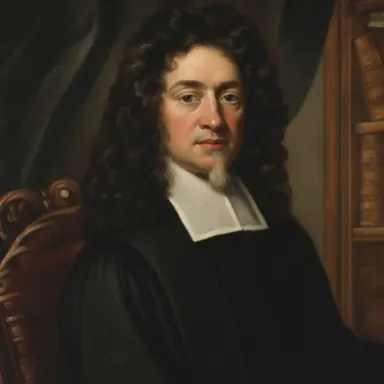
Illustration: Chacham David Nieto
Illustration from the podcast episode
Read the research
· 40 min
Listen
Watch the video
📜Sefaria
⬡Show in the network
🌌Show in the Tower of Generations
🔗The path to another sage

Listen to the episode

Podcast episode · Chacham David Nieto

Open in Spotify
The player loads from Spotify only when you click.
Open in Spotify

Watch the video

Chacham David Nieto

Open on YouTube (opens in a new tab)

David Nieto: “Mateh Dan” and the Debate on Nature

The video loads from YouTube only when you click.
Open on YouTube (opens in a new tab)

Core Concept

Nature is providence – identifying the laws of nature as direct divine action, as a rational answer to deism.

Biography

Rabbi of the Spanish and Portuguese community in London at the start of the 18th century, a physician and astronomer. In his book "Mateh Dan" he defended the authority of the Oral Torah with rational tools, and fought deism and Sabbateanism.

Writings on Sefaria

The writings of David Nieto can be read on Sefaria, a free library of Jewish texts. A title opens the text itself.

  • 📖Matteh Dan(opens in a new tab)
📜All writings of David Nieto on Sefaria(opens in a new tab)

Content from Sefaria (sefaria.org) and Wikimedia projects, non-profit projects.

The Road to Sinai

The archive doesn’t yet record Chacham David Nieto’s teachers, so the road to Sinai can’t be drawn yet.

See the generations from Sinai

Full research

2 documents·7,914 words· 40 min read

Contents40 min read

  1. Thought, Science and the Defense of Tradition: The Work and the Torah and Philosophical Teaching of Hakham David Nieto
    • The Intellectual Struggles and the Historical Background in the London Community
    • Reconciling Reason and Halakha: The Philosophy of the Divine and of Nature
    • The Defense of the Oral Torah: The Book Matteh Dan (The Second Kuzari)
    • The Struggle against Sabbateanism and Doctrinal Deviation: The Book Esh Dat
    • Science, Astronomy and the Science of Chronology in the Service of Halakha and Apologetics
    • Apologetics and Interreligious Polemic: The Answer to the Archbishop of Cranganore
    • Further Works, His Last Days and His Legacy
    • Sources
  2. The Torah Teaching, Public Work and Scientific-Philosophical Thought of Hakham David Nieto
    • Biography, Family Background and Geographical Moves
    • Stations of Life and Institutional Roles of Hakham David Nieto
    • The Controversy over Nature and Providence: Newtonian Determinism versus Divine Immanence
    • The Book Matteh Dan: The Epistemology of the Oral Torah against Skepticism and Karaism
    • The Structure of the Apologetic Arguments in the Book "Matteh Dan"
    • The War against Sabbateanism and His Further Polemical Works
    • Cosmology, the Calendar and the Integration of Science into Halakha
    • A Comparison between the Gregorian Calendar and the Hebrew Calendar in the Tradition of the Sages
    • Summary and Historical Assessment
    • Sources
Contents· 18 sections
  1. Thought, Science and the Defense of Tradition: The Work and the Torah and Philosophical Teaching of Hakham David Nieto
    • The Intellectual Struggles and the Historical Background in the London Community
    • Reconciling Reason and Halakha: The Philosophy of the Divine and of Nature
    • The Defense of the Oral Torah: The Book Matteh Dan (The Second Kuzari)
    • The Struggle against Sabbateanism and Doctrinal Deviation: The Book Esh Dat
    • Science, Astronomy and the Science of Chronology in the Service of Halakha and Apologetics
    • Apologetics and Interreligious Polemic: The Answer to the Archbishop of Cranganore
    • Further Works, His Last Days and His Legacy
    • Sources
  2. The Torah Teaching, Public Work and Scientific-Philosophical Thought of Hakham David Nieto
    • Biography, Family Background and Geographical Moves
    • Stations of Life and Institutional Roles of Hakham David Nieto
    • The Controversy over Nature and Providence: Newtonian Determinism versus Divine Immanence
    • The Book Matteh Dan: The Epistemology of the Oral Torah against Skepticism and Karaism
    • The Structure of the Apologetic Arguments in the Book "Matteh Dan"
    • The War against Sabbateanism and His Further Polemical Works
    • Cosmology, the Calendar and the Integration of Science into Halakha
    • A Comparison between the Gregorian Calendar and the Hebrew Calendar in the Tradition of the Sages
    • Summary and Historical Assessment
    • Sources

Document 1/2

Thought, Science and the Defense of Tradition: The Work and the Torah and Philosophical Teaching of Hakham David Nieto

20 min read·3,953 words

Summary

This source surveys the life and teaching of Hakham David Nieto, the spiritual leader of the Spanish-Portuguese community in London at the beginning of the 18th century, a polymath who combined halakhic scholarship with the exact sciences. The text details his intellectual struggles against the currents of Deism and Sabbateanism, with an emphasis on his revolutionary conception identifying nature as an expression of direct divine providence. Through his main books, foremost among them "Matteh Dan," Nieto is presented as a distinct advocate of the truth of the Oral Torah, who uses rational and empirical tools to establish the authority of the Sages in the eyes of the enlightened men of his generation. Ultimately, the work illuminates Nieto's contribution to the formation of modern Jewish identity through a harmonious synthesis of religion and science, which made him an exemplary figure in the defense of tradition in the face of the challenges of the Enlightenment.

The Intellectual Struggles and the Historical Background in the London Community

Hakham David Nieto (1654–1728) represents one of the most fascinating and influential figures in the history of Jewish thought at the beginning of the modern era.[1, 2] As a distinct polymath who worked as a rabbi, dayan (rabbinic judge), physician, philosopher, astronomer, mathematician and poet, Nieto succeeded in connecting the world of halakha and tradition with the scientific and intellectual revolution of eighteenth-century Europe.[1, 3, 4] His work was characterized by a constant attempt to prove the complete harmony between the Jewish religion and empirical scientific inquiry, while uncompromisingly defending the legitimacy of the Oral Torah against threats from within and without.[2, 4]

Nieto was born in Venice to a family of Spanish-Portuguese origin, which belonged to the community of former anusim (Conversos) who had fled the terror of the Inquisition in the Iberian Peninsula.[4] His father, Pinchas (Phinehas) Nieto, raised him within the complex and dynamic Levantine ghetto of Venice.[4] This rich cultural environment blended Ashkenazi and Sephardi traditions and gave the young Nieto a comprehensive multilingual education in Hebrew, Spanish, Italian and Latin.[4] Alongside his deep Torah studies, Nieto turned to academic studies at the University of Padua, one of the most advanced scientific centers in the Europe of those days, where he completed a degree in medicine after specializing in anatomy, philosophy and the natural sciences.[2, 4] This unique combination of medical-scientific knowledge and halakhic scholarship made him one of the greatest polymaths of the Jewish people at that time, capable of bridging rabbinic tradition and up-to-date European science.[3, 4, 5]

After completing his studies, Nieto served as dayan, preacher and physician in the community of Livorno in Italy, where he acquired a name as a scholar of great stature who maintained close ties with Christian intellectuals around astronomical and chronological questions.[2, 4] In 1701 he was called to serve as Hakham and rabbi of the Portuguese congregation "Sha'ar HaShamayim" (Bevis Marks) in London, in place of Hakham Shlomo Ayllon.[3, 4, 6] His arrival in London marked the beginning of a new era in this community, which had been re-established under the protection of Oliver Cromwell in 1656.[4] The London community, composed mostly of anusim who had returned to open Judaism, needed a leader of stature who could shape its religious identity, impose halakhic authority on it and cope with the winds of skepticism and Deism that had begun to blow in the England of the Enlightenment era.[4, 7, 8]

The community's board of trustees (the "Mahamad") set the new Hakham strict terms of employment, which included giving up active medical practice, a commitment to regular teaching of Scripture with Rashi's commentary and of Talmud, and delivering regular sermons every two weeks and on festivals.[4] These terms were intended to ensure that Nieto would devote his full energy to strengthening the Torah foundation of the community, which was characterized by deep educational gaps; its members, who had grown up as Catholics and had been trained to read the biblical text literally, experienced a cultural and religious shock when they encountered the multilayered halakhic and Talmudic system.[4, 8] Hakham Nieto filled a historically critical role in bridging these gaps by writing sophisticated theological and philosophical works, which gave rational and scientific legitimacy to the authority of the Sages.[2, 4, 8]

✦

Reconciling Reason and Halakha: The Philosophy of the Divine and of Nature

One of the stormiest stations in Hakham Nieto's career in London was the great controversy that arose following his sermon in the "Bevis Marks" synagogue on November 20, 1703, which was printed in 1704 as a work in Spanish under the title "Della Divina Providencia" ("On Divine Providence, or Universal Nature, or Naturing Nature").[2, 4] In this sermon Nieto sought to confront one of the great spiritual dangers of his time, Deism, which was very widespread in England in those days under the influence of the new scientific discoveries.[2, 4] Deist philosophy presented the universe as an automatic machine operating according to fixed laws of physics, and God as a "supreme clockmaker" who created the world and left it to operate by its own powers, without constant intervention or individual providence.[4]

In order to topple this mechanistic view, Hakham Nieto declared in his sermon that God and nature are one and the same, and that nature is nothing other than God Himself.[4, 12] He explained that the modern term "Nature" is a misleading concept that has no real foothold in the sources of Judaism, and in practice all the phenomena regarded as "natural," such as the falling of rain, the growth of grass and the motion of the heavenly bodies, are nothing but direct actions of divine providence, which governs every single detail of creation.[4, 5, 12] To support his words Nieto relied on verses of Psalms, and especially on the verse "Who covers the heavens with clouds, who prepares rain for the earth, who makes grass grow upon the mountains" (Psalms 147:8), which stresses that God Himself operates the forces of heaven and earth directly, without the mediation of autonomous laws of nature.[4, 12]

The wording of the sermon aroused fierce opposition among a group of members of his congregation, headed by one of the community's parnassim (lay leaders), Joshua Zarfati.[4] The opponents accused Hakham Nieto of Spinozism (pantheism or atheism in the terms of that period), that is, of the heretical identification of God with the physical matter of the universe and the abolition of the Creator's transcendence.[2, 3, 4] Many scholars point out that some of the accusers were in fact secret Sabbateans, who exploited this opportunity to undermine the halakhic authority of the new rabbi who sharply opposed them.[6] The controversy threatened to tear the community apart, descended into vilification and the imposition of bans, and even reached the point of a legal appeal to the Attorney General in England.[4, 12]

To defend himself and his teaching, Nieto published an expanded edition of the work in the form of a dialogue between two figures, Reuben and Simeon, who clarify the principles of providence and of the relation between the Creator and the world.[4, 12] In this work Nieto sharpened his fundamental philosophical distinction, based on the concepts:

  • Natura Naturans (nature naturing / creating): the Divinity as the force that acts, directs and continually animates the universe. This is the correct definition of God according to Hakham Nieto, representing active divine providence.[2, 4]
  • Natura Naturata (nature natured / created): physical matter and corporeal creation itself, which are created things and are not God.[2, 4] Nieto stressed that, unlike Spinoza, he had never identified God with created matter, but held the traditional theological position of a transcendent God who watches over His world immanently.[2, 4]

Finally, in order to resolve the crisis of leadership, the community board turned in 1705 to the external arbitration of one of the greatest halakhic decisors of the generation, Hakham Tzvi Ashkenazi in Amsterdam.[2, 3, 4] Hakham Tzvi studied the writings and issued a famous halakhic ruling (Responsa Hakham Tzvi, no. 18), in which he fully acquitted Hakham Nieto and praised him for his teaching.[2, 3, 4] Hakham Tzvi determined that Nieto's words are consistent with the principles of traditional Jewish faith, and that the claim that everything is conducted by the direct providence of the Creator and that there is no independent "nature" is a foundation of the belief in God's unity.[1, 4] This ruling restored Nieto's standing in London, silenced his opponents and established his unchallenged spiritual authority.[4, 12] Later, as can be seen in the history of Jewish thought, Rabbi Moshe Avigdor Amiel noted that the idea that we know God from nature is one of the "agreed lies," since everything we call "nature" is nothing but a linguistic term intended "to make it understandable to the ear."[1] The work aroused renewed interest in the twenty-first century and was translated into English for the first time by Walter Hilliger in 2018.[6]

✦

The Defense of the Oral Torah: The Book Matteh Dan (The Second Kuzari)

The most monumental and famous work of Hakham David Nieto is the book "Matteh Dan," also called "The Second Kuzari," which was printed in London in 1714 in Hebrew with a Spanish translation and notes.[2, 4, 9] The work is shaped in a carefully crafted dialogue format, modeled on the structure of the book "The Kuzari" by Rabbi Yehuda HaLevi of the eleventh century, and presents a lively philosophical debate between the king of the Khazars and the Haver, the representative of faithful Judaism.[4, 9] This literary and ideological choice was intended to appeal directly to the souls of the members of the Spanish-Portuguese community at that time, many of whose members experienced enormous difficulties in adapting to the multilayered halakhic and Talmudic system.[4, 8] The scholarly literature makes clear that although the book presents a polemical front against the historical Karaites, its true target audience was those anusim who had returned to Judaism, as well as skeptical and radical figures such as Uriel Acosta and Baruch Spinoza, who challenged the very legitimacy of the Talmudic tradition.[1, 4, 6]

Coping with the erosion of tradition among these communities was not unique to London; it reflected a broader pattern of migration of anusim who had to balance the rationalism of the Enlightenment era with ancestral tradition, challenges that recurred also in the first Sephardi communities established at that time on the American continent, in cities such as Newport, Rhode Island and Charleston, South Carolina.[4] Hakham Nieto divided his work into five main debates, intended to establish the truth of the Oral Torah from a historical, philosophical, psychological and scientific point of view.[1, 5, 9]

In order to establish the authority of the Sages, Nieto incorporated in his work extensive discussions in the fields of astronomy, geometry and Newtonian mechanics.[2, 4] This combination constituted a sophisticated rhetorical move: instead of demanding blind faith alone from the members of his community, he proved that the sages of the Talmud mastered the exact sciences of their time, and thereby raised the prestige of the Sages in the eyes of the new enlightened men who tended to belittle tradition.[2, 4] The work won enormous admiration throughout the generations and was printed in many editions, among them a prominent edition in the twentieth century (Mossad HaRav Kook, 1958) that included an introduction by Rabbi Yehuda Leib Maimon and a comprehensive biography by the historian Bezalel (Cecil) Roth.[2, 4]

✦

The Struggle against Sabbateanism and Doctrinal Deviation: The Book Esh Dat

An inseparable part of Hakham Nieto's work of leadership was the stubborn and uncompromising struggle against Sabbateanism and religious heresies that threatened the cohesion and orthodoxy of the Jewish world at the beginning of the eighteenth century.[2, 3, 4] The struggle focused mainly on the figure of the wandering Sabbatean leader Nehemiah Hiya Hayon (c. 1668–1730), who spread throughout Europe a deviant kabbalistic theology based on the teaching of Shabbetai Tzvi and of Abraham Miguel Cardozo, exploiting the naivety of former anusim who did not possess complex theological tools for identifying heresy.[2, 4, 13] Hayon tried to instill his ideas by relying on a distorted interpretation of classic works of Kabbalah, and even hurled accusations of heresy at authoritative kabbalists and philosophers, among them the Spanish-Dutch kabbalist Rabbi Abraham Cohen de Herrera.[1]

In response to this danger, and following an explicit invitation from the "Mahamad" in London, which was worried about the penetration of these ideas into its community, Hakham Nieto composed and published in 1715 his polemical book "Esh Dat" ("Fire of the Law").[1, 2, 4] The book was written mainly in Hebrew and accompanied by an added Spanish translation, and it is shaped in the form of two incisive theological debates against the sect of Shabbetai Tzvi and the teaching of Hayon.[1, 4, 14] In this work Nieto acted in defense of the philosopher-kabbalist de Herrera and refuted the accusations of heresy that Hayon had hurled at him.[1]

In order to confront the Sabbatean theology, which presented a certain dualism within the Godhead, Nieto used distinctly cosmological arguments to prove the eternity, absolute unity and incorporeality of God.[2, 4] He presented Judaism as a religion based on rational and universal theistic principles shared also by Christianity and Islam, and thereby harnessed the rationalism of the Age of Enlightenment to topple anarchic Sabbatean mysticism.[4] This move corresponded with the latitudinarian efforts of the Anglican Church in England at that time, which acted in a similar way to suppress "religious enthusiasm" and false messianism in favour of social order and religious reason.[4] The book received enthusiastic approbations from the sages of the generation, among them Hakham Tzvi Ashkenazi, which helped strengthen Nieto's close ties with the rabbis of Italy (such as the Mantua community) and created a united Sephardi-Ashkenazi front of opposition to Sabbateanism.[4]

✦

Science, Astronomy and the Science of Chronology in the Service of Halakha and Apologetics

Hakham Nieto's distinct scientific talent found tangible expression in his research in the field of chronology and applied astronomy.[2, 4] In Livorno, Italy, Nieto acquired great skill in conducting scientific and comparative debates with Christian scholars on questions of calendars and time reckoning.[4] The fruits of this research were collected in his Italian work "Paschologia" (or "Pascalogia"), which was printed in Cologne in 1702 and dedicated to Cardinal Francesco Maria de' Medici with the aim of promoting mutual cultural and religious understanding.[2, 3, 4]

In this book Nieto carried out a detailed historical and mathematical analysis of the errors that had accumulated in the calendars of the Greek Orthodox Church and the Roman Catholic Church from the First Council of Nicaea (the year 325 CE) until the year 1692.[3, 4] He proved astronomically the distortions that arose in the transition from the Julian calendar to the Gregorian calendar with regard to fixing the date of the Christian festival of Easter, and set against them the extraordinary astronomical and mathematical precision of the Hebrew calendar, which combines the solar cycle with the lunar cycle with maximal precision.[2, 4]

Upon his arrival in London, Nieto used the astronomical knowledge he had acquired to solve a serious practical halakhic problem.[4] The Jews of the community, who were accustomed to the climate and the times of the Mediterranean countries, had difficulty determining the times of the beginning and end of the Sabbath at the northern latitudes of England, where the length of the day changes extremely between the seasons of the year and the twilight periods are especially long.[4] Nieto was the first to calculate and determine scientifically the times of the beginning and end of the Sabbath for the latitude of England, and thereby prevented desecration of the Sabbath and halakhic confusion.[3, 4]

In 1717 he published the multi-year calendar "Binah la-Ittim" (in Spanish: "Repertorio de los Ros-Hodes, Fiestas, y Ayunos"), which covered the years 1718 to 1800 and included detailed tables of new moons (moladot), solar and lunar eclipses, times of sunrise and sunset, and times of prayers.[2, 7] This calendar served as the official and exclusive guide of the Jewish community in London until the nineteenth century.[2, 4]

At the beginning of the calendar Nieto included a fascinating chronological appendix listing the years that had passed since the creation of the world, the Flood, the birth of Moses our teacher and the destruction of the Temples, and alongside them he noted precisely the number of years that had passed since the expulsion of the Jews from England, France, Spain and Portugal.[7] The inclusion of these traumatic historical events in the calendar served as a powerful educational tool for building a shared historical memory for the former anusim, while stressing the continuity of the existence of the people of Israel despite the persecutions.[7]

Hakham Nieto's scientific authority attracted the attention of Christian scholars and Hebraists at the universities of Oxford and Cambridge.[7] Among others, he was in contact with the well-known Hebraist John Covel, Master of Christ's College, Cambridge, who approached him with a proposal to cooperate in publishing further scientific and chronological works.[7] Nieto also maintained ties with the well-known German bibliographer Johann Christoph Wolf, which attests to his respected standing in the European Republic of Letters.[2, 3]

From a philosophical-epistemological standpoint, Nieto held an open approach to science; he saw scientific discoveries, including the possibility of life existing on other planets and the understanding that the stars are suns illuminating distant worlds, as an expression of divine providence and not a threat to it.[4] Nevertheless, when the new science threatened to harm the plain meaning of Scripture in a way that could not be reconciled, as in the case of the heliocentric model, which clashed with the description of Joshua's miracle at Gibeon, Nieto preferred to set a clear limit, refused to adopt heliocentrism and chose to preserve the plain meaning of the verses, thereby exemplifying a selective and cautious synthesis between science and faith.[4]

✦

Apologetics and Interreligious Polemic: The Answer to the Archbishop of Cranganore

A further arena in which Hakham Nieto displayed his power as a gifted and courageous polemicist was the defense of the people of Israel and of the Torah against direct Christian theological attacks.[2, 3] The most prominent case is connected with the traumatic event of the auto-da-fé held in Lisbon on September 6, 1705, in which Jewish anusim who had been caught observing the commandments in secret were burned at the stake.[10, 11] On that occasion the Archbishop of Cranganore delivered a humiliating and cutting sermon addressed to the victims of the Inquisition condemned to death, in which he preached to them to abandon their wretched religion and presented a one-sided Christological interpretation of verses of the Hebrew Bible in order to prove the truth of Christianity.[2, 10, 11]

Hakham David Nieto could not pass over in silence this offense to the honor of the slain of his people.[10, 11] He composed a sharp, detailed and profound answer to this sermon, which was published anonymously under the pseudonym "Carlos Vero" and printed after his death in 1729 under the title "Respuesta al Sermon" ("Answer to the Sermon").[2, 6, 10, 11] In this work Nieto dismantled the archbishop's arguments one by one, displayed extraordinary expertise in the biblical sources and showed that the Christian interpretations of verses of the Hebrew Bible are based on mistaken translations, on taking things out of context and on distorting the plain meaning of the verses.[2]

Nieto established anew the justification of the Jews' readiness to give up their lives for the sanctification of God's name, and presented the Christian Inquisition not as an expression of divine grace but as a cruel and immoral mechanism contrary to the values of religion and humanity.[10, 11] As part of establishing Jewish faith and refuting Christian claims, Nieto made a use unique and rare among Jewish theologians of the "consensus gentium" argument (the agreement of all nations).[2, 4] He argued that the existence of basic principles shared by all the great human religions, such as the existence of God, the concept of reward and punishment and the immortality of the soul, proves the universal truth of these principles of faith, and puts the unique ecclesiastical claims of Christianity in an untenable light.[2, 4] The work was later translated into English in 1845 by Moses Mocatta under the title "The Inquisition and Judaism," and became a classic asset of the literature of Jewish polemic and apologetics in Britain.[10, 11]

✦

Further Works, His Last Days and His Legacy

Hakham David Nieto composed a number of further works in Hebrew and Spanish, some of which remained in manuscript or were included in various collections. Among his prominent works one can count:

Los Triunfos de la Pobreza (The Triumphs of Poverty): a panegyric poem printed in 1709, which praises poverty and stresses the importance of withstanding life's trials out of faith.[6] The work was translated into English for the first time in 2018 by Walter Hilliger.[6]

  • Sha'ar Dan: a first encyclopedia of its kind on the entire Babylonian Talmud, in which Nieto sought to organize all the concepts and entries of the Talmud in an alphabetical and methodical form.[1] Apparently Nieto did not manage to complete this monumental work before his death.[1]
  • Responsa: Nieto answered many halakhic questions, and some of his responsa were included in the responsa collection "Peri Etz Chaim" of the sages of the famous "Etz Chaim" yeshiva in Amsterdam, with which he maintained continuous Torah ties.[1]
  • Occasional poetry: Nieto engaged in writing liturgical and occasional poetry, and some of his poems were included in the poetry collection "Kol Ugav."[1]

Hakham David Nieto died in London on January 10, 1728 (28 Tevet 5488) and was buried in the old Jewish cemetery (the "Velho") at Mile End.[3, 6] His son, Hakham Isaac Nieto, later inherited his place as Hakham of the community, but with the father's death the golden age of Torah-scientific leadership in London came to an end.[6, 7] During the rest of the eighteenth century the community contended with trends of assimilation and demographic decline, which left the years of Nieto's tenure as exceptional and unforgettable.[7]

The figure of Hakham Nieto won enormous admiration not only from his contemporaries such as Hakham Tzvi Ashkenazi, but also from the great figures of the following generations, among them the Chida (Rabbi Chaim Yosef David Azulai), who praised his extraordinary wisdom and his books.[5, 6] The legacy of Hakham Nieto has remained as a symbol of the harmonious combination of the world of halakha and Talmud with modern philosophy and science, a model that placed the defense of the Oral Torah on firm rational foundations and helped preserve the integrity of the tradition of Israel at the threshold of the modern era.[2, 4, 8]

Sources14

  1. 1.דוד ניטו - ויקיפדיה, he.wikipedia.org/wiki/דוד_ניטו
  2. 2.David Nieto - Jewish Virtual Library, jewishvirtuallibrary.org/nieto-david
  3. 3.NIETO, DAVID - JewishEncyclopedia.com, jewishencyclopedia.com/articles/11535-nieto-david
  4. 4.David Nieto - Grokipedia, grokipedia.com/page/david_nieto
  5. 5.Rabbi David Nieto - Halakha of the Day, rabbibitton.blogspot.com/2011/11/rabbi-david-nieto.html
  6. 6.David Nieto - Wikipedia, en.wikipedia.org/wiki/David_Nieto
  7. 7.1693– 1733: The Era of David Nieto - Brill, brill.com/display/book/9789004367050/BP000015.pdf
  8. 8.How Best to Respond to Theological and Philosophical Misconceptions About Judaism in the 21st Century Based on Three Principle H - S&P Sephardi Community, sephardi.org.uk/wp-content/uploads/2020/02/Dissertation.MA_.JD_.pdf
  9. 9.מטה דן | ספריית ספריא, sefaria.org.il/Matteh_Dan
  10. 10.The Inquisition and Judaism. London, 1845. First Edition in English - Winner'S Auctions, winners-auctions.com/en/items/the-inquisition-and-judaism-london-1845-first-edition-in-english/
  11. 11.Judaica The Inquisition and Judaism A Sermon, response by Rabbi D. Nieto, 1845 | eBay, ebay.com/itm/294257163079
  12. 12.הדפוס היהודי הראשון באנגליה - הספרנים - הספרייה הלאומית, blog.nli.org.il/sodot-british/
  13. 13.נחמיה חייא חיון - ויקיפדיה, he.wikipedia.org/wiki/נחמיה_חייא_חיון
  14. 14.Online Auction 03 - Judaica - Books, Manuscripts, Letters, Objects | Page 16, kedem-auctions.com/en/online-auction-03-judaica-books-manuscripts-letters-objects?page=15

Document 2/2

The Torah Teaching, Public Work and Scientific-Philosophical Thought of Hakham David Nieto

20 min read·3,961 words

Summary

The text surveys the many-sided figure of Hakham David Nieto, one of the prominent spiritual leaders of the Sephardi community in London at the beginning of the 18th century, who combined traditional Torah scholarship with a broad scientific education. The article analyzes his central intellectual struggles, foremost among them the controversy over nature and providence, in which he identified the laws of physics with direct divine action, as well as his defense of the truth of the Oral Torah in his monumental book "Matteh Dan" against the currents of skepticism of his time. Through a survey of his public work and his research in astronomy and the Hebrew calendar, the source stresses how Nieto fortified the walls of orthodoxy by harnessing science as an apologetic tool, thereby offering a unique model of Jewish leadership bridging the world of tradition and the scientific revolution of the early modern era.

Biography, Family Background and Geographical Moves

Hakham David Nieto (1654–1728) is counted among the most fascinating and influential rabbinic figures at the threshold of the early modern era.[1, 2] He was born in Venice on 29 Tevet 5414 (January 13, 1654), in the midst of the process of the re-formation of the Sephardi diaspora in Western Europe.[1] His family descended from the anusim of the Iberian Peninsula, a historical reality that shaped his cultural and linguistic world and gave him full mastery of Hebrew, Spanish, Portuguese, Italian and Latin.[1, 3] His father, Pinchas Nieto, was a merchant and one of the notables of the Sephardi community in Venice, and served as a member of its "Mahamad" (the community board).[1] The father's Torah ties were close, and he maintained an extensive halakhic correspondence with the famous rabbi of Venice, Rabbi Shmuel Aboab, whose questions and answers to him were later printed in the responsa book "Devar Shmuel."[1]

In his childhood and youth David Nieto experienced the upheavals of wandering of that period.[1] He was educated in the Levantine ghetto of Venice, which was established in 1541 and served as a bustling center of Torah study and cosmopolitan philosophical discourse.[2] Following business opportunities, his family moved to Reggio after his father received a license from the duke of the state to establish a workshop for the manufacture of stockings, but when the ghetto requirement was applied in that city, the family moved its residence to Rome.[1] Throughout this period David Nieto remained the distinguished disciple of Rabbi Shmuel Aboab.[1] He acquired his academic and scientific training at the University of Padua, one of the leading institutions in Europe for the sciences, where he completed studies in medicine, anatomy, philosophy and the natural sciences, and at the same time completed his Torah studies and received rabbinic ordination.[1, 2]

After his marriage Nieto moved to live in Livorno, a major seaport that served as a cultural and economic junction for the Jews of the Mediterranean.[1, 2] In Livorno he served as dayan, preacher, head of a yeshiva and practising physician.[1, 4] In 1701, following the departure of Rabbi Shlomo Ayllon for Amsterdam, Hakham Nieto was called by the parnassim of the Spanish and Portuguese community in London to serve as Hakham and av beit din (head of the rabbinic court) of the "Sha'ar HaShamayim" congregation.[1, 2] This community, which had been re-established following the initiative of Menasseh ben Israel and the authorization of Oliver Cromwell in 1655, dedicated in that very same year (1701) the magnificent synagogue at Bevis Marks.[5] The members of the community were mostly wealthy businessmen speaking Spanish and Portuguese, some of them former anusim who had returned to Judaism.[5]

The move to London set Nieto exceptional leadership challenges.[2] His contract of employment with the community included a unique clause requiring him to cease completely from practical medicine, so that he could devote all his time and energy to spiritual leadership.[6] Under his leadership the synagogue became a center of attraction for gentiles as well, and Christian churchmen used to attend the Gemara lessons he gave.[1] At the same time Nieto had to repel various religious libels directed at the Jewish community by Christian elements.[1] He served in this post until his death on 28 Tevet 5488 (January 10, 1728), exactly on the day he turned 74, and his place in the rabbinate passed to his son, Rabbi Isaac Nieto.[1, 5]

Stations of Life and Institutional Roles of Hakham David Nieto

✦

The Controversy over Nature and Providence: Newtonian Determinism versus Divine Immanence

At the beginning of the 18th century England experienced an unprecedented scientific and philosophical flowering under the influence of the mechanistic teaching of Sir Isaac Newton and the experiments of Sir Robert Boyle.[9] These conceptions presented the universe as a closed system operating according to rigid and autonomous laws of physics, and led to the growth of Deism, a conception according to which God created the world but withdrew His hand from its management and left it to the mercy of the laws of "universal nature."[9, 10] At the same time, the philosopher John Toland coined the term "pantheism," inspired by the thought of Baruch Spinoza, and called for the abolition of Christian dualism and for the worship of nature itself as a deity.[9]

The clash between these conceptions and Jewish orthodoxy reached its peak in London on the Sabbath of the Torah portion Vayishlach, in November 1703.[9, 10] In a sermon that Hakham Nieto delivered in the yeshiva and in the synagogue, he came out against the Deists and declared that "God, blessed be He, and nature, and nature and God, blessed be He, are all one."[1, 9] Nieto argued that the concept of "nature" (in its modern sense as an independent lawfulness) is an invention of later philosophers from the end of the 13th century, and that this word does not exist at all in the language of the Bible, the Mishnah or the Talmud.[9, 10] In his view, phenomena attributed to "nature," such as the falling of rain, the blowing of winds and the growing of plants, are an entirely direct expression of divine providence, as King David expresses in Psalm 147: "Who covers the heavens with clouds, who prepares rain for the earth."[1, 2, 9]

This sermon aroused a great storm in the community.[1, 9] One of the community's prominent parnassim, Joshua Zarfati, accused Nieto of Spinozist pantheism (which was regarded at that time as heresy and atheism), refused to enter any building in which the Hakham was present, and recruited supporters for his removal.[7, 9] The controversy intensified when the community board (the Mahamad) removed the rabbi's opponents from their posts and at first refused to involve outside arbitrators.[1] To clarify his position, Nieto published in 1704 the dialogical work in Spanish "On Divine Providence" (Della Divina Providencia, ó sea Naturalezza Universal, ó Natura Naturante).[1, 4, 8]

At the center of the work stands a dialogue between two figures, Reuben and Simeon, which analyzes the philosophical meanings of the concept "nature" [10]:

A discussion of Deism: Reuben explains that the Deists compare God's rule over the world to a prince who leaves the management of his palace and his state in the hands of a steward (Majordomo) or a favoured official, without intervening in small or great details.[10] Hakham Nieto utterly rejects this image and regards it as complete heresy.[10]

The distinction between universal nature and particular nature: Nieto distinguishes between "universal nature" (Universal Nature), a heretical concept that assumes an independent system of laws steering the world in place of God, and "particular nature" (Specific Nature), the specific physical properties that characterize elements such as fire or water.[10]

  • Resolving the question of miracles and materiality: Simeon objects that if there is no nature at all, then all created things (including fire and water) are God Himself, and consequently miracles that change the customary course of the world have no meaning.[10] Reuben answers that the negation of universal nature does not mean the abolition of the particular properties of matter.[10] God created the elements with a defined particular lawfulness, but this lawfulness is activated and sustained at every moment only by the power of His will and His providence.[2, 10] Miracles occur when the Creator chooses to change this particular lawfulness temporarily.[10]
  • The distinction from Spinoza: Nieto clarifies that God is not identical with matter or with creation itself (a negation of Spinoza's Natura Naturata), but is utterly transcendent to it.[4, 9] Nevertheless, the laws of nature are nothing but the way in which God chooses to limit His action to fixed and consistent patterns (the immanence of the Natura Naturant).[2, 9]

The controversy came to an end in August 1705, when the matter was referred to the decision of the Ashkenazi rabbinic court in Altona/Hamburg headed by Rabbi Tzvi Hirsch Ashkenazi (the "Hakham Tzvi").[1, 9] In his famous responsum (Responsa Hakham Tzvi, no. 18), which was signed jointly with the judges of the community, the Hakham Tzvi sided entirely with Hakham Nieto.[1, 4, 7] He determined that Nieto's words are based on the words of Rabbi Yehuda HaLevi in the Kuzari, according to which the Holy One, blessed be He, is called "truly nature" because it is He who stamps (tove'a) with His seal the properties of creatures and directs them without mediation.[1, 9, 11] The Hakham Tzvi added that in kabbalistic literature it had already been noted that God's name "Elohim" equals in gematria the value of the word "ha-teva" (nature) (Elohim = ha-teva = 86), and praised Nieto for having warned the people against philosophical Deism, which distances the Creator's providence from corporeal reality.[1, 9] In later days the rabbi of Tel Aviv, Rabbi Moshe Avigdor Amiel, defined the prevalent conception of a separate "nature" as a kind of "agreed lie" intended solely to make things comprehensible to the human ear.[1]

✦

The Book Matteh Dan: The Epistemology of the Oral Torah against Skepticism and Karaism

The most important and famous book of Hakham Nieto is "Matteh Dan ve-Kuzari Chelek Sheni" ("The Staff of Dan and the Kuzari, Part Two"), which was printed in London in 1714 in a bilingual edition in Hebrew and Spanish.[5, 12] The title of the book, "Matteh Dan," alludes by its initials to the author's name (David Nieto), and at the same time attests to its purpose: to serve as a supporting staff (matteh) and as an instrument of debate (dan) for proving the truth of the Oral Torah and the tradition of the Sages.[1] The work is shaped in the format of a philosophical-logical dialogue between the king of the Khazars and "the second Haver," and takes place, as it were, in the year 5470 (1710) from the creation of the world, as a direct continuation of the book of the Kuzari by Rabbi Yehuda HaLevi.[5, 8, 13]

Nieto explained that whereas Rabbi Yehuda HaLevi focused on proving the truth of the Written Torah against the other monotheistic religions, his own book was required to prove the truth and necessity of the Oral Torah, which was under sharp intellectual attack.[5, 13] The book was written out of deep awareness of the spiritual challenges of Western European Jewry at that time.[4] The main target audience was the descendants of the anusim who had returned to open Judaism, people with a broad academic education who knew the text of Scripture well but lacked basic knowledge of the tradition of the Sages, and therefore tended to see the words of the Talmud as late and baseless inventions.[5] The book was also directed against the skeptical rationalist currents in the spirit of Baruch Spinoza and Uriel da Costa.[5, 8]

One of the prominent methodological achievements of the work is the restoration and rehabilitation of the figure of the Pharisees in polemical literature.[12] Nieto rescued the Pharisees from the negative image attached to them both in the Christian New Testament (as symbols of hypocrisy) and in the critical writings of Uriel da Costa (as a source of corruption and falsification), and presented them as the faithful and legitimate guardians of the Torah of Moses and of the chain of Jewish authenticity.[12, 13] Nieto's defense of the Sages is built systematically over five parts, called "debates" [5]:

The Structure of the Apologetic Arguments in the Book "Matteh Dan"

In order to establish the truth of tradition against the attacks of those who demand "Scripture alone," Nieto confronts them with incisive epistemological questions.[13] He makes use of the work of Rabbi Immanuel Aboab, "Nomologia", and points out that even the greatest skeptics are forced to admit the necessity of oral tradition for the fulfillment of the most basic practical commandments.[13] Thus, for example, the Written Torah commands circumcising the flesh of the foreskin but does not define which organ of the human body is to be circumcised, and the command to rest on the Sabbath remains obscure without a definition of the principal categories of labour (avot melakhah).[13] Both the Karaites and the Rabbanites agree on the place of circumcision and on the existence of the 39 labours forbidden on the Sabbath, a fact that proves that the common starting point of all the currents rests on an oral tradition.[13]

Nieto exposes the halakhic inconsistency of the Karaite movement and demonstrates how the rejection of the uniform rabbinic tradition necessarily leads to anarchic disintegration and sectarian splitting.[13] He quotes from the writings of the Karaite sage Elijah ben Moses (Elijah Bashyazi), who documents three severe historical disputes that arose among the Karaites over three generations on the question of performing a circumcision that falls on the Sabbath day [13]:

  • The first generation: practised circumcision on the Sabbath day in accordance with the Sages' interpretation of the verse "And on the eighth day the flesh of his foreskin shall be circumcised," which overrides the prohibitions of the Sabbath.[13]
  • The second generation: decided that circumcision on the Sabbath constitutes a grave desecration of the Sabbath, and therefore postponed the ceremony to Sunday.[13]
  • The third generation: tried to compromise between the positions and determined that one should circumcise on the Sabbath, but only at twilight (bein ha-shmashot) (a time called by the challengers "the suburb of the Sabbath," or the late part of the day).[13] They argued that this time is called Sabbath only with respect to the name of the day, but the prohibitions of labour of the Sabbath do not apply to it.[13]

Nieto sharply criticizes the position of the third generation and points to an internal logical contradiction: it is impossible to define the very same span of time as Sabbath with respect to the obligation of circumcision on the eighth day, and at the same time to regard it as a weekday with respect to the permission to perform labour.[13] His conclusion is that the attempt to interpret the Torah without the accepted chain of tradition leads to arbitrary interpretations in which "each one builds an altar for himself," whereas the Torah commanded "There shall be one law for you."[13] The influence of the work went beyond the bounds of Western Jewry, as attested by the enthusiastic approbation given to the Metz edition (1780) by the author of the book "Sha'agat Aryeh," Rabbi Aryeh Leib Gunzberg.[3]

✦

The War against Sabbateanism and His Further Polemical Works

During the 18th century the Jewish world continued to contend with the deep Sabbatean crisis.[2, 4] Many communities were torn from within because of the underground activity of Sabbatean kabbalists who sought to instill extreme messianic views into the faith of Israel.[4, 7] Hakham David Nieto is considered one of the most consistent and resolute fighters against this phenomenon, and he saw in it a direct threat to the halakhic stability of orthodoxy.[1, 7]

In 1714 a severe controversy broke out in Amsterdam around the figure of the Sabbatean kabbalist Nehemiah Hiya Hayon and his book "Shalhevetyah."[1, 4] In this work Hayon attacked the supporters of the doctrine of "tzimtzum she-lo ki-feshuto" (the non-literal contraction: the conception according to which the contraction of the divine light in creation is merely metaphorical and not a physical change in God's essence), foremost among them the Spanish-Dutch philosopher and kabbalist Rabbi Abraham Cohen de Herrera.[1] In response to Hayon's attacks, Nieto composed in 1715 the book "Esh Dat."[1, 4, 6] In this book Nieto refuted the Sabbatean claims and set up a solid theological defense of the freedom of the divine will and of God's transcendence, while rejecting the religious corporealization proposed by Hayon.[1, 4]

Nieto's activity was not confined to the literary theological arena; he made London a safe haven for the sages of orthodoxy who were persecuted because of their struggle against Sabbateanism.[1] When Rabbi Moshe Hagiz and Hakham Tzvi Ashkenazi were forced to leave Amsterdam because of the anger of the local Portuguese community, which supported Hayon, Hakham Nieto received them in London under his personal patronage and protection.[1]

Alongside the struggle against Sabbateanism, Nieto composed a series of books intended to defend the Jewish religion and its history against attacks from without and from within [4, 8]:

noticias recónditas y póstumas del procedimiento de las Inquisiciones de España y Portugal (printed in 1722): a sharp historical and polemical work exposing the cruel and perverse methods of operation of the tribunals of the Inquisition in the Iberian Peninsula.[8, 14] The book was intended to strengthen the spirit of the anusim who sought to escape from Catholic Europe and return to their Judaism.[5]

Respuesta al Sermón Predicado por el arzobispo de Cranganor (printed after his death, in 1729): a detailed theological answer to a Christian sermon delivered by the Archbishop of Cranganore during an auto-da-fé ceremony in Lisbon in 1705.[4, 6, 14] In this work Nieto systematically refuted the Christological interpretations that churchmen gave to the verses of Scripture.[4]

Los Triunfos de la Pobreza (printed in 1709): a poetic and philosophical work written as a hymn of praise and panegyric.[8, 14]

✦

Cosmology, the Calendar and the Integration of Science into Halakha

As a physician qualified at the University of Padua and as a polymath, Nieto saw no contradiction between scientific inquiry and religious faith, but held that the sciences are indispensable handmaidens for understanding the depth of the commandments and of halakha.[2, 4] This conception found expression in his intensive scientific engagement with astronomy and the reckoning of the Hebrew calendar.[1, 2, 5]

His first scientific book, Pascalogia (Cologne, 1702), was written in Italian and dedicated to Cardinal Francesco Maria de' Medici.[5, 14] In this work Nieto analyzed the mathematical inconsistency in the calculations of the Christian calendars (the Greek Orthodox and the Roman Catholic) for fixing the date of the Christian festival of Easter in relation to the Jewish festival of Passover.[5, 7, 14] He pointed to errors of calculation that had crept into the Christian calendars from the Council of Nicaea in the year 325 until the year 1692, and set against them the mathematical stability of the Hebrew calendar.[5, 7]

In the fifth debate of the book "Matteh Dan" Nieto expanded on the analysis of the Hebrew calendar.[5] He stressed that the Jewish calendar, which is based on a precise synchronization between the solar year (the annual cycle) and the lunar months (the monthly cycle), requires a lofty mathematical and astronomical understanding.[5] Nieto compared Jewish precision with the difficulties of the Christian scientists: in 1582 Pope Gregory XIII was forced to make an aggressive correction to the calendar and to skip ten days at once (so that the day after October 4 was fixed as October 15), owing to an imprecise understanding of the motion of the sun.[5] By contrast, the Sages and the Sanhedrin calculated the length of the lunar cycle with a precision of five digits after the decimal point, a calculation that corresponds completely to the most modern astronomical measurements carried out by means of satellites and space agencies.[5]

A Comparison between the Gregorian Calendar and the Hebrew Calendar in the Tradition of the Sages

Nieto is also one of the few Jewish theologians who made use of the classical philosophical argument "De consensu gentium" (general agreement / the consensus of the nations).[3, 4] This argument states that the very existence of a universal agreement among all nations and cultures throughout history concerning the existence of God and reward and punishment (retribution) constitutes a rational proof of the truth of these principles.[3, 4] This combination of rationalist thought and general philosophy enabled him to present Judaism not as an isolated and detached religion, but as the most sublime and complete expression of cosmic and scientific truth.[2]

✦

Summary and Historical Assessment

Hakham David Nieto worked at a decisive historical crossroads, at which a spiritual leadership was required that was capable of bridging the world of halakha and tradition and the scientific revolution and early Enlightenment in Western Europe.[1, 2] His unique thought enabled him to establish Jewish orthodoxy not by entrenchment and rejection of science, but by adopting scientific and philosophical tools and turning them into an apologetic instrument of the first rank.[2, 4]

His public work in London and in Europe left an indelible mark in several key arenas:

Stabilizing the community of the descendants of the anusim: Nieto gave a deep intellectual and psychological answer to Jews who had returned from Christianity and had difficulty accepting the yoke of the Oral Torah.[5] His book "Matteh Dan" served as a protective wall that checked the trends of skepticism and Deism, and preserved the religious and halakhic cohesion of the Sephardi community in London for hundreds of years.[4, 15]

Defining the relation between religion and science: in the controversy over nature, Nieto presented a complex philosophical doctrine that rejected mechanistic Deism on the one hand, and material pantheism on the other.[2, 9] His revolutionary determination that the laws of nature are nothing but the consistent patterns of action of divine providence received the full backing of the Hakham Tzvi, and became a cornerstone of modern Jewish thought.[1, 9]

Fortifying the standing of halakha in the public sphere: through his astronomical work and the publication of the biennial calendar "Binah la-Ittim" in 1717, Nieto became the first sage to determine the times of the beginning and end of the Sabbath for the geographical latitude of England, thereby proving how exact science directly serves the practice of halakhic life.[4, 7, 8, 14]

Through a rare combination of rabbinate and judgeship, medical and scientific education, and brilliant polemical writing, Hakham David Nieto stands as one of the fathers of Jewish theology in the modern era.[1, 2, 4] He showed that the Oral Torah and the tradition of the Sages are able to withstand rigorous logical and scientific criticism, and even to emerge from the confrontation strengthened and better established.[2, 5]

Sources15

  1. 1.דוד ניטו – ויקיפדיה, he.wikipedia.org/wiki/דוד_ניטו
  2. 2.David Nieto - Grokipedia, grokipedia.com/page/david_nieto
  3. 3.Mate Dan Kuzari khelek sheni by Nieto, Rabbi David ben Pinchas: Very Good Hardcover (1780) | Meir Turner - AbeBooks, abebooks.com/Mate-Dan-Kuzari-khelek-sheni-Nieto/13932569244/bd
  4. 4.David Nieto - Jewish Virtual Library, jewishvirtuallibrary.org/nieto-david
  5. 5.Rabbi David Nieto (1654-1720) and the Oldest Sephardic Community in London by Rav. Yosef Bitton - eSefarad, esefarad.com/sephardic-rabbisi-david-nieto
  6. 6.David Nieto | Posen Library, posenlibrary.com/author/david-nieto
  7. 7.NIETO, DAVID - JewishEncyclopedia.com, jewishencyclopedia.com/articles/11535-nieto-david
  8. 8.David Nieto - Wikipedia, en.wikipedia.org/wiki/David_Nieto
  9. 9.Pantheism and Judaism - The London Controversy - Chabad.org, chabad.org/library/article_cdo/aid/1807957/jewish/Pantheism-and-Judaism.htm
  10. 10.On Divine Providence, or Universal Nature (De la divina providencia ..., posenlibrary.com/entry/de-la-divina-providencia-o-sea-naturaleza-universal-divine-providence-or-universal-nature
  11. 11.חכם צבי י״ח | ספריית ספריא, sefaria.org.il/Chakham_Tzvi.18
  12. 12.Matteh Dan; or, Kuzari Heleq Sheni (1714 Nieto), book - 4 Enoch, 4enoch.org/wiki5/index.php/Matteh_Dan;_or,Kuzari_Heleq_Sheni(1714_Nieto),_book
  13. 13.Mateh Dan (The Tribe of Dan) | Posen Library, posenlibrary.com/entry/mateh-dan-tribe-dan
  14. 14.Nieto, David Ben-pinchas - McClintock and Strong Biblical Cyclopedia, biblicalcyclopedia.com/N/nieto-david-ben-pinchas.html
  15. 15.How Best to Respond to Theological and Philosophical Misconceptions About Judaism in the 21st Century Based on Three Principle H - S&P Sephardi Community, sephardi.org.uk/wp-content/uploads/2020/02/Dissertation.MA_.JD_.pdf

External Links

📜 Sefaria📖 Wikipedia (he)🌐 Wikipedia🏛 National Library of Israel

Data source

Ozar Chachamim — Jewish Sages Knowledge Base

ID 487