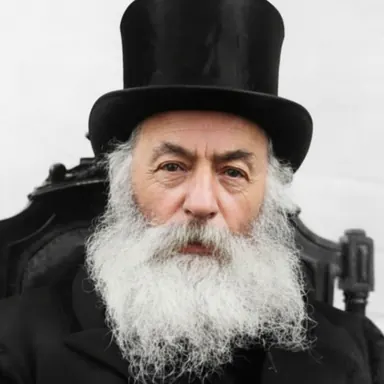
The Work and Torah Teaching of Rabbi Yitzchak Yaakov Reines: Between Halakhic Scientism, Educational Reform and Political Zionism
13 min read2,559 words
Summary
This text surveys the many-sided work of Rabbi Yitzchak Yaakov Reines, a key figure who joined halakhic conservatism with rational innovation in the fields of study, education and politics. The article shows how the rabbi harnessed the tools of scientific logic and conceptual analysis to reorganize the study of the Gemara, while opposing emotional approaches such as the Mussar movement and promoting a pedagogical reform that incorporated secular studies in the Lida yeshiva. On the national plane, it explains how he founded the "Mizrachi" movement and led a pragmatic line of political Zionism that preferred saving the lives of the people over the holiness of the Land, in the framework of his support for the Uganda Plan. In conclusion, the source stresses the decisive contribution of Rabbi Reines as a shaper of a modern Orthodoxy that separates the realistic needs of the hour from expectations of a miraculous redemption.
Rabbi Yitzchak Yaakov Reines (1839–1915), who was born on 9 Cheshvan 5600 and died on 10 Elul 5675, is counted among the most brilliant and influential Torah giants of Lithuanian Jewry in the modern era.[1, 2] He was known as an exceptional Talmudic prodigy from his early youth, and over the years worked as a rabbi, halakhic decisor, pioneering thinker and political leader of great stature, who founded and led the "Mizrachi" movement.[2, 3] The public work and Torah thought of Rabbi Reines present a unique and complex synthesis between meticulous halakhic conservatism and a wide-ranging methodological and practical openness.[2]
Scholarly interest in the teaching of Rabbi Reines has recently gained added force with the deposit of the "Reines Collection" in the National Library.[1] This collection, which includes 88 valuable manuscripts that were not published in his lifetime, was deposited in memory of Rebbetzin Elka Zipperstein.[1] The accessibility of these hidden writings allows scholars to examine the depth of his influence and the range of interests of this thinker, whose writings ranged from classical halakhic novellae to revolutionary proposals for the reorganization of Jewish learning and society.[1, 2]
Talmudic Logic and the Method of Conceptual Analysis in Halakhic Literature
At the heart of Rabbi Reines's Torah teaching stood the aspiration to set the study of the Talmud and of the literature of the commentators on rational, scientific and logical foundations.[2] He recognized that the traditional method of study in his generation, which was at times characterized by pilpul not based on defined rules, made it difficult to grasp halakhic truth and made things difficult for young students.[2, 4] Rabbi Reines sought to import into the world of Torah principles and modes of thought from formal logic, a move that fits with later modern scholarship identifying deep affinities between Talmudic logic and modern logic.[2, 5]
The most prominent expression of his methodical approach appears in his book "Chotam Tokhnit," which was first printed in two parts: the first part in Mainz in 5640 at the press of Yechiel Brill, and the second part in Pressburg in 5641.[6] This book is in effect an abridgment of, or a sample from, a broader monumental work called "Derekh ba-Yam," which was written by the author but was not published in his lifetime.[6] The book opens with a series of detailed introductions and prefaces including "Davar el ha-Kor'im" (A Word to the Readers, parts 1 and 2), "Hatza'ah" (Proposal), "Petach Davar" (Foreword), and a comprehensive survey of "Tokhen ha-Sefer ve-Seder Chalakav" (The Contents of the Book and the Order of Its Parts).[6]
Rabbi Reines divided his scientific-logical method into three main fields, which are represented in "Chotam Tokhnit" by sketches and examples from three planned books:
The first book, "Yesod Torah she-be-al Peh" (The Foundation of the Oral Torah): devoted to formulating an orderly and systematic set of rules explaining the hermeneutical methods of the Sages, both in the field of halakha and in the field of aggadah.[4, 6] The aim of this part is to prove that halakhic and aggadic midrash is not an arbitrary creation but a system based on rigorous internal laws of inference and logic.[4]
The second book, "Erkhei ha-Musagim" (The Values of the Concepts): characterized by more scholarly and abstract aspects, it deals with the clarification and classification of the concepts and basic assumptions that constitute Talmudic discourse.[4, 6] In this part Rabbi Reines applied methods of rigorous categorical classification customary in the exact sciences.
The third book, "Musagei ha-Nimtza'im" (The Concepts of Existing Things): delves into a philosophical-scholarly clarification which posits that the tangible existents in physical reality are divided into general categories that constitute the inner concepts of the existents.[4, 6] This part, like the first part, is common to the worlds of halakha and aggadah alike, out of the conception that the Torah reflects the laws of concrete reality.[4]
Alongside "Chotam Tokhnit," Rabbi Reines published in 5647 in Vilna (at the press of Yehuda Leib Matz) his book "Urim Gedolim."[7] This work offers straightforward explanations, deep investigations and the formulation of fundamental rules and roots that chart a paved and consistent path in the sea of the Talmud.[7]
Nevertheless, Rabbi Reines's innovative path was not accepted without challenge in the Lithuanian Torah world.[4] While some scholars received his method with great enthusiasm and saw in it a methodological tiding, various critics argued that his method presents no new scholarly content but constitutes only a different mode of presentation and explanation.[4] In their view, Rabbi Reines formulated the classical novellae of traditional scholarship in a cumbersome and scientific style, which created a mistaken impression of innovation in content.[4] To repel this criticism and prove his complete mastery of the accepted tradition of learning, Rabbi Reines composed the book "Edut be-Yaakov."[4] This work, which deals with complex topics in the laws of testimony, was written in the classical scholarly style accepted in the yeshivot, without using the radical methodical tools of "Chotam Tokhnit," and thereby proved his standard Talmudic genius.[4]
Pedagogical Reform in an Age of Change: The Lida Yeshiva and the Mussar Controversy
Rabbi Reines's rationalist conception did not remain confined to the pages of books but was translated in practice into a pioneering pedagogical reform that reached its peak in the founding of the Lida yeshiva.[2] Rabbi Reines recognized with concern that the traditional yeshiva world was in a deep crisis and that many young people were abandoning the Torah in favor of secular studies and general education.[2] He held that the only way to remedy the situation was not withdrawal and the hardening of the walls, but the introduction of structural changes in the arrangements of education, foremost among them a controlled integration of secular studies into the yeshiva curriculum.[2]
In Rabbi Reines's view, Torah and secular studies do not contradict each other but complement each other and are in harmony.[2] He assumed that when the students received the secular education they desired openly, with the permission and under the supervision of the heads of the yeshiva, they would not be compelled to seek it in secret, a covert search that in many cases had led to a complete abandonment of religion and tradition.[2]
This intellectual and rationalist worldview set Rabbi Reines in sharp conflict with other spiritual and educational currents prevalent in Lithuania at that time, foremost among them the Mussar movement.[8] During the "Mussar controversy," a wide-ranging ideological and Torah conflict that took place in Eastern Europe in the 19th and 20th centuries around the attempts of the Mussar movement's supporters to introduce daily Mussar study into the yeshivot, Rabbi Reines stood in the camp of the opponents.[8]
The rationalist opposition of Rabbi Reines and other opponents to the Mussar movement rested on three main arguments, which reflect their anxiety for the intellectual character of Torah study:
Neglect of Torah and the delaying of study: the opponents argued that allocating a fixed and defined time to the study of Mussar books necessarily comes at the expense of the study of the Gemara and the decisors, which constitute the center of Torah life.[8] In their view, intellectual immersion in the Torah itself is the highest moral and spiritual instrument, and any distraction from it harms this goal.
Fear of deviation from tradition and from the accepted yeshiva model: a pointed argument was voiced that the Mussar movement was producing an innovative and revolutionary educational approach, one not based on the traditional model handed down from generation to generation in the yeshivot of Lithuania.[8] The introduction of new educational methods was perceived as a threat to the stability of the institution of the yeshiva.
Excessive emotional influence at the expense of the intellect: the opponents sharply criticized the pedagogical methods of the Mussar movement, which appealed far too much to emotion, to the experience of sin and to psychological turmoil, instead of focusing on the cool and precise intellectual work required in Torah study.[8] For a rabbi like Rabbi Reines, who saw logic and clarity of thought as the seal of the Divine in the Torah, this tendency toward unsettled emotion was perceived as a real spiritual danger.[5, 8]
Political Zionism and the Uganda Controversy: Between Physical Rescue and Spiritual Redemption
The principles of logical thought and conceptual separation that guided Rabbi Reines in his study and in his yeshiva found unprecedented expression in his political activity as well.[2, 3] Rabbi Reines, who founded and led the "Mizrachi" movement in 1902, formed a close bond and a deep friendship with Binyamin Ze'ev Herzl.[2, 3] He led the movement with determination until his death in 1915, and was the main religious support of political Zionism at the Zionist Congresses.[3]
The Uganda Controversy and the Dramatic Decision at the Sixth Congress
The political alliance between Rabbi Reines and Herzl faced its most fateful and stormy test during the Sixth Zionist Congress in the summer of 1903, around the British government's proposal to establish Jewish autonomy in Africa (the Uganda Plan).[3] The plan caused a deep rift in the Zionist movement; the "Zionei Zion" group, most of whose members were Jews from Russia and which was headed by Menachem Ussishkin and Chaim Weizmann, firmly opposed the plan and saw it as a betrayal of the central idea of the Return to Zion.[3] On the other side, alongside Herzl stood his friend Max Nordau, Israel Zangwill, and the heads of the "Mizrachi" movement led by Rabbi Reines.[3] The official support of the "Mizrachi" faction was the decisive factor that brought about the approval of the plan and its adoption at the Congress.[3]
Historians and scholars have wondered greatly how a leader of religious Zionism, which by its nature aspires to the return of the people to the sacred inheritance of its fathers, supported with such enthusiasm the settlement of Jews in a remote African territory.[3] An analysis of his writings and statements reveals an orderly teaching based on an exceptionally rationalist and realistic worldview:
A categorical distinction between physical rescue and spiritual redemption: in complete accord with his logical method that separates different categories, Rabbi Reines resolved the theological contradiction between the practical work of Zionism and the religious prohibition against "hastening the End."[3] In his view, the sole aim of political Zionism is to provide immediate, material and political rescue alone for the persecuted Jewish people.[3] As for the messianic spiritual redemption, Rabbi Reines believed that it would take place in the Land of Israel only by the will of God and in a supernatural manner, and that it has nothing whatever to do with human political activity.[3] This separation allowed him to act in the political arena without the shackles of a hindering messianism.
The principle of national pikuach nefesh (saving life): the people comes before the Land: Rabbi Reines placed human life at the top of the national scale of values.[3] In his view, in order for Judaism to exist and in order for it to be possible to settle the Land of Israel in the future, one must first and foremost care for the physical existence of living Jews.[3] He formulated this clearly before his critics at the Congress, explaining that his consent to the African proposal stemmed from the fact that the needs of the people, which was in danger of physical annihilation, were dearer to him than the Land itself.[3]
Material distress as a generator of assimilation: following the severe Kishinev pogrom in 1903, Rabbi Reines warned that the physical suffering and the economic and social persecutions in Europe were depriving the Jews of the ability to engage in spiritual matters and in Torah.[3] Beyond that, he recognized that when a Jew suffers so extremely because of his identity, the real risk increases that he will be tempted to cast off his religion and assimilate in order to save his life.[3] Saving the body in a temporary autonomy was therefore seen by him also as an instrument of the first rank for saving the soul and Jewish identity from spiritual assimilation.[3]
Autonomy as a hothouse for strengthening national and religious feeling: Rabbi Reines believed that the existence of Jewish self-government, wherever it might be, would bring about a spiritual and demographic awakening and a strengthening of religious and national feeling among the masses.[3] In his opinion, the experience of managing a temporary independent sovereignty would prepare the people psychologically and organizationally for the final goal: the establishment of Jewish sovereignty in the Land of Israel when God so wills.[3]
Summary and Conclusions
The teaching and work of Rabbi Yitzchak Yaakov Reines reveal an exceptional personality who succeeded in setting a rationalist intellectual and practical coherence against the storms of his generation.[2] A common thread connects his scholarly work with his educational and political conceptions: the tools of conceptual distinction, meticulous categorization, and the rejection of emotionalism in favor of logical clarity guided him at every step.[3, 4, 5, 8]
In Torah literature, he refused to submit to pedagogical traditions not based on a scientific method, and worked to instill Talmudic logic.[2, 5] In the field of education, he refused to shut himself off from modernity and established in his yeshiva a controlled integration of secular studies out of a sober sociological understanding of the needs of the youth.[2] And in the political arena, he displayed rare public courage when he supported the Uganda Plan out of an absolute preference for saving human life over the holiness of the soil, while making a complete separation between man's practical duty and the decree of the messianic redemption reserved for God.[3]
The uncovering of Rabbi Reines's 88 manuscripts in the National Library ensures that research on his fascinating figure will continue to expand, and will shed further light on one who is rightly regarded as one of the founding fathers of modern Orthodoxy and of practical religious Zionism.[1, 2, 3]
Sources8
- 1.הרב יצחק יעקב ריינס - הספרייה הלאומית, nli.org.il/he/discover/judaism/figures/reines
- 2.יצחק יעקב ריינס - ויקיפדיה, he.wikipedia.org/wiki/יצחק_יעקב_ריינס
- 3.כשהרב ריינס קרא להקים מדינה יהודית באוגנדה - הספרנים - הספרייה הלאומית, blog.nli.org.il/chov-reines-uganda/
- 4.למדנות של תורת ההיגיון - שמואל מרצבך, shmuel-merzbach.com/post/למדנות-של-תורת-ההיגיון
- 5.לוגיקה תלמודית - ויקיפדיה, he.wikipedia.org/wiki/לוגיקה_תלמודית
- 6.חותם תכנית - ויקיטקסט, he.wikisource.org/wiki/חותם_תכנית
- 7.אורים גדולים, מאת רבי יצחק יעקב ריינס ORIM GEDOLIM 1887 Yitzchak Yaacov Reines | eBay, ebay.com/itm/316540833245
- 8.פולמוס המוסר - ויקיפדיה, he.wikipedia.org/wiki/פולמוס_המוסר