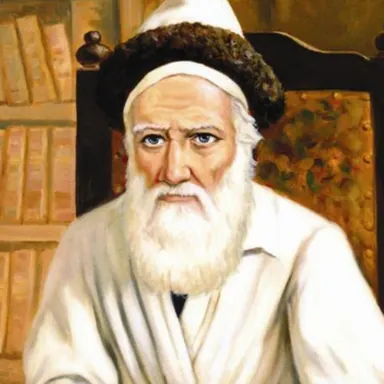
The "Tzemach Tzedek" Rebbe
21 min read4,271 words
Summary
This source surveys the life and monumental contribution of Rabbi Menachem Mendel Schneersohn, the third Rebbe of Chabad Hasidism, known by his appellation the **"Tzemach Tzedek." The text sketches his figure as a spiritual leader who brought about a unique intellectual synthesis between the world of pure halakha and the metaphysical thought of Hasidism, thereby establishing the movement's standing among broad scholarly circles. Throughout the survey, emphasis is placed on his courageous public activity in the face of the decrees of the Tsarist regime and of the Haskalah (Enlightenment) movement, alongside his mighty literary enterprise, which includes thousands of halakhic responsa and works of thought such as "Derech Mitzvotecha" and "Or ha-Torah"**. Finally, the article describes the moments of his passing and the splitting of the dynasty after his death, dwelling on his educational and scholarly legacy, which continues to pulse to this day in the Torah institutions of Chabad.
Spiritual Leadership and Halakhic Authority in a Time of Change: The Work and Torah Teaching of the "Tzemach Tzedek" Rebbe
The Formative Years in the Shadow of the Founder and the Ascent to Leadership
Rabbi Menachem Mendel Schneersohn, the third Rebbe of the House of Chabad, known after his principal halakhic work as the author of the "Tzemach Tzedek," was born on 29 Elul 5549 (1789) in the town of Liozna.[1] He was born to Rabbi Shalom Shachna and Rebbetzin Devorah Leah Altshuler, the daughter of the founder of Chabad Hasidism, Rabbi Shneur Zalman of Liadi (the Alter Rebbe).[1] His name, Menachem Mendel, was given to him after the leader of the Hasidim in the Land of Israel, Rabbi Menachem Mendel of Vitebsk.[1] In 5553, on 3 Tishrei, when he was only about three years old, his mother died.[1] In accordance with her last request and unwritten will, the child was adopted by his grandfather, the Alter Rebbe, who cherished him greatly and devoted mighty efforts to his upbringing, his education and the development of his unique Torah personality.[1, 2]
The spiritual growth of the Tzemach Tzedek in the shadow of his grandfather laid the foundations for the intellectual synthesis that characterized all his work: a joining of pure halakha, analytical Talmudic research and abstract Hasidic thought.[3] In his youth Rabbi Menachem Mendel married his cousin, Rebbetzin Chaya Mushka, the daughter of the second Rebbe of the dynasty, Rabbi Dovber (the Mitteler Rebbe).[2] In the first years after his marriage he tried as far as possible to keep away from honor, from authority and from open public involvement, and he even earned his living by managing a wax workshop.[2] Despite these attempts to keep himself hidden, his intellectual and spiritual work made him a central figure in the court of his grandfather and father-in-law, where he filled a variety of Torah and administrative roles.[2]
After the passing of his father-in-law, the Mitteler Rebbe, in 5588 (1827), the burden of leading Chabad Hasidism was placed upon him.[2, 4] Despite his initial refusal and his consistent flight from the trappings of authority [2], he was crowned as the third Rebbe of the dynasty.[1, 2] Under his leadership, which lasted close to four decades until his passing on 13 Nisan 5626 (1866) [1], Chabad established its standing as one of the most dominant, influential and organized movements in Eastern European Jewry.[5] Beyond the theoretical foundations laid by his predecessors, the Tzemach Tzedek brought about a methodical turning point when he anchored the metaphysical theory of Hasidism within the world of halakha and analytical legal decision-making, thereby contributing to the legitimation of Hasidism also in the eyes of the traditional scholarly circles that had opposed it in the past.[6]
His spiritual legacy resonated widely even beyond the borders of Chabad Hasidism itself; thus, for example, in the tradition of Breslov Hasidism, His Holiness Moharash, may his merit protect us (Rabbi Eliezer Shlomo Schick), stressed his inner bond with and his enormous esteem for the work of the Tzemach Tzedek, seeing in his teaching a model of the combination of Torah, prayer and pure faith.[2]
The Halakhic Enterprise and His Torah Writing in the Revealed Torah
The halakhic contribution of the Tzemach Tzedek Rebbe is considered a milestone in the history of responsa literature and halakhic decision-making in the 19th century.[7] His extraordinary greatness in the revealed Torah won high esteem not only among his Hasidim but also among the most prominent Torah giants of the camp of the Mitnagdim (the opponents of Hasidism).[6] Clear testimony to this emerges from the letter of the Gaon Rabbi David Tevele of Minsk (author of the book "Nachalat David"), who addressed the Tzemach Tzedek with exalted titles expressing submission to his Torah authority, such as "the great luminary, the renowned Gaon, the eye of the congregation, the master of the people, the leader of his nation... our teacher the Rav Rabbi Menachem Mendel."[6]
The axis of his halakhic writing was the series of questions and answers (responsa) "Tzemach Tzedek," whose name alludes by gematria to the author's name, "Menachem Mendel" (in a common Yiddish spelling).[1, 6, 7] His halakhic writing was characterized by phenomenal speed, which his contemporaries regarded as beyond the natural order.[8] Over fifty years of activity he wrote sixty thousand printed sheets and answered thousands of questions addressed to him by rabbis and communities in White Russia, Lithuania and Ukraine.[7, 8] His method of ruling and editing was characterized by careful and systematic collection of material: he kept copies of his responsa for himself, and thus 14 volumes of bound responsa came into being, of which nine volumes have survived (two preserved in the Chabad Library in New York and seven in the Schneersohn Collection in Moscow).[7] From 5591 (1831) onward, he began to re-edit his writings in an expanded edition called the "Mahadura Batra" (final edition).[7]
His process of ruling ran along two parallel channels [7]:
- Short version (a practical ruling): written with extreme concision and sent to the questioner mainly in urgent cases, with a concise record kept for his personal archive.[7]
- Long version (an edited responsum): a comprehensive and reasoned theoretical development of the issue, which at times included the addition of summaries and chapter headings in the margins of the discussion.[7]
A considerable part of the responsa deals with releasing agunot (women "chained" to a marriage).[1] In light of the waves of forced conscription of Jewish boys (the cantonist decree) and the frequent wars in the Russian Empire, many women were left without any trace of the fate of their husbands.[1, 2] The Tzemach Tzedek became known as a releaser of agunot who applied creative scholarship and halakhic courage to find a remedy for them within the framework of the laws of the Torah.[1]
His style of ruling combined Lithuanian analytical scholarship with a broad systemic view. He presented independent positions vis-à-vis his predecessors; thus, for example, regarding the law of an "itter" (a left-handed person), he ruled that in practice one should follow the stronger hand of the person's body and not only the writing hand, contrary to the explicit ruling of his grandfather, the author of the Shulchan Arukh HaRav.[7] Another prominent halakhic position is his ruling that completely forbids shaving the beard (even with scissors that work like a razor) because of the prohibition "a man shall not put on a woman's garment."[7] Likewise, he ruled in practice that one who is compelled to eat on Tisha be-Av because of illness must eat in "measures" (less than the prescribed quantity each time, as on Yom Kippur), out of the methodical conception that the Sages framed their enactments on the model of Torah law ("whatever the Rabbis enacted, they enacted on the model of Torah law").[7]
Methodologically, great caution is evident in his teaching regarding the combination of the hidden Torah (Kabbalah and the Zohar) with established halakha. Although he was immersed in the world of Kabbalah, the Tzemach Tzedek held the view that the rulings of the Zohar are not to be imposed where they stand in direct contradiction to the accepted rules of halakhic decision-making in the Shulchan Arukh and the Rishonim. A clear example of this appears in the discussion concerning an elderly woman who no longer wishes to marry, in which he ruled that she is not subject to the commandment of chalitzah, even though according to the Zohar there is significance and a commandment in this too.[9] This determination reflects a firm rational-halakhic approach that preserves the defined boundaries of practical halakha.
Summary of the Halakhic Works of the Tzemach Tzedek Rebbe
The Hidden Torah and the Chabad System of Hasidism in the Teaching of the Tzemach Tzedek
Alongside his complete mastery of the revealed Torah, the Tzemach Tzedek Rebbe is considered the methodical architect of the consolidation phase of Chabad Hasidism. His Hasidic thought, based on the teaching of his grandfather the Alter Rebbe, cast off the revolutionary garb of the movement's early days and took on the form of an orderly philosophical-metaphysical system, formulated in clear, structured and analytical language.[3] To this end the Tzemach Tzedek was assisted by a team of "chozrim" (copyists and memorizers) who carefully recorded and reconstructed his words.[1, 4] Among the most prominent chozrim and recorders were his youngest son, the Rebbe Maharash (from 5614 onward), Rabbi Hillel of Paritch, Rabbi Dovber Ashkenazi (Kalisker), Rabbi Nachum of Starodub, Rabbi Menachem Nachum Yitzchak Isaac Chanin, and Rabbi Isser Ber Gilerson.[4, 10] They memorized the discourses and repeated them before him, and he corrected their mistakes and explained what required explanation.[1]
The Book "Derech Mitzvotecha" (The Book of the Reasons for the Commandments)
His most famous written work, which serves as a methodical gateway into the world of Chabad thought, is the book "Derech Mitzvotecha."[3, 8, 11] The book was written mainly between 5574 and 5588 (1814–1828) and was first printed in Poltava in 5671 (1911) at the press of A. E. Rabinov.[3] The work's most striking distinction lies in its style, which is organized as a kind of explanatory "Shulchan Arukh."[3] Whereas other Hasidic writings demand reading skill and inner intuition, "Derech Mitzvotecha" is written in a logical, structured and graded manner that enables even beginners to acquire basic concepts in Hasidism and Kabbalah, and for this reason the Seventh Rebbe recommended beginning the study of Hasidism specifically with this book.[3]
The structure of the book is divided into three main layers [3]:
The Book of the Reasons for the Commandments: an in-depth explanation of selected commandments from among the 613 commandments.[3] The method of the Tzemach Tzedek in each commandment is fixed and profound [3]:
- Presenting the definition of the commandment and its details from Sefer ha-Chinuch and from the Book of the Commandments of Maimonides (Rambam).[3]
- Enriching the subject through the reasons for the commandments according to the esoteric teaching in the holy book of the Zohar and in the writings of the Arizal (Likkutei Torah).[3]
Explaining the whole matter and its application in the human soul in the way of Chabad Hasidism.[3] (Since the explanations of all 613 commandments have not come down to us, the Seventh Rebbe noted in his additions other places in Hasidic literature where the remaining commandments are explained.)[3]
"Shoresh Mitzvat ha-Tefillah" (The Root of the Commandment of Prayer): an extensive monograph of 49 chapters.[3] This is a fundamental work dealing with the service of prayer and the recitation of the Shema as the central axis of Hasidic divine service.[3] The book elaborates on the mechanics of the upper worlds, the essence of the ten sefirot and the influence of prayer upon them.[3] A Chabad tradition relates that in 5567, when the Alter Rebbe saw the first drafts of this work, which his young grandson had written for himself, he was deeply moved, stood up and recited the blessing "Shehecheyanu" with God's name and kingship in the presence of his brother (the Maharil) and the Hasid Reb Pinchas Reizes.[3] In modern times this work received a comprehensive commentary in two parts by Rabbi Adin Even-Israel (Steinsaltz), which makes the depth of the intentions of prayer and the relation between the Creator and the worlds accessible to the modern student.[8]
A collection of short discourses and glosses: a compilation of expositions dealing with fundamental subjects such as the doctrine of "Tohu and Tikkun," the question of "the ten sefirot hidden within their Emanator," the service of trials, as well as practical abridgements of the Tanya.[3]
Through the commandments explained in this book, the Tzemach Tzedek clarifies a series of critical theological principles [3]:
Stripping the concepts of Kabbalah of their corporeality: a development of the Baal Shem Tov's warning against the corporealization of the Divine; the author guides the student in how to understand the kabbalistic terms as abstract spiritual-cognitive categories and not as physical images.[3]
The light that fills and the light that encompasses: an analysis of the difference between "the light that fills all worlds" (the Divinity that clothes itself in nature and animates it according to the vessels of the world) and "the light that encompasses all worlds" (the infinite, encompassing and incomprehensible Divinity, as explained in the commandment of tzitzit).[3]
- Personal service and character traits: an explanation of the Hebrew slave in man's divine service, the matter of repentance and confession, and an explanation of the trait of trust according to Hasidism (in the commandment of the shaving of the metzora).[3]
- Kingship and Messiah: defining the essence of a king in Israel and of the King Messiah (in the commandment of appointing a king).[3]
- Ways of apprehending the Divine: an explanation of the two different modes of apprehension of Maimonides and of the Maharal of Prague.[3]
Deciding the controversy over the resurrection of the dead: a philosophical-kabbalistic decision in the famous controversy between Maimonides and Nahmanides (Ramban).[3] The Tzemach Tzedek establishes the position of Nahmanides that the resurrection of the dead in a physical body is the final and supreme purpose of creation, and not the abstract world of souls.[3]
The saying of the Alter Rebbe: the book records and explains the well-known saying uttered in a state of devekut (cleaving to God): "I do not want Your Garden of Eden or Your World to Come, but only You Yourself" ("Mer nit az Dikh aleyn").[3]
The Enterprise of the Books "Or ha-Torah," "Biurei ha-Zohar" and "Sefer ha-Likkutim"
Another enormous work of thought is the series of books "Or ha-Torah."[4, 12] This is a multi-volume series (about 41 volumes) that gathers the Hasidic discourses and the notes of thought that the Rebbe wrote during the years of his leadership (5588–5626).[4, 12] Unlike sermons recorded by listeners, most of the volumes are based on the original manuscripts of the Tzemach Tzedek, which were arranged systematically according to the order of the weekly Torah portions, the books of the Bible, the festivals and defined subjects in Jewish thought.[4] The publication of these writings took many years: the first volume, on the book of Genesis, was printed in Berdychiv in 5673 (1913), but most of the series was printed from 5725 (the centenary of his passing) onward and was completed in 5743, at the initiative and through the strenuous editing of the Seventh Rebbe.[4]
Alongside these, the Rebbe wrote the following works, which complete his kabbalistic and scholarly teaching:
- Sefer ha-Likkutim – DACh (Chassidus): a mighty enterprise of 27 volumes that collects and arranges excerpts of discourses by subject in the Hasidic teaching of the Tzemach Tzedek.[8] The set was published at the instruction of the Seventh Rebbe and was carefully edited by yeshiva students.[8]
- Biurei ha-Zohar: a systematic and in-depth commentary on difficult passages of the book of the Zohar.[1, 6, 10] The work was published in three volumes over the years 5728–5782 (1968–2022).[6]
- Iggerot Kodesh: a collection of the Rebbe's letters and personal guidance, edited by Rabbi Shalom Dovber Levin.[8]
- Yahel Or: the famous work of the Tzemach Tzedek explaining the book of Psalms in the way of Kabbalah and Hasidism.[2]
Public Struggles and Political Activity in Imperial Russia
The leadership of the Tzemach Tzedek Rebbe coincided with one of the stormiest and hardest periods for Russian Jewry, under the centralized rule of Tsar Nicholas I.[2, 13] In this period traditional Jewish society stood under double pressure: on the one hand, aggressive government decrees intended to force integration and reduce communal autonomy; on the other hand, the growing activity of the local Haskalah (Enlightenment) movement, which sought to bring about deep religious and educational reforms in Jewish life, often in close cooperation with officials of the Tsarist government.[13, 14]
The Petersburg Conference (1843) and the Struggle against the Haskalah
In 5603 (1843) the Russian government convened the conference of rabbis in Petersburg.[13] The aim of the conference, which was largely run behind the scenes by the maskilim and with the backing of the Russian government, was to prepare the ground for introducing changes in the laws of the Torah and in the arrangements of Jewish education, including forcing secular studies on Haredi educational institutions and government supervision of rabbinic ordination.[13, 14]
The Tzemach Tzedek Rebbe went to Petersburg as a distinguished representative of Orthodox Judaism, equipped with dozens of books of halakha and Hasidism.[13] Alongside his personal preparations, a special Haredi committee was established in Vitebsk that coordinated the activity of all the Orthodox streams in order to present a uniform and unyielding front against the proposed reforms.[13] During his stay there, the Rebbe composed "Sefer ha-Chakirah" (also called "Derech Emunah"), a work of apologetic thought that explains the principles of faith rationally and in depth in the face of the claims of the maskilim.[8]
During the conference's deliberations, the Tzemach Tzedek firmly refused to sign the protocols and documents prepared by the government.[15] His uncompromising position aroused the wrath of the Tsar's officials.[13] During the conference the Rebbe was held in the house of detention twenty-two (22) times, as a punitive measure intended to break his spirit and dissuade him from his obstinacy.[13, 15] When he was warned that his opposition to the Tsar constituted rebellion against the kingdom, punishable by death, he replied with a sharp methodical statement: "One who rebels against the kingdom is liable to death in the body; but one who rebels against the Kingdom of Heaven is liable in the soul – and which is the greater rebellion?!"[13] His courageous stand dissuaded the government from implementing large parts of the planned drastic reforms.[14, 15]
The details of these struggles were later documented in the "Kuntres Admor ha-'Tzemach Tzedek' u-Tenu'at ha-'Haskalah'" (The "Tzemach Tzedek" Rebbe and the "Haskalah" Movement), a historical-documentary work written by the sixth Rebbe of Chabad, Rabbi Yosef Yitzchak Schneersohn (the Rayatz).[14] The booklet, first printed in 5706 (1946) and since published in eight editions (among them a new edition in 5776), describes in detail the firm stand of the Tzemach Tzedek also at the second Petersburg conference in 5608 (1848).[14]
The Struggle against the Cantonist Decree
Another harsh decree against which the Tzemach Tzedek acted with all his strength was the cantonist decree, under which Jewish children and boys were abducted for 25 years of forced military service in the remote reaches of Russia, under harsh conditions whose aim was to make them abandon their religion.[2, 16] The Rebbe set up a secret network of aid and support for those Jewish soldiers, and saw to the supply of kosher food, religious articles and spiritual encouragement.[16]
The distinctiveness of his care for and education of the cantonists lay in the fact that he did not see them merely as social casualties, but related to them as spiritual heroes withstanding hard trials. On one occasion he even delivered before them a deep and complex Hasidic discourse.[16] This act was later explained by the Seventh Rebbe as an educational instruction for the generations: even toward those perceived as distant or lacking broad Torah education (because of the hard circumstances of their lives), one must act with full intellectual and spiritual respect and influence them from the deepest wellsprings of the Torah.[16]
The public and personal teaching of the Tzemach Tzedek was summed up in the famous saying he coined in Yiddish: "Tracht gut, vet zain gut" ("Think good, and it will be good").[1, 17] This saying is not merely a simplistic expression of optimism but a deep theological doctrine explained in his writings: human thought and absolute trust in God do not merely reflect a future reality but are active and bring about a supreme cosmic change. When a person focuses his thought on complete faith in the good, he activates spiritual forces that bring down an abundance of loving-kindness and produce the good in actual fact.[1, 17]
The Passing, the Family Legacy and the Continuity of Leadership
The passing of the Tzemach Tzedek Rebbe on the night before Thursday, 13 Nisan 5626 (1866), in Lubavitch, marked the end of the golden age of single leadership in Chabad Hasidism.[1] His last moments, in his room surrounded by Hasidim, were documented in his final hours:
At that time, at about eleven o'clock at night, his bed stood in the middle of the room and around him stood the Hasidim with lit candles, while the Rebbe lay without any movement and looked at those present.[1] The faithful attendant, Reb Chaim Ber, bent his ear to the Rebbe's mouth and heard him whispering again and again the verse "that your days may be multiplied."[10] At half past twelve at night he departed to the treasuries on high.[1]
After his death, the Hasidic movement faced a complex succession crisis because of the multitude of his sons, all of whom were Torah giants and men of leadership stature.[1, 18] Chabad Hasidism in effect split into a number of parallel courts and streams led by his various sons in Russia and Ukraine, each of whom developed a distinctive shade in understanding the teaching of the father and of his grandfather.[1, 18]
The Sons of the Tzemach Tzedek Rebbe and the Splitting of the Chabad Courts
Influence for Generations and Commemorative Enterprises
Alongside his direct heirs, the Tzemach Tzedek Rebbe raised outstanding Torah scholars who shaped the face of Hasidic scholarship and thought in the following generations. The most prominent of them include Rabbi Hillel of Paritch (one of the greatest of the "chozrim" and of those who delved most deeply into his teaching) [4, 10], Rabbi Shneur Zalman Fradkin of Lublin (author of "Torat Chesed," who was among the most important halakhic decisors of his generation) [10], and Rabbi Avraham David Lavaut (author of "Shaar ha-Kollel" and grandfather of the Seventh Rebbe).[10]
The intellectual and spiritual admiration for the Tzemach Tzedek has remained alive and active throughout the generations. A clear modern expression of this is the founding of the historic "Tzemach Tzedek" kollel for young married scholars within the walls of the Old City of Jerusalem.[19] The kollel was established on Rosh Chodesh Elul 5732 (1972), in the midst of an initiative to establish 71 institutions in honor of the 70th birthday of the Seventh Rebbe.[19] The building in which the kollel operates, which historically belonged to "our Rebbes, our leaders" and remained intact through the wars, became a bustling Torah center combining in-depth study of halakha with Hasidic thought.[19] Regarding its unique location the Seventh Rebbe expressed himself with great affection: "A kollel of prayer and study of the holy Torah that is within the walls in the Holy City in the Holy Land and in the building of our Rebbes, our leaders."[19]
Within the framework of the kollel's activity, dozens of books and booklets of notes and explanations in the revealed Torah and in Hasidism have been published.[19] The most prominent of them is the collection "Yagdil Torah," whose publication the Seventh Rebbe initiated at the farbrengen of 18 Elul 5736, with the aim of founding a special platform in which the novel insights of our Rebbes, our leaders, and of their disciples in the field of the revealed Torah would be published.[19] On 20 Menachem-Av 5736 he stressed that two places would be designated for collecting the material – the Tzemach Tzedek kollel in Jerusalem and the Kollel of the Secretariat beside 770 in New York.[19] The Rebbe used to follow the publication of the collections keenly, and in his conversations with the kollel's administration he always demanded that more and more be published, saying: "After all, they study in the kollel, and when one studies, one produces novel insights. Where, then, are the novel insights?"[19] Today the kollel is headed by Rabbi Chaim Shalom Deitsch and Rabbi Yosef Tzvi Segal, and some 40 diligent and outstanding young married scholars study there daily, continuing the scholarly legacy of the author of the Tzemach Tzedek.[19]
Sources19
- 1.רבי מנחם מענדל שניאורסון (אדמו"ר הצמח צדק) - חב"דפדיה, chabadpedia.co.il/index.php?title=רבי_מנחם_מענדל_שניאורסון_(אדמו"ר_הצמח_צדק)&mobileaction=toggle_view_desktop
- 2.רבי מנחם מנדל בעל ה'צמח צדק' מליובאוויטש זי"ע - י"ג ניסן - ברסלב סיטי, breslevcity.co.il/רבי-מנחם-מנדל-בעל-הצמח-צדק-מליובאוויט/
- 3.מעיינותיך. ספר דרך מצוותיך לאדמו"ר ה'צמח צדק', toratchabad.com/ספר-דרך-מצוותיך-לאדמור-הצמח-צדק
- 4.אור התורה (ספר) - ויקיפדיה, he.wikipedia.org/wiki/אור_התורה_(ספר)
- 5.Background: History and Ideology - Chabad.org, chabad.org/library/article_cdo/aid/2346204/jewish/Background-History-and-Ideology.htm
- 6.מנחם מנדל שניאורסון (צמח צדק) - ויקיפדיה, he.wikipedia.org/wiki/מנחם_מנדל_שניאורסון_(צמח_צדק)
- 7.צמח צדק (ספר) – ויקיפדיה, he.wikipedia.org/wiki/צמח_צדק_(ספר)
- 8.ספרי אדמו"ר הצמח צדק - חב''ד-שופ, chabadshop.com/collections/ספרי-אדמור-הצמח-צדק-1
- 9.משקל הזוהר והקבלה בהלכה - מנחת אשר, minchasasher.com/he/shiur/parsha-vort/משקל-הזוהר-והקבלה-בהלכה/
- 10.רבי מנחם מענדל שניאורסון (אדמו"ר הצמח צדק) - חב"דפדיה, chabadpedia.co.il/wiki/רבי_מנחם_מענדל_שניאורסון_(אדמו"ר_הצמח_צדק)
- 11.דרך מצותיך - BeitChabad.com - בית חב"ד, he.chabad.org/library/article_cdo/aid/5580713
- 12.אור התורה - חב"דפדיה, chabadpedia.co.il/index.php/אור_התורה
- 13.ועידת הרבנים תר"ג - חב"דפדיה, chabadpedia.co.il/index.php/ועידת_הרבנים_תר"ג
- 14.קונטרס אדמו"ר הצמח צדק ותנועת ההשכלה - חב"דפדיה, chabadpedia.co.il/wiki/קונטרס_אדמו"ר_הצמח_צדק_ותנועת_ההשכלה
- 15.התקשרות 1309 | עת לדעת - חב"ד, chabad.org.il/Magazines/Article.asp?ArticleID=15431&CategoryID=2419
- 16.הרבי מליובאוויטש - הקנטוניסטים - YouTube, youtube.com/watch?v=8XQID2zZVYI
- 17.150 שנה להסתלקות ה"צמח צדק" - BeitChabad.com - בית חב"ד, he.chabad.org/library/article_cdo/aid/3307715
- 18.בני הצמח צדק - ספרי אור החיים, sifreiorhachaim.co.il/product/בני-הצמח-צדק/
- 19.כולל אברכים – צמח צדק חב"ד, tzemachtzedekshul.org/כולל/