Document 1/2
Sarah Schenirer: Her Writings, Her Work and the Revolution in the Education of Girls in Orthodoxy
15 min read2,984 words
Summary
The Work, Educational Doctrine and Torah Thought of Sarah Schenirer: A Historical-Sociological Analysis of the "Beit Yaakov" Revolution
The article examines the "Beit Yaakov" revolution led by Sarah Schenirer, analyzing the transition from local activity in Krakow to a worldwide educational network that changed the face of Haredi society. The text charts the educational crisis in Eastern Europe, in which Jewish girls were left without formal religious education and were drawn to secular movements, and explains how Schenirer bridged the gap by combining neo-Orthodox thought with Hasidic warmth and experiential pedagogy. In addition, the source reveals Schenirer's complex inner world through her personal diaries, and criticizes the processes of censorship and canonization intended to shape her image as a model of religious conservatism while obscuring her original intellectual aspirations. The aim of the article is to present a historical-sociological analysis that balances the public myth against the revolutionary reality of a woman who succeeded in obtaining rabbinic backing for a change that had previously been perceived as impossible.
The Work, Educational Doctrine and Torah Thought of Sarah Schenirer: A Historical-Sociological Analysis of the "Beit Yaakov" Revolution
Historical Background and the Crisis of Girls' Education in Eastern Europe
In the late 19th century and the early 20th century, Orthodox Jewish society in Eastern Europe, and especially in Poland, faced a deep cultural and educational rupture.[1, 2] While boys and young men received a structured, systematic and institutionalized Torah education in the heder and the yeshivot, Jewish girls were left without any formal religious educational framework.[1, 2] This situation stemmed in part from the compulsory education laws imposed by the Polish government, which forced parents to send their daughters to general public schools, where they studied in the same class with non-Jewish pupils.[1]
This educational gap created an unprecedented inner dissonance within the Jewish home. The girls acquired a broad general education and were exposed to literature, poetry and the ideas of modernization, while their religious knowledge remained limited and was based mainly on an informal family tradition transmitted orally.[3, 4, 5] As a result, a deep cultural rift arose between the educated young women and the young men who remained in the traditional world of Torah, which led to enormous difficulties in marriage, to spiritual alienation and to the mass abandonment by Jewish girls of the path of Torah in favor of the secular, socialist, Marxist and feminist movements that flourished in Poland at that time.[4, 6, 7]
The opposition of the rabbinic establishment to a solution of the girls' educational crisis was deep-rooted and profound. At a conference of Polish rabbis that convened in Krakow in 1903, a proposal was raised to establish religious schools for girls in order to stem the secular drift.[7] The proposal was rejected almost unanimously, with the rabbis relying on the traditional halakhic prohibition on teaching Torah to women and determining that this prohibition is eternal, fixed and applies in every generation.[7] This decision left Orthodox girls without any institutional religious response, while the general culture increasingly swept them out beyond the walls of tradition.[2, 7]
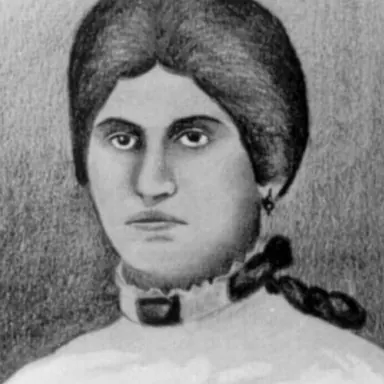
Within this leadership and halakhic vacuum arose the radical initiative of Sarah Schenirer, who succeeded in bringing about one of the most significant sociological and educational revolutions in the history of the Jewish people in the modern era.[4, 8] In the historical research there is a certain ambiguity regarding the exact date of her birth; some sources point to the 1st of Tammuz 5643 (6 or 15 July 1883) as her date of birth, while other sources cite the year 5647 (1887).[3, 8, 9] She was born in Krakow to a well-established Hasidic family of the Hasidim of Belz and Sanz, and her father, Rabbi Betzalel, was a devout Torah scholar and a follower of the Rebbe of Sanz.[1, 3]
Sarah Schenirer's Inner World: Her Hidden Diaries and Personal Struggles
The revelation of Schenirer's personal diaries, which she wrote in Polish and German between 1908 and 1913 while she was an anonymous seamstress in Krakow, sheds new light on her complex and turbulent inner world, and presents a picture entirely different from the hagiographic narrative accepted in Haredi society.[10, 11] The diaries, which served her as a kind of therapeutic tool and emotional outlet, describe her struggle with a forced and unhappy arranged marriage, tense relations with her mother, and deep crises surrounding her outward appearance and body image.[10, 11]
Modern academic research, especially the research of Prof. Naomi Seidman of the University of Toronto, analyzes at length the concept of corporeality in these diaries.[10, 11, 12] The research points to the way in which the female body underwent processes of shaping and discipline through religious and medical practices and the spa culture in which she took part.[10, 11]
Alongside this, the diaries reveal Schenirer's deep attraction to Polish and German literature and poetry, and her regular attendance at lectures at Polish universities and in modern cultural circles.[3, 4, 6] At the same time, she had to cope with a social duality; on the one hand, she belonged to the urban working class that engaged in manual labor, but on the other hand, her exceptional intellectual and spiritual inclinations drew her close to the educated culture of that period, sometimes called "the white collars."[1, 3]
Already at the age of twenty Schenirer wrote in her diary about her aspiration to devote her life to working for her Jewish sisters.[4] She aspired to bring them closer to a true faith in the Creator, one not based on family habit or on fear of their fathers, but on deep love and independent spiritual understanding.[4] She expressed heavy apprehension about public ridicule and the reaction of those around her to her radical plans, and wondered in writing whether she was losing her sanity and how the people around her would react.[4] As a girl, she suffered mockery from her surroundings because of her uncompromising religious devotion, and in her diaries she expressed her hope of finding the courage to confront those who treated the observance of the commandments and Jewish law lightly.[6]
The Viennese Inspiration, German Neo-Orthodoxy and the Formation of the Conceptual Model
The outbreak of the First World War and the temporary migration of the Schenirer family to Vienna were the main catalyst for the formation of her practical vision.[2, 7] In Vienna Schenirer was exposed for the first time to a modern, organized and highly self-aware Orthodoxy.[2] On the advice of her landlord, she began to attend the synagogue of Rabbi Moshe David Flesch on Stumpergasse.[2] Rabbi Flesch's sermons, which addressed women directly and dealt with the historical heroism of figures such as Judith and the Hasmonean women, produced in her a deep spiritual shock.[2]
Schenirer felt that the lack of historical and religious knowledge among the women of Eastern Europe was the main cause of their alienation from their people and their heritage, and decided to import this spiritual message back to her city of Krakow.[2] Through Rabbi Flesch's sermons, Schenirer was also exposed to the educational and philosophical doctrine of Rabbi Shimshon Raphael Hirsch, the father of the "Torah im Derekh Eretz" approach and leader of German Orthodoxy, who firmly opposed the radical Haskalah but supported a modern religious education.[2, 6]
Schenirer combined Hirsch's conception of systematic education for women with the fervor, emotion and warmth of the Hasidic world from which she had emerged.[2, 6] In this way she built a unique conceptual bridge between West European Orthodoxy and East European Hasidism, and gave Hasidic girls a sophisticated spiritual alternative that allowed them to remain faithful to the tradition of their forefathers without giving up the need for intellectual development.[2, 6]
From the "Girls' Association" to "Beit Yaakov": The Evolution of an Educational Enterprise
Upon her return to Krakow, Schenirer discovered that her early vision of establishing lecture courses and a dedicated Torah library for adult women was not feasible, and she was forced to abandon this plan.[9] Instead, she initiated the establishment of a youth organization for adolescent girls called "The Association of Orthodox Girls" (Orthodox Girls' Union).[6] The organization offered Torah lectures and cultural activities, but Schenirer suffered a bitter disappointment with the results; she realized that although the girls were enthusiastic about her sermons, they did not succeed in translating the emotional experience into halakhic commitment and practical observance of the commandments in their private lives.[6]
This insight led her to the conclusion that the educational process must begin at a much younger age, before their spiritual world is shaped by secular institutions of learning.[6] In 1918 she opened, in her sewing workshop, a kindergarten and an elementary class for twenty-five children and pupils, in which she placed emphasis on the love of Torah and the commandments.[1, 9] The official school class of "Beit Yaakov" opened with only seven pupils, and soon expanded and became the revolutionary core of the entire network.[1]
The process of preserving, translating and censoring Sarah Schenirer's writings reflects the inherent tension between the public myth and her original personal world. The main stages in the publication of her writings over the years are detailed in the following table:
- Year
- Title of the publication / type of writings
- Language and features of the publication
- Pedagogical and historical aspects and censorship processes
1929
"Chapters from My Life" (in the Beit Yaakov journal) [10, 12]
Yiddish [10]
The official and first version of her memoirs, published as part of the presentation of the educational enterprise. The writings underwent careful editing, and personal, family details or spiritual doubts were filtered out of them.[10, 12]
1933
"Ketavim Melukatim" (Collected Writings) [12]
Yiddish [12]
An earlier promise to include excerpts from her personal diaries was not fulfilled, and only the edited autobiography was printed in the book.[12]
1936
"Di Mames Tzavoe" (The Mother's Testament) [13]
Yiddish (with a cover in Hebrew and in a foreign language) [13]
A collection for children and youth edited by Eliezer Gershon Friedenson, containing letters, thought and a detailed list of hundreds of students ("Pronumerantn"), commemorating a community that was annihilated in the Holocaust.[13]
1955
"Em be-Yisrael: Kitvei Sarah Schenirer" (A Mother in Israel: The Writings of Sarah Schenirer) [12, 14, 15]
Hebrew (four volumes) [12, 14]
A Hebrew translation of the Collected Writings with the addition of articles by leaders of the movement. For the first time, 11 censored and translated passages from her personal diaries were included.[12]
2014
Publication in the journal "Cwiszn" [12]
Polish and Yiddish [12]
Exposure of extensive and original passages from the Polish diary, enabling a direct glimpse into her inner world before she became a famous leader.[10, 12]
The growth of the "Beit Yaakov" network under Schenirer's leadership and in the years that followed was unprecedented in scope, and it became the largest educational model for women in the Haredi world. The development of the educational enterprise and its geographic spread are presented in the following table:
- Period / year
- Number of institutions and students
- Institutions and geographic spread
- Organizational features and institutional support
1918
One class; 7 to 25 students [1, 9]
Krakow (Poland), in a sewing studio [1, 10]
An independent local initiative focused on young girls.[1, 9]
1919
Beginning of expansion [14]
Poland [14]
Receipt of patronage and official support from the "Agudat Israel" movement.[14]
1925
Establishment of follow-up organizations [14]
Poland and Central Europe [14]
Founding of the "Bnot Agudat Israel" movement as a social response for graduates of the institutions.[14]
1935
248 schools; over 35,000 students [1]
Poland and neighboring countries [1]
An established network that includes teachers' seminaries, elementary schools and a youth movement.[1, 6]
After the Second World War
A leading global network [16]
Israel, the United States, Europe [16]
Operating under "Independent Education" (Chinuch Atzmai) in Israel, kindergartens, day-care centers and independent schools around the world.[16]
Her Torah Doctrine, Experiential Pedagogy and Halakhic Justification
The halakhic justification given for Sarah Schenirer's educational enterprise rested on a sophisticated theological development carried out by her supporters, foremost among them the "Chafetz Chaim" (Rabbi Israel Meir HaKohen) and the Rebbe of Gur, who were required to contend with the rigid Talmudic ruling that "whoever teaches his daughter Torah, it is as if he taught her tiflut (frivolity)."[5, 7] The key to understanding their approach lies in the distinction between the study of the Oral Torah and the study of the Written Torah, and also in the halakhic development identified with the approach of Maimonides (Rambam).[5]
Maimonides (Rambam) emphasized that the five foundational commandments – belief in God, the negation of idolatry, the unity of God's name, the love of God and the fear of God (known as "Pardes") – are an absolute obligation upon every person, male and female, young and old alike.[5] In order to reach these spiritual achievements, a person is required to fill "his belly with meat and wine," that is, knowledge of halakha and the distinction between the permitted and the forbidden.[5] From this was derived the modern halakhic justification according to which women are not only permitted to study the laws of the commandments, but are obligated to do so in order to fulfill the foundations of faith.[5]
Schenirer made use of this halakhic space to give her students a broad and deep foundation of Torah knowledge, while refraining from the study of classical Gemara (theoretical Oral Torah) but focusing on Scripture, mussar, practical halakha and Jewish history.[2, 5, 6]
Schenirer's pedagogy was pioneering and was characterized by the combination of deep sensory and emotional experiences.[6] She understood that purely theoretical study would not withstand the temptations outside, and therefore she developed a holistic women's culture.[6] She wrote and directed religious plays that were performed by the students, and composed songs in Yiddish that accompanied daily life in the institutions.[1]
In addition, Schenirer cultivated a deep love and reverence for nature, and saw in it a means of divine revelation and of strengthening faith.[6] Events such as the trip to the forests on the 15th of Av in 1932, in which the girls lit a bonfire, studied Torah, sang and danced, demonstrated how Schenirer turned the observance of the commandments into a positive, attractive and liberating experience for girls who lived under social and cultural oppression.[6]
Canonization, Holocaust Memory and the Question of Gender and Censorship
The memory of Sarah Schenirer in post-Holocaust Haredi society underwent a complex process of mythical construction.[4, 17] She was granted the title "Our Mother Sarah" and was presented as an exemplary spiritual figure and a sublime righteous woman, but at the same time substantial parts of her work, her writings and her personal struggles were erased from the public narrative.[4, 10, 17] The institutional disregard of the fact that Schenirer was a prolific writer, who published twenty volumes of fiction, plays and articles in Yiddish, alongside the scant study today of her original writings in the seminaries of "Beit Yaakov," attests to the attempt to shape a conservative and obedient female figure, detached from her original feminist and educated contexts.[1, 4, 6]
Fascinatingly, the name of Sarah Schenirer is inextricably linked to the memory of the Holocaust among the Haredi public.[17] This link stems not only from the fact that her many students formed the spiritual backbone of the communities that were annihilated, but also from the chilling historical testimony contained in the early publications of this enterprise.[13, 17]
The book "Di Mames Tzavoe" (The Mother's Testament), which was published in Lodz in 1936 on the first anniversary of her death, contained a very long and detailed list of hundreds of girls and students of "Beit Yaakov" throughout dozens of cities and towns in Poland (the list of "Pronumerantn").[13] This list, bearing the emblem of the "Women's Center and Bnot Agudat Israel in Poland," constitutes today one of the most tangible and painful documentations of a living and vibrant Jewish world that was almost entirely annihilated in the Holocaust.[13]
Schenirer's influence extends beyond the borders of pre-war Poland.[16] Her students and partners in the endeavor – among them the mother of the researcher Prof. Naomi Seidman, who taught in the network's schools in Europe, and her father, Dr. Hillel Seidman, who was a researcher and a regular publicist in the movement's journal – carried her vision forward and reestablished the "Beit Yaakov" network in the United States and in Israel.[6, 16] Today, the network operates as a worldwide educational empire that includes the Independent Education institutions, seminaries, kindergartens and day-care centers, and it constitutes the central pillar of preserving Haredi society and educating its women.[16]
Sources17
- 1.שרה שנירר - ארגון יוצאי קרקוב בישראל, cracow.org.il/אישים-ועדויות-אישים/אישים-שרה-שנירר/
- 2.The Problem of Girls' Religious Education in Ultra-Orthodox Judaism: The Case of Sarah Schenirer and Bais Yaakov Movement - ResearchGate, researchgate.net/publication/381168219_The_Problem_of_Girls'_Religious_Education_in_Ultra-Orthodox_Judaism_The_Case_of_Sarah_Schenirer_and_Bais_Yaakov_Movement
- 3.בית יעקב - ויקיפדיה, he.wikipedia.org/wiki/בית_יעקב
- 4.שרה שנירר | מייסדת בית יעקב וממחוללות הפמיניזם האורתודוקסי - יוצאים לשינוי, leshinuy.org/mag/שרה-שנירר-מייסדת-בית-יעקב-וממחוללות-הפ/
- 5.Learning Torah III: Openings - Deracheha, deracheha.org/learning-torah-3-openings/
- 6.Review of Sarah Schenirer and the Bais Yaakov Movement: A Revolution in the Name of Tradition - Jewish Action, jewishaction.com/books/reviews/review-of-sarah-schenirer-and-the-bais-yaakov-movement-a-revolution-in-the-name-of-tradition/
- 7.Ultra Ortodoks Yahudilikte Kızların Din Eğitimi Sorunu: Sarah Schenirer ve Bais Yaakov Hareketi Örneği - DergiPark, dergipark.org.tr/en/download/article-file/3845240
- 8.שרה שנירר – ויקיפדיה, he.wikipedia.org/wiki/שרה_שנירר
- 9.ספר שרה שנירר סיפור חייה המופלא של הרבנית החשובה מייסדת בית יעקב=Sarah SchenireR - eBay, ebay.com/itm/173055920326
- 10.The Body in Sarah Schenirer's Diary - Project MUSE, muse.jhu.edu/article/979799
- 11.The Body in Sarah Schenirer's Diary | Polin: Studies in Polish Jewry, liverpooluniversitypress.co.uk/doi/abs/10.3828/polin.2026.38.351
- 12.From the Diary (Appendix A) - Sarah Schenirer and the Bais Yaakov Movement, cambridge.org/core/books/sarah-schenirer-and-the-bais-yaakov-movement/from-the-diary/784C870F057FB340A6C1281546D0CE08
- 13.די מאמיס צוואה. שרה שנירר. נדיר ביותר - ווינרס מכירות פומביות, winners-auctions.com/items/די-מאמיס-צוואה-שרה-שנירר-נדיר-ביותר/
- 14.3 Vol Set COLLECTED WORKS OF SARAH SCHENIRER אם בישראל - כתבי שרה שנירר | eBay, ebay.com/itm/175137112428
- 15.Sarah Schenirer Em BeYisrael שרה שנירר אם בישראל Stories of Beis Yaakov Founder | eBay, ebay.com/itm/317389416821
- 16.ילדות בברוקלין, ארצות הברית - הקשר הרב דורי, ravdori.co.il/stories/ילדות-בברוקלין-ארצות-הברית/
- 17.מי היתה "אמנו שרה"? - אל מדף ספרי ההיסטוריה, sharon-geva.com/2020/01/מי-היתה-אמנו-שרה/