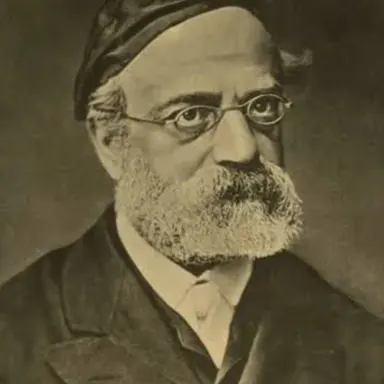
The Torah Teaching and Historical Work of Rabbi Samson Raphael Hirsch: Thought, Education and Struggle on the Seam Line of Modernity
24 min read4,824 words
Summary
This source surveys the life and teaching of Rabbi Samson Raphael Hirsch, the father of modern Orthodoxy in Germany, who confronted the challenges of the Enlightenment and the Reform in the 19th century. The text details his formative model, "Torah im Derekh Eretz" (Torah with the way of the world), which seeks to combine absolute halakhic loyalty with engagement in general culture and science as an ideal and educational value. Alongside a survey of his principal works, such as "Horeb" and "Iggerot Tzafon" (The Nineteen Letters), it highlights his original exegetical method, based on the symbolism of the commandments and on the linguistic etymology of the holy tongue. The article concludes with an analysis of the secession controversy in Frankfurt, which shaped the boundaries of the Orthodox community, and examines the complex influence of Rabbi S. R. Hirsch on the various religious streams of our day.
Biographical Background and the Formation of a Leader's Personality
Rabbi Samson Raphael Hirsch (Rashar Hirsch) was born in Hamburg on 24 Sivan 5568 (20 June 1808) and died in Frankfurt on 27 Tevet 5649 (31 December 1888), after eighty-one years of life in which he reshaped the face of Orthodox Judaism in Germany and Western Europe [cite: 1, 2]. He was born to Raphael Aryeh Hirsch and Gella née Hertz, a family that he later described as "enlightened-religious" (erleuchtet religiös) [cite: 2]. His family roots tied him both to the traditional rabbinic world and to the moderate Haskalah movement: his grandfather was Rabbi Menachem Mendel Frankfurter, who served as head of the rabbinic court in Altona and was one of the principal disciples of Rabbi Yehonatan Eybeschutz; while his uncle was Moshe Mendelssohn-Frankfurter, one of the last of the German Maskilim [cite: 2]. It was his father who changed the original family name to "Hirsch" [cite: 2].
In his childhood and youth Hirsch combined studies with his father and grandfather alongside studies at a classical Christian gymnasium headed by Johann Gottfried Gurlitt [cite: 2]. At this institution he acquired an excellent command of Latin and of the general sciences [cite: 2]. Although in his childhood he lacked a deep Talmudic foundation, he was endowed with an intense love of Scripture and began to delve into the study of Gemara only after his bar mitzvah [cite: 2]. His most influential teacher in this field in Hamburg was Chakham Isaac Bernays [cite: 2, 3]. In 1828 he traveled to Mannheim to study at the 'Lemle Klaus' under Rabbi Yaakov Ettlinger, author of the "Arukh la-Ner" [cite: 2, 3]. Ettlinger granted Hirsch a license to teach (semikha) after about one year of study [cite: 2]. Through this teacher Hirsch was linked to a distinct chain of halakhic transmission: Rabbi Yaakov Ettlinger was the disciple of Rabbi Avraham Bing, who was the disciple of Rabbi Natan Adler [cite: 4]. In 1829 Hirsch turned to the University of Bonn to acquire a general education and studied theology [cite: 2]. At this university he formed ties of friendship and even studied in chavruta with Abraham Geiger, who later became his bitterest ideological rival as the leader of the Reform movement [cite: 2]. Hirsch left his academic studies without receiving a formal degree [cite: 2].
Rabbi S. R. Hirsch's first rabbinic post came at the age of only twenty-two, when he was appointed rabbi of the Principality of Oldenburg, where he was in charge of seven communities numbering about a thousand souls [cite: 2, 3]. On 5 October 1831 he married Hanna (Johanna) Jüdel, the daughter of a banker, who was three years older than he [cite: 2]. In this period he began to formulate his teaching in writing, and contended with local Reform initiatives [cite: 2]. A notable halakhic event from this tenure took place on Yom Kippur 5600 (1839), when he ordered the "Kol Nidrei" prayer to be omitted for halakhic reasons [cite: 2]. However, the following year he restored the prayer to its place, on the principled ground that a change such as this should not be made on the opinion of a single rabbi [cite: 2].
In 1841 he moved to serve as rabbi of the two western districts in Emden [cite: 2, 3]. His next post, to which he was appointed at the age of thirty-nine, was as chief rabbi of Moravia in Nikolsburg [cite: 3]. This tenure was characterized by sharp struggles and mutual dissatisfaction between the modern rabbi and the conservative community [cite: 3]. In 1851 he accepted an offer to leave his lofty post in Moravia in favor of serving as rabbi of a small group of observant Jews in Frankfurt am Main [cite: 2, 3]. Although this was a considerable decline in his official status, he took up the challenge with the encouragement of Baron Rothschild, who made his bringing conditional on the establishment of a new educational institution and on Hirsch's being placed at its head [cite: 3]. The choice of Hirsch was made after Rabbi Michael Sachs of Berlin declined the offer [cite: 5]. Hirsch led the "Adat Yeshurun" community in Frankfurt until his death [cite: 2, 5].
Rabbi S. R. Hirsch's family was large, and many of his descendants became key figures in the continued preservation of his legacy and in the publication of his writings [cite: 2].
Torah im Derekh Eretz: The Conceptual and Pedagogical Teaching
The expression "Torah im Derekh Eretz" is the central motto of Rabbi S. R. Hirsch's teaching [cite: 1, 6]. Although the source of the expression is in the words of the Sages in Tractate Avot, Hirsch poured into it a revolutionary content drawn from the spirit of the Enlightenment and civil emancipation [cite: 6, 7]. In contrast to the prevalent traditional interpretation that identifies "derekh eretz" with good manners or the fear of Heaven, or with the practical need to work for a living, Hirsch saw in derekh eretz the general culture, science, spirit and literature of all humanity [cite: 6, 7, 8].
According to his conception, a person must first of all be a "Mensch" – a complete human being who realizes his universal intellectual and ethical potential [cite: 6]. Only out of this broad human and cultural foundation can the religious dimension of "Yisrael" grow – the absolute subordination of man's powers to the command of the Torah [cite: 6]. Derekh eretz (secular culture) supplies the raw material of life, and the Torah gives it its divine form and purpose [cite: 6].
When Hirsch left his community in Moravia, he sent them a farewell letter that constituted one of the first signs of the public formulation of his method [cite: 3]. In this letter he emphasized that there is a vital need for openness to external culture and that one must not shut oneself up within the four cubits of halakha alone, and this cultural openness he called "derekh eretz" [cite: 3].
This conception stood at the focus of an ancient halakhic question concerning the relation between Torah and work, presented in the famous dispute of the Tannaim between Rabbi Yishmael and Rabbi Shimon bar Yochai [cite: 8]. While Rabbi Shimon bar Yochai advocated devoting one's entire life to Torah study on the assumption that the work of the righteous will be done by others, Rabbi Yishmael ruled that one should conduct oneself in the way of the world and engage in work alongside Torah [cite: 8]. The ruling of the Shulchan Arukh decided according to the view of Rabbi Yishmael for the world at large, since not all can attain the level of the select few who rely on miracles [cite: 8]. Rabbi S. R. Hirsch took this ruling a step further: he turned engagement in work and in culture from an after-the-fact solution or an existential necessity into an a priori ideal [cite: 1, 6]. The Torah does not define the course of social life through the generations, but sanctifies the routine of life and the general culture that each generation chooses to adopt for itself [cite: 9].
In the field of education, Hirsch turned his ideas into practical practice [cite: 6]. In the periodical "Jeschurun" that he edited, he published leaflets and pedagogical articles ahead of the public end-of-year examinations, in which the pupils were asked questions in the presence of their parents [cite: 3]. Hirsch compared his educational path to physical inoculation: he argued that one should not shut the child in the house to protect him from diseases, but should take him outside and inoculate him against strong winds [cite: 3]. He who tries to protect his children by hiding them completely from all contact with education and modernity will in the end find them all outside, without spiritual protection [cite: 3].
The Realschule institution that he established in Frankfurt combined intensive sacred studies with full secular studies, out of the conception that these two components are complementary parts of a single, complete education [cite: 6]. This model helped create the "Rabbiner Doktor" type in Germany – a Torah scholar who holds an academic degree and is integrated into general society [cite: 3].
His Literary and Intellectual Work: "Iggerot Tzafon" and "Sefer Horeb"
Rabbi S. R. Hirsch's writing was intended to set out a meaningful philosophical alternative for the young people of Germany who had abandoned religion because of the influences of the Haskalah and the rising antisemitism [cite: 10, 11]. His first monumental book was "Horeb," written over two years during his stay in Oldenburg [cite: 3, 11]. The book deals with a comprehensive explanation of the reasons for the commandments practiced at the present time, their roots and their laws, and is formulated as essays on the duties of Israel in exile [cite: 11, 12]. However, because of technical difficulties and the publishers' fears regarding the demand for so extensive a halakhic book, Hirsch decided to write a short and concise preparatory booklet [cite: 3, 10].
This booklet, called "Iggerot Tzafon" (Neunzehn Briefe über Judenthum), was published in 1836 in Altona under the pen name "Ben Uziel" [cite: 3, 10, 13]. Hirsch chose to sign with this pen name out of humility, as he wrote: "Not for my own honor did I act, nor for the honor of my father's house did I act" [cite: 3]. The booklet won enormous success among German Jewry, and paved the way for the printing of "Sefer Horeb" in 1837 (5597) [cite: 10, 14].
The Source of the Name and the Structure of the Book "Iggerot Tzafon"
In a letter from 1835 Hirsch explained that he had chosen a Hebrew name in order to distinguish his book from other apologetic works of his time [cite: 10]. Regarding the meaning of the name there are two main scholarly approaches:
The approach of Rabbi Noach Chaim Rosenbloom: He argued that the name "Iggerot Tzafon" (Letters of the North) alludes to the North Pole as a geographical and intellectual counterpart to Maimonides' (Rambam's) "Iggeret Teiman" (Epistle to Yemen) (north versus south) [cite: 10].
The approach of Prof. Mordechai Breuer: He rejected this hypothesis and argued that the correct name is "Iggerot Tzafun" (from the sense of hidden and concealed), alluding to the fact that the author concealed his true identity under a pen name [cite: 10].
The book is written in the form of a fictional dialogue, an exchange of letters between two friends from the past: Benjamin, an enlightened young Jew inclined to abandon religion under the influence of modern philosophy, and Naftali, a young rabbi loyal to halakha out of inner conviction [cite: 3, 10]. The book includes the first letter sent by Benjamin (Letter 1) and eighteen letters of reply by Naftali (Letters 2–19) [cite: 10]. This is the only work of Rabbi S. R. Hirsch that presents systematically and comprehensively the whole of his theological teaching in Jewish thought, in contrast to "Horeb," which focuses on the reasons for the commandments alone [cite: 10].
Analysis of the Content of the Letters
In the course of the nineteen letters Hirsch lays out an ordered body of thought [cite: 10]:
- Letter 1 (Benjamin's question): Benjamin complains that the religious education he received was superficial and that Judaism does not bring a person to happiness and to spiritual and intellectual perfection, but restricts him [cite: 10]. Nevertheless, he rejects "improvements" (reform) in religion, seeing in them a first step toward assimilation [cite: 10].
- Letter 2 (Naftali's reply): Naftali attacks Benjamin's basic assumptions and criticizes the concept of "personal happiness" as a selfish and transient pursuit of pleasures [cite: 10]. He emphasizes that intellectual perfection is the possession of a select few only, and asks what the destiny of the masses of simple human beings is [cite: 10]. Naftali determines that Judaism must be learned from within itself and its sources and not through external criteria, and in its original language (Hebrew) [cite: 10].
Letter 3 (The structure and purpose of the world): Naftali explains that all of nature constitutes one harmonious whole created by one God for one purpose – to serve the Creator [cite: 10]. The variety of opposites in the world is arranged exactly in its proper place [cite: 10].
Letters 4–5 (The status of man and an explanation of Genesis): Man is defined in relation to creation as an "elder brother" – neither a slave nor a tyrannical master [cite: 10]. He must serve God out of free choice and awareness, and protect nature and the creatures around him [cite: 10]. The sin of the Tree of Knowledge and the sins at the beginning of the Book of Genesis are explained as sins of pride, in which man turned his pleasures and material possessions into an end in itself instead of seeing them as means for the service of God [cite: 10]. The forgetting of the belief in God's unity led to idolatry, in which people began to deify the forces of nature instead of the Creator [cite: 10].
Letter 7 (The role of the people of Israel): An explanation of the need to establish a separate people that would not learn its destiny only from historical experience, but would itself serve as a vital example of a people that sanctifies matter and turns it into a means for the service of God [cite: 10].
- Letter 8 (History and Israelite nationhood): An analysis of the election of Abraham our father, who bequeathed the quality of self-dedication to Isaac and Jacob [cite: 10]. In order to prepare the people for its destiny, God withheld from it accepted national symbols such as a state and territory at the beginning of its path, and enslaved it in Egypt – a place where the deification of materialism reached its peak [cite: 10]. The Torah is the exclusive foundation of the nationhood of the people of Israel, and the historical state was only a means for its preservation [cite: 10].
- Letter 9 (Israel in the Diaspora): Exile is a punishment for forgetting the destiny in the Land of Israel, but its educational purpose is to teach the people to serve God while lacking any material basis, and to prove that the life of the spirit and the Torah are what sustain it [cite: 10].
Letter 10 (The opening to the explanation of the commandments): A response to the criticism according to which the commandments are performed mechanically and have become "a dead corpse without spirit" [cite: 10]. Naftali classifies the commandments into six categories governed by three foundations: righteousness, love and education [cite: 10].
Letter 16 (Emancipation): Civil emancipation is defined as something positive and good, on condition that the Jews use it as a platform (stage) to advance their destiny as a people [cite: 10]. It will become harmful only if it leads to assimilation and to the abandonment of national and religious distinctiveness [cite: 10].
Letter 18 (The rejection of opposing methods): A critical survey of the history of Torah study and of Jewish thought [cite: 10]. Hirsch presents a historical thesis according to which the Written Torah at first contained only the foundations, while the details of the commandments were transmitted orally [cite: 10]. In the wake of the exiles and the troubles, the tradition was committed to writing in the Mishnah and the Gemara so that it would not be forgotten [cite: 10]. However, the "spirit of the Torah" and the philosophical meaning of the commandments were not written explicitly, but were concealed in the aggadot of the Sages [cite: 10]. This situation led to a faulty understanding of the Torah in the following generations, to divisions and to the mechanical performance of the commandments [cite: 10].
The Exegetical and Linguistic Method of Rabbi S. R. Hirsch
Rabbi S. R. Hirsch's exegetical work includes his commentary on the Five Books of the Torah (Genesis appeared in 1867 and Deuteronomy in 1878), a commentary on the Book of Psalms and a commentary on the prayer book [cite: 2, 3]. A translation of his commentaries into Hebrew was published in 5748 (1988) by the Yitzchak Breuer Institute [cite: 15]. His commentary on the Torah was translated into English in 1989 with funding from the Fleischman Foundation and is available on the "Sefaria" platform [cite: 16]. The book "Horeb" was translated into English in 1962 by Dayan I. Grunfeld in England, published by Soncino, and was translated anew into Hebrew in 5766 by Rabbi Yitzchak Friedman, published by Feldheim [cite: 14].
Hirschian exegesis excels along two central axes that run counter to the tendencies of the period:
Criticism of Maimonides' Rationalism in the Reasons for the Commandments
Rabbi S. R. Hirsch did not hesitate to level sharp criticism at Maimonides' method of explaining the reasons for the commandments, as formulated in the third part of the "Guide of the Perplexed" [cite: 2, 17, 18]. Maimonides proposed a rational-historical approach, according to which many of the commandments (especially the chukkim, the statutes, and the sacrificial service) were given as an after-the-fact means of distancing the people of Israel from the idolatrous practices that were widespread at the time [cite: 2, 18, 19]. According to Maimonides, the commandments were intended to bring about intellectual, social and moral perfection that can be understood rationally [cite: 17, 19].
Hirsch saw in this historicist approach an existential danger to the observance of the commandments in the modern era [cite: 2]. He argued that if the commandments were given only in order to combat the ills of the past (such as pagan idolatry), then in a modern world in which these ills have disappeared, the educated person will conclude that the commandments have lost their relevance and there is no longer any need to observe them [cite: 17, 18]. As an alternative, Hirsch proposed the method of symbolism [cite: 2, 18]. In his view, all the commandments, and especially the "edot" (testimonies) and the "avodah" (divine service), are eternal symbols expressing profound spiritual and moral ideas [cite: 2]. The commandment is not a temporary historical aid, but an eternal educational system that actively shapes the soul of the Jew [cite: 6, 15].
Original Etymological Linguistics
A considerable part of Hirsch's commentary is based on an analysis of the Hebrew language as a divine and organic language [cite: 4, 15]. He developed an original linguistic method for investigating the roots of biblical words, based on comparing groups of roots with phonetic affinity (interchangeable letters from the same family of origin: labials, gutturals and so on) [cite: 4, 15]. In his view, words of similar sound share a common semantic field, and the differences in the root letters represent different shades of the abstract concept [cite: 15].
This linguistic method was foreign to the classical Eastern European yeshiva world, which focused on casuistic and Talmudic study and did not deal with grammar and etymology [cite: 4]. Likewise, Hirsch utterly rejected the liberal method of the "Science of Judaism" (Wissenschaft des Judentums), which sought to analyze Scripture with historical-critical tools [cite: 2]. In his view, this approach undermines the unassailable standing of the tradition and of the divine Torah [cite: 2]. His commentary reads the verses from within themselves, reveals inner connections between words and illustrates how linguistic structures directly represent the Torah worldview [cite: 15, 20].
The Secession Controversy in Frankfurt: The Communal Rift and Its Consequences
The "controversy over the separation of the community in Frankfurt" (the secession controversy), which took place in 1877, is one of the key formative chapters in shaping the boundaries of Orthodoxy in Western Europe [cite: 5]. The controversy revolved around the question of whether the observant should withdraw completely from the general Jewish community, which was controlled by the Reformers [cite: 5].
The Historical Background to the Split in Frankfurt
From 1808 a new community board was appointed in Frankfurt, made up exclusively of members of the liberal "Philanthropin" club [cite: 5]. The board worked systematically to weaken the traditional foundations in the city:
- Torah study for the young was forbidden between 1818 and 1838, and melamdim (teachers of young children) were expelled from the city [cite: 5].
- The teaching of the Bible in the old traditional manner was forbidden [cite: 5].
- The only women's mikveh in the city was closed [cite: 5].
- Community funding for kosher food in the general hospital was cancelled, and the institutions of ritual slaughter were abolished [cite: 5].
- A regulation was laid down preventing anyone who puts on tefillin from being elected to the community board [cite: 5].
In 1848 eleven men applied to the city Senate with a request to establish an independent "religious society" in order to maintain a synagogue run according to halakha, but they were required to remain official members of the general community and to pay taxes to it [cite: 5]. In 1851 Rabbi S. R. Hirsch was appointed to lead this group, known as the "Adat Yeshurun" community, and succeeded in enlarging it to 325 families and in establishing independent religious institutions [cite: 5].
Hirsch acted on the political level and brought about the extension of a Prussian law (originally intended to harm the Catholic Church as part of Bismarck's "Kulturkampf") so that it would also allow Jews to withdraw from their community without converting from their religion [cite: 5]. The civil Law of Secession was passed in 1876 [cite: 5]. Immediately upon its enactment, Hirsch ruled that there was an absolute religious obligation to separate from the general liberal community, since partnership with it lends legitimacy to heresy and helps finance Reform institutions [cite: 5]. Hirsch established the separate "Kahal Adat Yeshurun" community [cite: 5].
Rabbi Bamberger's Entry into the Controversy and the Positions of the Great Scholars of the Generation
To Hirsch's surprise, most of the members of his community, led by R' Moshe Mainz, refused to secede [cite: 5]. The general community offered a compromise: in order to prevent the secession of the Orthodox and the loss of their taxes, it permitted them to establish independent and organized Torah institutions within the mother community [cite: 5]. The members of the community preferred the economic convenience and the right to be buried in the ancient cemetery in which their ancestors were interred, and used the law mainly as a means of pressure on the general community [cite: 5].
The supporters of secession called on Rabbi Yitzchak Dov (Seligmann Baer) Bamberger of Würzburg to persuade the members of the community to accept Hirsch's ruling [cite: 5]. However, after Bamberger arrived in Frankfurt and was impressed by the compromises that had been reached, he ruled contrary to Hirsch's position [cite: 5]. Bamberger determined halakhically that since the general community was prepared to provide all the religious needs of the Orthodox in full, there was no longer a halakhic obligation to secede from it [cite: 5]. This ruling led to a sharp public dispute and to a complete break between the two [cite: 5].
This dispute brought out a wide range of positions among the great Torah scholars of the time [cite: 5]:
In practice, fewer than eighty families ultimately seceded with Rabbi S. R. Hirsch to the separate community, most of them families of new immigrants or holders of posts in the new community [cite: 5]. In the other cities of Germany too, only a small minority made use of the law in order to secede [cite: 5]. Nevertheless, the controversy had an enormous historical influence on the definition of communal identity and on the attitude of Orthodoxy toward other streams [cite: 5].
His Historical Legacy and Its Influence on Present-Day Orthodoxy
Rabbi S. R. Hirsch's teaching left a broad and many-faceted legacy, which to this day feeds fierce debates and differing interpretations within modern Orthodoxy and the Haredi public [cite: 6]:
His Place in Modern Orthodoxy in the West
For modern Orthodoxy in Western Europe and in the United States, Rabbi S. R. Hirsch is regarded as the formulator and founder of the "third way," a unique intellectual model that paved a path between assimilation and Reform on the one hand and separatism and seclusion on the other [cite: 6]. His conception, which combines the sacred and the profane in a harmonious and integrative manner, and his definition of the "Mensch" as a precondition for "Yisrael," supplied the ideological foundation for these communities [cite: 6]. His grandson, Rabbi Joseph Breuer, who led the community in the United States, stressed that "Torah im Derekh Eretz" is an eternal way of life valid for every generation, and not a temporary solution [cite: 6].
The Ambivalent Attitude in the Haredi Public
In Haredi Judaism today, which is based mainly on the ethos and tradition of Eastern European Jewry, the attitude toward Rabbi S. R. Hirsch is ambivalent and complex:
Historical esteem as a defender of the faith: Hirsch enjoys enormous esteem as the founder and father of the 'Agudat Yisrael' movement, many of whose first leaders were among his disciples [cite: 6]. His conception, which rejected the negation of the exile and rejected Zionism, shaped the opposition of the Haredi public to the national movement [cite: 2, 6]. Likewise, his philosophy of secession (Austritt) serves as a model for Haredi separatism [cite: 6].
The sidelining of his teaching and its definition as a "hora'at sha'ah" (a ruling for the hour): after the Holocaust, the demographic and ideological centre of Orthodoxy moved to America and to Israel under Eastern European hegemony [cite: 6]. Hirsch's original thought was pushed aside and was interpreted in the Haredi public as a "hora'at sha'ah," a temporary emergency solution that was right for its time in order to prevent a mass abandonment of religion in 19th-century Germany, but not an eternal ideal for the generations [cite: 2, 6]. The third generation of his disciples (including his grandson, Yitzchak Breuer) already felt a certain estrangement from the synthesis of "Torah im Derekh Eretz" and turned to the secluded yeshivas of Lithuania and Poland [cite: 6].
The Historical Synthesis of Rav Kook
A further angle on the preservation of Hirsch's legacy finds expression in the thought of the Ra'ayah (Rabbi Avraham Yitzchak HaKohen) Kook [cite: 9]. The modern Orthodoxy of Rabbi S. R. Hirsch, which was characterized by rigid communal separatism in Germany, found its continuation in the Land of Israel thanks to Rav Kook's vision of revival, which allowed it to give up its separatism and to develop a deep bond with the whole of the Jewish people (Klal Yisrael) [cite: 9]. Rav Kook adopted the idea that the Torah sanctifies the routine of social life (derekh eretz) that the people chooses to adopt for itself in accordance with its era, but embedded it within the national and universal process of redemption of the people of Israel returning to its land [cite: 9].
Sources20
- 1.מחבר:רש"ר הירש - ויקיטקסט, he.wikisource.org/wiki/מחבר:רש"ר_הירש
- 2.רש"ר הירש - ויקיפדיה, he.wikipedia.org/wiki/רש"ר_הירש
- 3.רבי שמשון רפאל הירש – ויקישיבה, yeshiva.org.il/wiki/index.php/רבי_שמשון_רפאל_הירש
- 4.האם היה הרש"ר 'גדול'? - צריך עיון, iyun.org.il/sedersheni/האם-היה-הרשר-גדול/
- 5.פולמוס הפרדת הקהילה בפרנקפורט - ויקיפדיה, he.wikipedia.org/wiki/פולמוס_הפרדת_הקהילה_בפרנקפורט
- 6.תורה, תרבות ומחלוקת: מורשתו רבת־הפנים של הרב שמשון רפאל הירש - שנורקל, blog.leobaeck.org/תורה-תרבות-ומחלוקת-מורשתו-רבת־הפנים-ש/
- 7.דרך ארץ קדמה לתורה - ויקיפדיה, he.wikipedia.org/wiki/דרך_ארץ_קדמה_לתורה
- 8.תורה עם דרך ארץ - עולמות, olamot.net/shiurim/תורה-עם-דרך-ארץ/
- 9.תורה עם דרך ארץ ישראל | אליעזר דניאל יסלזון | מוסף "שבת" - לתורה, הגות ספרות ואמנות, musaf-shabbat.com/2014/08/22/תורה-עם-דרך-ארץ-ישראל-אליעזר-דניאל-יסל/
- 10.איגרות צפון - ויקיפדיה, he.wikipedia.org/wiki/איגרות_צפון
- 11.חורב | האוסף של ספריא, sefaria.org.il/Horeb
- 12.ספר חורב / רש"ר הירש - אוצר הספרים, sefer.org.il/items/3730824-ספר-חורב-רש-ר-הירש-הוצאה-לאור-פלדהיים
- 13.אגרות צפון - ויקיטקסט, he.wikisource.org/wiki/אגרות_צפון
- 14.חורב (ספר) - ויקיפדיה, he.wikipedia.org/wiki/חורב_(ספר)
- 15.ביאור:הקלדת פירושי רש"ר הירש לתורה ולספר תהלים - ויקיטקסט, he.wikisource.org/wiki/ביאור:הקלדת_פירושי_רש"ר_הירש_לתורה_ולספר_תהלים
- 16.רש"ר הירש על התורה | האוסף של ספריא, sefaria.org.il/Rav_Hirsch_on_Torah
- 17.טעמי המצוות על פי הרמב"ם- חלק א, מקורות ועמדה עקרונית - ספריא, sefaria.org.il/sheets/602184
- 18.טעמי המצוות במשנתו של הרמב"ם - ספרי צבי אינפלד, infeldbooks.com/טעמי-המצוות-במשנתו-של-הרמבם/
- 19.תכלית המצוות – ויקישיבה, yeshiva.org.il/wiki/index.php/תכלית_המצוות
- 20.הרב יובל שרלו | פתיחות והקדמות לספרים | הקדמת הרש"ר הירש לפירושו על התורה - YouTube, youtube.com/watch?v=QdPiiqDsobE