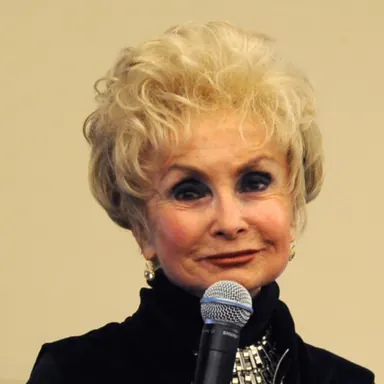
A Call from the Ashes: The Legacy of Rebbetzin Esther Jungreis and the Hineni Movement
16 min read3,176 words
Summary
A Call from the Ashes: The Torah Teaching, Public Work and Outreach Enterprise of Rebbetzin Esther Jungreis
This survey presents the extraordinary figure of Rebbetzin Esther Jungreis, a Holocaust survivor who became a trailblazer in establishing Orthodox female leadership and in the spiritual rehabilitation of the Jewish people in the United States. The text details how her childhood experiences in Bergen-Belsen were transformed into a life mission of drawing hearts closer to Judaism, through the founding of the "Hineni" movement and the use of innovative methodologies of mass communication and practical psychology. By means of theological analysis, the source explains her conception of the "spiritual Holocaust" of assimilation and presents the network of institutions and the formative books she published in order to return Jews to the tradition of their forefathers. In conclusion, the essay emphasizes her educational and social legacy, which continues to this day, while recognizing her broad political and international influence as a model of compassion and Jewish strength.
A Call from the Ashes: The Torah Teaching, Public Work and Outreach Enterprise of Rebbetzin Esther Jungreis
Introduction: Orthodox Female Leadership in the Second Half of the Twentieth Century
Rebbetzin Esther Jungreis (1936–2016) constitutes a unique and trailblazing phenomenon in the history of Orthodox Judaism and of Jewish-American society in the second half of the twentieth century and the beginning of the twenty-first.[1, 2] In an era in which Orthodox women hardly took on broad public roles in the field of leadership and teaching, Jungreis founded and consolidated an international outreach enterprise of unprecedented scope, using innovative rhetorical, media and institutional methodologies.[3] Her life, from her childhood in the shadow of the horrors of the Holocaust in Hungary to her passing on 23 August 2016 (19 Menachem Av 5776) in New York, was interwoven with an unceasing effort toward the spiritual rehabilitation of the Jewish people.[1, 4] Through a combination of burning faith, practical psychology and phenomenal oratorical ability, she reached the hearts of hundreds of thousands of estranged Jews and paved for them a way back to the bosom of the Orthodox tradition.[3, 5]
Biography and Formative Background: Roots in Hungary, Survival and Exile
Esther Jungreis was born on 27 April 1936 in the city of Szeged in Hungary, to Rabbi Avraham HaLevi Jungreis and his wife Miriam, née Cohen.[1, 6] Her father served as an Orthodox rabbi and ran a local community shtiebel within an environment that was identified for the most part with the Neolog stream (Reform in its Hungarian context).[1] This childhood experience within a diverse Jewish space, saturated with ideological tensions, gave her an early understanding of the range of Jewish identities and created in her a psychological foundation for the ability to communicate with Jews of all streams and backgrounds without prior judgment. During the war, her grandfather's house in Szeged served as a temporary shelter for young Jewish men who had been conscripted for forced labor.[5] Although they were forced to wear humiliating yellow armbands, at her grandfather's Sabbath table they underwent a spiritual and psychological transformation through Torah study and love.[5] This formative experience laid the foundations for the Rebbetzin's therapeutic approach to drawing hearts closer: the ability to look beyond the outer covering, the clothes or the badges of social stigma, and to identify the "Jewish spark" (the pintele yid) that exists in every soul.[5]
With the occupation of Hungary by the Nazis in 1944, the deportation of the family members to Auschwitz was prevented thanks to a relative who worked in the service of the leader of the Rescue Committee, Israel Kasztner.[3] The family was included on the Kasztner train, and after several hard months in the Bergen-Belsen concentration camp it was released to Switzerland and from there emigrated to the United States in 1947.[3, 7] As a seven-year-old girl in frozen Bergen-Belsen, she found in her pocket a crumpled piece of paper on which her father had written the words of the Shema.[5] This piece of paper instilled in her the awareness that she was not alone and that God lives and exists, an event that became the spiritual turning point of her life.[5] Another formative memory from that period was a walk with her father through deep snow; when she was afraid of falling, her father instructed her to step exactly in his footsteps, and promised her that the path of the forefathers would always remain firm for her so that she could get up and keep walking.[5] This image of her footsteps in the tracks of the forefathers became a central axis of her philosophy of life, and even inspired her later book "Footsteps".[3, 5]
After they settled in New York, Jungreis studied at the "Beit Yaakov" teachers' seminary and received a teaching certificate in 1955.[6] That same year she married her distant relative, Rabbi Meshulam HaLevi (Theodore) Jungreis, and joined him in leading a congregation in the suburb of North Woodmere on Long Island.[3, 6, 7] Together they raised four children: Chaya Sarah (Gertzulin), Shalva Chana (Wolff), Rabbi Yisrael and Rabbi Asher Jungreis.[1, 7] The destruction of her extended family in the Holocaust, in which about 75 of the 85 rabbis of the Jungreis family perished, left in her a deep void and a developed sense of survivor's guilt.[6, 8] The Rebbetzin described this loss as a divine categorical imperative to devote her life to filling the depleted spiritual ranks of the Jewish people.[4, 6] In 1971, after she had displayed impressive oratorical ability at community events in hotels in the Catskills region, the editor of the New York weekly "The Jewish Press" invited her to write a regular column.[3] This column, written for 45 consecutive years, combined Torah solutions to everyday problems and became the main written platform for disseminating her ideas.[1, 3]
Worldview and Theology: From the Physical Destruction to the Struggle against the Spiritual Holocaust
At the center of Rebbetzin Esther Jungreis's Torah teaching stood a profound theological conception that identified the processes of secularization, assimilation and absorption of the Jews of the United States as a "spiritual Holocaust" or a "spiritual genocide".[1, 4] She refused to see the physical Holocaust as an event that undermines faith in God.[8] In her view, the Holocaust demonstrated precisely the moral collapse of a human society that tries to exist without the fear of Heaven; Germany, which had been the most educated, enlightened and civilized society in Europe, produced from within it doctors, scientists and lawyers who carried out the most despicable atrocities.[8] In this she saw confirmation of King David's words in Psalms, "The beginning of wisdom is the fear of the Lord".[8]
The Rebbetzin developed a complex historiosophical philosophy of Jewish existence:
A divine covenant and the eternity of the nation: The Jewish people has a special covenant with the Creator to spread His message in the world.[8] The miracle of Jewish survival is a historical law of nature; just as the people survived the attempts at annihilation in Egypt, in ancient Persia and in the Roman Empire, so too its eternal survival is assured even after the Nazi destruction.[8]
The concept of Amalek and awakening from the ashes: Jungreis presented a spiritual and painful explanation of modern antisemitism.[8] When the Jewish people abandons its moral destiny and sinks into cultural indifference, "Amalek" appears, the embodiment of evil, forcing the Jew to confront his identity.[8] Similar to the Sages' statement that the removal of Ahasuerus's ring and the elevation of Haman to greatness brought about the repentance of Israel more than many prophets, she saw in the threat of the "modern Haman", Iranian President Mahmoud Ahmadinejad, a wake-up call requiring a renewed acceptance of the yoke of Torah and commandments.[9]
A call against indifference and feeble leadership: She sharply criticized the Jewish and political leadership in the United States and in Israel, arguing that the absence of courageous spiritual leadership permits corruption and accelerated assimilation.[9] She held that indifference to the eternal values of the Torah makes the modern Jew, in practice, a passive partner in Hitler's vision of erasing Judaism.[8]
The significance of Holocaust remembrance and Yad Vashem: Whereas Holocaust museums throughout the world serve as memorials to the victims, she saw in the "Yad Vashem" museum in Jerusalem a living testimony to the Return to Zion and to the fulfillment of the biblical prophecies about the return of the people of Israel to its land.[8]
The Institutional Structure: The Enterprises of the Hineni Movement in the United States and Israel
The formation of the "Hineni" movement in 1973 marked the beginning of the first institutionalized wave of "teshuvah" (return to observance) in American Jewry.[1, 2] The Rebbetzin, who was among the first to respond to the Lubavitcher Rebbe's call to go beyond the boundaries of the closed community and draw Jews closer to the tradition, founded a movement that became a worldwide network of institutions.[7, 10]
The institutional and social network of the "Hineni" movement is detailed below:
- Name of the institutional branch
- Geographic location
- Year of founding / operation
- Purpose, target audiences and social practice
- Yeshivat Ateret Yisrael
- Brooklyn, New York
The 1970s [7]
Establishment of a day school intended for children from non-observant homes, with the aim of making the beauty of the tradition accessible without coercion.[7]
Hineni Heritage Center
Manhattan, New York
1982 [3]
A spiritual and educational center that includes a multimedia museum of the culture of the Jewish people, study classes, Shabbatons and High Holiday prayers.[1, 3]
Hineni Jerusalem Center
18 Shlomzion HaMalka Street, Jerusalem [11]
1995 (spiritual declaration in 1976) [2, 11]
Operation of community social projects, including a soup kitchen for the elderly and the needy, and assistance to Holocaust survivors.[10, 11]
The Bill and Jill Roberts Soup Kitchen and Youth Center
Jerusalem
Providing therapeutic and social support for youth at risk (including dealing with drug and alcohol problems) and holding an annual Passover Seder for the homeless.[3, 10]
The institutional activity was accompanied by extensive field programs.[2] In 1975 the Rebbetzin planned to establish a settlement in the Jerusalem hills to be called Kiryat "Hineni", but this plan ultimately did not come to fruition.[2] In addition, her activity extended across the mass media; her weekly classes regularly drew about 1,500 participants, and the weekly "Hineni" television program is considered the longest-running Jewish broadcast in the history of American television.[4, 8]
The Methodology of Outreach: Practical Psychology, Personal Guidance and Spiritual Rehabilitation
Rebbetzin Jungreis's public success stemmed from the use of sophisticated psychological tools adapted to the young and estranged soul of Western Jewry.[3, 6] Her approach to outreach avoided dry moralizing and was based on deep love and on placing complete trust in the human soul.[5, 12]
Changing the Approach and the Methodology of the Emotional Mirror
In the field of relationships and dating the Rebbetzin developed a distinctive teaching.[5] She identified that the difficulty young people have in finding a partner in the modern era does not stem from a lack of opportunities, but from emotional barriers, extreme individualism and a deep fear of commitment.[5] She called on young people to look into an honest "emotional mirror" and to remove the defensive walls and the "tough attitude" that they wrap around themselves.[5] The Rebbetzin instructed them to "soften" so as to allow relationships to grow, and did not hesitate to give direct and blunt physical feedback ("Tell-it-like-it-is") regarding outward appearance, aesthetics and personal style, out of an understanding that technical and external obstacles might prevent the creation of a deep emotional connection.[5]
A Paragon of Compassion and Blessing: Her Personal Influence on Individuals
The Rebbetzin's power as a spiritual leader rested on her ability to give complete attention and deep empathy to every person she met.[5] Her legacy abounds in personal stories that illustrate this:
- The spiritual "measure of greatness": The author Sara Yoheved Rigler described an encounter in which the Rebbetzin's "measure of greatness" was put to the test.[5] During a fundraising evening in Jerusalem that fell into disorder and commotion, the emcee found herself humiliated and frustrated on the stage.[5] Instead of hurrying to deliver her keynote speech before thousands of waiting listeners, Rebbetzin Jungreis stopped, went over to her, took her hands and showered her with warm words of praise and encouragement.[5] This gesture of compassion demonstrated how the Rebbetzin placed the emotional well-being of the individual before her own public honor.[5]
- Removing the barrier of commitment: Dr. Yvette Alt Miller testified that reading the book "The Committed Life" changed her life completely.[5] The book helped her to recognize that her fear of committing to marriage was reflected even in her avoidance of keeping houseplants at home.[5] The dignified and loving model of marriage of the Rebbetzin and her husband gave her the courage to marry, to increase her charitable giving and to strengthen her family ties.[5]
Comforting mourners and the birth of a new generation: After the tragic death of the young man Yonah Goldman in a severe road accident in Israel, his grieving parents turned to the Rebbetzin.[5] She gave them a rare theological perspective, suggesting that their son had been a lofty soul (a "gilgul", a reincarnation) that had descended to the world to complete a short and focused mission.[5] The Rebbetzin gave a special blessing to the daughters of the family, that both of them would conceive and give birth to sons who would be named Yonah after their brother, a blessing that was fulfilled in full a year later with the births of Yonah Yehoshua Simcha and Yonah Yisrael.[5]
The Written Legacy: A Literary and Thematic Analysis of Her Works
Rebbetzin Jungreis's literary writing served as a principal shofar for spreading her spiritual thought throughout the world.[4] Her books became bestsellers and were translated into many languages, as detailed in the following table:
- Original title of the book (English)
- Title of the book in Hebrew translation
- Date and publication details
- Central themes and conceptual contribution
Jewish Soul on Fire [4]
HaNitzotz HaYehudi: Ein Lanu Shorashim Acherim (The Jewish Spark: We Have No Other Roots) [13]
1982, William Morrow & Company [4, 6]
A personal and rhetorical manifesto for awakening Jewish consciousness in the United States; chosen by B'nai B'rith as one of the ten best Jewish books of the year.[3, 6]
The Committed Life: Principles for Good Living from Our Timeless Past [4]
HaChaim BeMechuyavut (The Committed Life) [13]
HarperCollins [4]
A practical guide to a meaningful life, loving-kindness, charity, and overcoming the fear of marital and family commitment.[5, 6]
The Committed Marriage: A Guide to Finding a Soul Mate and Building a Relationship through Timeless Biblical Wisdom [3]
Mechuyavut HaNisuin (The Committed Marriage) [9]
2003, HarperCollins [3]
A Jewish-psychological analysis of marital relationships; providing tools for finding a match through emotional openness and the removal of defensive walls.[3, 5]
Life Is a Test: How to Meet Life's Challenges Successfully [1, 4]
HaChaim Hem Nisayon (Life Is a Test) [14]
2006, ArtScroll Shaar Press [1, 14]
A philosophy of coping with trauma and personal crises; presenting life's trials as opportunities for spiritual growth.[3, 14]
Footsteps: Perspectives for Daily Life [3]
-
2012 [3]
An outline of spiritual paths for everyday conduct, relying on the paths of the forefathers and on family history.[3, 5]
Political Influence, State Recognition and the Continuity of the Generations
Rebbetzin Jungreis's work won broad recognition from state, social and political bodies in the United States and Israel.[1, 6] Over the years she was chosen as "Woman of the Year" by many major organizations, among them Hadassah (1975), B'nai B'rith (1976), the Jewish War Veterans, and the Federation of Jewish Women's Organizations.[6]
Her influence reached the highest echelons of government in the United States.[1, 3] Because of her ideological closeness to the Republican Party, the Rebbetzin was invited in August 2004 to deliver the invocation at the party's annual national convention.[2, 3] In May 2008 President George W. Bush appointed her a member of the official delegation that accompanied him to the celebrations of the 60th anniversary of the State of Israel in Jerusalem.[1] After her death, on 21 October 2016, she was posthumously awarded the "I Am Jewish" prize, which was accepted by her daughter.[1]
The continuity of her spiritual enterprise is led today by members of her family.[1, 5] Her daughter, Shlomit (Slovie) Jungreis-Wolff, a senior lecturer and sought-after author, heads the "Hineni Couples" organization.[5, 15, 16] Drawing on her mother's teaching, Jungreis-Wolff published the parenting guides "Raising a Child with Soul" and "The Soul of Parenting".[12, 17, 18] Her educational teaching emphasizes the importance of building the child's spiritual identity, developing psychological resilience (grit) and coping with the harms of modern technology and social pressure, while avoiding judgmentalism and focusing on nurturing the child's bond with the family and his faith in the Creator.[12, 17]
Summary and Conclusions
Rebbetzin Esther Jungreis left an indelible mark on the demographic and religious map of American Jewry, and set a new historical model for female leadership within the bounds of halakhic Orthodoxy.[2, 3]
The historical and theological analysis of her work yields several fundamental conclusions:
- Processing trauma into a creative force: Jungreis demonstrated how the experiences of the Holocaust and of family destruction can be channeled into an active engine of growth, one that interprets physical survival as a moral duty to preserve the integrity of the nation.[5, 8]
- Modern methodological adaptation: She skillfully combined halakhic and traditional tools with mass media, dramatic performances and practical psychology, and thereby turned the process of "teshuvah" into an attractive and relevant cultural alternative for Western youth.[1, 3]
- Leadership out of service to the community: Her public importance rested not only on her mass appearances, but above all on her ability to provide welfare solutions, nourishment and emotional and spiritual support to individuals and to youth on the margins of society, thereby putting the principle of "Hineni" ("Here I am") into practice.[5, 10]
Sources18
- 1.Esther Jungreis - Wikipedia, en.wikipedia.org/wiki/Esther_Jungreis
- 2.אסתר יונגרייז – ויקיפדיה, he.wikipedia.org/wiki/אסתר_יונגרייז
- 3.Esther Jungreis | Jewish Women's Archive, jwa.org/encyclopedia/article/jungreis-esther
- 4.Esther Jungreis | Hachette Book Group, hachettebookgroup.com/contributor/esther-jungreis/
- 5.Missing My Mother, Rebbetzin Esther Jungreis - Aish.com, aish.com/missing-my-mother-rebbetzin-esther-jungreis/
- 6.Jungreis, Esther 1936- | Encyclopedia.com, encyclopedia.com/arts/educational-magazines/jungreis-esther-1936
- 7.Rebbetzin Esther Jungreis, 80, Founder of Hineni Outreach Organization - Hungarian-born Holocaust survivor inspired Jews to explore their roots - Chabad.org, chabad.org/news/article_cdo/aid/3413043/jewish/Rebbetzin-Esther-Jungreis-80-Founder-of-Hineni-Outreach-Organization.htm
- 8.הרבנית אסתר יונגרייז מדברת על השואה - אש התורה - אתר עם חכמת חיים, aish.co.il/48856547/
- 9.COL מרכז התקשורת החב״די - הרבנית יונגרייז ל-COL: "אין ... - חב״ד און ליין, col.org.il/news/32461
- 10.הנני (ארגון) - ויקיפדיה, he.wikipedia.org/wiki/הנני_(ארגון)
- 11.הנני (ע"ר) | גיידסטאר - אתר התאגידים של ישראל | משרד המשפטים, guidestar.org.il/organization/580253623
- 12.81: Creating a Spiritual Identity with Slovie Jungreis Wolff, thejewisheducationexperiencepodcast.buzzsprout.com/1257653/episodes/12329369-81-creating-a-spiritual-identity-with-slovie-jungreis-wolff
- 13.Esther Jungreis | The National Library of Israel, nli.org.il/en/a-topic/987007263469005171
- 14.Life is a Test - Hebrew Edition - החיים הם ניסיון - Moznaim.com, moznaim.com/products/life-is-a-test-hebrew-edition-החיים-הם-ניסיון
- 15.Slovie Jungreis Wolff, Author at The Jewish Press - JewishPress.com, jewishpress.com/author/slovie-jungreis-wolff/
- 16.Mrs. Slovie Jungreis-Wolff - OU Women's Initiative, ouwomen.org/speakers/mrs-slovie-jungreis-wolff/
- 17.The Soul Of Parenting | Slovie Jungreis-Wolff - Mosaica Press, mosaicapress.com/product/the-soul-of-parenting/
- 18.Slovie Speaks: How to Instill a Love for Judaism in Your Children | Aish, aish.com/slovie-speaks-how-to-instill-a-love-for-judaism-in-your-children/