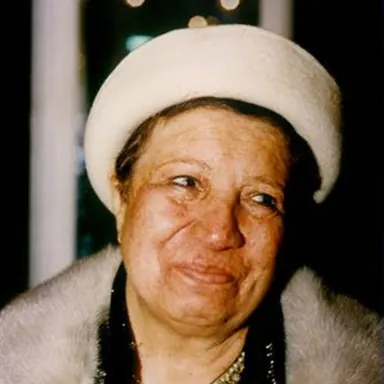
The Life's Work and Social-Torah Teaching of Rebbetzin Bracha Qafih: A Historical, Sociological and Intellectual Analysis
11 min read2,268 words
Summary
This text analyzes the figure and work of Rebbetzin Bracha Qafih, a trailblazing Jewish leader who merged a conservative Yemenite tradition with modern social entrepreneurship. The survey follows her development from her childhood in Sana'a, through the founding of an embroidery enterprise that gave women economic independence, to the establishment of the "Segulat Naomi" association, which became a broad social safety net in Jerusalem. The source emphasizes the Rebbetzin's rationalist intellectual teaching, which saw loving-kindness as an objective religious duty and not merely a passing emotion, while she served as the economic anchor that made possible the Torah work of her husband, Rabbi Yosef Qafih. The aim of the article is to present her work not merely as local philanthropy, but as a model of female leadership that acted to preserve the heritage of Yemenite Jewry and to strengthen the moral and social resilience of the State of Israel, an achievement that led to her being awarded the Israel Prize for her unique contribution.
Roots in Yemen and the Growth of a Consciousness of Loving-Kindness
Rebbetzin Bracha Qafih (5682, 1922 – 23 Kislev 5774, 26 November 2013) represents a complex and multidimensional model of Jewish female leadership in the twentieth century, one that combined halakhic conservatism with social and entrepreneurial innovation.[1, 2] Her life story shows that her developed consciousness of loving-kindness was not the product of a late awakening, but a direct continuation of a deep process of socialization that she absorbed in her childhood in Sana'a, the capital of Yemen, in the home of her parents, Yosef and Naomi Tzadok, of the well-known Salah family.[1, 2, 3] Her father, who was a merchant of jewelry and fabrics, used to collect money and provisions from his fellow merchants on the eves of festivals for needy families.[3] This model of communal philanthropy was put into practice before the eyes of the girl Bracha, who accompanied her mother Naomi in distributing provisions to the homes of the poor, and was exposed to the mechanism of giving charity in which poor women came to the door of their house with veiled faces in order to preserve their dignity and spare them embarrassment.[3]
The circumstances of Rebbetzin Qafih's personal life bore a dramatic and challenging character from a young age.[4] When she was only eleven years old, she married her cousin, Yosef Qafih, who later became one of the greatest halakhic decisors of Yemen, a member of the Supreme Rabbinical Court and the translator of Maimonides' (Rambam's) teaching.[1, 2, 5, 6] These early marriages stemmed, among other things, from the legal-historical reality in Yemen, in which marrying off orphans and young people was meant to prevent their forced conversion to Islam by the authorities. At only fourteen she became a mother with the birth of their firstborn son, David, and later the children Naomi and Yahya were born to them.[2]
In 1943, when she was twenty-one, the family decided to immigrate to the Land of Israel.[2] The journey to the Land was full of severe physical and emotional hardships, and was made on donkeys along a long and dangerous road to the port city of Aden.[2] During this grueling journey she lost her young son, Yahya, a tragedy that left an indelible mark on her personality, but did not prevent her from continuing to strive to build a new life in the Land of Israel, where their youngest son Aryeh was born.[1, 2]
The Socio-Economic Model in Jerusalem: A Transition from Dependence to Independence
After a short period of living in Tel Aviv, the Qafih family settled in the Nachlaot (Nachalat Achim) neighborhood of Jerusalem, at 12 Lod Street, which was later renamed Yosef Qafih Street after her husband.[2, 3, 4] The early years of the state were marked by a severe economic crisis and by waves of mass immigration, which created a housing shortage and acute poverty in Jerusalem.[4, 7] The Qafih family itself experienced severely crowded conditions, with five people crammed into a single room.[4]
In these complex conditions, Rebbetzin Qafih developed a revolutionary economic and social model that was ahead of its time.[2, 4] Instead of relying on welfare allowances or passive philanthropy, she set up a workshop for traditional Yemenite embroidery.[1, 2, 4] The workshop employed about 55 Yemenite women who came from weak socio-economic strata.[4] This initiative carried a double significance: it provided these women with a dignified source of livelihood, developed their economic independence and preserved a traditional craft that was disappearing, and at the same time it created a significant source of income for her own family.[1, 4]
The formative aspect of the family and Torah relationship between the Qafih couple found expression in the management of the capital generated by the workshop.[4] Rebbetzin Qafih decided to channel her entrepreneurial profits into building an addition and an upper floor above their house.[4] This move allowed a distinct functional and metaphorical division: the lower apartment served Rabbi Yosef Qafih as a quiet and secluded space for his monumental scholarly and Torah work, while the upper floor served as the family's living quarters and for managing the unceasing communal enterprises of loving-kindness.[4] In this way the Rebbetzin's economic activity became the material infrastructure that enabled the flourishing of her husband's Torah, a model that applies the historical conception of "Issachar and Zebulun" within the family unit.
Her Intellectual Teaching: Loving-Kindness as a Rational Halakhic Commandment and Trust in the Human Being
A conceptual analysis of the work of Rebbetzin Bracha Qafih reveals an ordered Torah and intellectual teaching, deeply anchored in the Maimonidean rationalist conception.[3, 4] Loving-kindness, in her eyes, was not an act driven by mere sentimentality or passing pity, but a religious duty and an objective moral structure.[3] Her teaching was formulated in sharp and brief sayings that served as codes for her public conduct:
Charity as a duty beyond pleasure: The essence of her moral conception found expression in her declaration that "Not every kindness a person does for another is a kindness that is pleasant to do. That is why it is called kindness. One does not do only what is pleasant".[3] This saying presents doing good as submission to a religious and halakhic categorical imperative, which demands that a person act even in conditions of physical or emotional discomfort.
An existential encounter with hunger: The inner motive for her unceasing struggle against poverty was reinforced by an event engraved in the family's memory.[3] Her grandson, Yosef (the son of David and Ayala, who lived on the lower floor of the house in Nachlaot), described how, after the passing of his grandfather, Rabbi Yosef Qafih, he visited his grandmother on a Friday and noticed a man who had received a basket of provisions from her.[3] The man stood on the entrance porch and with enormous speed swallowed ("devoured") a cold container of rice he had received for the Sabbath.[3] This sight of extreme physical hunger shocked the members of the family and sharpened the understanding that the Rebbetzin's activity was not a communal luxury, but the saving of lives in the plainest sense.[3]
Absolute faith in the good core of the human being: Although she worked among populations in distress and more than once had to deal with attempts at fraud and exploitation, Rebbetzin Qafih held a consistently optimistic position regarding human nature.[3] She held that "one must believe in the good core within a person; it cannot be that a person will not have a single moment of honesty".[3] This approach led to surprising results, when recipients of support who had wrongfully taken equipment or money from her changed their minds of their own free will and returned what they had taken, as a result of the complete trust she radiated toward them.[3]
The dignity of the recipient and logistical precision: Aid was given with great care to prevent dependence and harm to dignity.[3] She was endowed with an extraordinary memory and kept precise mental track of the dates and scope of the distributions, which on the one hand prevented double exploitation and on the other ensured a just distribution of resources.[3] This precision is reflected in the testimony of Adina Kalchaim, founder of the fund for victims of the Yom Kippur War, who told of a poor elderly woman who scolded the Rebbetzin for a slight delay in her arrival, since she managed her budget for electricity, water and kerosene stoves around the Rebbetzin's precise distribution dates.[3]
The language of blessing and communal mobilization: The Rebbetzin coined distinctive expressions that became part of the social ecology of her home.[3] Her regular blessing to every needy person who left her gate was "happiness, health and a joyful heart", a blessing meant to lift a person's spirit beyond the satisfaction of his physical needs.[3] Toward visitors and volunteers, on the other hand, she used the recruiting motto "in your own way", out of the conception that every person has a unique way and a personal tool through which he can contribute to the general communal effort.[3]
The Institutional Structure of the Segulat Naomi Enterprises and the Logistical Infrastructure
In order to turn her social teaching from potential into reality, Rebbetzin Qafih set up a ramified organizational infrastructure based on the "Segulat Naomi" association (named after her mother).[2, 8] The association operated as a social safety net that brought together a wide range of aid and welfare initiatives, which were described by the Israel Prize laureate herself and by those close to her.[1, 2, 8]
The Heritage of Yemenite Jewry, Cultural Diplomacy and Ethnic Activism
The work of Rebbetzin Bracha Qafih went significantly beyond the bounds of local social activity toward ethnic activism and cultural diplomacy in the international arena.[2] She recognized that solving the distress of the Mizrahi communities was not limited to material aid, but required a deep change of consciousness and a proud presentation of the cultural and spiritual assets of Yemenite Jewry in the face of the cultural hegemony of those days.[2]
In 1976 Rebbetzin Qafih set out, together with the social activist Yona Amir, on an extensive lecture tour in the United States.[2] The aim of the journey was twofold: raising resources to establish a center for the heritage of Yemenite Jewry in Jerusalem, and cultural outreach.[2] In this framework the two were invited to the Judaica museum in Chicago, where they exhibited a rich traditional Yemenite bridal costume, and they lectured throughout the continent on the structure of the traditional home, community life and the material culture of the Jews of Yemen.[2]
This activity rose to a new level in 1988, when the Rebbetzin went on an official mission on behalf of the State of Israel to the celebrations of the state's 40th anniversary in Rio de Janeiro, Brazil.[2] On this mission she presented an extensive exhibition of varied traditional costumes representing the different communities of Israel, and produced joint folklore performances together with the renowned Israeli-Yemenite singer Ofra Haza.[2] This mission, later documented in the book "A Rebbetzin and a Bride on a Mission for the State" written by her daughter-in-law Dr. Esther Qafih, highlighted the Rebbetzin's conception that ethnic heritage is not outdated folklore to be melted down in the melting pot, but a cultural asset of the first order that represents the richness and beauty of Israeli society as a whole.[2]
Recognition, Legacy and Commemoration in the Public and Educational Sphere
The long-term influence of Rebbetzin Qafih was given institutional expression through a series of prizes, literary works and educational initiatives intended to instill her figure as a role model.[1, 2]
Rebbetzin Qafih maintained extraordinary vitality and active involvement in community life and in running her household in her last years as well, when she was close to the age of ninety.[4] Living testimony to this is found in an interview she gave to the magazine "Penima", in which she related that until a few months earlier, before she underwent complex heart surgery, she used to swim regularly to keep physically fit, and expressed regret that the doctors had forbidden her to continue this activity.[4] Despite her temporary physical weakness after the operation, she continued to receive her guests herself and to serve them generously, consistently applying the practices of hospitality and communal activity that were at the center of her being.[4]
An analysis of the historical figure of Rebbetzin Bracha Qafih shows that her work is not confined to the bounds of local philanthropy, but outlines a new paradigm of Jewish female leadership.[1, 2, 4] Through a sophisticated combination of business entrepreneurship, advanced logistical management, a deep anthropological faith in the human spirit and an uncompromising rationalist halakhic commitment, she rescued the concept of loving-kindness from the sentimental sphere and moved it into the institutional and structural sphere.[2, 3, 4] In this way she created an exemplar of living Torah, which made a decisive contribution to fortifying the identity, welfare and culture of Israeli society in the generation of the transition from exile to independence.[1, 2]
Sources8
- 1.Bracha Qafih - Wikipedia, en.wikipedia.org/wiki/Bracha_Qafih
- 2.ברכה קאפח – ויקיפדיה, he.wikipedia.org/wiki/ברכה_קאפח
- 3.מבצעי סבתא: על אשת החסד ברכה קאפח. בלי תוספת סוכר, עם זחוק ופלפל - מהמחסן של צור ארליך, tsurehrlich.blogspot.com/2014/01/blog-post_7312.html
- 4.הרבנית ברכה קאפח ע"ה, כלת החסד | ערוץ 7, inn.co.il/news/266150
- 5.יוסף קאפח - ויקיפדיה, he.wikipedia.org/wiki/יוסף_קאפח
- 6.Rabbi Yosef Qafih - Tzadikim, dailyzohar.com/tzadikim/1265-Rabbi-Yosef-Qafih
- 7.הרבנית ברכה קאפח: מפעל חסד של אישה אחת, kan.org.il/content/kan/podcasts/p-8135/403517/
- 8.אלבום זהב - משפחת קפאח - בית אבי חי, bac.org.il/blog/?postID=10122