Skip to contentGo to the list of all sages
Ozar Chachamim
  1. /
  2. Modern
  3. /
  4. Hannah Szenes
עבENРУ
Modern1921–1944Budapest, Hungary; Nahalal; Sdot Yam; Yugoslavia

Hannah Szenes

Zionism, mission and poetry

  • The Yishuv's paratroopers
  • Zionism
  • Prayer
  • The journey to Caesarea
  • "Eli, Eli"
  • Mission
  • The Holocaust
  • Heroism
  • Women
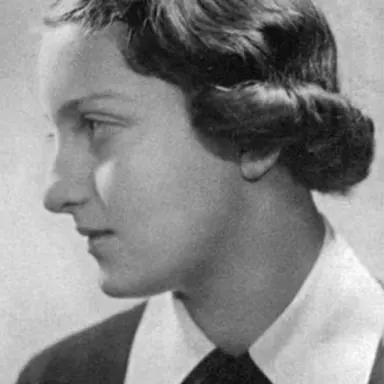
Picture: Hannah Szenes
Picture from the podcast episode
Read the research· 36 minListen⬡Show in the network🌌Show in the Tower of Generations🔗The path to another sage

Listen to the episode

Podcast episode · Hannah Szenes

Open in Spotify
The player loads from Spotify only when you click.
Open in Spotify

Core Concept

True spirituality does not shut itself off from reality but demands action; prayer, responsibility for the people and readiness to act can merge into one moral mission.

Biography

A poet, paratrooper and hero of the Yishuv who came from Hungary to the Land of Israel and joined a parachute mission behind enemy lines in Europe. In her diaries and poems she joined Jewish identity, prayer, moral responsibility and national mission.

The Road to Sinai

The archive doesn’t yet record Hannah Szenes’s teachers, so the road to Sinai can’t be drawn yet.

See the generations from Sinai

Full research

2 documents·7,358 words· 36 min read

Contents36 min read

  1. The Work, Thought and Spiritual-Torah Teaching of Hannah Szenes: A Historical, Literary and Theological Analysis
    • Introduction: The Torah-Spiritual Dimension of a Pioneer and Fighter
    • The Logistics and Ethics of the Operational Mission
    • The Ontology of the "Voice" and the Hermeneutic Dialogue with the Sources of Israel
    • A Voice Called and I Went: Reconstructing the Myth of Lech Lecha
    • A Walk to Caesarea: Human Prayer and the Cosmic Triangle
    • Humanist Activism versus Passive Asceticism: The Analysis of "To Seek a Human Being"
    • Integration into the Society of the Yishuv and the Shaping of a "Sabra" Identity
    • The Family Circle, the Last Correspondence and Commemoration
    • Summary and Theological Comparison of Her Work
    • Sources
  2. The Work, Thought and Spiritual-Torah Teaching of Hannah Szenes: A Historical, Literary and Theological Analysis
    • Introduction: The Torah-Spiritual Dimension of a Pioneer and Fighter
    • The Logistics and Ethics of the Operational Mission
    • The Ontology of the "Voice" and the Hermeneutic Dialogue with the Sources of Israel
    • A Voice Called and I Went: Reconstructing the Myth of Lech Lecha
    • A Walk to Caesarea: Human Prayer and the Cosmic Triangle
    • Humanist Activism versus Passive Asceticism: The Analysis of "To Seek a Human Being"
    • Integration into the Society of the Yishuv and the Shaping of a "Sabra" Identity
    • The Family Circle, the Last Correspondence and Commemoration
    • Summary and Theological Comparison of Her Work
    • Sources
Contents· 20 sections
  1. The Work, Thought and Spiritual-Torah Teaching of Hannah Szenes: A Historical, Literary and Theological Analysis
    • Introduction: The Torah-Spiritual Dimension of a Pioneer and Fighter
    • The Logistics and Ethics of the Operational Mission
    • The Ontology of the "Voice" and the Hermeneutic Dialogue with the Sources of Israel
    • A Voice Called and I Went: Reconstructing the Myth of Lech Lecha
    • A Walk to Caesarea: Human Prayer and the Cosmic Triangle
    • Humanist Activism versus Passive Asceticism: The Analysis of "To Seek a Human Being"
    • Integration into the Society of the Yishuv and the Shaping of a "Sabra" Identity
    • The Family Circle, the Last Correspondence and Commemoration
    • Summary and Theological Comparison of Her Work
    • Sources
  2. The Work, Thought and Spiritual-Torah Teaching of Hannah Szenes: A Historical, Literary and Theological Analysis
    • Introduction: The Torah-Spiritual Dimension of a Pioneer and Fighter
    • The Logistics and Ethics of the Operational Mission
    • The Ontology of the "Voice" and the Hermeneutic Dialogue with the Sources of Israel
    • A Voice Called and I Went: Reconstructing the Myth of Lech Lecha
    • A Walk to Caesarea: Human Prayer and the Cosmic Triangle
    • Humanist Activism versus Passive Asceticism: The Analysis of "To Seek a Human Being"
    • Integration into the Society of the Yishuv and the Shaping of a "Sabra" Identity
    • The Family Circle, the Last Correspondence and Commemoration
    • Summary and Theological Comparison of Her Work
    • Sources

Document 1/2

The Work, Thought and Spiritual-Torah Teaching of Hannah Szenes: A Historical, Literary and Theological Analysis

18 min read·3,679 words

Summary

This source presents an in-depth analysis of the figure of Hannah Szenes, combining the historical dimension of her operational heroism as a paratrooper with her spiritual and literary richness. The text reveals that beyond her supreme act of sacrifice there stood a consolidated theological and moral worldview, which reinterpreted Jewish concepts of mission, faith and prayer as instruments for humanist activism. Through an examination of her well-known works and their comparison with the biblical sources, it explains how Szenes turned her personal fate into a symbol of absolute moral responsibility and of the sanctification of the human spirit even in the heart of the moral darkness of the Holocaust period. In conclusion, the source stresses the process of forming her identity as a Hebrew pioneer and her educational legacy in Israeli culture, which sees her as a unique bridge between the tradition of Israel and modernity.

Introduction: The Torah-Spiritual Dimension of a Pioneer and Fighter

The figure of Hannah Szenes has been engraved in the historical and national memory of the State of Israel chiefly as a distinct symbol of supreme heroism, operational daring and self-sacrifice [cite: 1]. However, a careful examination of her literary estate, which includes personal diaries, poems and letters, reveals that behind the fighter and pioneer stood a thinker with a deep and ordered spiritual and theological worldview [cite: 1, 2, 3].

The term "Torah teaching" in the context of Szenes does not refer to traditional halakhic thought or to classical observance of the commandments, since she grew up in Budapest in an assimilated family rooted in general Hungarian culture [cite: 1]. Instead, the term expresses a broad existential and moral "Torah": a worldview that conducts a constant and incisive dialogue with the Jewish sources, reinterprets concepts of mission, faith and prayer, and sets mutual responsibility and humanism as a supreme divine and existential command [cite: 4, 5, 6]. Szenes's work combines her personal longings with the fate of the Jewish people, and formulates a modern theology based on absolute moral responsibility, deep attentiveness to the command of conscience, and the sanctification of life and of the human spirit even in the heart of the greatest historical darkness [cite: 1, 7, 8].

The Logistics and Ethics of the Operational Mission

Hannah Szenes's enlistment in the British army and her decision to parachute into occupied Europe were not only a response to an urgent operational need, but the absolute physical realization of her moral and spiritual teaching [cite: 1, 2]. In 1943, as the shocking reports of the extermination of European Jewry by the Nazis multiplied, Szenes volunteered to serve in the British army as one of the paratroopers of the Yishuv [cite: 1, 2]. She took part in a complex and exceptional military operation in which secret agents were integrated into the British war effort and, at the same time, into rescue activity for Jews behind enemy lines [cite: 3].

The operational data of the paratroopers' project, as they emerge from the historical documentation, show the scale of the screening and the level of sacrifice of the participants:

Szenes left Cairo, where she had trained, on 11 February 1944 for Bari in southern Italy, together with Yona Rosenfeld, Abba Berdiczew and Reuven Dafni [cite: 2]. From there they were assigned to penetrate into Yugoslavia and join Tito's partisans at a distance of about 180 kilometers from the border [cite: 2]. While Dafni, who had immigrated from Yugoslavia, was to remain with the rebels as a liaison of the Rescue Committee, Szenes, Rosenfeld and Berdiczew were assigned to continue to Hungary, to Murska Sobota [cite: 2]. The operational plan set them a meeting at the "Elefant" hotel with Moshe Schweiger, a member of the Aid and Rescue Committee, under the identification password "Achdut HaAvoda," and from there to make contact with the head of the Rescue Committee's branch in Kushta (Istanbul), Ze'ev Hadari (code-named "Venya Pomerantz") [cite: 2].

Because of the shifting map of battles in the area of their drop in northern Yugoslavia, they were prevented from reaching the planned meeting at the hotel [cite: 2]. The team had to make a grueling journey on foot of 360 kilometers with the Tenth Corps of the Yugoslav partisans [cite: 2]. The penetration into Hungary was delayed for long months because of the occupation of the country by Nazi Germany on 19 March 1944 [cite: 2]. During this period Szenes stayed among the partisans and developed her unique moral teaching concerning the essence of the mission [cite: 1]. She stated categorically that the paratroopers must act without taking personal risk into account, since even if they failed in physical rescue, their personal sacrifice would serve as a symbol that would give strength and faith to the Jews of Europe who were living in darkness [cite: 1].

On 9 June 1944 Szenes finally crossed the border into Hungary together with two Jewish refugees who sought to save their families, a French underground man and three Yugoslav partisans [cite: 2]. The group was caught almost immediately by a Hungarian patrol [cite: 2]. Szenes was imprisoned and underwent unbearably severe torture and exhausting interrogations in the Hungarian prison in Budapest, but withstood them with wondrous courage and revealed nothing to her interrogators [cite: 3]. She was tried for treason against her homeland (since she had been born in Hungary) and sentenced to death [cite: 2]. Before her judges too she displayed proud moral steadfastness, refused to ask for clemency and declared: "I have been a Zionist since the days of my youth... In the Land of Israel I became a human being in the full sense of the word among my pioneer comrades. I only did my duty in volunteering to fight with weapon in hand against the rule of the Nazi murderers in Hungary" [cite: 2]. On 7 November 1944 she was executed in the prison courtyard, at only 23 years of age [cite: 3].

The Ontology of the "Voice" and the Hermeneutic Dialogue with the Sources of Israel

At the heart of Szenes's literary writing and thought stands the conception of "mission" as a deep existential and metaphysical command [cite: 8]. In her personal diary she formulates this feeling clearly: "Sometimes I feel myself a kind of emissary on whom a task has been laid. What the task is, is not clear to me... As if I feel a duty toward others, as if I owe them something" [cite: 8]. This inner understanding of absolute moral obligation toward others is shaped through a close and intersubjective affinity with the biblical texts, which served her as a model for action in the world [cite: 4, 9].

A Voice Called and I Went: Reconstructing the Myth of Lech Lecha

The poem "On the Way," known by its words "A voice called and I went," was written against the background of Szenes's anguished parting from her old homeland and from the comfortable student life in Budapest [cite: 4, 10, 11]. Szenes, who was a gifted student with a promising future, had to accept painful compromises in order to realize her aspiration to immigrate to the Land of Israel and become a pioneer [cite: 10, 11]. Analysis of the poem reveals a direct structural and thematic parallel to the divine call to Abram in the portion "Lech Lecha" ("Go forth," Genesis 12) [cite: 9].

While the biblical story is sparing in describing Abram's feelings on leaving his land and his father's house, Szenes excels in giving words and pain to the going forward into the unknown while yearning for what was left behind [cite: 9]. The "voice" in Szenes is not an external prophetic voice revealed to a person transcendently, but an inner movement, a binding impulse of conscience that allows no evasion: "I went so as not to fall" [cite: 4, 9, 12]. The weeping at the crossroads and the decision "to stop my ears with the cold whiteness" attest to the enormous emotional difficulty involved in responding to the moral command [cite: 4].

The second part of the poem presents a fascinating hermeneutic motif:

"For three days its memory did not leave me, and on the fourth you broke the bread, and on the fourth you opened the window, and on the fourth I saw the sea. And on the fourth I knew that the sea" [cite: 4].

This structure maintains a distinct intertextual connection with the Book of Jonah (Jonah 1–2) [cite: 4]. Jonah the prophet stayed in the belly of the fish three days and three nights, while trying to flee from before the Lord, until he raised his prayer and was answered [cite: 4]. Unlike Jonah, who tries to flee from his mission and from God, Szenes chooses to move toward the mission [cite: 4, 9]. The stay of "three days" represents the period of incubation and inner hesitation, while the fourth day represents reconciliation with the new reality: the breaking of the bread (physical nourishment and existence), the opening of the window (spiritual sight) and the discovery of the sea as representing eternity, space and pioneering in the Land of Israel [cite: 2, 4, 13]. For Szenes the sea is transformed from a source of danger and storm (as with Jonah) into a source of revelation, faith and spiritual renewal [cite: 4].

A Walk to Caesarea: Human Prayer and the Cosmic Triangle

The poem "A Walk to Caesarea" ("Eli, Eli" – "My God, My God") represents the theological peak of Szenes's thought [cite: 3, 6]. The poem, written on the seashore of Kibbutz Sdot Yam after she had completed her studies at Nahalal, presents a harmonious religious worldview reflecting the triangle: God, world (nature) and man [cite: 1, 3, 6].

The wording of the poem underwent editing and change until it reached its familiar form, as can be seen in the historical comparison:

The double repetition in the opening "Eli, Eli" parallels the cry of King David in Psalm 22 ("My God, my God, why have You forsaken me") and the double mention of the Name in the Thirteen Attributes of Mercy, as Rabbi Yaakov Medan notes [cite: 6]. The poetic repetition creates a call of immense emotional power that does not attest to the existence of "two powers" (two divine authorities), but to a concentrated call of the soul to its Creator out of wonder and gratitude [cite: 6, 15].

The poem sets out four eternal elements interwoven with one another: the sand and the sea (the earthly and material), the rustle of the waters and the lightning of the heavens (the dynamic and metaphysical), and the prayer of man (the spiritual and the conscientious) [cite: 6, 16]. The spiritual source of the poem presents human prayer not as an artificial or detached religious event, but as a natural, primal and organic expression of existence in the world, equivalent to the actions of nature themselves [cite: 16]. The prayer itself is "a prayer for the very ability to pray and to believe" [cite: 16]. Szenes links turning to God with taking personal and social responsibility: the request for help and hope from God does not come to replace human action, but to give it inspiration, strength and moral justification [cite: 15].

Humanist Activism versus Passive Asceticism: The Analysis of "To Seek a Human Being"

During the Second World War, in view of the dimensions of destruction and blood, Szenes formulates an uncompromising moral teaching in her poem "To Seek a Human Being," written in her diary at Nahalal on 11 October 1940 [cite: 5]. This poem is a distinctly theological document dealing with the ability to preserve the human image in the midst of catastrophe [cite: 5].

Szenes's moral thought in this poem stands out especially when it is compared with the sources of the Tannaim that discuss the response to the destruction of the Temple [cite: 5]. In the Tosefta (tractate Sotah, chapter 15, halakha 5) it is related that when the Second Temple was destroyed, ascetics (perushim) multiplied in Israel who would not eat meat or drink wine as an expression of mourning and asceticism [cite: 5]. Rabbi Yehoshua argues with them and makes clear that excessive mourning and withdrawal from life are not the right way, and proposes symbolic solutions (such as leaving a cubit by a cubit unplastered in the house) that allow one to go on living and creating alongside the memory [cite: 5].

Szenes sets out a similar but even more active spiritual alternative [cite: 5]:

"In the bonfires of war, in blaze, in conflagration, among the stormy seas of blood, I light my little lantern, to seek, to seek a human being" [cite: 5].

Instead of sinking into lament, mourning or abstention from the world, Szenes chooses the moral activism of "lighting the little lantern," a symbol of preserving the values of humanism, compassion and mutual help within the moral darkness of the war [cite: 5]. She recognizes that evil and fire blind the eyes and make it hard to identify the good, and therefore she turns to God with an existential request: "Give a sign, God, give a sign upon his forehead" [cite: 5, 17]. This sign is meant to identify "the pure, eternal spark" found in every person, which enables human solidarity to exist even under extreme conditions [cite: 5, 17].

The poem maintains a deep poetic and theological affinity with Psalm 142 ("A Maskil of David, when he was in the cave; a prayer") [cite: 5]. David in the cave cries out from a severe distress of loneliness and helplessness: "Look on my right hand and see: there is none who knows me; refuge has failed me; no one cares for my soul" [cite: 5]. Szenes, influenced by these words, turns herself from the "pursued" one who asks for help into the active "seeker" [cite: 5]. She takes it upon herself to be the one who "cares for the soul" of man, and instead of waiting for someone to recognize her, she goes out with her lantern to seek the humanity in the other [cite: 5].

This conception sharpens the understanding that trust in man is not a naive position that ignores evil, but a conscious moral decision and an active spiritual effort [cite: 7]. Szenes grapples with the question of her moral right, as one who sits in relative security in the Land of Israel ("Around me the green Carmel, I breathe clean air"), to offer words of comfort and faith to those dwelling in the valley of the shadow of death in Europe [cite: 7]. Her decision is that faith in the human spirit, in love and in freedom is the ultimate meaning, which cannot be annihilated by suffering or death, and precisely for that reason her moral duty is to go out and rescue [cite: 2, 7].

Integration into the Society of the Yishuv and the Shaping of a "Sabra" Identity

Hannah Szenes's arrival in the Land of Israel was accompanied by a conscious effort to reshape her personal and cultural identity [cite: 2, 10]. Although she had the option of joining kibbutzim of Hungarian immigrants, where she could have found a familiar language and culture, she rejected these invitations out of a principled aspiration to integrate into the society of the Yishuv as a whole and to improve her knowledge of Hebrew [cite: 2]. She nurtured a hidden dream of writing and creating in Hebrew, a language that became for her the main instrument of her spiritual and literary expression [cite: 2].

Szenes sought to shed the marks of exile and of European bourgeois life [cite: 11]. Her fellow student at Nahalal, Miriam, described the rapid outward and inward change she underwent: Szenes hastened to get rid of the fancy dresses she had brought with her from Budapest, and loved wearing shorts and doing simple agricultural work suited to the climate and to the pioneering spirit of the country [cite: 11]. She had a sporty, well-proportioned and impressive appearance, and expressive sky-blue eyes that drew many suitors to her at Nahalal and Sdot Yam [cite: 11]. Szenes took an active part in the local cultural life, including taking part in theater performances, such as the play staged at the agricultural school in Nahalal to mark the 20th jubilee of the WIZO organization in January 1941 [cite: 2]. This activity shows her strong desire to be an integral part of the renewed Hebrew cultural creation [cite: 2].

The Family Circle, the Last Correspondence and Commemoration

Szenes's family ties, and especially her relations with her mother Katarina and her older brother Giora, formed a central emotional anchor in her life and were inseparably woven into her activity and her writings [cite: 1, 18]. Her father, Béla Szenes, who was a respected journalist and playwright in Hungary, died when she was six, and her mother Katarina raised her two children with devotion and in relative comfort [cite: 1].

In January 1943 the idea was born in Szenes's mind to go up to Hungary in order to help organize Youth Aliyah and to save her mother [cite: 18]. This decision took on a practical character with her enlistment [cite: 18]. At the beginning of 1944 Szenes met her brother Giora in Tel Aviv, shortly after he had immigrated to the country and before her departure on the operational mission [cite: 1]. On the back of the joint photograph of the two from that meeting Szenes inscribed the biblical verse from Psalm 133: "Behold, how good and how pleasant it is for brothers to dwell together" [cite: 1].

Szenes's last correspondence reveals the attempts to protect her family alongside her absolute commitment to the mission:

  • The last letter to Giora: written less than a month before her departure for Egypt as an enlisted soldier [cite: 19]. In this letter she apologized for not having been able to reveal to him the full truth about the nature of her secret mission: "You were so new in our life that I could not tell you the truth. I am sure that now you will understand me" [cite: 19].
  • The official farewell letter: written in English to ease the British military censorship and allow its rapid transmission to Giora [cite: 20]. In this letter she asked him to explain her prolonged silence to their relatives, and even authorized him, in a gesture of sad humor, to forge her signature on letters to their mother so as to spare her worry, while expressing the hope that he would not use the signature for financial obligations [cite: 20].
  • The last note to her mother: written on 7 November 1944, a few minutes before her execution, and found in the pocket of her daughter's garment only after her death [cite: 18]. In the note she wrote: "My dear and beloved mother, only a few words... forgive me if you can... I have no words to say to you but thanks from the bottom of my heart" [cite: 1, 18].

Szenes's legacy has been worked out and developed over the years as an educational and moral model of the first order in Israeli society [cite: 1]. Her remains were brought to Israel in 1950 and buried on Mount Herzl in Jerusalem, in a special plot dedicated to the seven paratroopers of the Yishuv who did not return from their mission [cite: 1, 3]. Kibbutz "Yad Hanna" is named after her [cite: 1]. The members of Kibbutz Sdot Yam established "Beit Hannah Szenes" in her memory, which conducts educational activity, audiovisual presentations and historical exhibitions for all age groups [cite: 3]. Her figure is taught in Israel's education systems through lesson plans in Jewish-Israeli culture, which emphasize the concepts of "soul-searching," "mission" and "moral responsibility" that arise from her poems and diaries [cite: 3, 21]. In 1986 her mother, Katarina Szenes, submitted a Page of Testimony in her memory to the Hall of Names of Yad Vashem, thereby closing the family and national circle of the fighter and poet who became one of the great symbols of the human spirit [cite: 1].

Summary and Theological Comparison of Her Work

The moral and Torah teaching of Hannah Szenes forms a unique bridge between the tradition of biblical and Jewish literature and pioneering Zionism and modern humanism [cite: 2, 4, 6]. Her literary work is not content with a passive description of reality, but calls for active action, for taking responsibility and for a constant search for the image of God in man even in the inferno of war [cite: 5, 7].

The following is a structural comparison presenting the theological and textual connections of Szenes's three principal works:

Sources21

  1. 1.ציונית, משוררת, לוחמת - צנחנית היישוב חנה סנש | יד ושם - Yad Vashem, yadvashem.org/he/from-our-collections/hannah-szenes.html
  2. 2.אסופת המאה // לכידתה של חנה סנש - הארכיון הציוני המרכזי, zionistarchives.org.il/ATTHECZA/Pages/Senesh.aspx
  3. 3.חנה סנש | מולדת חברה ואזרחות יסודי - מרחב פדגוגי - משרד החינוך, pop.education.gov.il/tchumey_daat/moledet_hevra_ezrahut/yesodi/noseem_nilmadim/hana-senesh/
  4. 4.הלכתי כי קרא הקול (חנה סנש) | חיבורים בספריא, sefaria.org.il/sheets/217860
  5. 5.הִנְנִי מַבְעִירָה פַּנָּסִי הַקָּטָן - מכון הרטמן, heb.hartman.org.il/small-lamp/
  6. 6.אלי, אלי, שלא ייגמר לעולם... - צריך עיון, iyun.org.il/maremakom/אלי-אלי-שלא-ייגמר-לעולם/
  7. 7."כי באדם אאמין": אמון הוא הכרעה קיומית - מכון הרטמן, heb.hartman.org.il/faith-in-mankind/
  8. 8.שליחוּת, שותפוּת ושמחה | חיבורים בספריא, sefaria.org.il/sheets/217923
  9. 9.בראשית י"ב - מכון הרטמן, heb.hartman.org.il/didactic-articles-genesis-12/
  10. 10.חנה סנש - הספרייה הלאומית, nli.org.il/he/discover/israel/figures/hannah-szenes
  11. 11.חייה ומותה של חנה סנש - גילי חסקין, gilihaskin.com/חייה-ומותה-של-חנה-סנש/
  12. 12.החלוצים החדשים - מגזין נשים, nashim.online/כתבה/החלוצים-החדשים/
  13. 13.שביל ישראל מקטע 14- מג'אסר אז'רקא לקיסריה: "הליכה לקיסריה"- מרבי עקיבא ועד חנה סנש - ספריא, sefaria.org.il/sheets/342691
  14. 14.הליכה לקיסריה - ויקיפדיה, he.wikipedia.org/wiki/הליכה_לקיסריה
  15. 15.הליכה לקיסריה - פ"סקול חברתי, paskol-chevrati.co.il/songs/הליכה-לקיסריה/
  16. 16.כמו תפילה | תרבות יהודית-ישראלית, tarbuty.org.il/page/8648/8
  17. 17.חנה סנש: חשבון נפש בימים נוראים | תרבות יהודית-ישראלית, tarbuty.org.il/page/34454
  18. 18.גם אלף דפים לא יספיקו לתת את דמותה: חנה סנש כותבת לאמא - הספרנים, blog.nli.org.il/_hannah_szenes_to_her_mother/
  19. 19.חנה סנש נפרדת מאחיה גיורא - הספרנים - הספרייה הלאומית, blog.nli.org.il/giborot-hannah-szenes-giyora/
  20. 20.המכתב האחרון של חנה סנש - סנש כותבת לאח שלה - הספרנים - הספרייה הלאומית, blog.nli.org.il/hannahsenesh/
  21. 21.חנה סנש | ימים מיוחדים בלוח השנה | מעגל השנה | פורטל פדגוגי - מרחב פדגוגי, pop.education.gov.il/maagal_hashana/yamim-meyuchadim/hannah-senesh/

Document 2/2

The Work, Thought and Spiritual-Torah Teaching of Hannah Szenes: A Historical, Literary and Theological Analysis

18 min read·3,679 words

Summary

This source presents an in-depth analysis of the figure of Hannah Szenes, combining the historical dimension of her operational heroism as a paratrooper with her spiritual and literary richness. The text reveals that beyond her supreme act of sacrifice there stood a consolidated theological and moral worldview, which reinterpreted Jewish concepts of mission, faith and prayer as instruments for humanist activism. Through an examination of her well-known works and their comparison with the biblical sources, it explains how Szenes turned her personal fate into a symbol of absolute moral responsibility and of the sanctification of the human spirit even in the heart of the moral darkness of the Holocaust period. In conclusion, the source stresses the process of forming her identity as a Hebrew pioneer and her educational legacy in Israeli culture, which sees her as a unique bridge between the tradition of Israel and modernity.

Introduction: The Torah-Spiritual Dimension of a Pioneer and Fighter

The figure of Hannah Szenes has been engraved in the historical and national memory of the State of Israel chiefly as a distinct symbol of supreme heroism, operational daring and self-sacrifice [cite: 1]. However, a careful examination of her literary estate, which includes personal diaries, poems and letters, reveals that behind the fighter and pioneer stood a thinker with a deep and ordered spiritual and theological worldview [cite: 1, 2, 3].

The term "Torah teaching" in the context of Szenes does not refer to traditional halakhic thought or to classical observance of the commandments, since she grew up in Budapest in an assimilated family rooted in general Hungarian culture [cite: 1]. Instead, the term expresses a broad existential and moral "Torah": a worldview that conducts a constant and incisive dialogue with the Jewish sources, reinterprets concepts of mission, faith and prayer, and sets mutual responsibility and humanism as a supreme divine and existential command [cite: 4, 5, 6]. Szenes's work combines her personal longings with the fate of the Jewish people, and formulates a modern theology based on absolute moral responsibility, deep attentiveness to the command of conscience, and the sanctification of life and of the human spirit even in the heart of the greatest historical darkness [cite: 1, 7, 8].

The Logistics and Ethics of the Operational Mission

Hannah Szenes's enlistment in the British army and her decision to parachute into occupied Europe were not only a response to an urgent operational need, but the absolute physical realization of her moral and spiritual teaching [cite: 1, 2]. In 1943, as the shocking reports of the extermination of European Jewry by the Nazis multiplied, Szenes volunteered to serve in the British army as one of the paratroopers of the Yishuv [cite: 1, 2]. She took part in a complex and exceptional military operation in which secret agents were integrated into the British war effort and, at the same time, into rescue activity for Jews behind enemy lines [cite: 3].

The operational data of the paratroopers' project, as they emerge from the historical documentation, show the scale of the screening and the level of sacrifice of the participants:

Szenes left Cairo, where she had trained, on 11 February 1944 for Bari in southern Italy, together with Yona Rosenfeld, Abba Berdiczew and Reuven Dafni [cite: 2]. From there they were assigned to penetrate into Yugoslavia and join Tito's partisans at a distance of about 180 kilometers from the border [cite: 2]. While Dafni, who had immigrated from Yugoslavia, was to remain with the rebels as a liaison of the Rescue Committee, Szenes, Rosenfeld and Berdiczew were assigned to continue to Hungary, to Murska Sobota [cite: 2]. The operational plan set them a meeting at the "Elefant" hotel with Moshe Schweiger, a member of the Aid and Rescue Committee, under the identification password "Achdut HaAvoda," and from there to make contact with the head of the Rescue Committee's branch in Kushta (Istanbul), Ze'ev Hadari (code-named "Venya Pomerantz") [cite: 2].

Because of the shifting map of battles in the area of their drop in northern Yugoslavia, they were prevented from reaching the planned meeting at the hotel [cite: 2]. The team had to make a grueling journey on foot of 360 kilometers with the Tenth Corps of the Yugoslav partisans [cite: 2]. The penetration into Hungary was delayed for long months because of the occupation of the country by Nazi Germany on 19 March 1944 [cite: 2]. During this period Szenes stayed among the partisans and developed her unique moral teaching concerning the essence of the mission [cite: 1]. She stated categorically that the paratroopers must act without taking personal risk into account, since even if they failed in physical rescue, their personal sacrifice would serve as a symbol that would give strength and faith to the Jews of Europe who were living in darkness [cite: 1].

On 9 June 1944 Szenes finally crossed the border into Hungary together with two Jewish refugees who sought to save their families, a French underground man and three Yugoslav partisans [cite: 2]. The group was caught almost immediately by a Hungarian patrol [cite: 2]. Szenes was imprisoned and underwent unbearably severe torture and exhausting interrogations in the Hungarian prison in Budapest, but withstood them with wondrous courage and revealed nothing to her interrogators [cite: 3]. She was tried for treason against her homeland (since she had been born in Hungary) and sentenced to death [cite: 2]. Before her judges too she displayed proud moral steadfastness, refused to ask for clemency and declared: "I have been a Zionist since the days of my youth... In the Land of Israel I became a human being in the full sense of the word among my pioneer comrades. I only did my duty in volunteering to fight with weapon in hand against the rule of the Nazi murderers in Hungary" [cite: 2]. On 7 November 1944 she was executed in the prison courtyard, at only 23 years of age [cite: 3].

The Ontology of the "Voice" and the Hermeneutic Dialogue with the Sources of Israel

At the heart of Szenes's literary writing and thought stands the conception of "mission" as a deep existential and metaphysical command [cite: 8]. In her personal diary she formulates this feeling clearly: "Sometimes I feel myself a kind of emissary on whom a task has been laid. What the task is, is not clear to me... As if I feel a duty toward others, as if I owe them something" [cite: 8]. This inner understanding of absolute moral obligation toward others is shaped through a close and intersubjective affinity with the biblical texts, which served her as a model for action in the world [cite: 4, 9].

A Voice Called and I Went: Reconstructing the Myth of Lech Lecha

The poem "On the Way," known by its words "A voice called and I went," was written against the background of Szenes's anguished parting from her old homeland and from the comfortable student life in Budapest [cite: 4, 10, 11]. Szenes, who was a gifted student with a promising future, had to accept painful compromises in order to realize her aspiration to immigrate to the Land of Israel and become a pioneer [cite: 10, 11]. Analysis of the poem reveals a direct structural and thematic parallel to the divine call to Abram in the portion "Lech Lecha" ("Go forth," Genesis 12) [cite: 9].

While the biblical story is sparing in describing Abram's feelings on leaving his land and his father's house, Szenes excels in giving words and pain to the going forward into the unknown while yearning for what was left behind [cite: 9]. The "voice" in Szenes is not an external prophetic voice revealed to a person transcendently, but an inner movement, a binding impulse of conscience that allows no evasion: "I went so as not to fall" [cite: 4, 9, 12]. The weeping at the crossroads and the decision "to stop my ears with the cold whiteness" attest to the enormous emotional difficulty involved in responding to the moral command [cite: 4].

The second part of the poem presents a fascinating hermeneutic motif:

"For three days its memory did not leave me, and on the fourth you broke the bread, and on the fourth you opened the window, and on the fourth I saw the sea. And on the fourth I knew that the sea" [cite: 4].

This structure maintains a distinct intertextual connection with the Book of Jonah (Jonah 1–2) [cite: 4]. Jonah the prophet stayed in the belly of the fish three days and three nights, while trying to flee from before the Lord, until he raised his prayer and was answered [cite: 4]. Unlike Jonah, who tries to flee from his mission and from God, Szenes chooses to move toward the mission [cite: 4, 9]. The stay of "three days" represents the period of incubation and inner hesitation, while the fourth day represents reconciliation with the new reality: the breaking of the bread (physical nourishment and existence), the opening of the window (spiritual sight) and the discovery of the sea as representing eternity, space and pioneering in the Land of Israel [cite: 2, 4, 13]. For Szenes the sea is transformed from a source of danger and storm (as with Jonah) into a source of revelation, faith and spiritual renewal [cite: 4].

A Walk to Caesarea: Human Prayer and the Cosmic Triangle

The poem "A Walk to Caesarea" ("Eli, Eli" – "My God, My God") represents the theological peak of Szenes's thought [cite: 3, 6]. The poem, written on the seashore of Kibbutz Sdot Yam after she had completed her studies at Nahalal, presents a harmonious religious worldview reflecting the triangle: God, world (nature) and man [cite: 1, 3, 6].

The wording of the poem underwent editing and change until it reached its familiar form, as can be seen in the historical comparison:

The double repetition in the opening "Eli, Eli" parallels the cry of King David in Psalm 22 ("My God, my God, why have You forsaken me") and the double mention of the Name in the Thirteen Attributes of Mercy, as Rabbi Yaakov Medan notes [cite: 6]. The poetic repetition creates a call of immense emotional power that does not attest to the existence of "two powers" (two divine authorities), but to a concentrated call of the soul to its Creator out of wonder and gratitude [cite: 6, 15].

The poem sets out four eternal elements interwoven with one another: the sand and the sea (the earthly and material), the rustle of the waters and the lightning of the heavens (the dynamic and metaphysical), and the prayer of man (the spiritual and the conscientious) [cite: 6, 16]. The spiritual source of the poem presents human prayer not as an artificial or detached religious event, but as a natural, primal and organic expression of existence in the world, equivalent to the actions of nature themselves [cite: 16]. The prayer itself is "a prayer for the very ability to pray and to believe" [cite: 16]. Szenes links turning to God with taking personal and social responsibility: the request for help and hope from God does not come to replace human action, but to give it inspiration, strength and moral justification [cite: 15].

Humanist Activism versus Passive Asceticism: The Analysis of "To Seek a Human Being"

During the Second World War, in view of the dimensions of destruction and blood, Szenes formulates an uncompromising moral teaching in her poem "To Seek a Human Being," written in her diary at Nahalal on 11 October 1940 [cite: 5]. This poem is a distinctly theological document dealing with the ability to preserve the human image in the midst of catastrophe [cite: 5].

Szenes's moral thought in this poem stands out especially when it is compared with the sources of the Tannaim that discuss the response to the destruction of the Temple [cite: 5]. In the Tosefta (tractate Sotah, chapter 15, halakha 5) it is related that when the Second Temple was destroyed, ascetics (perushim) multiplied in Israel who would not eat meat or drink wine as an expression of mourning and asceticism [cite: 5]. Rabbi Yehoshua argues with them and makes clear that excessive mourning and withdrawal from life are not the right way, and proposes symbolic solutions (such as leaving a cubit by a cubit unplastered in the house) that allow one to go on living and creating alongside the memory [cite: 5].

Szenes sets out a similar but even more active spiritual alternative [cite: 5]:

"In the bonfires of war, in blaze, in conflagration, among the stormy seas of blood, I light my little lantern, to seek, to seek a human being" [cite: 5].

Instead of sinking into lament, mourning or abstention from the world, Szenes chooses the moral activism of "lighting the little lantern," a symbol of preserving the values of humanism, compassion and mutual help within the moral darkness of the war [cite: 5]. She recognizes that evil and fire blind the eyes and make it hard to identify the good, and therefore she turns to God with an existential request: "Give a sign, God, give a sign upon his forehead" [cite: 5, 17]. This sign is meant to identify "the pure, eternal spark" found in every person, which enables human solidarity to exist even under extreme conditions [cite: 5, 17].

The poem maintains a deep poetic and theological affinity with Psalm 142 ("A Maskil of David, when he was in the cave; a prayer") [cite: 5]. David in the cave cries out from a severe distress of loneliness and helplessness: "Look on my right hand and see: there is none who knows me; refuge has failed me; no one cares for my soul" [cite: 5]. Szenes, influenced by these words, turns herself from the "pursued" one who asks for help into the active "seeker" [cite: 5]. She takes it upon herself to be the one who "cares for the soul" of man, and instead of waiting for someone to recognize her, she goes out with her lantern to seek the humanity in the other [cite: 5].

This conception sharpens the understanding that trust in man is not a naive position that ignores evil, but a conscious moral decision and an active spiritual effort [cite: 7]. Szenes grapples with the question of her moral right, as one who sits in relative security in the Land of Israel ("Around me the green Carmel, I breathe clean air"), to offer words of comfort and faith to those dwelling in the valley of the shadow of death in Europe [cite: 7]. Her decision is that faith in the human spirit, in love and in freedom is the ultimate meaning, which cannot be annihilated by suffering or death, and precisely for that reason her moral duty is to go out and rescue [cite: 2, 7].

Integration into the Society of the Yishuv and the Shaping of a "Sabra" Identity

Hannah Szenes's arrival in the Land of Israel was accompanied by a conscious effort to reshape her personal and cultural identity [cite: 2, 10]. Although she had the option of joining kibbutzim of Hungarian immigrants, where she could have found a familiar language and culture, she rejected these invitations out of a principled aspiration to integrate into the society of the Yishuv as a whole and to improve her knowledge of Hebrew [cite: 2]. She nurtured a hidden dream of writing and creating in Hebrew, a language that became for her the main instrument of her spiritual and literary expression [cite: 2].

Szenes sought to shed the marks of exile and of European bourgeois life [cite: 11]. Her fellow student at Nahalal, Miriam, described the rapid outward and inward change she underwent: Szenes hastened to get rid of the fancy dresses she had brought with her from Budapest, and loved wearing shorts and doing simple agricultural work suited to the climate and to the pioneering spirit of the country [cite: 11]. She had a sporty, well-proportioned and impressive appearance, and expressive sky-blue eyes that drew many suitors to her at Nahalal and Sdot Yam [cite: 11]. Szenes took an active part in the local cultural life, including taking part in theater performances, such as the play staged at the agricultural school in Nahalal to mark the 20th jubilee of the WIZO organization in January 1941 [cite: 2]. This activity shows her strong desire to be an integral part of the renewed Hebrew cultural creation [cite: 2].

The Family Circle, the Last Correspondence and Commemoration

Szenes's family ties, and especially her relations with her mother Katarina and her older brother Giora, formed a central emotional anchor in her life and were inseparably woven into her activity and her writings [cite: 1, 18]. Her father, Béla Szenes, who was a respected journalist and playwright in Hungary, died when she was six, and her mother Katarina raised her two children with devotion and in relative comfort [cite: 1].

In January 1943 the idea was born in Szenes's mind to go up to Hungary in order to help organize Youth Aliyah and to save her mother [cite: 18]. This decision took on a practical character with her enlistment [cite: 18]. At the beginning of 1944 Szenes met her brother Giora in Tel Aviv, shortly after he had immigrated to the country and before her departure on the operational mission [cite: 1]. On the back of the joint photograph of the two from that meeting Szenes inscribed the biblical verse from Psalm 133: "Behold, how good and how pleasant it is for brothers to dwell together" [cite: 1].

Szenes's last correspondence reveals the attempts to protect her family alongside her absolute commitment to the mission:

  • The last letter to Giora: written less than a month before her departure for Egypt as an enlisted soldier [cite: 19]. In this letter she apologized for not having been able to reveal to him the full truth about the nature of her secret mission: "You were so new in our life that I could not tell you the truth. I am sure that now you will understand me" [cite: 19].
  • The official farewell letter: written in English to ease the British military censorship and allow its rapid transmission to Giora [cite: 20]. In this letter she asked him to explain her prolonged silence to their relatives, and even authorized him, in a gesture of sad humor, to forge her signature on letters to their mother so as to spare her worry, while expressing the hope that he would not use the signature for financial obligations [cite: 20].
  • The last note to her mother: written on 7 November 1944, a few minutes before her execution, and found in the pocket of her daughter's garment only after her death [cite: 18]. In the note she wrote: "My dear and beloved mother, only a few words... forgive me if you can... I have no words to say to you but thanks from the bottom of my heart" [cite: 1, 18].

Szenes's legacy has been worked out and developed over the years as an educational and moral model of the first order in Israeli society [cite: 1]. Her remains were brought to Israel in 1950 and buried on Mount Herzl in Jerusalem, in a special plot dedicated to the seven paratroopers of the Yishuv who did not return from their mission [cite: 1, 3]. Kibbutz "Yad Hanna" is named after her [cite: 1]. The members of Kibbutz Sdot Yam established "Beit Hannah Szenes" in her memory, which conducts educational activity, audiovisual presentations and historical exhibitions for all age groups [cite: 3]. Her figure is taught in Israel's education systems through lesson plans in Jewish-Israeli culture, which emphasize the concepts of "soul-searching," "mission" and "moral responsibility" that arise from her poems and diaries [cite: 3, 21]. In 1986 her mother, Katarina Szenes, submitted a Page of Testimony in her memory to the Hall of Names of Yad Vashem, thereby closing the family and national circle of the fighter and poet who became one of the great symbols of the human spirit [cite: 1].

Summary and Theological Comparison of Her Work

The moral and Torah teaching of Hannah Szenes forms a unique bridge between the tradition of biblical and Jewish literature and pioneering Zionism and modern humanism [cite: 2, 4, 6]. Her literary work is not content with a passive description of reality, but calls for active action, for taking responsibility and for a constant search for the image of God in man even in the inferno of war [cite: 5, 7].

The following is a structural comparison presenting the theological and textual connections of Szenes's three principal works:

Sources21

  1. 1.ציונית, משוררת, לוחמת - צנחנית היישוב חנה סנש | יד ושם - Yad Vashem, yadvashem.org/he/from-our-collections/hannah-szenes.html
  2. 2.אסופת המאה // לכידתה של חנה סנש - הארכיון הציוני המרכזי, zionistarchives.org.il/ATTHECZA/Pages/Senesh.aspx
  3. 3.חנה סנש | מולדת חברה ואזרחות יסודי - מרחב פדגוגי - משרד החינוך, pop.education.gov.il/tchumey_daat/moledet_hevra_ezrahut/yesodi/noseem_nilmadim/hana-senesh/
  4. 4.הלכתי כי קרא הקול (חנה סנש) | חיבורים בספריא, sefaria.org.il/sheets/217860
  5. 5.הִנְנִי מַבְעִירָה פַּנָּסִי הַקָּטָן - מכון הרטמן, heb.hartman.org.il/small-lamp/
  6. 6.אלי, אלי, שלא ייגמר לעולם... - צריך עיון, iyun.org.il/maremakom/אלי-אלי-שלא-ייגמר-לעולם/
  7. 7."כי באדם אאמין": אמון הוא הכרעה קיומית - מכון הרטמן, heb.hartman.org.il/faith-in-mankind/
  8. 8.שליחוּת, שותפוּת ושמחה | חיבורים בספריא, sefaria.org.il/sheets/217923
  9. 9.בראשית י"ב - מכון הרטמן, heb.hartman.org.il/didactic-articles-genesis-12/
  10. 10.חנה סנש - הספרייה הלאומית, nli.org.il/he/discover/israel/figures/hannah-szenes
  11. 11.חייה ומותה של חנה סנש - גילי חסקין, gilihaskin.com/חייה-ומותה-של-חנה-סנש/
  12. 12.החלוצים החדשים - מגזין נשים, nashim.online/כתבה/החלוצים-החדשים/
  13. 13.שביל ישראל מקטע 14- מג'אסר אז'רקא לקיסריה: "הליכה לקיסריה"- מרבי עקיבא ועד חנה סנש - ספריא, sefaria.org.il/sheets/342691
  14. 14.הליכה לקיסריה - ויקיפדיה, he.wikipedia.org/wiki/הליכה_לקיסריה
  15. 15.הליכה לקיסריה - פ"סקול חברתי, paskol-chevrati.co.il/songs/הליכה-לקיסריה/
  16. 16.כמו תפילה | תרבות יהודית-ישראלית, tarbuty.org.il/page/8648/8
  17. 17.חנה סנש: חשבון נפש בימים נוראים | תרבות יהודית-ישראלית, tarbuty.org.il/page/34454
  18. 18.גם אלף דפים לא יספיקו לתת את דמותה: חנה סנש כותבת לאמא - הספרנים, blog.nli.org.il/_hannah_szenes_to_her_mother/
  19. 19.חנה סנש נפרדת מאחיה גיורא - הספרנים - הספרייה הלאומית, blog.nli.org.il/giborot-hannah-szenes-giyora/
  20. 20.המכתב האחרון של חנה סנש - סנש כותבת לאח שלה - הספרנים - הספרייה הלאומית, blog.nli.org.il/hannahsenesh/
  21. 21.חנה סנש | ימים מיוחדים בלוח השנה | מעגל השנה | פורטל פדגוגי - מרחב פדגוגי, pop.education.gov.il/maagal_hashana/yamim-meyuchadim/hannah-senesh/

External Links

📜 Sefaria📖 Wikipedia (he)🌐 Wikipedia🏛 National Library of Israel

Data source

Ozar Chachamim — Jewish Sages Knowledge Base

ID 533