Skip to contentGo to the list of all sages
Ozar Chachamim
  1. /
  2. Acharonim
  3. /
  4. Rabbi Elazar Azikri
עבENРУ
Acharonim1533–1600Safed

Rabbi Elazar Azikri

Ethics, Kabbalah, liturgical poetry

  • Sefer Charedim
  • Yedid Nefesh
  • Sukkat Shalom
  • The Ramak
  • The Ari
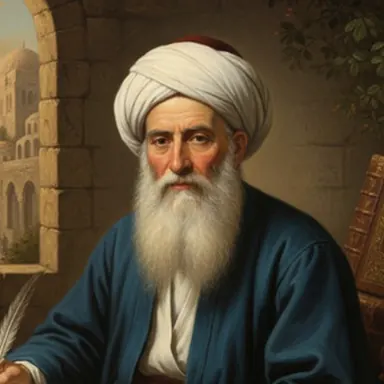
Illustration: Rabbi Elazar Azikri
Illustration from the podcast episode
Read the research
· 24 min
Listen
Watch the video
📜Sefaria
⬡Show in the network
🌌Show in the Tower of Generations
🔗The path to another sage

Listen to the episode

Podcast episode · Rabbi Elazar Azikri

Open in Spotify
The player loads from Spotify only when you click.
Open in Spotify

Watch the video

Rabbi Elazar Azikri

Open on YouTube (opens in a new tab)

Rabbi Elazar Azikri: Kabbalist, Poet, and Spiritual Leader of 16th-Century Safed

The video loads from YouTube only when you click.
Open on YouTube (opens in a new tab)

Core Concept

Mapping the personal service of God: every limb becomes a vessel of holiness – "within my heart I will build a sanctuary".

Biography

A kabbalist and member of the Safed circles, he founded a fellowship for repentance and devotion and wrote "Sefer Charedim"; his poem "Yedid Nefesh" became a prayer of the heart for generations.

Writings on Sefaria

The writings of Elazar ben Moshe Azikri can be read on Sefaria, a free library of Jewish texts. A title opens the text itself.

  • 📖Sefer Charedim(opens in a new tab)
📜All writings of Elazar ben Moshe Azikri on Sefaria(opens in a new tab)

Content from Sefaria (sefaria.org) and Wikimedia projects, non-profit projects.

Related sages2

Teachers1

  • Rabbi Moshe Cordovero (the Ramak)Acharonim

Influenced by1

  • Rabbi Yosef KaroAcharonim

The Road to Sinai

49 stations on the road
  1. MosesGeneration 1
  2. 41 more generations
  3. Rav Saadia GaonThe Epistle of Rav Sherira Gaon
  4. 4 more sages
  5. Rabbi Moshe Cordovero1522–1570
  6. Rabbi Elazar Azikri1533–1600

includes 2 inspiration linksThe generations follow the Rambam’s introduction to the Mishneh Torah. A dashed line is inspiration, not direct transmission.

✦Fly it in the TowerOpen the full path

Full research

2 documents·4,779 words· 24 min read

Contents24 min read

  1. The Torah Teaching and Spiritual Work of Rabbi Elazar Azikri
    • The Theological Foundations and Polemical Dimensions of Azikri's Teaching
    • The Anatomical Structure of the Commandments in Sefer Haredim
    • The Sukkat Shalom Fellowship and Social Organization in Safed
    • The Philosophy of Hitbodedut and Mystical Devekut
    • The Liturgical Poem Yedid Nefesh: A Literary and Theological Analysis of the Soul's Longing
    • An Ethical and Halakhic Synthesis for the Generations
    • Sources
  2. Rabbi Elazar Azikri: Poet, Kabbalist and Spiritual Leader in 16th-Century Safed
    • 1.0 Introduction: The Many-Sided Figure of a Sage of Safed
    • 2.0 His Growth in the Embrace of the Golden Age of Safed
    • 3.0 The Founding of the "Sukkat Shalom" Fellowship
    • 4.0 His Literary Work and Thought
    • 4.1.1 Sefer Haredim: A Road Map for the Service of God
    • 4.1.2 Poetry and Liturgical Verse: Expressions of the Yearning Soul
    • 4.1.3 Further Works: Commentary and Personal Thought
    • 5.0 Basic Principles of His Spiritual Teaching
    • 6.0 His Last Days and His Legacy
    • 7.0 Conclusion
Contents· 17 sections
  1. The Torah Teaching and Spiritual Work of Rabbi Elazar Azikri
    • The Theological Foundations and Polemical Dimensions of Azikri's Teaching
    • The Anatomical Structure of the Commandments in Sefer Haredim
    • The Sukkat Shalom Fellowship and Social Organization in Safed
    • The Philosophy of Hitbodedut and Mystical Devekut
    • The Liturgical Poem Yedid Nefesh: A Literary and Theological Analysis of the Soul's Longing
    • An Ethical and Halakhic Synthesis for the Generations
    • Sources
  2. Rabbi Elazar Azikri: Poet, Kabbalist and Spiritual Leader in 16th-Century Safed
    • 1.0 Introduction: The Many-Sided Figure of a Sage of Safed
    • 2.0 His Growth in the Embrace of the Golden Age of Safed
    • 3.0 The Founding of the "Sukkat Shalom" Fellowship
    • 4.0 His Literary Work and Thought
    • 4.1.1 Sefer Haredim: A Road Map for the Service of God
    • 4.1.2 Poetry and Liturgical Verse: Expressions of the Yearning Soul
    • 4.1.3 Further Works: Commentary and Personal Thought
    • 5.0 Basic Principles of His Spiritual Teaching
    • 6.0 His Last Days and His Legacy
    • 7.0 Conclusion

Document 1/2

The Torah Teaching and Spiritual Work of Rabbi Elazar Azikri

12 min read·2,460 words

Summary

This text surveys the spiritual and halakhic teaching of Rabbi Elazar Azikri, one of the prominent sages of Safed in the 16th century, with an emphasis on the unique combination of halakhic precision and mystical longing. The source details the innovative structure of "Sefer Haredim," which organizes the commandments according to the limbs of the body in order to sanctify matter, and discusses the practice of hitbodedut (secluded meditation) that he developed as a means of attaining divine devekut (cleaving to God) and purifying thought. In addition, the article analyzes the liturgical poem "Yedid Nefesh" as a literary expression of the soul's longing for its Creator, and Azikri's social work in founding the "Sukkat Shalom" fellowship. At the basis of it all stands the aim of presenting an ethical synthesis that makes the life of holiness accessible to every person, even within a complex and challenging material reality.

The Torah Teaching and Spiritual Work of Rabbi Elazar Azikri: Between Halakhic Rigor, Theological Polemic and Longings for Devekut in Golden-Age Safed

During the 16th century the town of Safed became a vibrant center of halakhic and kabbalistic creativity, which reshaped the face of Judaism in the generations that followed.[1] The geopolitical and social reality of the period was marked by deep instability in security and economy; the roads were in a state of constant danger, and merchants and travelers often had to wait until the wrath had passed in order to move by land or by sea.[2] In this historical climate, in which the physical dimension was fragile and prone to calamity, the sages of Safed turned to building protected and powerful spiritual worlds. This worldview combined supreme mystical devekut with uncompromising halakhic commitment, in the recognition that the Torah and faith represent a reality that is above limited human reason and logic, as Rabbi Yosef Karo formulated it.[3]

In the midst of this vibrant world grew the unique figure of Rabbi Elazar ben Moshe Azikri (1533–1600), a kabbalist, preacher and poet born in Safed.[1] His spiritual work was marked by a rare combination of broad halakhic scholarship with practical piety and inner contemplative withdrawal, as expressed in his personal writings and in his principal book, "Sefer Haredim."[1, 4] In his personal life Azikri conducted himself with abstinence and great holiness and was careful about unique mystical intentions in prayer; his writings record his personal supplication when reciting the blessing "and the fire-offerings of Israel and their prayer" in the Amidah prayer, in which he directed his intention toward the acceptance with love of the sacrifices, the prayers, the fasts and the souls of the righteous, while adding a personal prayer that his Torah works would be received with favor and that no mishap would come about through him.[3]

✦

The Theological Foundations and Polemical Dimensions of Azikri's Teaching

The Torah teaching of Rabbi Elazar Azikri is founded on the conception that the absolute purpose of the human being in the world is the fear of God and the keeping of His commandments, as Scripture sums it up in the verse "The end of the matter, all having been heard: fear God and keep His commandments, for this is the whole of man."[5] In Azikri's eyes, a person's material achievements, social standing, wealth or physical pleasures are devoid of any real value in themselves, and they acquire meaning only when they are subordinated to the service of the Creator.[5]

Alongside this ethical conception, Azikri's teaching includes a distinct theological and polemical layer directed against Christian theology. In his commentary on the commandment to love God ("And you shall love the Lord your God"), Azikri stresses that the command of love is directed solely toward the one and only God, and he firmly opposes attempts to divide the Godhead into parts or to anthropomorphize it.[6] This polemic takes on an especially sharp character when Azikri utterly rejects the application of the concept of divine love to Jesus, whom he describes in blunt language as one who "was separated from the others and entered the place of filth," that is, one born of a woman who passed through the physical process of birth, and therefore it is clear that he is not to be loved nor is any divinity to be ascribed to him.[6] This is a clear theological self-defense of the Jewish community of Safed against external influences, fortifying the concept of the absolute unity of the God of Israel.

✦

The Anatomical Structure of the Commandments in Sefer Haredim

Rabbi Elazar Azikri's most original structural contribution to the literature of the commandments is "Sefer Haredim."[1, 4] Unlike the accepted methods of classification, Azikri chose to organize the 613 commandments under the inspiration of the verse "All my bones shall say, Lord, who is like You."[1] This structure represents a somatic (bodily) conception of the Torah, according to which the human body serves as a kind of spiritual road map in which every physical limb and sense is meant to be an instrument of service for the fulfillment of specific commandments, and thereby to raise matter to a level of supreme holiness.[4]

The following table presents the monumental mapping of the commandments that Azikri carried out, dividing them according to the various limbs of the body, the source of their halakhic authority, and the spiritual meaning attributed to them in his teaching:

An in-depth analysis of this structure reveals the ontological hierarchy that Azikri attributes to speech as against physical action. The commandments dependent on the mouth and on speech stand at a higher spiritual level, because speech issues directly from the rational soul.[6] By contrast, the commandments of action require a person to involve his material body and to move his limbs, an act that involves coarser material elements.[6] This distinction explains why Torah study, which is based on rational speech, is greater in value than the material service of the sacrifices.[6]

This layer is directly connected to the traits of the soul, and in particular to the trait of joy and of contentment with little. In his commentary on the Book of Proverbs, Azikri stresses that the joyful heart is a direct outcome of the love of God.[8] A person who truly loves his Creator will rejoice in his portion and be content with the little material goods he has, out of the understanding that fear of God and closeness to Him are the true treasure, surpassing any material wealth accompanied by turmoil and worry.[8]

✦

The Sukkat Shalom Fellowship and Social Organization in Safed

The work of Rabbi Elazar Azikri was not confined to theoretical writing but took practical form through the founding of the "Sukkat Shalom" fellowship in Safed.[9] This fellowship was founded with the aim of uniting individuals with a shared spiritual aspiration and arousing them to constant repentance, to the refinement of character and to devekut with God.[9] The founding of the fellowship reflected the understanding that the private refinement of character necessarily leads to the repair of the whole, and that the national redemption and Israel's return to its land depend on the ability of individuals to create a sanctified and harmonious communal space.[9]

The importance of this fellowship stands out especially against the background of the harsh living conditions in Safed at that time, when there was constant danger on the roads from robbers and mortal perils, as the Mabit attests in his responsa.[2] The "Sukkat Shalom" fellowship offered its members a spiritual and social refuge from the threats of the outside world, and made the aspiration to inner and outer peace a foremost instrument for preserving the resilience of the community.[9]

✦

The Philosophy of Hitbodedut and Mystical Devekut

One of the most influential and profound contributions of Rabbi Elazar Azikri to the thought of mussar, Kabbalah and Hasidism is his development of the method of "hitbodedut."[10, 11] In his book Azikri defines hitbodedut as a practice in which a person, while alone, removes from his mind all the affairs of the material world and binds his thought directly to the Master of all.[12] Azikri stresses that this way was not invented in his own days but was practiced among the ancient pious ones (chasidim) of Israel.[12] This statement accords with the ruling of the Shulchan Arukh, which describes the early pious ones who would seclude themselves and concentrate in their prayer until they reached the level of divestment of corporeality and the strengthening of the power of the intellect, close to the level of prophecy.[12]

According to Azikri, hitbodedut is the central instrument that enables a person to attain several vital spiritual goals:

First, it is a necessary preparation for understanding the depth of halakha and for rendering a judgment that is true to its very truth, since only with a mind clear of distractions can a person penetrate to the Torah's truth.[13] Second, hitbodedut is the foundation for a searching self-examination, for pouring out one's speech and for asking pure forgiveness before God, acts that require complete tranquility of the soul.[10, 13] Third, it serves as a fence and barrier against sins of the tongue; Azikri cites the verse "he shall put on the holy linen tunic" (bad kodesh yilbash) as a hint that hitbodedut is the way to preserve the holiness of speech.[13]

Azikri's great innovation lies in his making hitbodedut accessible also to those who cannot withdraw physically from society. He states that true pious ones are able to seclude themselves in their minds with their Maker even while standing among a crowd of people and in the streets of a town, without the company of people disturbing their thought that cleaves to God.[13]

This spiritual legacy of Azikri made waves over the generations and deeply influenced the great figures of the mussar movement and of Hasidism.[10, 11] Central figures such as Rabbi Elimelech of Lizhensk, Rabbi Aharon the Great of Karlin, the Chofetz Chaim and Rabbi Nachman of Breslov adopted and expanded his method.[10, 11, 14] Rabbi Nachman of Breslov made hitbodedut and personal conversation with the Creator in one's mother tongue a supreme level that enables a person to be included in the light of the Infinite (Ein Sof).[10, 14]

In the modern halakhic world, Azikri's teaching on hitbodedut serves as a central point of reference in discussions concerning the practices of meditation and yoga.[12] Contemporary halakhic decisors have had to distinguish between meditations originating in the Far East that involve mantras of idolatry, and meditation and contemplation in pure holiness based on the hitbodedut and abstinence described by the author of "Haredim."[12] Azikri provided the halakhic and conceptual foundation for the existence of a kosher Jewish meditation, directed entirely toward devekut with the one God.[12]

✦

The Liturgical Poem Yedid Nefesh: A Literary and Theological Analysis of the Soul's Longing

The deepest expression of Azikri's longings for devekut is found in his famous poem "Yedid Nefesh," printed at the end of "Sefer Haredim."[1, 15] The poem, whose four stanzas form the initials of the Ineffable Name (Y-H-W-H), reflects the spiritual path of the soul that is sick with love for God and longs for its healing through seeing the radiance of His glory.[9, 16, 17]

The poem achieved enormous circulation in all the communities of Israel, but over the generations corruptions and changes of version entered it, reflecting differences of wording with deep theological and kabbalistic meanings.[9] The following table compares different versions of the poem and analyzes their sources and meanings:

The epithet "Yedid Nefesh" (Beloved of the Soul) itself carries a heavy historical and midrashic load.[9] Its conceptual source lies in Jeremiah 12:7: "I have given the beloved of My soul into the hand of her enemies."[9, 19] The Sages, in the midrash appearing in Tractate Menachot, connected the concept of "yedidut" (beloved friendship) to the triple relationship among Abraham our father, King Solomon, the tribe of Benjamin, the people of Israel and the Temple, all of whom are called "yedidim" (beloved ones).[9] The use of this epithet in the poem is not merely an expression of personal affection but a deep national supplication for the restoration of the days of closeness of the Temple, the dwelling place of the "Beloved."[9]

The request "Reveal Yourself, please, and spread over me, Beloved, the shelter of Your peace" (sukkat shelomekha) reconnects the poet's personal experience of devekut to the "Sukkat Shalom" fellowship that he founded in Safed.[9] Azikri hopes that the inner peace and holiness developed within the physical fellowship will receive a divine echo and bring about the spreading of an eternal and all-embracing "shelter of peace" over the whole earth, shining with the glory of the Creator and bringing nearer the time of the longed-for redemption.[9]

✦

An Ethical and Halakhic Synthesis for the Generations

The Torah teaching of Rabbi Elazar Azikri presents an exemplary synthesis between two seemingly opposed poles in the religious world: formal halakha with its meticulous details, and mystical devekut that strives to break through the boundaries of matter.[4] Through "Sefer Haredim," Azikri succeeded in showing that there is no contradiction between the two.[4] The fulfillment of the commandments by the limbs turns the physical human body into a refined spiritual instrument, and hitbodedut and pure prayer give the commandments their inner soul.[12, 13]

Azikri's legacy, formulated out of a fragile communal reality in 16th-century Safed [2], went beyond the boundaries of its time and place. It inspired mighty spiritual movements and established the understanding that holiness, the fear of God and the love of God are not luxuries for a select few but an accessible and demanding way of life meant for every person who strives to fulfill his purpose in the world.[5, 10, 11]

Sources19

  1. 1.אלעזר אזכרי – ויקיפדיה, he.wikipedia.org/wiki/אלעזר_אזכרי
  2. 2.חכמי צפת בין השנים , 0104 - 0451 מעמדם הדתי והחברתי, eyaldavidson.co.il/wp-content/uploads/2025/01/דוקטורט-בקובץ-אחד.pdf
  3. 3.הנהגות אמונה מעשית - תורת אמת, toratemetfreeware.com/online/f_05068.html
  4. 4.ספר חרדים | ספריית ספריא, sefaria.org.il/Sefer_Charedim
  5. 5.סדר היום בהלכה ובאגדה - תורת אמת, toratemetfreeware.com/online/f_01961.html
  6. 6.שלחן ערוך המדות - ג, toratemetfreeware.com/online/f_02558.html
  7. 7.קיצור ספר חרדים / מאת רבי אלעזר אזכרי (במאה ה- 16 בצפת), daat.ac.il/daat/mahshevt/kitsur/tohen.htm
  8. 8.ביאור:משלי טו - ויקיטקסט, he.wikisource.org/wiki/ביאור:משלי_טו
  9. 9.ידיד נפש – מילים, פירושים וביצועים | ר' אלעזר אזכרי | פיוט | הספרייה הלאומית – אתר הפיוט והתפילה, nli.org.il/he/piyut/Piyut1song_010001600000005171/NLI
  10. 10.התבודדות וגדולי ישראל - כה עשו חכמינו - שער ברסלב, breslev.org/breslev-articles/הפגישה-ההתבודדות-וגדולי-ישראל-כה-עשו/
  11. 11.גדולי ומאורי הדורות אומרים את דברם על מעלת ההתבודדות - שער ברסלב, breslev.org/breslev-articles/גדולי-ומאורי-הדורות-אומרים-את-דברם-על-מ/
  12. 12.ט – יוגה ומדיטציה | הרב נועם ברנפלד - הרחבות לפניני הלכה, ph.yhb.org.il/plus/20-14-09/
  13. 13.התבודדות - ספר פלא יועץ - אשובה, ashoova.co.il/ask/k/התבודדות-ספר-פלא-יועץ/
  14. 14.התבודדות | שאל את הרב - כיפה, kipa.co.il/שאל-את-הרב/התבודדות-4/
  15. 15.ידיד נפש: פיוט עתיק שכל כולו כיסופים וקרבה להקב"ה - פרשת יהדות, parashat.co.il/yedid-nefesh/
  16. 16.ידיד נפש - שירה עובדת, shira-ovedet.kibbutz.org.il/cgi-webaxy/item?2824
  17. 17.ידיד נפש סימן יה-וה - SONG-CIRCLE, song-circle.com/שירים/פיוטים/ידיד-נפש-סימן-יה-וה/
  18. 18.ידיד נפש - ויקיטקסט, he.wikisource.org/wiki/ידיד_נפש
  19. 19.חבר, רע וידיד יצאו לטיול בהיסטוריה, milimilim.co.il/חבר-רע-וידיד-יצאו-לטיול-בהיסטוריה

Document 2/2

Rabbi Elazar Azikri: Poet, Kabbalist and Spiritual Leader in 16th-Century Safed

12 min read·2,319 words

1.0 Introduction: The Many-Sided Figure of a Sage of Safed

Rabbi Elazar ben Moshe Azikri, who lived and worked in Safed between the years 1533 (5293) and 1600 (5360), is counted among the prominent and influential figures of the spiritual center of Safed in its golden age in the 16th century. He was the embodiment of the spiritual renaissance of Safed: his personality combined halakhic scholarship, kabbalistic depth, poetic talent and communal leadership, and he excelled in his ability to translate lofty mystical ideas into practical guidance and accessible emotional expressions.

Two central and enduring contributions secured his place in the history of Jewish thought: the composition of the famous poem "Yedid Nefesh," which became an inseparable part of prayer books, and the writing of "Sefer Haredim," a masterpiece in the field of ethics that is considered to this day a foundational book for defining the personal service of God.

This article will survey comprehensively his life, work, thought and legacy. On the basis of the existing sources, we will sketch a complete narrative of his personality and his contribution, in an attempt to understand the forces that drove his work and the deep influence he left behind. To understand his figure fully, one must first look at the unique spiritual environment in which he grew and worked: 16th-century Safed.

2.0 His Growth in the Embrace of the Golden Age of Safed

In the 16th century, in the shadow of the trauma of the expulsion from Spain, Safed became a vibrant spiritual and Torah center, a beacon of Torah, Kabbalah and intense longings for redemption. The town drew to itself a splendid community of spiritual giants, thinkers and kabbalists, who together created an atmosphere of spiritual intensity and messianic ferment. This environment was the fertile ground for the growth and development of Rabbi Elazar Azikri, who was born into it and became an inseparable part of it.

Rabbi Elazar was born in Safed in the year 1533 (5293), a descendant of a family of exiles from Spain. He grew up and was educated at the feet of the town's sages. Among his teachers were Rabbi Yosef Ashkenazi and the kabbalist Rabbi Yosef Sagis, who was the friend and colleague of Rabbi Yosef Karo on his rabbinic court. He was ordained to the rabbinate by Rabbi Yaakov Berab (the grandson of the renewer of ordination) and studied in the yeshiva of the greatest of the kabbalists of Safed at that time, Rabbi Moshe Cordovero (the Ramak). He was also deeply influenced by the teaching of the holy Ari (Rabbi Yitzchak Luria), who was active in Safed in the years 1570-1572, a short but decisive period in Azikri's life. The esteem was mutual, for the Ari himself held him in great respect.

The activity of Rabbi Elazar Azikri was part of a mighty spiritual symphony of sages who were active in Safed at that time. He lived and worked alongside persons who left their mark on Jewish history for generations, among them:

  • The Radbaz (Rabbi David ben Zimra)
  • Rabbi Shlomo Alkabetz (author of "Lecha Dodi")
  • The Ramak (Rabbi Moshe Cordovero)
  • Rabbi Yosef Karo (author of the "Shulchan Arukh")
  • Rabbi Chaim Vital (the foremost disciple of the Ari)
  • The Ari (Rabbi Yitzchak Luria)
  • Rabbi Yisrael Najara (liturgical poet and poet)

This background, a descendant of the exiles from Spain, a native of Safed, and a disciple and member of the circle of kabbalists who awaited redemption, shaped his consciousness and was the starting point for his spiritual and public activity.

3.0 The Founding of the "Sukkat Shalom" Fellowship

The founding of spiritual fellowships was a characteristic phenomenon in 16th-century Safed, and it served as a means of deepening the service of God, refining character and preparing spiritually for the longed-for redemption. Out of this sense of historical responsibility, Rabbi Elazar Azikri founded the "Sukkat Shalom" fellowship in the year 1588 (5348).

The central aim of the fellowship, as emerges clearly from his writings, was to arouse the people of Israel to complete repentance and to uncompromising devekut with God, as a direct response to the needs of the hour and as part of the overall messianic effort. In his introduction to his book "Sefer Haredim," Rabbi Elazar describes the vision of the fellowship:

"And it came to pass one day that we said: It is a time to act for the Lord our God, may He be blessed; He has promised us 'one who comes to purify himself is helped,' and said 'Open for Me, My sister, My beloved, an opening as small as the eye of a needle, and I will open for you an opening like the entrance of a hall.' Come, let us return to the Lord with all our strength, and let us also turn many back from iniquity, as He, may He be blessed, commanded us. Here in Safed we made a holy society and called its name Sukkat Shalom, and many gather to return with all their heart, (...) they will tremble to return with all their heart from iniquity to Him, may He be blessed, and to strengthen themselves in His commandments to perform them."

The founding of "Sukkat Shalom" was not merely an organizational act; it constituted the conceptual and practical foundation for the writing of his most important literary work, "Sefer Haredim," which was meant to serve as a guide for the members of the fellowship and for all of Israel.

4.0 His Literary Work and Thought

The rich literary enterprise of Rabbi Elazar Azikri is the most practical and refined expression of his spiritual aspirations. His works combine in a unique way the worlds of halakha, ethics, Kabbalah and poetry, and all are directed toward one goal: strengthening the bond between the human being and his Creator.

4.1.1 Sefer Haredim: A Road Map for the Service of God

"Sefer Haredim" is the masterpiece of Rabbi Elazar Azikri. The book was written as part of the aims of the "Sukkat Shalom" fellowship and was first printed in Venice in 1601, about a year after its author's death.

The book's uniqueness lies in its original structure: the classification of the commandments according to the various limbs of the body involved in their fulfillment (heart, eyes, mouth, hands, etc.). This conceptual basis rests on the verse "All my bones shall say, Lord, who is like You" (Psalms 35:10), and its aim is to turn the whole human body into a living and active sanctuary. Thus the book is not merely a list of commandments but a road map for turning all of physical existence into an instrument of service in the worship of the Creator, a kind of private "Tabernacle."

The book's contents are varied and include the foundations of faith, ethical admonition, the roots of the commandments and their branches, an emphasis on their kabbalistic aspect with quotations from the Zohar, and a special treatment of the commandments dependent on the Land. The book's name, "Haredim" ("Those Who Tremble"), was chosen to emphasize the fear and trembling required for the fulfillment of the commandments. The book became greatly beloved by the masses, and its influence is felt to this day; the author of the "Mishnah Berurah" recommended studying it, and it is told that the "Chofetz Chaim" used to give a regular lesson in it.

4.1.2 Poetry and Liturgical Verse: Expressions of the Yearning Soul

Alongside his halakhic scholarship, Rabbi Elazar Azikri had the soul of a poet. His poems show the influence of the liturgical poets of Spain, such as Rabbi Yehuda Halevi and Rabbi Abraham ibn Ezra, but he poured into them the spiritual-kabbalistic world of Safed.

His most famous liturgical work is "Yedid Nefesh." The author himself defined the purpose of the poem as "a petition for the unification and the desire of love." It was quickly accepted in the prayer books of the Sephardi and Ashkenazi communities and is recited to this day in many synagogues.

Beloved of the soul, merciful Father, draw Your servant to Your will; Your servant will run like a hart to bow down before Your splendor; for Your love will be sweeter to him than the honeycomb and every taste.

Glorious, beautiful, radiance of the world, my soul is sick with love for You; I beseech You, O God, heal her now by showing her the pleasantness of Your radiance; then she will be strengthened and healed and will be Your maidservant forever.

Ancient One, let Your mercies be stirred, and have pity, please, on the son of Your beloved; for it is so long that I have yearned and yearned to behold the glory of Your strength; I beseech You, my God, desire of my heart, hasten, please, and do not hide Yourself.

Reveal Yourself, please, and spread over me, Beloved, the shelter of Your peace; let the earth shine with Your glory, let us rejoice and be glad in You; hasten, Beloved, for the appointed time has come, and be gracious to me as in days of old.

The poetic peak of the idea of building the inner "Tabernacle," laid down as a foundation in "Sefer Haredim," appears in another poem by Azikri. In the immortal line "Within my heart I will build a Tabernacle for His radiance; my only soul will offer Him a sacrifice," he expresses the essence of his spiritual thought. According to this conception, the human heart becomes an inner sanctuary, the perpetual fire is the drive of desire turned to the service of God, and the sacrifice is the soul itself, dedicating all its wishes to the Creator. This idea, which later became famous in the shortened expression "Bilvavi Mishkan Evneh" ("In my heart I will build a Tabernacle"), inspired the later song of Rabbi Yitzchak Hutner.

4.1.3 Further Works: Commentary and Personal Thought

In addition to his central works, the scope of Rabbi Elazar Azikri's writing attests to his broad scholarship. Among his further works are:

  • Commentaries on Tractates Nedarim and Gittin of the Babylonian Talmud.
  • Commentaries on Tractates Berakhot and Beitzah of the Jerusalem Talmud (as well as a lost commentary on Tractate Pesachim).
  • "Milei di-Shemaya" ("Matters of Heaven"), a personal-mystical diary dealing with ethics, self-examination and the service of God.
  • From the whole of his works emerge clear basic lines of his spiritual teaching, deeply rooted in the Safed experience.

5.0 Basic Principles of His Spiritual Teaching

The thought of Rabbi Elazar Azikri is deeply rooted in the spiritual experience of Safed and focuses on the personal and national connection to holiness, in expectation of redemption.

Love of the Land of Israel is a central component of his conception, and it is expressed at length in his treatment of the commandments dependent on the Land in his book. For him, the bond with the Land was not an abstract idea but a spiritual and physical duty, and a longing that should beat in the heart of every Jew:

"...And every man of Israel must cherish the Land of Israel and come to it from the ends of the earth, with great longing, like a son to his mother's bosom..."

His kabbalistic outlook is another foundation of his teaching. His connections with the kabbalists of Safed, his studies with the Ramak and the influence of the Ari shaped his world. His standing in kabbalistic circles was high, as the sources attest regarding the great esteem in which the Ari held him, calling him "our master kabbalist, upon whom the holy spirit rests." Nevertheless, in a unique way, he refrained from writing explicitly kabbalistic books. Instead, he incorporated kabbalistic ideas into his books of ethics and halakha, thereby making them accessible to the broad public and contributing to their internalization in the daily service of God.

These ideas, together with his life and enterprises, secured the central place of Rabbi Elazar Azikri in the spiritual history of the people of Israel.

6.0 His Last Days and His Legacy

The life of Rabbi Elazar Azikri was a life of intensive spiritual activity, which left a deep mark on his generation and on the generations that followed. He combined Torah scholarship with public leadership, poetic creativity with ethical guidance, all out of love of Israel and longings for redemption.

Rabbi Elazar Azikri died in the year 1600 (5360) and was buried in his native town of Safed, in the ancient Jewish cemetery, near the grave of the holy Ari. For hundreds of years the exact location of his grave was lost, until its rediscovery on 11 September 2009. The identification was made possible, among other things, after the gravestone of his wife, Mazal Tov, was found nearby.

The enduring legacy of Rabbi Elazar Azikri is broad and varied. He is remembered not only as a sage and halakhic scholar but as a poet whose poem "Yedid Nefesh" is recited with longing in synagogues to this day, and as a man of ethics whose "Sefer Haredim" continues to guide and inspire students who seek to build "a Tabernacle in their hearts."

7.0 Conclusion

The figure of Rabbi Elazar Azikri is a mosaic of a 16th-century spiritual man of Safed, who masterfully synthesized the worlds of halakha, ethics, Kabbalah and poetry. His decisive contribution was his ability to translate the lofty ideals of Safed Kabbalah (the striving for devekut, the repair of the world and preparation for redemption) into the language of personal experience. He was not only part of the vibrant spiritual environment but also shaped it and contributed to making it a spiritual beacon.

His legacy lives on and continues to resonate in the hearts of worshippers and students hundreds of years after his death. His conception, which calls for making the body a sanctuary and the heart a Tabernacle, remains relevant and powerful, and secures his place as one of the most significant guides of Jewish spirituality.

External Links

📜 Sefaria📖 Wikipedia (he)🌐 Wikipedia🏛 National Library of Israel

Data source

Ozar Chachamim — Jewish Sages Knowledge Base

ID 74