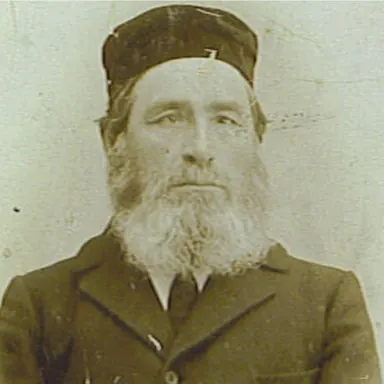
Rabbi Israel Salanter
17 min read3,304 words
Summary
This work surveys the activity of Rabbi Israel Salanter, founder of the Musar movement, who led a spiritual and psychological revolution in Lithuanian Jewry of the nineteenth century. The text analyzes how Salanter identified the limitations of purely intellectual study and developed a methodology for dealing with the "dark forces" in the human subconscious through work on character traits and emotional education. Beyond his theoretical thought, the source emphasizes his bold public leadership, the fierce controversies his movement generated in the world of the yeshivot, and the development of three central Musar schools: Kelm, Slabodka and Novardok. Ultimately, the article presents Salanter as a trailblazer who reshaped the moral character of the modern Jew and embedded responsibility for one's fellow as a supreme value standing at the heart of the service of God.
The Revolution of Consciousness of Rabbi Israel Salanter: A Comprehensive Study of His Work, His Torah Thought and the Influence of the Musar Movement on Modern Judaism
The nineteenth century in Eastern Europe was a period of radical changes in the life of the Jewish people. While Hasidism continued to take root in the south and the Haskalah began to penetrate from the west, the Lithuanian Torah world—the "world of the Misnagdim"—stood before a deep internal crisis. At the heart of this tension arose the figure of Rabbi Israel Lipkin of Salant (1810–1883), a thinker and spiritual leader who recognized that intellectual study alone is not sufficient to preserve the vitality of Judaism in the face of the challenges of modernity.[1, 2, 3] The Musar movement that he founded was not merely a call to personal piety, but a psychological and theological revolution that sought to reshape the personality of the believing Jew.[4, 5, 6] This report will analyze in depth his roots, his innovative psychological thought, his bold public activity, and the wide-ranging controversy that his movement aroused in the Lithuanian world of the yeshivot.
The Roots of Genius and the Formation of Personality in Salant
Rabbi Israel was born on 6 Cheshvan 5571 (1810) in the town of Zager in northern Lithuania, to a family steeped in the deepest Lithuanian tradition of talmudic scholarship.[1, 4] His father, Rabbi Ze'ev Wolf Lipkin, was the author of the book "Ben Aryeh" on the Shas and the Tur, and served as rabbi in major cities such as Telz and Goldingen.[1, 7] Already from his earliest years it was evident that the young Israel was no ordinary child; tradition tells that at the age of five he already mastered the Five Books of the Torah, and at the age of ten he knew most of the tractates of the Shas and their commentaries.[8] He was endowed with a rare combination of a sharp mind, quick comprehension, and an exceptional ability in pilpul that left the great figures of the generation astonished.[4, 7]
When he reached the age of 12, Israel was sent to continue his studies in the yeshiva in the town of Salant under Rabbi Tzvi Broida.[4, 9] There, within the walls of the study hall, his scholarly personality began to take shape, but the truly formative encounter took place with an apparently peripheral figure—Rabbi Yosef Zundel of Salant.[7] Rabbi Zundel, a distinguished student of Rabbi Chaim of Volozhin (who was a student of the Vilna Gaon), was a "hidden tzaddik" who sought to conceal his Torah genius beneath a cloak of simplicity and engagement in a trade.[7, 10] Rabbi Israel noticed Rabbi Zundel's noble conduct and began to follow him in secret in order to learn how a truly great person behaves in everyday life.[7]
The dramatic turning point occurred when Rabbi Zundel noticed the young genius's turmoil of soul and addressed him with the famous statement that changed the face of Jewish history: "Israel! Study Musar and be a God-fearing person."[7] This call made clear to Rabbi Israel that intellectual genius alone is lacking; without a systematic program for the rectification of character traits and a living fear of Heaven, Torah may remain "external" to a person.[7, 9] From that moment, Rabbi Zundel became his distinguished teacher in the ways of Musar and fear of God, and Rabbi Israel began to formulate what would later become the "Musar method."[9, 10]
An Innovative Psychological Doctrine: The "Dark Forces" and the Subconscious
Rabbi Israel Salanter's most original contribution to Jewish thought is the transformation of Musar from a field of religious preaching into a structured psychological system.[2, 5, 6] He was among the first to identify the complexity of the human soul, and in particular the existence of unconscious motives operating below the threshold of consciousness.[11, 12] Rabbi Israel called these forces "dark forces" (or "obscure forces"), and understood that they are what drive a person at a time of trial, much more than the dry halakhic knowledge that resides in the brain.[11, 12]
According to Rabbi Israel's analysis, the human being is a creature torn between two systems: the conscious, which includes knowledge and declared will, and the subconscious, which includes entrenched habits, desires and impulses.[6, 11, 13] He claimed that "it is easier to finish the Shas than to correct a single character trait," because correcting a character trait requires a change in the "dark forces" and not only intellectual learning.[8] In order to deal with this challenge, Rabbi Israel developed a methodology comprising several central principles:
- Study with emotional arousal: Rabbi Israel held that the study of Musar cannot be cold and theoretical. In order for the message to penetrate the subconscious and change character traits, it must be done with intense emotion, with a stirring melody and with enthusiasm ("limud be-hitpa'alut").[7, 14] Only a powerful emotional experience can leave an impression on the "dark forces."[14]
- Memorization and repetition: The use of techniques of memorizing short and catchy sayings of the Sages that relate to a specific character trait, again and again, until they become part of the automatic response of the soul.[7, 14]
- Feeling (Impression): Creating a situation in which a person "feels" the consequences of his actions. For example, instead of merely knowing that slander is forbidden, a person should imagine the pain he causes to his fellow and feel emotional revulsion at the sin.[10, 14]
- Seclusion and self-examination: Rabbi Israel instructed his students to set aside a fixed time for quiet seclusion, in which they would examine their hidden motives without pretense, and identify the pride or lust concealed behind deeds that appear to be "for the sake of Heaven."[6, 11, 15]
The understanding that rectifying character traits requires "work" (work on character traits) is what led to the establishment of the "Musar houses"—institutions where people could devote themselves to this psychological practice.[4, 9] Modern scholars, such as Hillel Goldberg and Immanuel Etkes, point to Rabbi Israel as an "early psychologist of the subconscious" who preceded Freud in understanding the multilayered structure of the soul, but did so within the framework of Torah and faith.[5, 11, 12]
Public Leadership and Displays of Halakhic Boldness
In 1840 Rabbi Israel was appointed head of the Rameilles Yeshiva in Vilna, and later established a yeshiva of his own in the city.[1, 7, 8] In Vilna, which was the center of Torah and Enlightenment in Lithuania, Rabbi Israel became one of the most popular and influential figures.[1, 4] His sermons, which were open to the general public and attracted thousands, focused on Musar and on the commandments between man and his fellow, emphasizing the religious duty to care for one's fellow.[1, 9]
The peak of his public leadership was expressed in the cholera epidemic that broke out in Vilna in 1848.[1] Rabbi Israel displayed exceptional leadership and halakhic boldness: he organized a network of hundreds of yeshiva students who tended the sick and supplied them with food and medicine, instructing them that saving a life overrides all the commandments, including Torah study.[1, 7] The most famous event took place on Yom Kippur of that year; fearing that the fast would weaken the public and cause the deaths of many, Rabbi Israel instructed the community not to fast.[1, 9] According to tradition, he ascended the platform in the Great Synagogue, recited Kiddush over wine and ate in front of everyone in order to remove fear from hearts and to demonstrate that the preservation of life is the supreme commandment at that hour.[1, 9]
This conception, which places the good of the human being at the center, characterized his entire halakhic path.[3, 16] Another prominent example is his reply to his students who wanted to know which "stringencies" and "fine points" they should be careful about when baking their matzot for the commandment.[7, 8] Rabbi Israel did not speak about the kashrut of the utensils or the temperature of the water, but replied sharply: "You must be careful not to shout at the orphan girls and widows who knead the dough."[7, 8] For him, the prohibition of harming an orphan or a widow was far more serious than any meticulous concern about leavening.[7]
The Musar Controversy: The Struggle over the Character of the Lithuanian Yeshiva
Despite his greatness in Torah, Rabbi Israel's innovation encountered sharp opposition from within.[15] The "Musar controversy" was a deep conceptual and Torah confrontation that divided the Lithuanian Torah world for decades.[15] The opponents, among them prominent rabbis such as Rabbi Yaakov Lifshitz, saw the Musar movement as a danger to the traditional model of Torah study.[15] Their central claims were:
- Neglect of Torah study: The concern that time devoted to the study of Musar would come at the expense of the study of the Gemara and the halakhic authorities, which are the core of Jewish life.[15] Rabbi Yaakov Lifshitz argued that Musar should be only "salt and spice," and not a central occupation.[15]
- Deviation from tradition: The claim that creating a new daily schedule in the yeshivot is a change from the way that generations of Torah scholars in Lithuania had studied.[15]
- Appeal to emotion: The concern that the focus on "emotional arousal" and feeling would draw the Lithuanians in directions reminiscent of Hasidism, from which they distanced themselves because of its preference for emotion over intellectual scholarship.[15]
- Melancholy and dejection: There were those who feared that excessive engagement with human sins and lowliness would lead students to sadness and depression instead of the joy of Torah.[15, 18]
The controversy reached its peak in yeshivot such as Slabodka, where in 1897 Rabbi Nosson Tzvi Finkel (the "Saba" of Slabodka) was forced to leave temporarily, and the yeshiva split into two separate yeshivot: "Knesset Yisrael" (supporting Musar) and "Knesset Beit Yitzchak" (opposing Musar).[15] In the Telz yeshiva too, a student rebellion broke out against the strict spiritual director, Rabbi Leib Chasman, which ultimately led to his departure.[15] Nevertheless, from a historical perspective, Rabbi Israel's vision prevailed; today, in almost all Lithuanian yeshivot there is a fixed "Musar seder," and the controversy has been almost completely forgotten.[15]
The Parting of the Ways: Kelm, Slabodka and Novardok
Rabbi Israel's distinguished students developed his teaching into three main branches, each of which represents a different aspect of the work of the soul [17, 19]:
1. The Kelm School (Rabbi Simcha Zissel Ziv)
The Kelm method focused on extreme "self-discipline" and "order."[18, 19] It advocated gradual and calculated work, eliminating the gap between speech and action, and cultivating the intellect as the ruler over emotion.[18] In Kelm they believed that a person must be master of himself at every moment, and that Musar is a long-term educational process that leaves no room for emotional shortcuts.[18, 19]
2. The Slabodka School (Rabbi Nosson Tzvi Finkel)
In contrast to approaches that emphasize human lowliness, Slabodka placed at the center the "greatness of man."[19] The goal was to cultivate in the student deep self-respect, out of an understanding that man was created in the image of God.[19] A person who recognizes the value of his lofty soul will feel "shame" at sinning or behaving with bad character traits.[19] This method was more relaxed in terms of lifestyle but very demanding in terms of spiritual awareness.[18, 19]
3. The Novardok School (Rabbi Yosef Yozel Horowitz)
Novardok represented the combative and extreme aspect of Musar.[19] It educated toward total contempt for public opinion ("worldly matters") and toward the violent shattering of personal pride.[19] The students of Novardok were accustomed to carry out "actions" of deliberate self-humiliation in order to free themselves from dependence on social approval and to reach absolute trust in God.[15, 19]
The Mission in Western Europe: Paris and Königsberg
In the last decades of his life, Rabbi Israel again displayed his sense of public responsibility when he turned to work in Western Europe.[1, 9] He understood that the danger to Judaism there was different from that in Lithuania; in the face of waves of secularization and assimilation in Germany and France, new tools were required.[7, 9] Rabbi Israel lived in Königsberg and Paris, where he worked to draw Jewish students closer and to strengthen the local communities.[1, 9]
One of his boldest projects was the attempt to translate the Talmud into one of the European languages (German or French).[1, 9] His aim was twofold: to make the treasures of the Jewish spirit accessible to the Christian world in order to remove prejudices, and to enable Jewish students who do not command Aramaic to study their sources.[1] He even aspired that the Talmud would be taught as an academic subject in Christian colleges.[1] Although he met with intellectuals and academics in Paris, the project did not come to fruition because of funding difficulties and a shortage of suitable staff, but the very initiative attests to his modern and broad outlook.[9]
The Literary Legacy and His Figure in Scholarship
Rabbi Israel Salanter did not leave behind many systematic books from his own pen, in accordance with his view that Musar is an "Oral Torah" that must pass from heart to heart.[8, 20] Nevertheless, his students and sons gathered his writings and sermons into several central works:
- Or Yisrael: The most important work, published by his distinguished student Rabbi Yitzchak Blazer.[8, 21] The book includes the famous "Iggeret HaMusar" and further letters detailing the foundations of his psychological and religious method.[21]
- Chokhmah u-Musar: Rabbi Israel's sermons, printed by his son, dealing with the combination of scholarship and fear of God.[8]
- Tevunah: A monthly journal founded by Rabbi Israel himself, which served as a platform for disseminating Musar ideas among Torah scholars.[15]
- Etz Peri and Imrei Binah: Pamphlets combining halakhic novellae with ethical guidance.[8]
In the twentieth century his figure became the subject of intensive research.[12] The work of Immanuel Etkes, "Rabbi Israel Salanter and the Musar Movement: Seeking the Torah of Truth," is considered the foundational study in the field, analyzing his figure as a trailblazer in Modern Orthodoxy.[5, 6] Hillel Goldberg, in his book "Israel Salanter: Text, Structure, Idea," emphasizes his role as a pioneer in the psychology of the subconscious.[11, 12]
His Personal Life and Family
Rabbi Israel's personal life was saturated with the tensions between the old world and the new.[1] His marriage to the daughter of Rabbi Yaakov Halevi Eisenstein gave him financial tranquility in his early years, as his wife managed the business and he devoted himself to study.[7, 9] Rabbi Israel had four sons and two daughters, some of whom continued in his path and some of whom symbolized the transformations of the generation:
- Yom Tov Lipman Lipkin: His most talented son, who left the world of the yeshivot and turned to academic studies in Western Europe.[1, 9] He completed a doctorate in mathematics and became famous for his inventions in mechanics (the Lipkin–Peaucellier mechanism), before his death at a young age.[1, 9] Rabbi Israel accepted his son's path with sorrow but continued to maintain a deep connection with him.[1, 9]
- Rabbi Yitzchak Lipkin: He served as rabbi in various cities and at the end of his days went up to Jerusalem, where he continued to disseminate his father's teaching.[1, 9]
- Rabbi Aryeh Leib Lipkin-Horowitz: He served as rabbi in Berezin and was the author of the book "Chayei Aryeh."[1, 9]
- His daughters: Malka Hinda and Hoda Liba married prominent Torah scholars, among them Rabbi Eliyahu Eliezer Grodzinski, father-in-law of Rabbi Chaim Ozer Grodzinski.[1, 9]
Rabbi Israel died on 25 Shevat 5643 (1883) in the city of Königsberg in Prussia.[1, 9] According to tradition, in his final moments, when he was alone with the gentile attendant in the hospital, Rabbi Israel occupied himself with calming the attendant's fear of death, and thus remained faithful to his method—concern for his own spirituality and for the materiality (and the feelings) of his fellow until his last breath.[16]
Summary and Conclusions: The Lasting Effect of the Musar Movement
Rabbi Israel Salanter succeeded in a task that seemed almost impossible: he created a new psychological language within the most conservative Torah world.[3, 10] The Musar movement was not merely a private rectification of individual people, but a structural change in the world of the Lithuanian yeshivot.[3]
Research and historical data point to three central long-term influences:
Changing the order of priorities in the yeshivot: Musar went from being a peripheral reading material to a binding "seder," which ensured that students would engage not only in the elucidation of Gemara topics but also in building their moral personality.[10, 15]
- Creating the leadership model of the "mashgiach": The figure of the spiritual mashgiach in yeshivot today is a direct product of the Musar movement, which sought to establish a figure whose main role is the education of the soul and not only the transmission of halakhic knowledge.[15]
- Fortifying Orthodoxy against modernity: By offering psychological depth, the Musar movement succeeded in keeping many young people within the Torah world, since it responded to emotional and existential needs that intellectual study alone did not satisfy.[3, 6]
Rabbi Israel Salanter remains an exemplary figure of the combination of Torah genius and uncompromising human sensitivity.[10] His teaching, which emphasizes that "your spirituality is your fellow's materiality," constitutes to this day one of the firmest moral pillars of Jewish thought, and continues to resonate in the study halls and in academic research alike.[16, 17] His greatest achievement was the ability to show that the Torah is not merely a collection of laws, but a powerful tool for refining the human soul and for turning the world into a better and more moral place.[3, 11]
Sources21
- 1.ישראל מסלנט - ויקיפדיה, he.wikipedia.org/wiki/ישראל_מסלנט
- 2.Rabbi Israel Salanter and the Mussar Movement: Seeking the Torah of Truth - Goodreads, goodreads.com/book/show/523033.Rabbi_Israel_Salanter_and_the_Mussar_Movement
- 3.134 שנה לפטירת מייסד תנועת המוסר רבי ישראל סלנטר - אמס, emess.co.il/radio/383805
- 4.דפי תנך - רבי ישראל מסלנט, sites.google.com/site/dapeytanakh/home/קישורי-מידע-במורשת/אנשים-מנהיגים/רבי-ישראל-מסלנט
- 5.Rabbi Israel Salanter and the Mussar Movement | The Jewish Publication Society, jps.org/books/rabbi-israel-salanter-and-the-mussar-movement/
- 6.Rabbi Israel Salanter and the Mussar Movement: Seeking the Torah of Truth - Google Books, books.google.com/books/about/Rabbi_Israel_Salanter_and_the_Mussar_Mov.html?id=Z82oW1OUXAsC
- 7.רבי ישראל סלנטר, גאון התורה והמוסר - ישיבת הר ברכה, yhb.org.il/shiurim/revivim-1668/
- 8.רבי ישראל מסלנט כל המידע - כה שבט פטירתו של רבי ישראל סלנטר - המאיר לארץ, hameir-laarets.org.il/hilulots/כה-בשבט-רבי-ישראל-ליפקין-מסַלַנְט/
- 9.ישראל מסלנט - איגוד יוצאי וילנה והסביבה בישראל, vilna.co.il/היסטוריה-ומורשת/אישים/רבנים-ואנשי-דת/ישראל-מסלנט/
- 10.פרק 2 – 'האדם דומה לכינור: אם הוא שלם בלי פגם, הריהו מנגן'. על רבי ישראל סלנטר ותנועת המוסר., jewstory.net/2_musar_movement/
- 11.Israel Salanter, Text, Structure, Idea: The Ethics and Theology of an Early Psychologist of the Unconscious - Google Books, books.google.com/books/about/Israel_Salanter_Text_Structure_Idea.html?id=xyHMx5p-hm0C
- 12.Mussar Movement History, mussar.center/books/history
- 13.On the Edge of the Abyss: The Jewish Unconscious before Freud [1 ed.] 0226838218, 9780226838212 - DOKUMEN.PUB, dokumen.pub/on-the-edge-of-the-abyss-the-jewish-unconscious-before-freud-1nbsped-0226838218-9780226838212.html
- 14.תנועת המוסר – ויקיפדיה, he.wikipedia.org/wiki/תנועת_המוסר
- 15.פולמוס המוסר – ויקיפדיה, he.wikipedia.org/wiki/פולמוס_המוסר
- 16.רוצה להיות צדיק? הטיפ המפתיע של רבי ישראל מסלנט - הידברות, hidabroot.org/article/1200059
- 17.כל זמן שהנר דולק / על ר' ישראל מסלנט - ערוץ מאיר - אתר היהדות הגדול בעולם, meirtv.com/alon-2054/
- 18.תנועת המוסר – ויקישיבה - אתר ישיבה, yeshiva.org.il/wiki/index.php/תנועת_המוסר
- 19.10 עובדות שלא ידעתם על הסבא מסלבודקה, הרב נתן צבי פינקל זצ"ל - הידברות, hidabroot.org/article/190676
- 20.כתבי ר' ישראל סלנטר - מוסד ביאליק, bialik-publishing.co.il/salanter
- 21.אור ישראל | ספריית ספריא, sefaria.org.il/Ohr_Yisrael