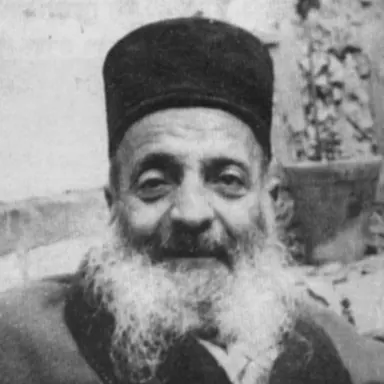
Rabbi Yitzchak Alfiya: A Central Figure in the World of Kabbalah and Sephardic Leadership in Jerusalem
15 min read2,915 words
Summary
This text surveys the life and spiritual contribution of Rabbi Yitzchak Alfiya, a central figure in the world of Kabbalah and Sephardic leadership in Jerusalem in the first half of the twentieth century. The article traces the course of his life from his childhood in Aram Tzova until his ascent to the Beit El yeshiva, stressing the extreme humility that characterized him alongside his deep mastery of the esoteric teaching. The central axis of the writing deals with his innovative public undertakings, foremost among them the institutionalization of the "fast of speech" as a spiritual substitute for a physical fast and the founding of the "Or Chadash" society, which sought to make Torah study accessible to all strata of the people. Through a detailed account of his Torah writings and of how he coped with the events of the British Mandate period and the War of Independence, the source presents the Rabbi as a living bridge between the preservation of ancient traditions and an active leadership that seeks to repair society and to arouse heavenly mercy upon Israel.
The Teaching and Work of the Kabbalist Rabbi Yitzchak Alfiya: A Central Figure in the World of Kabbalah and Sephardic Leadership in Jerusalem
The figure of the kabbalist Rabbi Yitzchak Alfiya represents a splendid and many-layered chapter in the history of the Jewish community in the Land of Israel in general, and in the history of the Sephardic sages of Jerusalem in particular. His activity, which spanned the first half of the twentieth century, is not confined within the four cubits of the kabbalists' yeshiva "Beit El," but bursts into the public sphere through social reforms, innovative educational initiatives and a spiritual leadership that sought to bridge the revealed and the hidden worlds, and the conservative tradition of the Aram Tzova community with the changing reality of Mandatory Eretz Israel and the early days of the State.[1, 2, 3]
Family Roots and the Shaping of Spiritual Identity in Aram Tzova
Rabbi Yitzchak Alfiya was born on 18 Shevat 5638 (1878) in the city of Aleppo, known by its traditional name Aram Tzova, in Syria.[1, 2, 3] This community, renowned for its adherence to ancient customs and its profound scholarship, served as his first intellectual home. His father, the kabbalist Rabbi Yaakov Chaim Yisrael Rafael, was a central figure in the Kabbalah of Aleppo, and his mother Sarah (known as Tzlacha) died when he was only about five years old.[1, 3, 4] His early orphanhood led to his being raised in the home of his paternal grandfather, Rabbi Yitzchak Yeshayahu Alfiya, after whom he was named.[1, 2, 3]
The grandfather's influence on his grandson was decisive. The grandfather not only raised him physically but also shaped his Torah and halakhic outlook, and even ordained him as a ritual slaughterer—a profession that served Rabbi Alfiya as a modest livelihood for many years, out of a desire to remain independent of the public purse.[1, 2, 3] Rabbi Alfiya's family was broad and ramified, and included his brothers Rabbi Yeshayahu Shaul and Rabbi Mordechai Moshe, and his half-sister Tzlacha.[1, 4]
Settling in Jerusalem and the Connection with the Beit El Yeshiva
Upon his ascent to Jerusalem, Rabbi Alfiya settled in the Old City, the very heart of the spiritual life of Israel at that time. He began his studies at the kabbalists' yeshiva "Beit El," an institution that was the world center for the dissemination of the teaching of the Rashash (Rabbi Shalom Sharabi) and the kavvanot of the Ari.[1, 3, 5] In this yeshiva, Rabbi Alfiya was exposed to the most rigorous speculative and practical Kabbalistic tradition, which stresses the power of prayer said with intention and the importance of spiritual rectifications for the redemption of the Divine Presence.[6]
Despite his acknowledged greatness in the revealed and the hidden Torah, Rabbi Alfiya excelled in extreme humility. In the introduction to his book he describes himself in these words: "If my intellect falls short of grasping the wisdom of the plain meaning, all the more so with regard to its secrets, the wisdom of Kabbalah and its supernal mysteries."[1] He claimed that the epithet "Chacham" attached to him was no more than a gesture of respect to his late grandfather.[1] This humility did not prevent him from becoming one of the greatest kabbalists of his generation, with disciples such as Rabbi Menachem Menashe and the kabbalist Rabbi Ovadia Hadaya, author of Yaskil Avdi, seeing in him a supreme spiritual authority.[1]
His connection with Rabbi Ovadia Hadaya is particularly significant for understanding the spiritual network in Jerusalem. Both acted within the tradition of the Beit El yeshiva, which constituted a central axis of esoteric Kabbalah focused on the kavvanot of the Rashash.[6] They were part of a vibrant center of Kabbalistic life in Jerusalem, which stood in contrast to certain historiographical conceptions that regarded Kabbalah at that time as a "dying ember."[6] Their joint activity included the dissemination of rectifications, prayers and customary literature among the wider public, while making the esoteric accessible to the masses in a controlled manner.[6]
Public Activity and the Founding of the "Or Chadash ve-Tzemach Tzaddik" Society
In 5667 (1907) Rabbi Alfiya was called to serve as a member of the rabbinical court in Jerusalem, a prestigious position by any measure.[1, 2, 3] After a short time, however, he chose to resign from his official post, apparently out of a desire to devote his time to freer public activity and to personal study, far from the formal rabbinic establishment.[1, 2, 3]
In 5680 (1920) he founded, together with other rabbis, the "Or Chadash ve-Tzemach Tzaddik" society.[1] The center of the society was established in the synagogue of the Misgav Ladach hospital in the Old City.[1, 2, 3] The aim of the society was revolutionary for its time: to create a framework for communal Torah study intended for Jews from all strata of the population—from outstanding Torah scholars to simple craftsmen.[1, 2, 3] Rabbi Alfiya personally attended to all the needs of the yeshiva, from raising donations to providing for the students' sustenance. In this context his moral scrupulousness stood out; he refused to accept donations from people who did not observe the Sabbath, out of a conviction that purity of money is essential to the sanctity of study.[1]
The society did not engage only in theoretical study but also in social and spiritual repair. Rabbi Alfiya brought together Torah scholars who engaged in the study of Kabbalah at the Beit El yeshiva and saw to their salaries, thereby ensuring the continued existence of the tradition of the Rashash in Jerusalem.[1] The society's regulations and the letters of support for it, published later, testify to the great esteem in which it was held by public figures and rabbis of all communities.[7]
The Stay in the Colony of Rishon LeZion and the "Olei Regalim" Society
A fascinating chapter in Rabbi Alfiya's life took place in 5671 (1911), when he moved to live in the colony of Rishon LeZion.[1, 2, 3] The move from the enclosed Old City to one of the first colonies of Zionism symbolizes his willingness to act in new spaces. In this colony he founded the "Olei Regalim" society, a group of about 50 members who took care to ascend to Jerusalem every festival in order to observe a remembrance of the commandment of pilgrimage.[1, 2, 3] This initiative sought to strengthen the connection between the new settlement and the spiritual center in Jerusalem.
For four years Rabbi Alfiya served as a teacher (melamed) of boys at the local school in Rishon LeZion.[1] However, when he learned that the school was supported financially by parties defined as "secular" (apparently organizations that promoted free education), he took an unprecedented step: he resigned from his post and returned all the salary he had received over the four years, despite his straitened financial situation.[1] This act demonstrates his unwillingness to compromise on the independence of Torah education and the moral exactitude that he demanded of himself.
The Undertaking of the "Fast of Speech" and His Moral-Kabbalistic Teaching
Rabbi Yitzchak Alfiya's most identifiable contribution to the Jewish world today is the dissemination of the concept of the "fast of speech" (taanit dibbur).[2, 8] Although the custom was mentioned in earlier sources, it was Rabbi Alfiya who turned it into a mass movement and arranged for it the orders of prayer and study that are accepted today.[8, 9]
The Philosophy Behind the Silence
Rabbi Alfiya held that in recent generations the strength of the body has weakened, and that observing physical fasts could lead to the neglect of Torah study or to harm to health.[9, 10] The fast of speech, by contrast—total abstention from mundane talk and the dedication of the mouth to Torah study and prayer—was in his view a greater rectification.[8, 9] He argued that the mouth, which is the source of social and spiritual sins (slander, falsehood, foul language), is the instrument through which the rectification must be carried out: "not to put food in—and not to let mundane speech out."[10]
According to his teaching, the fast of speech has special propitious value when it is observed in public.[9] He disseminated the idea that these fasts should be observed especially during the days of Shovavim (the weeks in which the Torah portions from Shemot to Mishpatim are read), a period traditionally designated for the rectification of sins.[8, 11] In addition, he stressed the exceptional merit of the fast of speech on the Sabbath day, since on the Sabbath it is more grave to speak forbidden words than on a weekday.[9] The custom generally includes reading the entire Book of Psalms three times in succession, an act regarded as having tremendous atoning power.[9]
Worldwide Dissemination and the Prayer of Advocacy
Thanks to his efforts, the custom spread from Jerusalem to many Jewish communities around the world.[8] Rabbi Alfiya composed a special "prayer of advocacy" (tefillat sanegoria), recited before the open Ark during the days of the fast.[2, 12] This prayer was intended to arouse heavenly mercy upon the people of Israel, emphasizing the merits of Israel against their accusers. Rabbi Nissim Peretz of blessed memory, one of the great kabbalists of the last generation, was accustomed to recite this prayer with great emotion in the study hall of the "Beit El" institutions in Bnei Brak, adding personal supplications, and thus continued the legacy of Rabbi Alfiya.[12]
His Literary Output: Between the Revealed and the Hidden
Rabbi Yitzchak Alfiya's books constitute a mosaic of his Torah thought. Many of them were printed in first editions in Jerusalem and received approbations and praise from the great figures of the generation.[5]
- Kuntres ha-Yechieli (5688): a book in three parts dealing with practical halakha and spiritual conduct.[5] It discusses the honor due to the synagogue, the laws of the mezuzah, the parapet, terumot and maaserot, and the laws of burial and mourning.[5, 13] The book reflects his punctiliousness down to the tip of the yod in the customs and conduct of the Jewish home.
- Siach Yitzchak (5683): this work is divided into two; the first part includes special prayers at the graves of the righteous, supplications and rectifications, and the second part contains Torah novellae and homilies.[2, 3, 14]
- Yair Nativ (5699): in this work Rabbi Alfiya explained the merit and order of the study of "Torah for its own sake" in a group of ten.[5] He instituted a structured curriculum that combines most of the foundational books of Judaism, with the aim of creating broad mastery among the learners.[2, 5]
- Ahavat Hashem (5703): this book deals with the preservation of the customs of Israel and the absolute prohibition against following the ways of the nations.[3, 5, 14] Rabbi Alfiya saw a change of customs as an existential spiritual danger, and based his words on sources from the Zohar, the Talmud and the Midrashim.[3, 5] The book also focuses on the customs of funerals and mourning, with a warning against adopting modern-secular patterns of behavior.[3]
- Reach le-Yitzchak (5694): a collection of Kabbalistic teachings that includes homilies and rulings from his father, the kabbalist Rabbi Yaakov Alfiya.[5, 13, 14] Through this book Rabbi Alfiya preserved the teaching of his family and bequeathed it to the wider public.
- Or Chadash ve-Tzemach Tzaddik: a book detailing the orders of the fast of speech, its merits, and the propitious power of Psalms, alongside homilies and responsa letters.[13, 14, 15]
Formative Events and the Historical Context
Rabbi Alfiya's life was not free of geopolitical upheavals. During the Second World War, following a dream he had, he set out on an extraordinary journey to Egypt.[1, 2] He obtained permission from the military governor and traveled on a military train in order to pray at the grave of the righteous Rabbi Yaakov Abuhatzeira (author of Makhsof ha-Lavan), in the belief that this prayer would stand in the people of Israel's favor in its difficult hours.[1, 2]
The Tragedy of 5708 and the Loss of the Manuscripts
The hardest blow, on the personal and Torah level, struck him in 5708 (1948).[14] During the battle for the Jewish Quarter of the Old City, Rabbi Alfiya acted in a desperate attempt to leave ten Jewish families in the Quarter under Jordanian rule, out of a desire to preserve the Jewish presence in the holy place.[2, 14] The attempt failed, and he was exiled, together with the rest of the Quarter's residents, to the new neighborhoods of Jerusalem.[1, 2, 14]
During the evacuation and relocation, most of his manuscripts and works that had not yet been printed were lost.[1, 2, 14] This is a significant historical loss, since a considerable part of his Kabbalistic and halakhic teaching that had been preserved in writing vanished forever.[14] Only the books that had already been published earlier survived and became the basis of his legacy.
Connections with the Sages of His Generation and His Worldview
Rabbi Alfiya was an integral part of the spiritual elite of Jerusalem. He gathered around him many kabbalists, and even saw to their salaries from donations.[1] His influence reached Rabbi Mordechai Eliyahu of blessed memory, who related that his father (Rabbi Salman Eliyahu) saw in Rabbi Alfiya one of the thirty-six righteous ones of the generation.[2]
In the political and national sphere, his Kabbalistic teaching at times provided an interpretation of modern processes. Although he maintained a strict conservative line in matters of custom, his connections with figures such as Rabbi Ovadia Hadaya show that in the Kabbalistic world of Jerusalem of that period there was room to grant a "divine-messianic" validity to the processes of the return to Zion, while addressing the challenges of technology and secularization through the prism of the practices of the Rashash.[6]
His homilies, which deal with love of Israel, charity and lovingkindness, stress the importance of the unity of the people.[13] He taught that charity, which is called "a little" (me'at), extinguishes a great transgression, as it is written, "Yet a little while (od me'at), and the wicked shall be no more," thereby emphasizing the value of every small act for the good.[13]
His Final Years and Legacy for the Generations
Rabbi Yitzchak Alfiya passed away on 13 September 1955 (26 Elul 5715) after an illness.[2] He was buried in the rabbis' section of Har HaMenuchot in Jerusalem.[2] After his death, a fund was established for the publication of his books, which worked to preserve and disseminate his remaining writings.[2, 3]
His legacy lives on today through thousands of Jews who observe the worldwide "fast of speech" every year, and through the study halls that continue to study by his methods.[8, 12] He remains a symbol of a leader who combines personal asceticism and supreme holiness with a deep and simple concern for every Jew, standing firmly on guard over tradition and custom.
Rabbi Alfiya's Torah teaching shows that precisely out of silence and self-restraint a person can reach high spiritual levels and influence physical and political reality. His standing on the boundaries of custom and his preservation of the Aram Tzova tradition in Jerusalem set up a barrier against processes of cultural assimilation, and gave Sephardic Judaism a powerful instrument of religious renewal without losing its ancient roots. His work to make Kabbalah accessible through practical rectifications and egalitarian study made him one of the most influential figures in shaping the face of Sephardic religiosity in the twentieth century.
Sources15
- 1.המקובל רבי יצחק אלפייה - MyTzadik, mytzadik.com/m/tzadik.aspx?id=866
- 2.שיח יצחק המנוקד / ר' יצחק אלפייה זיע"א - אוצר הספרים, sefer.org.il/items/3734078-שיח-יצחק-המנוקד-ר-יצחק-אלפייה-זיע-א
- 3.Ahavat HaShem : Rabbi Yitzchak Alfia - Seforim Center, seforimcenter.com/Ahavat-HaShem--Rabbi-Yitzchak-Alfia__p-15292.aspx
- 4.Rabbi Yaakov Chaim Israel Refael Alfiya - Tzadikim - Daily Zohar, dailyzohar.com/tzadikim/287-Rabbi-Yaakov-Chaim-Israel-Refael-Alfiya
- 5.Lot 49 - שלושה ספרי המקובל רבי יצחק אלפיה עם חותמת המחבר - מהדורה ..., moreshet-auctions.com/auction/174-מכירת-קודש-כולל-he/lot-49-שלושה-ספרי/
- 6.קבלה , לאומי ות ומודרנה - משנתו ההגותית - קבלית של הרב ... - ResearchGate, researchgate.net/profile/Nathaniel-Hershkovitz/publication/322855378_Kabbalah_Nationalism_and_Modernity_The_Kabbalistic_Thought_of_Rabbi_Ovadia_Hadaya_Hebrew/links/5a72e7674585155120768009/Kabbalah-Nationalism-and-Modernity-The-Kabbalistic-Thought-of-Rabbi-Ovadia-Hadaya-Hebrew.pdf
- 7.| Page 942 | קדם בית מכירות פומביות בע״מ - Kedem Auctions, kedem-auctions.com/he/search?page=941
- 8.תענית דיבור בשבת ור''ח | שאל את הרב - כיפה, kipa.co.il/שאל-את-הרב/תענית-דיבור-בשבת-ורח/
- 9.פרשת בא – תיקון השובבים | הרב שמואל אליהו | בית המדרש - אתר ישיבה, yeshiva.org.il/midrash/14972
- 10.️ ימי השובבים ותיקון הברית – סוד ה־40 יום, שם הוי"ה במילוי ותענית הדיבור של רבי יצחק אלפיה, youtube.com/watch?v=tth-q1sp918
- 11.תענית דיבור - ויקיפדיה, he.wikipedia.org/wiki/תענית_דיבור
- 12.תענית דיבור העולמית ותפילת הסנגוריה תשע"א - פרדס נסים, pardesnissim.com/international-speech-and-5771-advocacy-prayer/
- 13.חכם יצחק אלפייה - החכם היומי, hyomi.org.il/חכם-יצחק-אלפייה
- 14.יצחק אלפייה – ויקיפדיה, he.wikipedia.org/wiki/יצחק_אלפייה
- 15.ספרי אר”ץ - המרכז העולמי למורשת יהדות ארם צובא, aleppojews.com/ספרי-ארץ/