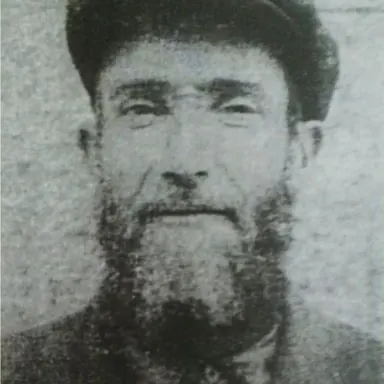
The Torah Thought and Public Work of Chacham Menachem Menashe: A Historiographical, Intellectual and Structural Analysis of the Author of "Ahavat Chaim"
19 min read3,762 words
Summary
This survey presents the life and teaching of Chacham Menachem Menashe, an exemplary figure who served as a spiritual bridge between the tradition of Turkish Jewry and the renewed Torah center in the Land of Israel. The text portrays him as a hidden righteous man who combined opposites, who toiled as a tinsmith for his livelihood by day and delved into the study of Kabbalah by night, while founding the "Ahavat Chaim" society for works of kindness and education. A central component of the work is its analysis of his popular book "Ahavat Chaim," which makes homily, halakha and tales accessible in clear language to the broad public, and reflects his ethical teaching, which emphasizes love of Israel and concern for the needy. Ultimately, the source seeks to commemorate a leader who devoted his life to spiritual and social repair, whose legacy continues to beat to this day in educational institutions and in his literary works.
The spiritual history of the Jewish settlement in the Land of Israel in the twentieth century is characterized by a dramatic transition from the old world of tradition, as it was shaped in the communities of the Ottoman Empire and the East, to the building of a new Torah center responding to the challenges of modernity, Zionism and the establishment of the State. At the heart of this process stands the multidimensional figure of Chacham Menachem Menashe, of blessed memory (1892–1968), a figure who embodies apparent opposites: a Kabbalist sage hidden from every eye who worked as a simple laborer for his livelihood, and a prolific public leader who founded charitable organizations and Torah institutions; a productive author who composed a classic work of wide scope, and a man of toil who walked the alleys of Jerusalem to collect penny by penny for orphans.[1, 2, 3] An analysis of his work reveals a spiritual influence that serves as a bridge between generations and between cultures, which left an indelible mark on the Jewish bookshelf and on the social structure of the Sephardic community in Jerusalem and beyond.[2, 4]
The Roots in Turkey: The Shaping of a Torah Personality in the Shadow of the "Saba Kadisha"
The figure of Chacham Menachem Menashe grew out of the rich spiritual soil of Turkish Jewry in the closing period of its golden age. He was born in 5653 (1892) in the village of Kayik near the city of Bursa, a place where ancient traditions of the sages of Spain had been preserved.[3] His family was steeped in fear of Heaven, and his father, Chacham Yaakov Menashe, served as his first guide in Torah and in character traits. His childhood years, however, were full of hardship; at the age of only ten he was orphaned of his father, an event that shaped his deep sensitivity toward orphans and widows, which would accompany him throughout his adult life.[2, 3]
Following his father's death, the young Menachem moved to the great spiritual center of Istanbul. There, despite his poverty and orphanhood, he joined the city's yeshivas and won recognition from the leading sages. The most significant encounter in these years was with the "Saba Kadisha," Rabbi Shlomo Eliezer Alfandari, who was considered one of the great men of the later generations.[2, 3] Alfandari, who was known for his asceticism and his firmness in matters of halakha, identified in Menachem Menashe the spiritual potential within him and became for him a model of the combination of Torah genius with piety and self-denial.[3] In 5671 (1911) he married Esther Haraz, a righteous woman who stood by his side throughout all the trials of his life, and together they began to build their home on the foundations of the rooted Sephardic tradition.[2]
The Crucible: His Service in the Ottoman Army and Its Consequences
The outbreak of the First World War interrupted the routine of Chacham Menachem's life. In 5673 (1913) he was conscripted by force into the Ottoman army, a service that lasted throughout the years of the war and put his faith to the most difficult tests.[2, 3] Military service in field conditions, in an enemy state that was waging bloody battles, required Menachem Menashe to develop strategies of spiritual survival. He used to study Torah at night inside the army tents, hiding a small candle so that the officers would not discover him.[3] Evidence of this can be found in stories that he used to smuggle in wine for Kiddush and kosher bread, risking heavy physical punishment. On one occasion he was caught by an officer and brutally beaten, but even then he did not retreat from his devotion to the commandments.[3]
This experience in the Ottoman army was not merely a period of suffering but a formative stage in his approach to "love of Israel." There, among the simple Jewish soldiers, Chacham Menachem saw the thirst for the word of God and the need for spiritual strengthening in hours of crisis. In those years he made his famous vow: if he merited to survive the inferno, he would go up to the Land of Israel and dedicate his life to spreading Torah and helping the needy in Zion.[2] His survival of the war was regarded by him as an open miracle that obligated him to total devotion to his public mission.
Settling in Jerusalem: A Tinsmith by Day and a Kabbalist by Night
The immigration to the Land of Israel, which took place between 1915 and 1918 (5675–5678), marked the beginning of the Jerusalem chapter of his life.[2, 3] Chacham Menachem chose to settle in the Beit Yisrael neighborhood, a neighborhood that was known for its population of sages and laborers. His choice of a way of life of "concealed conduct" was conscious and deliberate. In order not to enjoy the crown of Torah, and in order to preserve an anonymity that would allow him to engage in Kabbalah and in tikkunim without attracting attention, he worked for his livelihood as a tinsmith (a smith).[1, 5]
The tinsmith's work, which was hard and dirty physical labor, served him as a kind of mask. During the daytime he appeared as a simple laborer providing for his family, but from nightfall until dawn he became one of the pillars of the Jerusalemite world of Kabbalah.[3, 4] This combination of "Torah and labor" in its Sephardic-Kabbalistic version placed him in the same line as other hidden sages in the Jerusalem of that time, who saw manual labor as a religious value that ensures the purity of intentions.[4]
The Torah Network of Connections: Rabbi Fatiya and Rabbi Alfiya
In Jerusalem, Chacham Menachem became an integral part of an inner circle of Kabbalists. He attached himself to the Kabbalist Rabbi Yitzchak Alfiya and became his close disciple.[1] The bond between the two deepened when Chacham Menachem joined in the tikkunim and the fasts of speech that Rabbi Alfiya organized, and drew from him knowledge of the hidden Torah.[1, 6]
With the arrival in Jerusalem, in 5694 (1934), of the renowned Babylonian Kabbalist Rabbi Yehuda Fatiya, Chacham Menachem found in him another teacher and guide. He became Rabbi Fatiya's right-hand man, and assisted him in conducting tikkunim for souls, writing amulets according to Kabbalah, and organizing mass prayers.[1] These awe-inspiring figures regarded Chacham Menachem Menashe as a "righteous man, foundation of the world." Rabbi Mordechai Sharabi, who was revered by the entire Jerusalem public, testified about him that he was counted among the thirty-six hidden righteous men of the generation, and even noted that he saw a "pillar of fire" above his head during his prayer.[4, 7]
The "Ahavat Chaim Society": The Institution and the Vision
In 5690 (1930) Chacham Menachem decided to turn his informal activity into an institutionalized organization, and so the "Ahavat Chaim Society" arose.[1, 5] The name "Ahavat Chaim" was not chosen by chance; it reflected his conception that the Torah is a "Torah of life" founded on love: love of God, love of Torah and love of Israel.
Spiritual Dissemination and Fasts of Speech
The society set itself the goal of spreading Torah among the broad public, especially among those who could not devote all their time to study in the yeshivas. Chacham Menachem established daily Torah classes in simple and accessible language, with an emphasis on ethics and practical halakha.[1, 5] One of the society's central and distinctive activities was the organization of mass fasts of speech, especially during the days of the "Shovavim" (the weeks of the Torah portions from Shemot to Mishpatim).[1, 8] He believed that the power of silence, and of focusing on study and prayer for an entire day, was capable of annulling harsh decrees against the people of Israel.
During the Second World War, when the Nazi threat reached the very gates of the Land of Israel, the "Ahavat Chaim Society" became a focal point of outcry and prayer. Chacham Menachem organized special tikkunim and prayers at the graves of the righteous for the welfare of the inhabitants of the Land and for the end of the war.[1] His view was that intensive spiritual activity in the hidden realm is the key to physical salvation in the revealed realm.
Works of Kindness and "Giving in Secret"
Alongside its spiritual activity, the "Ahavat Chaim Society" served as a community welfare center. Chacham Menachem was known for his extraordinary righteousness; he himself would collect funds and distribute them to the needy by way of "giving in secret" so as not to shame the recipients.[1, 2] He cared especially for widows and orphans, remembering his own orphanhood in Turkey. One of his practices was to visit poor families on the eves of Sabbaths and festivals and leave baskets of food at their door without their knowing who the benefactor was.[4]
Testimony to his devotion can be found in the story of raising funds for the wedding of an orphan groom. The sages of the Porat Yosef Yeshiva, who recognized his abilities and his generous heart, charged him with obtaining an enormous sum of five hundred lira, a sum that was fantastical for a simple tinsmith. Chacham Menachem was not deterred; he traveled to Tel Aviv and approached the wealthy donors, taking care to maintain absolute truthfulness in every single word that left his mouth, until he obtained the full sum.[4]
The Struggle for the Education of Immigrants' Children
With the establishment of the State and the great waves of immigration from the countries of the East, Chacham Menachem identified a great spiritual danger. Many immigrant children were sent to educational frameworks that did not accord with the spirit of Israel Saba, and many families were forced to send their children to work because of a difficult economic situation.[2, 4] Chacham Menachem acted resolutely to change the situation. At the expense of the "Ahavat Chaim Society" he hired teachers and study places, and he arranged food for the children so that their parents would agree to send them to learn Torah instead of working.[2, 3]
In this activity Chacham Menachem was a partner in founding the "Yad LeAchim" (the Activists) organization, an organization intended to prevent foreign religious proselytizing and to return children to Torah education.[3, 4] He saw the struggle for the soul of the children as the most urgent task of the generation, and invested in it all his energy and money, at times at the expense of his most basic needs.[3]
The Monumental Work: The Book "Ahavat Chaim"
The most significant contribution of Chacham Menachem Menashe to the Jewish bookshelf is the book "Ahavat Chaim" on the Torah, which first appeared in 5696 (1936).[1, 5, 9] The book quickly became a bestseller among Sephardic and Eastern Jewry, and to this day it is found in almost every Jewish home that preserves the tradition of its forefathers.[5, 10]
Structure and Sources
The book "Ahavat Chaim" is built according to the order of the weekly Torah portions, and each portion is divided into several layers that give the reader a holistic learning experience:
- Homilies and aggadot: explanations of the verses of the portion based on the Sages, the Midrashim and the Holy Zohar. Chacham Menachem used simple and clear language ("language suited to every soul") in order to make profound ideas accessible.[3, 5]
- Practical halakha: in each portion are integrated practical laws relating to that time of year or to topics arising from the portion. The laws were written according to the custom of the Sephardic communities and the communities of the East, relying on the "Beit Yosef," the "Kaf HaChaim," and earlier and later halakhic authorities.[5, 9, 11]
- Tales and parables: one of the distinctive features of the book is the richness of its stories and tales. Chacham Menachem gathered tales from rare manuscripts of the sages of Spain, including passages from the book "Me'am Lo'ez" that had not yet appeared in Hebrew at that time.[5, 9] The stories were meant to arouse the imagination and to strengthen the personal ethics of the learner.
Influence and Popularity
The book "Ahavat Chaim" filled a spiritual vacuum among the Sephardic public in the Land of Israel and in the Diaspora. It served as a central aid for "balebatim" (householders), working people who sought a concentrated source of study for the Sabbath table, combining Torah and halakha together with stories that fascinate children as well.[3, 10] The new editions of the book, vocalized and printed in eye-opening letters, continue to appear and prove the eternal relevance of his work.[11]
His Intellectual Teaching: Foundations of Hope and Responsibility
Behind the deeds and the books stood a consolidated intellectual teaching, whose roots are planted in the Kabbalah of the Ari and the Rashash, but whose fruits are intended for the simple person in the alleys of the marketplace.
Redemption out of Darkness: The Evening Prayer as a Metaphor
Chacham Menachem developed a profound insight regarding the concept of redemption. He explained that it was precisely our patriarch Jacob, the chosen of the patriarchs, whose life was filled with suffering and exile, who instituted the Maariv prayer, a prayer recited at night.[2] According to Chacham Menachem, the night symbolizes the hour of judgment and the darkness of exile. The fact that a Jew prays at night teaches of a "light of hope" that never goes out. He taught that precisely in the hardest moments of the nation and of the individual, one must remember the covenant with God, who will redeem us "from the hand of kings" and "from the palm of all tyrants."[2]
The Severity of Shaming
A central theme in his ethical teaching was caution regarding the honor of one's fellow. He sharply warned against shaming, and argued that shaming is considered actual murder.[2] Chacham Menachem criticized those who pose as "righteous men and zealots" and disgrace people who sinned publicly. He brought proof from the laws of the guilt offering, which was burned at night so as not to embarrass the penitent.[2] For him, "love of Israel" was not a slogan but a rigid halakhic and metaphysical requirement: every Jew is a part of the Divine Presence, and harming him is harming the Creator Himself.
Charity as Cosmic Repair
Chacham Menachem saw the act of charity as an act of "the unification of the Holy One, blessed be He, and His Shekhinah." He explained that charity is not merely social assistance but a spiritual force capable of raising the Shekhinah from the dust ("to raise the Shekhinah from the dust").[2] He emphasized that charity must be given for worthy purposes, to modest righteous people who conceal their poverty, to orphans and to widows, and thereby the learner and the donor become partners in the act of Creation and in the repair of the four worlds.[2]
Personal Practices and an Ascetic Way of Life
Despite his extensive public activity, Chacham Menachem maintained a way of life of extreme abstinence. He and his group (the "Ahavat Chaim Society") used to perform mortifications intended to atone for the sins of the generation. Testimonies tell of "tikkunim of reincarnations" that included immersion in frozen ritual baths in which blocks of ice had been placed, and all this with complex Kabbalistic intentions and unifications.[3]
His daily schedule was a model of the use of time:
- Midnight: rising to perform the "Tikkun Chatzot" with weeping and supplications over the exile and the destruction.[3]
- Before dawn: studying the hidden Torah and writing novel insights for his books.[3]
- Morning: the Shacharit prayer at sunrise, followed by going out to the tinsmith's work to support the household.[1, 3]
- Noon and afternoon: work in the workshop, while taking care to recite Psalms and Mishnayot by heart.
- Evening: delivering Torah classes in the synagogue, receiving the public for counsel and blessing, and raising funds for charity.[3, 5]
He was very careful about guarding his speech, and used to hold fasts of speech not only during the days of the "Shovavim" but at any time when he felt a need for spiritual strengthening.[8, 12] His simplicity was so great that many of the people for whom he repaired metal vessels in his workshop did not know at all that he was one of the great Kabbalists of Jerusalem.[3, 4]
His Passing and Funeral: Secrets Revealed
Chacham Menachem Menashe passed away on the 12th of Elul 5728 (1968).[1, 2, 3] Toward the end of his life, he revealed to one of his sons that he had taken it upon himself to go as an atonement for the people of Israel in order to annul a harsh decree that hovered over the Yishuv.[4] He foresaw the exact time of his passing and left detailed instructions regarding his funeral: he asked that he not be carried on an ambulance or a vehicle, but that his bier be carried by hand by people by means of "iron biers" alone, as was customary in ancient Jerusalem.[3]
During his funeral, which was saturated with the tears of masses of Jerusalemites from all circles, many stories were revealed of wonders and salvations that he had wrought in secret. The great rabbis, headed by Rabbi Mordechai Sharabi and Rabbi Ovadia Yosef, eulogized him and emphasized the loss of the "pillar of prayer" of the generation.[3, 4] He was buried in the Sephardic section on Har HaMenuchot in Jerusalem, and his gravestone became a magnet for prayer and the seeking of mercy.[3, 13]
The Continuity of the Legacy: The "Ahavat Chaim" Institutions Today
The legacy of Chacham Menachem Menashe does not dwell only between the pages of his books, but beats in educational and charitable institutions established in his name and in his spirit.
Ahavat Chaim Yeshiva – Kochav HaShachar
One of the prominent educational enterprises is the "Ahavat Chaim" Yeshiva, which was founded in 5755 in the community of Kochav HaShachar.[14] The yeshiva was founded by a group of parents who sought to put into practice Chacham Menachem's conception: to see in every soul an "unpolished diamond." The yeshiva combines Torah study with manual labor (carpentry, metalwork, silversmithing), thereby continuing the path of Chacham Menachem, who combined tinsmithing with the highest holiness.[14, 15]
Torah Centers and Teaching Institutions
The Ahavat Chaim Synagogue in Jerusalem: located at 13 Chaim Ozer Street, it serves to this day as a rooted Sephardic Torah center, in which the prayer customs and the tikkunim that Chacham Menachem established are preserved.[16, 17]
The Ahavat Chaim Beit Midrash for Halakha in Herzliya: an association that works to train kollel fellows for the rabbinate ("Yoreh Yoreh"), to guide grooms and brides, and to strengthen religious life in the local community, all for the elevation of the soul of Chacham Menachem Menashe.[18]
The "Toldot Menachem" Publishing House: his grandson, Rabbi Yosef Nachman Shabtai (Sheni), has dedicated his life to preserving and disseminating his grandfather's teaching. He has published new editions of "Ahavat Chaim," "Likutei Menashe" and the pamphlet "Sha'ar HaChaim," alongside a comprehensive biography called "Toldot Menachem" that documents the lives of the hidden righteous men of Jerusalem.[19, 20]
Summary of His Character and Its Importance for Generations
Chacham Menachem Menashe was a living bridge between worlds. He brought with him the depth and quiet of Bursa and Istanbul into the noise and bustle of renewing Jerusalem. His path in Torah was not elitist or detached; he wrote for the people, acted for the people, and toiled for his livelihood together with the people.
His book "Ahavat Chaim" remains a foundational work because it is not content with teaching dry law, but wraps it in the warmth of tales of the righteous and the consolation of the aggadot of the Sages. He proved that it is possible to be a divine Kabbalist and at the same time a poor tinsmith, that one can engage in cosmic tikkunim at night and care for the bread of orphans by day. The figure of Chacham Menachem Menashe is a reminder that true holiness is not found in separation from the public, but in total devotion to it, out of love that is not dependent on anything – "Ahavat Chaim."
Sources20
- 1.מנחם מנשה - ויקיפדיה, he.wikipedia.org/wiki/מנחם_מנשה
- 2.חכם מנחם מנשה - החכם היומי, hyomi.org.il/חכם-מנחם-מנשה-
- 3.הרב (חכם) מנחם מנשה כל המידע - נפטר בתאריך י"ב אלול תשכ"ח - המאיר לארץ, hameir-laarets.org.il/hilulots/חכם-רבי-מנחם-מנשה-יב-אלול/
- 4.חכם מנחם מנשה! הרב יוסף חיים אוהב ציון - פורום מורשת מרן, forum.moreshet-maran.com/threads/חכם-מנחם-מנשה-הרב-יוסף-חיים-אוהב-ציון.11415/
- 5.אהבת חיים - אהבת חיים למכירה - המדף היהודי, hamadaf-y.co.il/חנות/מוסר-ואמונה/אהבת-חיים/
- 6.המקובל רבי יעקב חיים ישראל רפאל אלפייה - MyTzadik, mytzadik.com/tzadik.aspx?id=1298
- 7.ספרי קודש בזול | אהבת חיים ב' כרכים - חכם מנחם מנשה זצ''ל | פרשת שבוע, hbooks.co.il/product/אהבת-חיים-ב-כרכים---חכם--מנחם-מנשה-זצל
- 8.סדר תענית דיבור - שובבי"ם תשפ"ו - ישיבת המקובלים נהר שלום, naharshalom.co.il/מה-חדש/1023/סדר תענית דיבור - שובבי"ם תשפ"ו
- 9.ספר אהבת חיים השלם - הספרייה הלאומית, nli.org.il/he/books/NNL_ALEPH990020071040205171/NLI
- 10.ספר אהבת חיים - Mekor Judaica, mekorjudaica.com/product/sefer-ahavat-chaim-hashalem-menukad-2-vol-set/
- 11.זול ספר ספרי קודש - אהבת חיים השלם מנוקד - חכם מנחם מנשה, zolsefer.co.il/אהבת-חיים-השלם-מנוקד-חכם-מנחם-מנשה.html
- 12.Untitled, dirshu.co.il/tag/הרב-מנחם-מנשה/
- 13.הסגולה של היום: יום הילולת חכם מנחם מנשה זצ"ל - מוקד תהילים ארצי, tehillim-center.co.il/article/9385
- 14.ישיבת אהבת חיים - דעת, daatedu.org.il/קהילות-חינוך/אהבת-חיים-כוכב-השחר/
- 15.ישיבת אהבת חיים - כוכב השחר מעודכן 2026 - שבת חתן באיזי, easyshabbat.co/listing/ישיבת-אהבת-חיים-כוכב-השחר/
- 16.חברת אהבת חיים, חיים עוזר 13, ירושלים - טלפון, שעות פתיחה ועוד בדפי זהב, d.co.il/5839890/7820/
- 17.מוסדות דת - הכי טוב בבתי אונגרין, ירושלים | איזי, easy.co.il/list/Religion-_-Spirituality?region=773398
- 18.בית מדרש להלכה והוראה אהבת חיים ע"ש ח' מנחם מנשה זיע"א הרצליה (ע"ר) | גיידסטאר, guidestar.org.il/organization/580587897
- 19.תולדות מנחם - הספרייה הלאומית, nli.org.il/he/books/NNL_ALEPH990034832180205171/NLI
- 20.קורות חייו של... ח' מנחם מנשה... משולבים בתולדות חייהם של רבותיו וחבריו הצדיקים הנסתרים בירושלים... - Google Books, books.google.com/books/about/תולדות_מנחם.html?id=UNBJzwEACAAJ