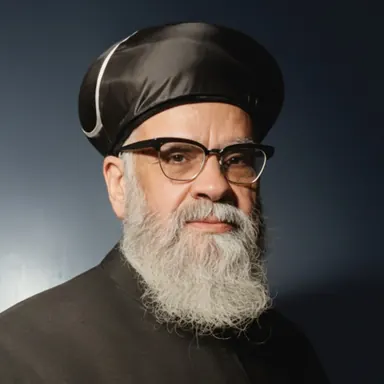
Leadership, Halakha and Statesmanship: The Work and Torah Teaching of the Rishon LeZion Rabbi Yitzhak Nissim
17 min read3,473 words
Summary
This survey presents the life and teaching of Rabbi Yitzhak Nissim, who served as Rishon LeZion and Chief Rabbi of Israel, focusing on the unique combination of deeply rooted halakhic leadership with a broad statesmanlike outlook. The text traces his path from his childhood in Baghdad to his immigration to the Land of Israel, and highlights his public activity to bring the different parts of the people closer together and his firm stand for the honor of the Torah and for Jewish sovereignty. At the center of the source stand his clear rulings on burning national issues, alongside the complex "brother and sister" affair, which ultimately led to the end of his term in the wake of political pressures. In conclusion, the work sheds light on his rich Torah legacy, which lives on through his books and the memorial institution established in his memory, and which expresses absolute commitment to halakha together with love of Israel.
Roots in Baghdad and Immigration to the Land of Israel: The Personal and Torah Foundations
Rabbi Yitzhak Nissim was born in Baghdad on the first day of the festival of Hanukkah, 25 Kislev 5656 (12 December 1895), to Rachamim, who was a native of Iran, and Emam.[1] Because he was born on the Festival of Lights he was called "Nissim" ("miracles"), and over the years this second name became his official surname.[1] From his early youth in Baghdad he stood out as a Torah prodigy, a profound scholar and an exceptional thinker whose opinion was listened to attentively in matters of the spirit and of the rabbinate.[2] He acquired his Torah education from the spiritual giants of Babylonian Jewry of that time, among them the kabbalist Rabbi Shimon Agassi and Rabbi Tzedaka Hutzin (the Second).[1] His Torah and scholarly connections quickly branched out beyond the borders of Iraq, and he conducted extensive halakhic correspondence with the Torah giants of the Land of Israel and with the most prominent sages of Ashkenaz and Poland.[2]
The family environment in which he grew up was saturated with Torah and public activity, but also with grave tragedies that shaped his national character. At the beginning of 1917, in the midst of the First World War, his brother, Shlomo Tzion, was brutally murdered by the Ottoman authorities in Baghdad, together with eighteen other Jewish money changers who had been falsely accused.[1] In memory of the murdered men Rabbi Nissim composed a special lament ("Kinat Baghdad," the Lament for Baghdad), which for many years was customarily read in the synagogues of Babylonian immigrants in Iraq and in Israel.[1] The rabbi's other brothers were prominent Torah figures in their own right: Rabbi Yechezkel Ezra Rachamim, and Rabbi Avraham Chaim Rachamim, who was a rosh yeshiva, a kabbalist and the foremost disciple of the "Ben Ish Chai" (Rabbi Yosef Chaim), and who even proofread his teacher's books.[1]
In 5680 (1919), at the age of twenty-four, Rabbi Nissim married Victoria.[1, 3] In these years he began to stand out as the unofficial leader of the Jewish community of Baghdad, instituted regulations in the local rabbinic courts and study halls, and actively assisted Jews who sought to immigrate to the Land of Israel.[3] In 5684 (1924), at the age of twenty-eight, he fulfilled the aspiration of his life and immigrated to the Land of Israel together with his wife, on a journey on donkeyback that lasted about a month.[1, 3] The two made their home in northern Jerusalem, in an area that was at that time desolate and lacked basic infrastructure such as water, roads or sidewalks.[3] Because of economic difficulties and a shortage of funds for building the house, the rabbi was forced to return to Baghdad for a short period, but in the month of Iyar 5685 (1925) he returned to Jerusalem for good, firmly refusing the entreaties of the leaders of the Baghdad community to return to Iraq and serve there in the rabbinate.[1, 3]
Once he had finally settled in Jerusalem, his home became a "meeting place for the sages" and a bustling Torah center, to which the sages and great men of Israel streamed every day to study and to clarify complex halakhic issues.[2, 3] Rabbi Nissim formed deep friendships with the Torah giants of Jerusalem, among them Rav Abraham Isaac HaKohen Kook, the aged kabbalist Rabbi Shlomo Eliezer Alfandari and Rabbi Chizkiya Shabtai.[1] Alongside his immense diligence in Torah study, he engaged in commerce for his livelihood, so as not to make the Torah a spade to dig with.[1]
The Road to the Seat of Leadership and His Term as Rishon LeZion
Rabbi Nissim's involvement in public life in the young State of Israel grew over the years, out of a desire to influence the spiritual character of the sovereign state. In 1951 he ran for the Second Knesset as number two on the "Emunei Yisrael" list founded by the educator and author Rabbi Eliyahu Ki Tov, but the list failed to pass the electoral threshold.[1] Nevertheless, his public standing as an independent and broad-minded Torah personality grew ever more established. In 1953, when the Rishon LeZion and Sephardi Chief Rabbi, Rabbi Ben-Zion Meir Chai Uziel, was on his deathbed, he turned to Rabbi Nissim with a personal request that he continue his path and take upon himself the office of Rishon LeZion.[1]
In 5715 (1955) the elections to the Chief Rabbinate were held. Rabbi Nissim was elected to the office of Rishon LeZion and the 37th Sephardi Chief Rabbi of Israel, after winning 42 votes in a contest against the rabbi of Tel Aviv, Rabbi Yaakov Moshe Toledano, who received 27 votes.[1] The festive installation ceremony was held on 6 Nisan 5715.[1] Upon taking office, his independence of thought and his unique path were immediately evident in every area of the institution's activity.[2] He served in his exalted office for about 17 years, alongside his Ashkenazi colleagues—Rabbi Yitzhak Isaac HaLevi Herzog and afterwards Rabbi Isser Yehuda Unterman.[1] His leadership was marked by a broad statesmanlike vision that sought to bridge social and ethnic gaps, but on the other hand it met fierce opposition from conservative Haredi circles, who saw him as too liberal a rabbi and worked incessantly to replace him.[1]
The Prominent Disciples of Rabbi Yitzhak Nissim
Rabbi Nissim established a special beit midrash for the training of rabbis, intended to shape a new generation of spiritual leaders capable of ruling on halakha with an understanding of the needs of the hour and of modern society.[1] This beit midrash produced outstanding Torah scholars who deeply influenced the world of Torah and of rabbinic judgeship in Israel [1]:
His Halakhic Teaching: "Kav ve-Naki" and Grappling with the Challenges of Jewish Sovereignty
Rabbi Yitzhak Nissim's halakhic teaching was marked by clarity, directness and a drive toward a clear practical decision.[2] As a posek, he avoided lengthy casuistry (pilpul) and focused on analyzing the sources and formulating decisive and clear rulings, a quality his contemporaries defined as rulings that are "kav ve-naki" ("a small measure, but pure").[2] The holding of Jewish sovereignty in the Land of Israel was seen by him not merely as a political event, but as a categorical religious transformation that obliges the decisors of halakha to confront courageously the public and national questions of the hour.
Two central halakhic and public decisions illustrate his special combination of Torah independence and a statesmanlike outlook:
Permitting ascent to the Temple Mount: While many rabbis of the period tended to forbid categorically any ascent to the Temple Mount for fear of karet, Rabbi Nissim ruled that Jews are permitted to ascend to certain areas of the Temple Mount, while strictly observing the required laws of purity.[1] This ruling was not a merely theoretical decision, but a step intended to demonstrate and strengthen Jewish sovereignty in the holiest place of the Jewish people immediately after its liberation in the Six-Day War.[1] He saw the Jewish presence on the Mount as a vital instrument for preserving national control of the site.
Insistence in the "Who is a Jew" controversy: During the stormy public controversy over the amendment of the Law of Return and the definition of nationality in the population registry, Rabbi Nissim displayed an uncompromising stand.[1] He refused to accept compromises that would allow a self-definition of nationality not in accordance with the rules of halakha, and acted forcefully so that the determination of a person's Jewishness would be made solely according to Torah law.[1] To this end, he mobilized broad international support through an exchange of letters with the greatest rabbis of the world, and thereby contributed to fortifying the halakhic standing of the Israeli identity card.[1]
During his term, the State of Israel became the largest Torah center in the Diaspora, and Rabbi Nissim was called upon to answer thousands of complex halakhic questions addressed to him from all over the world.[2] His rulings, which excelled in brief and clear language, dealt with every area of life—from individual questions to questions of running a state.[1, 2]
Public Leadership: Breaking Down Barriers and Guarding the Honor of the Nation
Rabbi Nissim's central goal as Rishon LeZion was the unification of the various tribes that make up the young Israeli society.[3] In his installation speech he declared that his first task was to turn the tribes of Israel into one people, to blend the various diasporas and to join together the good and the beautiful in every tribe and community.[3] Out of this conception, from 5716 (1956) he initiated regular visits and tours of kibbutzim, factories, development towns and workers' councils throughout the country.[1, 2, 3] He did not appear in the kibbutzim as "a prophet reproving at the gate" who chastises his listeners with rebukes, but conducted a cultured and respectful dialogue with them, and thereby succeeded in bringing the young generation, which had been educated in a markedly secular spirit, closer to the values of Jewish tradition, and in integrating traditional elements into the daily life of the kibbutz movement.[2, 3]
Rabbi Nissim worked resolutely to break down ethnic barriers.[2] His home in Jerusalem served as a regular and unique meeting point for all parts of society: rabbis, intellectuals, politicians, judges, academics, diplomats and leaders of Diaspora communities.[1, 2] Among the regular visitors to his home were the scholar of Kabbalah Prof. Gershom Scholem and Supreme Court Justice Haim Cohn.[1] These meetings created vital bridges between the world of Torah and the worlds of science and law, and helped to clarify the fundamental problems of Israeli society in fruitful and respectful discourse.[2]
Nevertheless, alongside his gentleness in drawing near those who were distant, Rabbi Nissim displayed absolute firmness and did not hesitate to enter the eye of the storm when he felt that the honor of the tradition or of the sovereign State of Israel had been harmed. Two affairs illustrate this clearly:
Boycotting the memorial for President Weizmann (1957): In November 1957 Rabbi Nissim chose to boycott the official state memorial ceremony for the first President of the State, Chaim Weizmann.[1] His decision stemmed from the fact that the ceremony was held in a markedly secular format that did not accord with the tradition of Israel.[1] By this step the rabbi made it clear that the Chief Rabbinate would not be a rubber stamp for state ceremonies emptied of traditional religious content.
The historic refusal to meet Pope Paul VI (1964): During the Pope's historic visit to Israel, government officials planned that the Chief Rabbi would take part in the state reception ceremony held at Megiddo.[1, 2] Rabbi Nissim refused to attend.[1, 2] He argued that since he represented the head of the sovereign Jewish religion in its own land, the duty of protocol and national honor required that the Pope (as head of the Catholic religion) pay him a reciprocal visit in Jerusalem.[1, 2] Without a commitment to such a visit, the rabbi explained, his participation in the reception would be interpreted as an inferiority of the Jewish religion vis-à-vis Christianity, which would constitute a grave affront to the honor of the people and the State.[1, 2] His refusal caused enormous international reverberations; the newspaper "Haaretz" even noted in an editorial that the rabbi's decision was a historic act that lent added validity and independence to the young State of Israel.[1, 2]
After the Six-Day War and the liberation of Jerusalem, Rabbi Nissim sought to give practical and symbolic expression to the historical link between Jewish law and its ancient source.[2] He moved the seat of the Great Rabbinical Court, which he headed as president, to a building overlooking the Southern Wall, close to the Chamber of Hewn Stone in which the Sanhedrin had sat in the past.[2] This was a powerful symbolic move that expressed his aspiration to renew the days of the Torah legal system as a sovereign national anchor.[2]
The "Brother and Sister" Affair and Its Consequences for the Institution of the Chief Rabbinate
The early 1970s brought upon the State of Israel and its political and religious system one of the gravest halakhic and social crises in its history—the "brother and sister" affair.[4] This crisis not only undermined relations between religion and state, but served as a direct political lever that led to the unprecedented removal of the serving chief rabbis, Rabbi Yitzhak Nissim among them.[4]
The course of the halakhic affair: In the 1960s a case came before the rabbinical court in Petah Tikva concerning the eligibility of Chanoch and Miriam Langer (the "brother and sister") to enter the congregation, because of a question of mamzerut (illegitimate status) that had arisen concerning them.[4] The court in Petah Tikva discussed the case at length, held firmly to its opinion and determined that there was no escaping their definition as mamzerim, and that they were therefore forbidden to marry Jewish spouses.[4] The deliberations in the affair reached the Great Rabbinical Court in Jerusalem.[4] Despite the heavy pressures and the prolonged deliberations, the judges of the Great Court decided not to decide the issue themselves but to return the case to the court in Petah Tikva so that it would re-examine its decision.[4] This decision relied on the strict halakhic rule that "a court does not examine after another court, but presumes that they are expert and will not err," which prevents hasty intervention by a higher instance in the ruling of a local instance.[4]
The political escalation and the coalition crisis: Since the brother and sister served in the General Staff of the IDF, close to the offices of the Minister of Defense Moshe Dayan and the then Chief Military Rabbi Shlomo Goren, their plight became a burning national issue.[4] Minister of Defense Moshe Dayan worked with all his might to resolve the matter, and Prime Minister Golda Meir, whose heart was touched by the plight of the two, spoke with them and demanded an institutional solution.[4] The affair dragged on for years and threatened to lead to a severe coalition crisis between the parties of the left (Labor-Mapam) and religious Zionism.[4] Rabbi Shlomo Goren, while still serving as Chief Military Rabbi, formulated a lenient halakhic ruling permitting the mamzerut to be lifted, and promised Moshe Dayan that if he were elected to the office of Chief Rabbi of Israel, he would convene a special court that would solve the problem immediately.[4]
The removal of the chief rabbis and the historic precedent: Rabbi Yitzhak Nissim tried to set up a special court that would rehear the affair, with the aim of resolving the crisis through accepted means, but the move failed because conservative judges refused to cooperate.[4] Following this failure, and in agreement between the Labor-Mapam party and the Mafdal (National Religious Party), it was decided to lead a political move to remove the serving chief rabbis, Rabbi Yitzhak Nissim and Rabbi Isser Yehuda Unterman, and to replace them with rabbis who would be more convenient for the government and willing to resolve the crisis.[4]
On 7 Marcheshvan 5733 (1972) Rabbi Nissim and Rabbi Unterman were replaced by Rabbis Ovadia Yosef and Shlomo Goren (who indeed made good on his promise immediately after his election and permitted the brother and sister).[1, 4] This was the first time in the history of the Chief Rabbinate, since its founding by Rav Kook, that alternative candidates were put up for election with the aim of removing serving rabbis while they were still alive (for until then the chief rabbis had customarily served for life).[1, 4]
Long-term effects of the affair: The "brother and sister" affair and the removal of Rabbi Nissim had far-reaching political and religious consequences for the leadership structure of Israeli society. The affair not only changed the character of the elections to the Chief Rabbinate, but constituted a historic launching point at which new spiritual leaders grew up and established themselves in the Haredi and religious-Zionist public.[5] Key figures such as Rabbi Elazar Menachem Man Shach (who in its wake became the undisputed leader of the Haredi-Lithuanian public), Rabbi Yosef Shalom Elyashiv and Rabbi Ovadia Yosef himself consolidated their leading position in the wake of the crisis and the upheaval that gripped the institution of the Chief Rabbinate.[5]
The Written Legacy and the Memorial Projects
Rabbi Yitzhak Nissim passed away on Tisha B'Av 5741 (9 August 1981) at the age of 85, and was buried in the Jewish cemetery on the Mount of Olives in Jerusalem.[1] His wife Victoria passed away several years later, in 5749 (1988).[1] He left behind a rich Torah output and a Torah library unique of its kind, which included rare manuscripts and books from early printings.[1, 2]
His writings and Torah works are collected in several central compositions:
- Responsa "Yayin HaTov" (parts 1–2): his central book of questions and answers, covering the four parts of the Shulchan Arukh.[6, 7] The first part was first printed in 5707 (1946/1947), and the second part was published in 5739 (1979).[6, 7] In 5766 the "Yad HaRav Nissim" institution published a third, renewed edition of both parts in one volume, proofread and accompanied by a detailed index of sources.[7]
- "LeDor VaDor" ("For Generation after Generation"): a three-volume collection gathering his articles, speeches, talks and letters of encouragement written over the years, which was published after his death, edited by Rabbi Shmuel Katz.[1]
"LaKlal VeLaPrat – Halakhot Ketzuvot" ("For the General and the Particular – Concise Laws"): a three-volume series gathering thousands of his brief halakhic responses to questions from the general public and from state institutions during the years of his term as Chief Rabbi (edited by Rabbi Shmuel Katz).[1, 7]
Historical correspondence: Dozens of his Torah letters were published as an appendix in the book "Yeshivot Baghdad," and another large collection of his correspondence with the famous Sassoon family was printed in the book "Nachalat Avot."[1]
To commemorate his memory and his work, the "Yad HaRav Nissim" institution was established in the Talbiyeh neighborhood of Jerusalem, engaged in publishing his writings and in Torah research.[7, 8] The institution published "The Memorial Book for Rabbi Yitzhak Nissim, of blessed memory" in six comprehensive volumes.[8, 9] The volumes of the memorial book reflect the breadth of his work and teaching:
Conclusion
The teaching and work of the Rishon LeZion Rabbi Yitzhak Nissim form a formative chapter in shaping the spiritual character of the young State of Israel.[2] As Chief Rabbi and as a posek, he wisely combined an uncompromising pursuit of decisive halakhic truth with a warm, embracing human approach that broke down barriers between religious and secular and between the various ethnic communities.[2, 3] His firm stand for the honor of the Torah and of the nation—as expressed in his refusal to meet the Pope without a condition of reciprocity and in his position in the "Who is a Jew" affair—fortified the independent standing of the Chief Rabbinate as a sovereign national institution that does not yield to external pressures.[1, 2]
Although his halakhic insistence in the "brother and sister" affair ultimately led to his unprecedented political removal, his written and spiritual legacy continues to inspire a Torah leadership that combines absolute commitment to halakha with a broad statesmanlike vision and a deep love of Israel.[2, 3]
Sources9
- 1.יצחק נסים – ויקיפדיה, he.wikipedia.org/wiki/יצחק_נסים
- 2.לדמותו של הרב – יד הרב ניסים, yadharavnissim.com/לדמותו-של-הרב/
- 3.הרב יצחק ניסים זצ''ל | בעקבות גדולי ישראל - לומדים יהדות באהבה, ravdavids.com/gdolai-israel-haravnisim
- 4.כך הדיחה הציונות הדתית את הרבנים הראשיים לישראל - סרוגים, srugim.co.il/19636-כך-הדיחה-הציונות-הדתית-את-הרבנים-הראשי
- 5."פרשת האח והאחות" סימלה את ראשיתו של עידן חדש בהנהגה החרדית - מקור ראשון, makorrishon.co.il/news/article/285503
- 6.יין הטוב | ספריית ספריא, sefaria.org.il/Yein_HaTov
- 7.שו"ת יין הטוב א-ב (תשס"ו) - יד הרב ניסים, yadharavnissim.com/product/שות-יין-הטוב-א-ב-תשסו/
- 8.ספר הזיכרון לרב יצחק נסים זצ"ל - יד הרב ניסים, yadharavnissim.com/product-category/הרב-יצחק-נסים/ספר-הזיכרון-לרב-יצחק-נסים-זצל/
- 9.הרב יצחק נסים זצ"ל, yadharavnissim.com/product-category/הרב-יצחק-נסים/