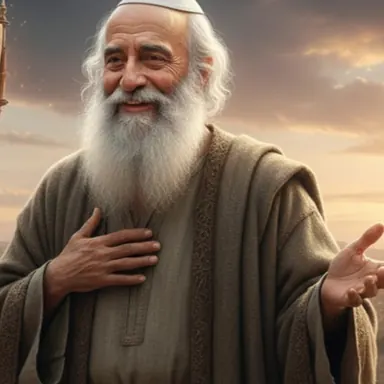
Rabbi Akiva ben Yosef
12 min read2,339 words
Summary
This survey presents the multidimensional figure of Rabbi Akiva as a central crossroads in the history of the people of Israel, focusing on the biographical revolution he underwent from an ignorant shepherd to a spiritual and national leader of the first rank. The text details his decisive contribution to the preservation of the Oral Torah through the organization of the halakhot and the development of a unique method of interpretation that gives meaning to every letter and crownlet in Scripture. In addition, it highlights his deep political involvement in the Bar Kokhba revolt and the messianic conception he led, alongside his ability to rebuild the world of Torah out of destruction. Ultimately, the source illuminates his figure as a symbol of self-sacrifice and sanctification of the Name, combining rigorous halakhic guidance with philosophical thought and deep mysticism.
The Master of Deeds: The Figure, Thought and Historical Work of Rabbi Akiva ben Yosef
The period of the Tannaim, centered on the second century CE, is one of the most decisive crossroads in the history of the people of Israel. At the center of this crossroads stands Rabbi Akiva ben Yosef, a figure who reshaped the face of Judaism and carried it from a world of Temple and sacrifices to a world of Torah, midrash and halakhic arrangement. Rabbi Akiva's work is not confined to the arena of the study hall; he was a national leader, a master of the esoteric, a political strategist and an exemplary figure of self-sacrifice.[1, 2, 3] The present report seeks to analyze in depth the various layers of his work, from his revolutionary personal biography, through the unique exegetical methodology he developed, to his messianic involvement in the Bar Kokhba revolt and the end of his life as a holy martyr.[3, 4, 5]
Class Roots and the Biographical Revolution
The life of Rabbi Akiva, as it is portrayed in the sources of the Sages, is not merely a sequence of historical events but an educational model of renewal. His birth at the end of the Second Temple period into a family of converts (descendants of Sisera, according to tradition) places him at the outset in the position of an "other" in hierarchical Jewish society.[1, 2] His first forty years as an am ha-aretz (an unlearned man) and an ignorant shepherd symbolized the deep rift that prevailed between the working class and the intellectual stratum of the Torah sages.[3]
The turning point in his life, which came about through his bond with Rachel, the daughter of Kalba Savua, represents a covenant between spirit and devotion. Rachel, who recognized in Akiva qualities of modesty and kindness, gave up legendary wealth and her social standing in order to marry him, on condition that he go to study Torah.[2] This decision led to economic ostracism on the part of her father, and the couple began their life in abject poverty in a hayloft.[2, 3] This story, in which Elijah the Prophet appears as a pauper asking for straw in order to console the couple in their situation, highlights Rabbi Akiva's worldview, according to which material hardship is only a temporary background to spiritual ascent.[2]
Rabbi Akiva's intellectual awakening arose from observing nature, at a well where he noticed a hole that had formed in a stone as a result of constant dripping. His conclusion was existential: if soft water can hew into hard stone, then words of Torah, which are likened to fire and water, can penetrate even the most impervious human heart.[2, 3] Beginning to study at the age of forty, sitting in elementary school beside his son and learning the letters of the alef-bet, broke the paradigm according to which study is the preserve of the young alone.[2, 3]
Stages of His Biographical and Leadership Development
His prolonged absence from home (first for 12 years and then for another 12 years), with Rachel's full consent, created the critical mass of tens of thousands of disciples who accompanied him on his return, and led to the famous statement: "Mine and yours are hers."[2, 3]
The Exegetical Methodology: Expounding the Crownlets and the Redemption of the Letters
Rabbi Akiva revolutionized the way in which the Written Torah was perceived. In contrast to the method of Rabbi Yishmael, who advocated the approach that "the Torah spoke in the language of human beings," Rabbi Akiva saw the Torah as a divine text in which no word, letter or graphic sign is superfluous.[1, 3] He would expound heaps upon heaps of halakhot on every "thorn" of the letters, a conception that ascribes sacred meaning to the physical form of the script.[3]
A clear example of his method appears in the midrash about Moses our teacher, who ascended on high and found the Holy One, blessed be He, tying crowns to the letters. To Moses' question, God answered that at the end of many generations there would arise a man named Akiva ben Yosef who would expound deep meanings on every crownlet.[2, 3] Moses, who did not understand Rabbi Akiva's expositions when he beheld them in a vision, was set at ease only when he heard Rabbi Akiva base a halakha on "a law given to Moses at Sinai," and thus the circle between the original Torah and the later midrashic interpretation was closed.[2, 3]
Rabbi Akiva developed a detailed midrash on "the crowns of the letters," in which every graphic element in the letters of the scribal script (STaM) symbolizes a profound cosmic or religious idea.[6] This method enabled him to bridge the gap between the written Scripture and the changing needs of halakha in his generations.[3]
Details of the Expositions of the Crowns of the Letters (Selected Sample)
This methodology is not merely an exegetical technique but a theological declaration: the Torah is infinite, and each and every generation can uncover new layers in it by adhering to the absolute precision of the text.[1]
The Arrangement of the Mishnah and the Oral Torah
Rabbi Akiva's mighty public and Torah achievement was the organization of the world of halakha. Until his time the Oral Torah was studied as scattered traditions without a uniform structure. Rabbi Akiva acted like "a laborer who goes out to the field," who gathers all the produce and arranges it in his house by kinds.[3] He divided study into three main fields: midrash (connecting the halakha to the verse), halakhot (short, decided rulings) and aggadot (ethical and philosophical expositions).[3]
His influence on the redaction of the Mishnah is absolute. The Talmudic saying "An anonymous Mishnah is Rabbi Meir, an anonymous Tosefta is Rabbi Nehemiah, an anonymous Sifra is Rabbi Yehuda, an anonymous Sifrei is Rabbi Shimon, and all of them follow Rabbi Akiva" [3, 7] teaches that all the foundational collections of Tannaitic literature were edited according to the method, structure and teaching of Rabbi Akiva.[7, 8] He laid the foundation on which Rabbi Yehuda HaNasi later built the six orders of the Mishnah.[3]
Political Leadership and Messianism: The Connection to Bar Kokhba
Rabbi Akiva was not only a man of halakha but a national leader who believed in the physical revival of the people of Israel in its land. His support for Shimon ben Kosiba (Bar Kokhba) was the spiritual engine behind the second revolt against Rome.[4] Rabbi Akiva saw Bar Kokhba as "the King Messiah" and expounded concerning him the verse "There shall step forth a star out of Jacob."[4, 9]
This support was not merely declarative; Rabbi Akiva served as Bar Kokhba's "armor-bearer" (according to Maimonides) and helped mobilize religious and public legitimacy for the struggle.[4, 5] The revolt, which scholars regard as a war for Jewish existence and for the meaning of life, gained the backing of many sages thanks to Rabbi Akiva's authority, although there were also prominent opponents, such as Rabbi Yochanan ben Torta, who warned of messianic disappointment.[4, 10]
Historical research discusses the scope of the revolt and the extent of Rabbi Akiva's influence on it. The discovery of Bar Kokhba's letters in the Judean Desert (Ein Gedi, Herodium) confirms the strength of the rebels' administrative control.[11] Some scholars connect the death of Rabbi Akiva's 24,000 disciples with the events of the revolt, interpreting "the plague" mentioned by the Sages as having in fact been death in battle.[5, 7]
The Impact of the Revolt and Its Consequences
Rebuilding the World of Torah: The Five Disciples
After the failure of the revolt and the death of tens of thousands of disciples by "askara" (or in battle), the world of Torah faced total destruction.[7] Rabbi Akiva, schooled in suffering but imbued with a sense of mission, turned to the south of the Land and established a new yeshiva with only five disciples: Rabbi Meir, Rabbi Yehuda, Rabbi Yosei, Rabbi Shimon bar Yochai and Rabbi Elazar ben Shamua.[7, 12]
It was these five who re-established the Torah and filled the whole Land of Israel with Torah.[8] Their practical contribution included transmitting Rabbi Akiva's entire tradition of study to the following generations, with an emphasis on correcting the sin of the previous generation: "that they did not treat one another with respect."[7, 12]
Philosophical and Intellectual Teaching
Rabbi Akiva grappled with fundamental questions of human and divine existence. His teaching in Tractate Avot, "All is foreseen, yet freedom of choice is given," is one of the foundations of the Jewish discussion of the paradox of divine foreknowledge and free choice.[13, 14] According to the interpretation of Maimonides (Rambam), Rabbi Akiva holds that the knowledge of the Holy One, blessed be He, does not compel the deeds of man, and free choice remains in his hands.[15, 16]
In addition, he advocated the conception that "the world is judged with goodness," with an emphasis on "the majority of deeds": the belief that the shaping of character takes place through persistence in many small good deeds, and not only through great one-time acts.[13, 16] His approach to suffering was one of acceptance with love, out of the recognition that "whatever the Merciful One does, He does for the good."[1, 5]
Esoteric Teaching and the Entry into the Pardes
Rabbi Akiva is regarded as the exemplary figure of early Jewish mysticism. In the story of "Four entered the Pardes (Orchard)," he is the only one who "entered in peace and departed in peace," unlike his companions, who were harmed in various ways (death, madness or heresy).[17, 18, 19] His warning, "Do not say: water, water" inside the Pardes symbolizes the caution required of one who engages in esoteric teaching not to confuse illusion with reality.[17, 20] Some also attribute to Rabbi Akiva the "Sefer Yetzirah" (Book of Creation), the earliest work of Kabbalah, which analyzes the creation of the world through the letters and the sefirot.[21, 22]
The Debates with Turnus Rufus
Rabbi Akiva's discussions with the Roman governor Turnus Rufus (Tineius Rufus) reflect the confrontation between Jewish and Roman philosophy. Turnus Rufus asked why God does not Himself provide for the poor, or why man is required to circumcise himself.[23, 24, 25] Rabbi Akiva answered that the role of man is to complete the works of creation: the work of human hands (bread) is finer than the work of Heaven (wheat), and he thereby established the idea of "tikkun olam" (repairing the world) by humankind.[23, 26, 27]
Sanctification of the Name and the End of the Leader
Rabbi Akiva's life ended with a cruel execution by the Romans, after he was caught publicly assembling congregations and teaching Torah in defiance of the decrees.[28, 29] While they combed his flesh with iron combs, he recited the Shema and rejoiced at the opportunity to fulfill "with all your soul."[5, 29] His death, as his soul departed with the word "One" (Echad), became the most sublime model of self-sacrifice for the people of Israel throughout the generations.[5, 29]
Rabbi Akiva left behind a legacy of a Torah that is living, breathing and organized, a leadership that did not shrink from political struggle, and a thought that connects the highest heavens with the simplest human deed.[1, 3] The testimony of Moses our teacher, "You have such a man, and You give the Torah through me?", remains as a seal on his standing as the greatest of the sages of Israel of all time.[2, 30]
Sources30
- 1.רבי עקיבא - ויקיפדיה, he.wikipedia.org/wiki/רבי_עקיבא
- 2.21 עובדות על רבי עקיבא - BeitChabad.com - בית חבד, he.chabad.org/library/article_cdo/aid/5941779
- 3.אנציקלופדיה יהודית דעת - עקיבא ;, daat.ac.il/encyclopedia/value.asp?id1=1665
- 4.רבי עקיבא ובר כוכבא - עיון ביחס החכמים למרד ובמשמעותו לדורנו / הרב נתנאל ..., machonso.org/hamaayan/?gilayon=41&id=1223
- 5.רבי עקיבא – ויקיפדיה, he.wikipedia.org/wiki/רבי_עקיבא#משנתו_הדתית_וההגותו
- 6.אוצר מדרשים, מדרשי רבי עקיבא, מדרש רבי עקיבא בן יוסף, sefaria.org.il/Otzar_Midrashim,_Midrashim_of_Rabbi_Akiba,_Midrash_of_Rabbi_Akiba
- 7.מיתת תלמידי רבי עקיבא - ויקיפדיה, he.wikipedia.org/wiki/מיתת_תלמידי_רבי_עקיבא
- 8.רבי עקיבא נותר עם חמישה תלמידים בלבד, ולא סגר את הישיבה אל תפחד ..., dirshu.co.il/ישנם-גם-כאלו-שחשים-למה-זה-אנכי-הנה-אותו/
- 9.הקרב האחרון של בר-כוכבא / אסף מלאך - מוסף "שבת", musaf-shabbat.com/2011/08/07/הקרב-האחרון-של-בר-כוכבא-אסף-מלאך/
- 10.בר כוכבא ורבי עקיבא – במה צדקו ובמה טעו? - יבי"ן – יוחנן בן יעקב, yavin.co.il/?p=2335
- 11.מרד בר כוכבא - ויקיפדיה, he.wikipedia.org/wiki/מרד_בר_כוכבא
- 12.מגיפה אחת, 24,000 קורבנות - BeitChabad.com - בית חבד, he.chabad.org/library/article_cdo/aid/2582618
- 13.מסכת אבות, פרק ג' משניות ט"ו - התנועה הרפורמית, reform.org.il/masechet-avot/perek-gimel/מסכת-אבות-פרק-ג-משניות-טו/
- 14."הכל צפוי והרשות נתונה" (אבות ג טו)?! | ספריא, sefaria.org.il/sheets/217131
- 15.הפילוסופיה של רבי עקיבא - מקור ראשון, makorrishon.co.il/judaism/239389/
- 16.משנה אבות ג טו - ויקיטקסט, he.wikisource.org/wiki/משנה_אבות_ג_טו
- 17.אַרְבָּעָה נִכְנְסוּ לַפַּרְדֵּס - בית הספר לתלמוד, thetalmud.wordpress.com/2017/06/11/אַרְבָּעָה-נִכְנְסוּ-לַפַּרְדֵּס-2/
- 18.פרדס (יהדות) - ויקיפדיה, he.wikipedia.org/wiki/פרדס_(יהדות)
- 19.ארבעה נכנסו לפרדס, daat.ac.il/chazal/maamar.asp?id=60
- 20.הסיפור ארבעה נכנסו לפרדס - אגדה - בית סיפורי העם היהודי, agadah.org.il/story/ארבעה-נכנסו-לפרדס/
- 21.ספר יצירה | ספריית ספריא, sefaria.org.il/Sefer_Yetzirah
- 22.ספר יצירה - ויקיפדיה, he.wikipedia.org/wiki/ספר_יצירה
- 23.טורנוסרופוס ורבי עקיבא - פורטל הדף היומי: הודעה בחלון חדש, daf-yomi.com/Forums/Message.aspx?id=780
- 24.רַבִּי עֲקִיבָא, טוּרְנוּסְרוּפוּס וּמִצְוַת הַצְדָּקָה - בית הספר לתלמוד, thetalmud.wordpress.com/2018/02/05/רַבִּי-עֲקִיבָא-טוּרְנוּסְרוּפוּס-ו/
- 25.בן ועבד - אם ה' גזר על העני, מדוע שאתן לו צדקה - BeitChabad.com - בית חבד, he.chabad.org/library/article_cdo/aid/477866
- 26.פרק ב - תפארת ישראל / לרב יהודה ליוואי - המהר"ל מפראג, daat.ac.il/daat/mahshevt/tifeeret/2-2.htm
- 27.ערלה ומילה - החטא ותיקונו (עקבי דרך, תזריע) - עולמות, olamot.net/shiurim/ערלה-ומילה-החטא-ותיקונו-עקבי-דרך-תזרי/
- 28.עשרת הרוגי מלכות - ויקיפדיה, he.wikipedia.org/wiki/עשרת_הרוגי_מלכות
- 29.300 מִלָּה עַל "עֲשֶׂרֶת הֲרוּגֵי מַלְכוּת" - בית הספר לתלמוד, thetalmud.wordpress.com/2017/05/01/300-מִלָּה-עַל-עֲשֶׂרֶת-הֲרוּגֵי-מַלְכו/
- 30.רבי עקיבא: הדמות והדימוי לדורות | שיעור 1 - ראשית דרכו | פרופ' ישעיהו גפני - YouTube, youtube.com/watch?v=-mF-sU4tZZI