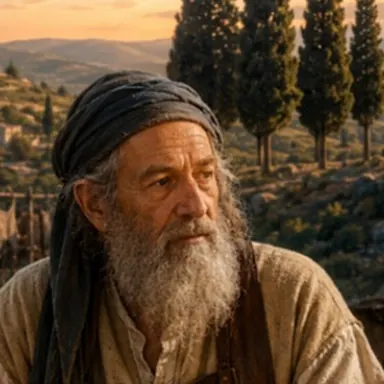
The Work, Torah Teaching and Halakhic Authority of the Tanna Rabbi Yosei ben Halafta
18 min read3,687 words
Summary
This text surveys the highly influential figure of Rabbi Yosei ben Halafta, one of the sages of the fourth generation of the Tannaim, who worked to rebuild the world of Torah after the destruction of the Temple and the Bar Kokhba revolt. His central work, "Seder Olam," is presented as the first comprehensive attempt to order biblical chronology and a systematic Jewish historiography, thereby giving an anchor of order and purpose to a generation that had suffered severe upheavals. On the halakhic side, the article stresses the rule "his reasoning is with him" (nimuko imo), which expresses his intellectual integrity and his tendency to provide a logical and clear explanation for every ruling, a quality that made his opinion decisive in almost every dispute. Alongside his public and scholarly work, the source describes the striving for harmony and the prevention of disputes as a guiding line in his personality, combining insights from the world of aggadah and thought that seeks to find deep religious meaning even in a reality of exile and persecution.
Biographical Background, Family Lineage and Historical Context
Rabbi Yosei ben Halafta, called in Tannaitic literature simply "Rabbi Yosei," was active in the fourth generation of the Tannaim and became one of the most formative figures in shaping Jewish thought and halakha in the period after the destruction of the Second Temple and the failure of the Bar Kokhba revolt.[1, 2, 3] He was born in the city of Sepphoris (Tzippori) in the Galilee to a family of distinguished lineage, whose roots were linked to the descendants of Yonadav ben Rechav.[3]
His father, Rabbi Halafta, was one of the leading sages of Sepphoris, a bridging figure who had seen the practices of the Temple in Jerusalem and passed on its traditions to the generations that settled in the Galilee.[3, 4] The father's influence on his son was profound, and Rabbi Yosei acquired Torah from him alongside his study with his principal teacher Rabbi Akiva and other prominent sages such as Avtolmos, Rabbi Yehoshua, Rabbi Yishmael, Rabban Gamliel, Rabbi Yochanan ben Nuri and Rabbi Eliezer ben Yaakov.[3] For his livelihood Rabbi Yosei worked as a tanner of hides, a craft that highlighted the integration of a Torah scholar into the practical life and economic production of his time.[3]
The Lineage of the "Five Cedars"
Rabbi Yosei married the wife of his deceased brother in levirate marriage, and from this marriage five sons were born to him who became prominent Torah scholars and are called in the literature of the Sages the "five cedars" that he planted in Israel.[3, 5] He expressed this with spiritual pride, saying: "Five times I had intercourse, and I planted five cedars in Israel."[5, 6]
The Burial Site in Kfar Chananya and the Tradition of Pilgrimage
Rabbi Yosei's burial site lies in Kfar Chananya in the Lower Galilee, near the Chananya junction on Road 85, right at the entrance to the access road to the village.[4] According to a long-standing tradition, members of the family are buried together in the burial cave: Rabbi Halafta and his wife, their son Rabbi Yosei, and his brother Rabbi Shimon ben Halafta.[1, 4] The geographical and spiritual location of the tomb has made it a focus of pilgrimage, with many hikers and worshippers visiting the site especially to offer prayers for children's success in education and in Torah.[4] This prayer draws its inspiration directly from the figures of the father and the son, who succeeded in establishing a glorious and continuous Torah lineage despite the harsh conditions of persecution and destruction of their days.[4]
The Underground Ordination and the Decrees of Roman Rule
The period of Rabbi Yosei's activity was marked by severe persecution by the Roman authorities, which forbade the ordination of elders to teach, with the intention of cutting off the chain of the Jewish people's spiritual leadership.[1, 2, 3] Despite the danger of the situation, Rabbi Yosei was secretly ordained to teach by Rabbi Yehuda ben Bava.[1, 2, 3] This ceremony took place clandestinely between Usha and Shefar'am, where Rabbi Yehuda ben Bava ordained five elders: Rabbi Meir, Rabbi Yehuda, Rabbi Shimon, Rabbi Yosei and Rabbi Elazar ben Shamua.[3] When they were discovered by the Romans, Rabbi Yehuda ben Bava ordered them to flee for their lives while he remained behind and was cruelly killed by the Roman soldiers.[3]
Afterwards Rabbi Yosei was forced to flee to "Asia" in western Asia Minor, and returned to the Land of Israel only at a later stage in order to take part in the intercalation of the year in the Rimon Valley.[3] A further decree of exile was linked to the famous event in which Rabbi Yehuda, Rabbi Shimon and Rabbi Yosei sat together, with Yehuda ben Gerim beside them.[8] At that meeting Rabbi Yehuda praised the infrastructure works of the Romans, Rabbi Shimon bar Yochai condemned them sharply, and Rabbi Yosei chose to remain silent.[3, 7, 8] Following Yehuda ben Gerim's informing, the Roman authorities decreed that Rabbi Yehuda be elevated, Rabbi Shimon be executed, and Rabbi Yosei be exiled to Sepphoris because of his silence.[3, 7, 8] According to one scholarly hypothesis, the decree imposed house arrest on him in his native city, while according to another version the original reading was "he shall be exiled from Sepphoris," and this is the source of his exile in Asia.[3]
Rabbi Yosei's Halakhic Authority and the Rule "His Reasoning Is with Him"
Rabbi Yosei's halakhic teaching is characterized by clarity, iron logic and a constant striving for peace and the prevention of disputes in Israel.[3, 9] His figure was seen by his contemporaries and by later generations as a model of intellectual integrity, and his rulings were accepted as pillars of the halakhic tradition.
The Source of the Concept and Its Interpretation
His disciple, Issi ben Yehuda, coined the definition that became a guiding rule for generations: "Rabbi Yosei – his reasoning is with him" (nimuko imo).[3, 10] The sages of the Talmud and the commentators interpreted this expression in two complementary ways that shaped his unique standing:
- Straightness like a plumb line: Rashi, in his commentary on tractate Eruvin, explains that the meaning of the rule is that Rabbi Yosei "says a thing straight as a plumb line," that is, his rulings aim directly at the logical and simple truth without unnecessary casuistry.[9]
- An explanation alongside the ruling: Rashi, in his commentary on tractate Gittin, offers a further interpretation according to which "his explanation is with him, to give a reason for all his words, for he would settle his words."[9] Rabbi Yosei never taught halakha as a decree without an explanation, and every ruling of his was accompanied by a rational explanation that allowed his listeners to grasp his full intent.[9]
Because of this foundation, the Amoraim laid down the broad halakhic rule: "The halakha follows Rabbi Yosei against his colleague."[9] This rule gives Rabbi Yosei's rulings almost absolute precedence in his disputes with his fellow Tannaim.[9, 10] The rule "the halakha follows Rabbi Yosei against his colleague" is so strong that it overrides even the rule "the halakha follows Rabbi (Yehuda HaNasi) against his colleague" in cases where the two disagreed.[9] His foremost disciple, Rabbi Yehuda HaNasi, held him in enormous respect, and when a position of Rabbi Yosei was brought before him by his son Rabbi Yishmael, he immediately set aside his own opinion and said: "An elder has already ruled."[3, 9] Upon the death of Rabbi Yosei, the sages lamented him and said: "When Rabbi Yosei died, understanding ceased."[3, 10]
The Strategic Use of Rabbi Yosei's Authority to Prevent Dispute
Fascinating testimony to Rabbi Yosei's unchallenged standing emerges from the discussion in tractate Eruvin, where it is related that Rabbah and Rav Yosef were walking on the road.[11] Rabbah proposed to Rav Yosef that they fix their Shabbat resting place (shevitah) under a certain palm tree as Shabbat approached.[11] Since Rav Yosef did not know the palm tree in question, Rabbah told him to rely on him, and cited a baraita according to which Rabbi Yosei says that if there were two people, and one of them knows the place while the other does not, the one who does not know entrusts his resting place to the one who knows.[11]
The Talmud makes a revealing remark about this that offers a deep perspective on the use of halakhic authority: in fact, this halakha was not originally taught in the name of Rabbi Yosei.[11] Rabbah deliberately attributed it to Rabbi Yosei so that Rav Yosef would accept his words without doubt or challenge, knowing that Rabbi Yosei's "reasoning is with him" and the halakha follows him in most of his words.[11] This episode illustrates how the name and authority of Rabbi Yosei served as a strategic tool in the hands of the Babylonian Amoraim to resolve doubts, establish agreement and prevent unnecessary arguments in the beit midrash.
Rules of Decision in the Disputes of the Tannaim
The sages of the Talmud defined in a structured way the halakhic balance of power between Rabbi Yosei and his colleagues of the Tannaitic generation, as emerges from the words of Rabbi Yochanan and other Amoraim [9, 12]:
His Halakhic Method and the Prevention of Disputes: Selected Rulings
Rabbi Yosei firmly opposed the multiplication of disputes and strove to avoid them, out of a belief that division harms national cohesion.[3] He used to present middle-ground opinions, and when he disagreed with his colleagues he took care to note the points of agreement with them or to concede to them in some cases.[3] His halakhic rulings were characterized by sharp, clear and practical definitions, as emerges from the wealth of areas of halakha in which he decided.
The Conceptual Dimension, the World of Aggadah and the Expansion of the Holy
Alongside his halakhic work, Rabbi Yosei was a prolific creator in the fields of aggadah, philosophy and religious thought.[3] His sayings reflect a worldview that seeks to find harmony, divine justice and structured order in the world, even in moments of hardship and destruction.
The "May My Portion Be" Sayings and the Shaping of the Identity of the Pious Man
Tractate Shabbat brings a series of statements in which Rabbi Yosei expresses his highest spiritual aspirations under the formula "May my portion be" (yehe chelki).[4, 5, 15, 16] These sayings sketch the outlines of the figure of the ideal pious man (chasid) in his eyes:
- The holiness of Shabbat and geographical sensitivity: Rabbi Yosei aspires to be "among those who usher in Shabbat in Tiberias and among those who usher out Shabbat in Sepphoris."[5, 6, 15] Tiberias, lying in a deep valley, grows dark early, and so Shabbat begins there earlier, while Sepphoris, sitting at the top of the mountain, enjoys the sunlight longer, and so Shabbat ends there later.[6, 15] Rabbi Yosei aspires to extend the boundaries of the holy at the expense of the profane at both ends.[6, 15]
- Delight in Shabbat out of hardship: "May my portion be among those who eat three meals on Shabbat."[4, 5, 15] The commentators on the Talmud explain that Rabbi Yosei himself was poor and in straits, and according to halakha he was exempt from holding three meals in such a situation; his prayer was that he might merit abundance that would allow him to fulfill this commandment without depending on charity.[6]
- Constant song and thanksgiving: "May my portion be among those who complete the Hallel every day."[5, 6, 15] Since reciting the Egyptian Hallel every day is regarded as mocking and diminishing the value of the miracle, the Sages explained that his intention was the Pesukei de-Zimra (from "A psalm of praise of David" to "Let every soul praise the Lord") recited in the morning.[5, 6, 15]
- Death in purity and cleansing suffering: "May my portion be among those who die of an intestinal illness."[5, 6, 15] The Sages explained that most of the righteous die of this illness, since the suffering cleanses their sins and they merit dying with a clean and purified body.[6, 15]
- Social integrity and false suspicion: "May my portion be with one who is suspected of something that is not in him."[4, 5, 6, 15] This situation represents the height of moral purity, in which a person is whole with his Maker while the wrong is done to him by people through no fault of his own.[4, 15]
- Leadership and education: "May my portion be among those who seat [students] in the beit midrash and not among those who make [them] rise from the beit midrash."[4, 5, 15] He preferred those who gather the public to learn and grow wise over those who order the end of study and the dispersal of the students.[5, 15]
His Conversations with the "Matrona" and the Defense of Divine Justice
The sources record many debates that Rabbi Yosei held with a "matrona" – a distinguished and educated Roman woman who represented the pagan-Hellenistic culture and philosophy of that period.[3] In these discussions Rabbi Yosei displayed a deep understanding of the human soul and a sophisticated polemical methodology.
One of the notable debates dealt with the question of the attribute of justice of the Holy One, blessed be He, as compared with that of flesh and blood.[3] Rabbi Yosei explained to her that unlike human beings, who curse out of anger and total destruction, in the curses of God there is always hidden a blessing, a provision for sustenance and a structured order of existence.[3] He demonstrated this through four biblical curses: the serpent, which, though cursed with dust, has its food available to it everywhere; Canaan, who, though cursed to be a slave, enjoys the food and drink his master provides for him; the woman, who despite the pain of childbirth remains desired and all seek her closeness; and the earth, which, though cursed to bring forth thorns and thistles, is still the source that nourishes and sustains all living creatures.[3]
Metaphysical Theology: "The Place of the World"
Within the theological discussions of the generation after the destruction, when the question of God's presence in the world had become painful and pressing, the opinion of Rabbi Yosei (or of his parallel name in these conceptual sources) is cited explaining the essence of the divine epithet "Makom" ("the Place").[17] Midrashic literature explains that the epithet was meant to make clear that the Holy One, blessed be He, "is the place of the world, and the world is not His place."[17]
This metaphysical conception rests on the verse "Behold, there is a place with Me" (Exodus 33:21) and seeks to emphasize the immanence of God alongside His transcendence: the whole world is contained within the Divine, but the Divine is not limited or confined within the physical dimensions of the material world.[17, 18] It is like a warrior riding a horse, where the horse is subordinate to the rider and not the rider to the horse.[18] This idea provided enormous spiritual consolation to a generation that had lost its physical Temple, by making clear that the presence of the Shekhinah does not depend on an architectural structure but is always contained in existence itself.
"Seder Olam" and the Ordering of Biblical Chronology
Rabbi Yosei's most important scholarly and historiographical contribution to Jewish culture is the work "Seder Olam" (also called "Seder Olam Rabbah").[2, 3, 19, 20] This work constitutes the first systematic Hebrew chronicle detailing the dates and years of the biblical events from the creation of the world to the destruction of the Second Temple.[19, 20]
The Structure of the Book and the Chronological Methodology
The work is mentioned many times in the Talmud, sometimes with its name stated explicitly and sometimes with general Tannaitic formulas such as "tanya" ("it was taught") or "amar Mar" ("the Master said").[19, 21] The book is divided into three gates, each of which contains ten chapters [19, 20, 21]:
Rabbi Yosei's chronological method is based on counting the complete years that have passed since the beginning of an event.[19, 22, 23] There is a gap of two years between the count of "Seder Olam" (which counts from Adam, with Adam's first year defined as year 0) and the count "from the creation of the world" customary today (which begins one year earlier, from the year of chaos, tohu).[19, 22, 23] To convert the years given in "Seder Olam" into the current count of years in the Hebrew calendar, two years must be added to the count in the book [19]:
- Y
- creation
- =Y
Adam
+2
The Gap of the "Missing Years" and Attempts to Resolve It
The chronology of "Seder Olam" poses a complex historical difficulty known in scholarship as "the problem of the missing years."[19] This gap stems mainly from the dating of the Second Temple period and of the duration of the rule of the Persian Empire in the Land of Israel.[19]
According to "Seder Olam," the Second Temple stood for 420 years.[19] Since the destruction of the Temple took place in 70 CE, its building is dated to 350 BCE.[19] Adding the 70 years of the Babylonian exile places the destruction of the First Temple in 420 BCE.[19] By contrast, historical scholarship dates the destruction of the First Temple to 586 BCE.[19, 22] This gap creates a shortfall of about 166 years in the traditional count.[19] The main cause of the gap is the period of Persian rule.[19] Whereas historical scholarship documents a Persian Empire that existed for more than two hundred years (539–331 BCE), "Seder Olam" states that Persian rule lasted only 52 years under three kings.[19]
Rabbis and scholars throughout history have proposed various ways of dealing with this gap:
- Rabbi Azariah de' Rossi (16th century): in his book "Me'or Einayim" he proposed the view that the chronological determinations of the Sages in matters of history do not carry binding halakhic authority, and that they used symbolic traditions and not scientific measurements.[19]
- The interpretive-theological approach: others argued that "Seder Olam" is not a history book in the modern sense but a chronological midrash based on the plain meaning of the verses.[19] Its aim is to shape a consciousness of order and divine providence ("an order for the world"), and therefore it joins events together and shortens periods that are not detailed in the Bible itself.[19, 21]
The thesis of Dr. Chaim Hefetz: a modern researcher who argued that the chronology of the Sages is the most accurate, and that the Greek and Roman historiography of the Persian period suffered from copying errors and archaeological reconstruction that led to the invention of kings who never existed.[19]
The method of "Seder HaDorot" (Rabbi Yechiel Heilprin, 1769): he distinguished between the period of Persia's rule "over the whole world" (which, in his view, did indeed last 52 years) and the period of its local rule in Persia itself, and thereby tried to resolve the two-century gap.[19]
Summary and Conclusions
A comprehensive examination of the work and teaching of Rabbi Yosei ben Halafta shows that it is not a random collection of halakhic rulings, aggadic sayings and chronology, but a whole, planned life project intended to achieve harmonization and order in a shattered Jewish world after the destruction.
His halakhic method, anchored in the rule "his reasoning is with him" and in the constant striving for consensus and peace, reflected the understanding that in the absence of a sovereign spiritual center (the Temple or the Chamber of Hewn Stone), the only way to prevent the disintegration of the people is to create a stable, clear and logically grounded halakhic system on which all the streams could agree.[3, 9] Rabbi Yosei did not seek to win disputes but to abolish them, and his moderate and reasoned rulings paved the way for the writing of the Mishnah by his disciple, Rabbi Yehuda HaNasi.[1, 3, 9] The fact that his name served later generations as a symbol for circumventing arguments attests to the absolute trust the sages had in his intellectual integrity.[11]
At the same time, his historiographical work "Seder Olam" gave the defeated and persecuted generation an anchor of stability.[3, 19] By creating a continuous, ordered and precise timeline from the creation of the world to the destruction of their own days, Rabbi Yosei showed his contemporaries that history is not a series of random disasters, but a planned and meaningful divine process.[19, 21] By organizing the biblical periods he proved that the Shekhinah accompanies Israel even in their exile and brokenness.
In his personality and his teaching, Rabbi Yosei joined halakhic depth, human compassion, the striving for peace and a broad historical vision.[3, 4] He succeeded in turning the silence the Roman government imposed on him into a clear, resonant Torah voice, straight as a plumb line, which continues to guide the world of Torah and the Hebrew calendar to this very day.[8, 9, 19]
Sources23
- 1.רבי יוסי - חב"דפדיה, chabadpedia.co.il/index.php?title=רבי_יוסי&mobileaction=toggle_view_desktop
- 2.רבי יוסי בן חלפתא - קברי צדיקים - טלחופש, telechofesh.co.il/zadik/רבי-יוסי-בן-חלפתא/
- 3.רבי יוסי בן חלפתא – ויקישיבה, yeshiva.org.il/wiki/index.php/רבי_יוסי_בן_חלפתא
- 4.ציון קבר רבי חלפתא ורבי יוסי בן חלפתא בכפר חנניה - נלך, nelech.co.il/2026/02/16/aba-halafta-ubanav/
- 5.ביאור:הל"מ שבת קיח ב - ויקיטקסט, he.wikisource.org/wiki/ביאור:הל"מ_שבת_קיח_ב
- 6.פרשני:בבלי:שבת קיח ב – ויקישיבה, yeshiva.org.il/wiki/index.php/פרשני:בבלי:שבת_קיח_ב
- 7.שבת לג ב - ויקיטקסט, he.wikisource.org/wiki/שבת_לג_ב
- 8.רבי יוסי | מקורות מתוך ספריית ספריא, sefaria.org.il/topics/rabbi-yose-b-chalafta
- 9.מיקרופדיה תלמודית:הלכה (ג) - כללי ההלכה במחלוקת התנאים – ויקישיבה, yeshiva.org.il/wiki/index.php/מיקרופדיה_תלמודית:הלכה_(ג)-כללי_ההלכה_במחלוקת_התנאים
- 10.רבי יוסי - ויקיפדיה, he.wikipedia.org/wiki/רבי_יוסי
- 11.ביאור שטיינזלץ על עירובין נ״א א | ספריית ספריא, sefaria.org.il/Steinsaltz_on_Eruvin.51a
- 12.עירובין מו ב - ויקיטקסט, he.wikisource.org/wiki/עירובין_מו_ב
- 13.יב - מל ולא טבל | דף מקורות | הרב אפרים שחור - הרחבות לפניני הלכה, ph.yhb.org.il/plus/19-05-02-02/
- 14.מסכת סוטה פרק א - מאגר ספרות הקודש, kodesh.snunit.k12.il/b/h/h35.htm
- 15.שבת קי״ח ב עם מפרשים | ספריית ספריא, sefaria.org.il/Shabbat.118b?with=Commentary
- 16.שבת קיח ב - ויקיטקסט, he.wikisource.org/wiki/שבת_קיח_ב
- 17.בראשית רבה סח ט - ויקיטקסט, he.wikisource.org/wiki/בראשית_רבה_סח_ט
- 18.קטגוריה:בראשית כח יא – ויקיטקסט, he.wikisource.org/wiki/קטגוריה:בראשית_כח_יא
- 19.סדר עולם - ויקיפדיה, he.wikipedia.org/wiki/סדר_עולם
- 20.סדר עולם רבה | ספריית ספריא, sefaria.org.il/Seder_Olam_Rabbah
- 21.סדר עולם רבא – ויקישיבה, yeshiva.org.il/wiki/index.php/סדר_עולם_רבא
- 22.מניין השנים בלוח העברי - ויקיפדיה, he.wikipedia.org/wiki/מניין_השנים_בלוח_העברי
- 23.מניין השנים בלוח העברי – ויקישיבה, yeshiva.org.il/wiki/index.php/מניין_השנים_בלוח_העברי