Skip to contentGo to the list of all sages
Ozar Chachamim
  1. /
  2. Rishonim
  3. /
  4. Rabbi Avraham Klausner
עבENРУ
Rishonim1341–1408Austria

Rabbi Avraham Klausner

Halakha and customs

  • Sefer HaMinhagim
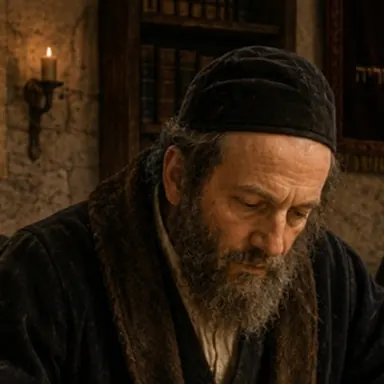
Illustration: Rabbi Avraham Klausner
Illustration from the podcast episode
Read the research· 24 minListen
⬡Show in the network
🌌Show in the Tower of Generations
🔗The path to another sage

Listen to the episode

Podcast episode · Rabbi Avraham Klausner

Open in Spotify
The player loads from Spotify only when you click.
Open in Spotify

Core Concept

Custom preserves the soul of the community.

Biography

One of the great sages of Austria and a central shaper of the tradition and customs of Ashkenaz after the crises of the 14th century.

Related sages1

Students1

  • The MaharilRishonim

The Road to Sinai

The archive doesn’t yet record Rabbi Avraham Klausner’s teachers, so the road to Sinai can’t be drawn yet.

See the generations from Sinai

Full research

2 documents·4,640 words· 24 min read

Contents24 min read

  1. Maharak: Shaper of Ashkenazi Custom in the Early Modern Period
    • Chapter 1: Vienna as the New Center of Torah and the Biographical Context
    • Chapter 2: Sefer HaMinhagim – The Monumental Project
    • Chapter 3: His Torah Teaching – Custom as a Source of Authority
    • Chapter 4: Teacher of Rabbis – His Influence through His Disciples
    • 1. The Maharil (Rabbi Yaakov Molin)
    • 2. The Mahari Tyrnau (Rabbi Yitzchak Isaac of Tyrnau)
    • 3. Rabbi Shalom of Neustadt
    • Chapter 5: The Transition to Print and the Influence on the Shulchan Arukh
    • Chapter 6: Modern Editions and Academic Research
    • Summary: The Maharak as a Bridge between Eras
    • Sources
  2. The Halakhic Teaching and Public Work of Rabbi Avraham Klausner (Maharak): Shaper of Ashkenazi Custom in the Early Modern Period
    • Chapter 1: Vienna as the New Center of Torah and the Biographical Context
    • Chapter 2: Sefer HaMinhagim – The Monumental Project
    • Chapter 3: His Torah Teaching – Custom as a Source of Authority
    • Chapter 4: Teacher of Rabbis – His Influence through His Disciples
    • 1. The Maharil (Rabbi Yaakov Molin)
    • 2. The Mahari Tyrnau (Rabbi Yitzchak Isaac of Tyrnau)
    • 3. Rabbi Shalom of Neustadt
    • Chapter 5: The Transition to Print and the Influence on the Shulchan Arukh
    • Chapter 6: Modern Editions and Academic Research
    • Summary: The Maharak as a Bridge between Eras
    • Sources
Contents· 34 sections
  1. Maharak: Shaper of Ashkenazi Custom in the Early Modern Period
    • Chapter 1: Vienna as the New Center of Torah and the Biographical Context
    • Early Life and Teachers
    • Circles of Family and Torah Connections
    • Chapter 2: Sefer HaMinhagim – The Monumental Project
    • Methodology of Writing and Formation
    • Structure and Contents of the Book
    • Chapter 3: His Torah Teaching – Custom as a Source of Authority
    • The Relationship between Law and Custom
    • Rulings in the Field of Ritual Slaughter and Inspection
    • Chapter 4: Teacher of Rabbis – His Influence through His Disciples
    • 1. The Maharil (Rabbi Yaakov Molin)
    • 2. The Mahari Tyrnau (Rabbi Yitzchak Isaac of Tyrnau)
    • 3. Rabbi Shalom of Neustadt
    • Chapter 5: The Transition to Print and the Influence on the Shulchan Arukh
    • Chapter 6: Modern Editions and Academic Research
    • Summary: The Maharak as a Bridge between Eras
    • Sources
  2. The Halakhic Teaching and Public Work of Rabbi Avraham Klausner (Maharak): Shaper of Ashkenazi Custom in the Early Modern Period
    • Chapter 1: Vienna as the New Center of Torah and the Biographical Context
    • Early Life and Teachers
    • Circles of Family and Torah Connections
    • Chapter 2: Sefer HaMinhagim – The Monumental Project
    • Methodology of Writing and Formation
    • Structure and Contents of the Book
    • Chapter 3: His Torah Teaching – Custom as a Source of Authority
    • The Relationship between Law and Custom
    • Rulings in the Field of Ritual Slaughter and Inspection
    • Chapter 4: Teacher of Rabbis – His Influence through His Disciples
    • 1. The Maharil (Rabbi Yaakov Molin)
    • 2. The Mahari Tyrnau (Rabbi Yitzchak Isaac of Tyrnau)
    • 3. Rabbi Shalom of Neustadt
    • Chapter 5: The Transition to Print and the Influence on the Shulchan Arukh
    • Chapter 6: Modern Editions and Academic Research
    • Summary: The Maharak as a Bridge between Eras
    • Sources

Document 1/2

Maharak: Shaper of Ashkenazi Custom in the Early Modern Period

12 min read·2,326 words

Summary

This text is a historical and halakhic survey of the life and achievements of Rabbi Avraham Klausner (Maharak), an outstanding 14th-century scholar who became a key figure in the revival of the Jewish communities of Austria after the devastating persecutions of the time of the "Black Death." The author emphasizes that Klausner acted as an architect of cultural memory, choosing the systematization of local customs as the main instrument for restoring spiritual identity and the continuity of generations. The document focuses on his monumental work "Sefer ha-Minhagim," which laid the foundation for subsequent authoritative codes and had a decisive influence on the formation of the Ashkenazi tradition through the works of his students and the Rema's glosses to the Shulchan Arukh. Thus the text reveals the significance of Maharak's activity as a link between eras, one that turned custom into a living source of legal authority that shaped the face of European Jewry for centuries to come.

The Halakhic Teaching and Public Work of Rabbi Avraham Klausner (Maharak): Shaper of Ashkenazi Custom in the Early Modern Period

The fourteenth century CE marked one of the most turbulent and significant periods in the history of Ashkenazi Jewry. After the destruction of the central communities along the Rhine in the wake of the "Black Death" massacres (1348–1350), the Jewish world in Europe faced an unprecedented crisis of identity and continuity. Within this leadership vacuum rose the figure of Rabbi Avraham Klausner, known by the epithet Maharak (died around 5169–5170; 1407/1408), whose work in Vienna became a decisive juncture in the development of halakha and custom.[1, 2] Rabbi Avraham Klausner was not merely a local halakhic decisor but the architect of a system of cultural preservation, who chose the documentation of custom as a tool for rebuilding the Jewish community after the destruction.[1, 2] This report will survey in depth his biography, his ties with the great figures of his generation, the methodology of his halakhic writing, and his decisive influence on the "Mapah" of the Rema and on the shaping of Ashkenazi Judaism for generations.[2, 3]

Chapter 1: Vienna as the New Center of Torah and the Biographical Context

The shift of the Torah center of gravity from Germany (Western Ashkenaz) to Austria (Eastern Ashkenaz) was a historical process forced upon the Jewish people in the wake of the persecutions. Fourteenth-century Vienna became a city of refuge for the refugees of the destroyed communities, and there arose the "Sages of Austria," a circle of Torah scholars who sought to fuse the teaching of France and early Ashkenaz with the new reality.[1, 4]

Early Life and Teachers

Rabbi Avraham Klausner was born around the year 5100 (1341) into a distinguished family of scholars. He acquired most of his Torah from Rabbi Moshe of Znaim (Znaim), who was one of the prominent figures of his time.[1, 2] The influence of Rabbi Moshe of Znaim on his disciple was profound, and it is evident in the emphasis the Maharak placed on precision in oral traditions and on fidelity to the original sources of the Sages of Ashkenaz.[1]

By around 1380 the Maharak was already active in Vienna as a recognized leading figure. He shared the seat of the rabbinate and of leadership with Rabbi Meir ben Baruch HaLevi (the Maharam Segal), who was considered one of the most important halakhic decisors of his generation and the one who renewed the institution of rabbinic ordination with the title "Morenu."[4, 5] The existence of this dual leadership in Vienna attests to the importance of the community and to the halakhic complexity that the management of the public required in a period of reconstruction. The Maharak apparently also served as head of a yeshiva in Vienna, where he raised disciples who in time became the leaders of the next generation.[2]

Circles of Family and Torah Connections

The Maharak's importance also derives from his being a central link in a family network of great Torah scholars. He was the brother-in-law of the holy Rabbi Aharon of Neustadt (called Blumlein), author of "Hilkhot Niddah" and one of the greatest sages, who was killed for the sanctification of God's name in the Vienna persecutions of 1421.[1] Another family tie, of enormous historical significance, is that he was the uncle and teacher of Rabbi Israel Isserlein, author of "Terumat ha-Deshen."[1] Through this network of connections, the Maharak's teaching passed through the main channels of the Ashkenazi halakhic world.

Chapter 2: Sefer HaMinhagim – The Monumental Project

The Maharak's central contribution for the generations is "Sefer HaMinhagim" (the Book of Customs), often called "Minhagei Maharak" (the Customs of the Maharak).[6, 7] The importance of this work goes beyond technical documentation; it is the first comprehensive attempt to establish local and communal custom as a subject of independent halakhic study and codification.[1]

Methodology of Writing and Formation

The formation of the book reveals the humility and the scholarly precision of the Maharak. The book was not originally written as an independent work but began as a collection of glosses that the Maharak recorded on an earlier book of customs, apparently the work of Rabbi Chaim Paltiel, a contemporary of the Maharam of Rothenburg.[1]

The Maharak added in the margins notes, explanations and updates based on what he had seen and heard in the study hall of his teachers in Vienna. The transition from glosses to a complete book took place when later copyists and printers incorporated his notes into the body of the text, until they became an inseparable part of the work identified with him.[1] This phenomenon highlights the authority attributed to his words; his words were not perceived as external notes but as a necessary correction and completion of the body of the tradition.

Structure and Contents of the Book

The book is arranged according to the order of the Hebrew calendar, beginning with the month of Elul.[2] This choice is not accidental; it reflects the centrality of the period of the High Holy Days in the life of the community and the need to regulate the customs of prayer and of the Selichot (penitential prayers), which varied from community to community.

  • Customs of prayer and liturgy: precise documentation of the wording of the blessings, the order of the Kaddish, and the changes in the prayers on Sabbaths and festivals.[2]
  • The cycle of the year: laws and customs specific to the holidays, with emphasis on the Passover Seder and the laws of Yom Kippur.[2]
  • Customs of life and death: the laws of mourning occupied an extensive place, since they constitute a critical component of identity in preserving communal and family memory.[2]
  • Everyday laws: a combination of decided law and prevalent custom in matters of tzitzit, tefillin and blessings over enjoyment.[2]

Chapter 3: His Torah Teaching – Custom as a Source of Authority

The central question accompanying the study of the Maharak's teaching is: why devote so much effort to documenting customs instead of focusing on "pure" Talmudic halakhic rulings? The answer lies in the Maharak's understanding of the power of custom as a shield of Jewish identity.[7]

The Relationship between Law and Custom

In the Maharak's conception, custom is not a "default option" in the absence of halakha, but constitutes a living and dynamic interpretation of the Oral Torah. In the Ashkenazi custom, custom can at times stand on a par with the original law, and at times even decide in places of dispute.[7] The Maharak sought to grant each and every custom a halakhic "letter of protection," finding sources for it in the writings of the Rishonim and explaining the rationale behind it.[1, 2]

This approach was especially vital after the Black Death. Many of the sages who held the oral traditions had perished, and the newly founded communities needed a guidebook that would instruct them "how our fathers conducted themselves."[1] In this way the Maharak turned the book of customs into a tool for national and religious reconstruction.

Rulings in the Field of Ritual Slaughter and Inspection

Beyond the book of customs, the Maharak dealt extensively with the practical field of "issur ve-heter" (dietary prohibitions and permissions). He composed glosses on the book "Lamed-Vav She'arim" (Thirty-Six Gates) of the Rokeach (Rabbi Elazar of Worms), which deal with the laws of ritual slaughter and the inspection for terefot (fatal defects).[2]

His rulings in this field are characterized by:

  • Ashkenazi conservatism: strict adherence to the stringencies that were accepted among the early Chasidei Ashkenaz (the Ashkenazi Pietists).[2]
  • Textual precision: an attempt to establish the exact wording of the Rokeach's words and to adapt them to the practical custom followed in Austria.[2]
  • Practical authority: his rulings were cited extensively by later sages such as the Mahari Weil, which attests to his being an authority in the technical and complex field of ritual slaughter.[2]

Chapter 4: Teacher of Rabbis – His Influence through His Disciples

The long-term influence of Rabbi Avraham Klausner passes through three central disciples, each of whom became a pillar of the halakhic world:

1. The Maharil (Rabbi Yaakov Molin)

The Maharil is considered the "father of the later Ashkenazi customs." He studied in Vienna under the Maharak, and his teacher's words are cited dozens of times in his work "Sefer Maharil."[1, 2] The Maharil continued the Maharak's fundamental line – raising custom to the level of holiness – and made it the common heritage of Germany and Western Europe. The connection between the two is the basis of everything we know today as "minhag Ashkenaz" (the Ashkenazi custom).[2, 7]

2. The Mahari Tyrnau (Rabbi Yitzchak Isaac of Tyrnau)

Rabbi Yitzchak Isaac of Tyrnau, also a disciple of the Maharak, composed a book of customs of his own that became extremely popular in Eastern Europe (Poland, Lithuania and Hungary).[7] His book is largely based on the Maharak's teaching, but it was written in a concise style that is easier to understand.[1] The success of this book (which reached hundreds of editions) is living testimony to the spread of the Maharak's ideas throughout the Jewish world.[7]

3. Rabbi Shalom of Neustadt

Another disciple who represents the Maharak's Austrian school. He worked alongside his teacher in consolidating the customs of the "communities of Austria," which at times differed from the customs accepted in the Rhineland communities.[2, 4]

Chapter 5: The Transition to Print and the Influence on the Shulchan Arukh

The link connecting the Maharak to the modern halakhic world is Rabbi Moshe Isserles (the Rema). When he came to write his glosses on the Shulchan Arukh, the Rema sought to preserve the heritage of Ashkenaz in the face of the rulings of the Sephardi Rabbi Yosef Karo.[2, 3]

The Rema relied directly and indirectly on the Maharak:

  • Direct citation: in his books "Darkhei Moshe" and "HaMapah" (the Tablecloth), the Rema brings the customs of the Maharak as an authoritative source for accepted Ashkenazi custom.[3]
  • The Maharil as intermediary: since the Maharil (the Maharak's disciple) became the Rema's main source for custom, the Maharak's teaching is present in almost every paragraph of Ashkenazi custom in the Shulchan Arukh.[2]

Chapter 6: Modern Editions and Academic Research

Over the years, the Maharak's book of customs underwent vicissitudes. The first edition (Riva di Trento, 1558/1559) was printed with corruptions, omissions and duplications, apparently because of the difficulty of separating the Maharak's original text from the additions of later copyists.[1]

In 1929, Rabbi Chaim Yehuda Ehrenreich published a new scholarly-rabbinic edition of the book.[1, 2] Ehrenreich did painstaking work in establishing the text, comparing manuscripts and adding a detailed introduction on the life of the Maharak. This edition, alongside the later editions of Machon Yerushalayim, returned the Maharak to the center of modern halakhic discourse.[2]

Historical and Torah research emphasizes that the Maharak was not merely a "collector" of customs but a decisor with a vision. He understood that in a changing world, documenting custom is the only way to preserve the sanctity of the community.[2]

Summary: The Maharak as a Bridge between Eras

The figure of Rabbi Avraham Klausner stands between the period of the Rishonim and the world of the Acharonim. On the one hand, he is deeply rooted in the traditions of the early Sages of Ashkenaz, and on the other hand, he is the one who laid the foundations for the method of halakhic ruling based on custom, which changed the face of European Jewry.[1]

His work in Vienna made the city a beacon of Torah that rebuilt Ashkenaz after the plague. The books of customs that came out of his study hall, foremost among them his own work, became a religious compass for millions of Jews over hundreds of years.[2, 7] The Maharak's legacy continues to pulse to this day every time an Ashkenazi community preserves an ancient custom in prayer or on a holiday, living testimony to the power of the tradition that the Maharak labored so hard to preserve.[3]

✦

Historical clarification: for the sake of scholarly accuracy, one must distinguish between Rabbi Avraham Klausner the Maharak (14th century) and Rabbi Abraham Judah Klausner (1915–2007), who was an American military chaplain who assisted Holocaust survivors in Dachau.[8, 9, 10] Despite the identical name, the Maharak is a rabbinic figure from the period of the Rishonim in Austria, and his contribution lies in the field of halakha and custom.[11, 12]

Sources12

  1. 1.Klausner, Abraham | Encyclopedia.com, encyclopedia.com/religion/encyclopedias-almanacs-transcripts-and-maps/klausner-abraham
  2. 2.אברהם קלויזנר – ויקיפדיה, he.wikipedia.org/wiki/אברהם_קלויזנר
  3. 3.יצחק אייזיק מטירנא - ויקיפדיה, he.wikipedia.org/wiki/יצחק_אייזיק_מטירנא
  4. 4.Abraham Klausner (Austrian rabbi) - Wikipedia, en.wikipedia.org/wiki/Abraham_Klausner_(Austrian_rabbi)
  5. 5.KLAUSNER, ABRAHAM - JewishEncyclopedia.com, jewishencyclopedia.com/articles/496-abraham-klausner
  6. 6.מנהגים - רבי אברהם קלויזנער - קלויזנר, אברהם (page 1 of 93), hebrewbooks.org/pdfpager.aspx?req=46975&pgnum=1
  7. 7.מנהג (יהדות) – ויקיפדיה, he.wikipedia.org/wiki/מנהג_(יהדות)
  8. 8.Private collection of Rabbi Abraham J. Klausner (Sign. P 68) - The EHRI Portal, portal.ehri-project.eu/units/us-005578-irn559428
  9. 9.Abraham Klausner - Wikipedia, en.wikipedia.org/wiki/Abraham_Klausner
  10. 10.Abraham Klausner describes encountering survivors of the Dachau camp, encyclopedia.ushmm.org/content/en/oral-history/abraham-klausner-1
  11. 11.אודות השואה | יד ושם - רשות הזיכרון לשואה ולגבורה - Yad Vashem, yadvashem.org/he/taxonomy/term/528.html
  12. 12.Oral history interview with Abraham Klausner - Collections Search - United States Holocaust Memorial Museum, collections.ushmm.org/search/catalog/irn511057

Document 2/2

The Halakhic Teaching and Public Work of Rabbi Avraham Klausner (Maharak): Shaper of Ashkenazi Custom in the Early Modern Period

12 min read·2,314 words

Summary

The text surveys the work of Rabbi Avraham Klausner (the Maharak), a key figure in the Jewish leadership of fourteenth-century Vienna, who worked to rebuild the world of Torah in Ashkenaz after the "Black Death" massacres. The source presents the book of customs he created as a cultural revolution, since it raised local custom to the status of binding halakhic authority intended to preserve communal identity in a time of crisis. Beyond the documentation of liturgy and halakha, the article emphasizes his decisive influence on later generations, from his outstanding disciples to the incorporation of his rulings into the Rema's "Mapah" on the Shulchan Arukh. Thus the Maharak is described as a historical bridge that connected the traditions of the Rishonim with the final shaping of Ashkenazi custom in the early modern period.

The fourteenth century CE marked one of the most turbulent and significant periods in the history of Ashkenazi Jewry. After the destruction of the central communities along the Rhine in the wake of the "Black Death" massacres (1348–1350), the Jewish world in Europe faced an unprecedented crisis of identity and continuity. Within this leadership vacuum rose the figure of Rabbi Avraham Klausner, known by the epithet Maharak (died around 5169–5170; 1407/1408), whose work in Vienna became a decisive juncture in the development of halakha and custom.[1, 2] Rabbi Avraham Klausner was not merely a local halakhic decisor but the architect of a system of cultural preservation, who chose the documentation of custom as a tool for rebuilding the Jewish community after the destruction.[1, 2] This report will survey in depth his biography, his ties with the great figures of his generation, the methodology of his halakhic writing, and his decisive influence on the "Mapah" of the Rema and on the shaping of Ashkenazi Judaism for generations.[2, 3]

Chapter 1: Vienna as the New Center of Torah and the Biographical Context

The shift of the Torah center of gravity from Germany (Western Ashkenaz) to Austria (Eastern Ashkenaz) was a historical process forced upon the Jewish people in the wake of the persecutions. Fourteenth-century Vienna became a city of refuge for the refugees of the destroyed communities, and there arose the "Sages of Austria," a circle of Torah scholars who sought to fuse the teaching of France and early Ashkenaz with the new reality.[1, 4]

Early Life and Teachers

Rabbi Avraham Klausner was born around the year 5100 (1341) into a distinguished family of scholars. He acquired most of his Torah from Rabbi Moshe of Znaim (Znaim), who was one of the prominent figures of his time.[1, 2] The influence of Rabbi Moshe of Znaim on his disciple was profound, and it is evident in the emphasis the Maharak placed on precision in oral traditions and on fidelity to the original sources of the Sages of Ashkenaz.[1]

By around 1380 the Maharak was already active in Vienna as a recognized leading figure. He shared the seat of the rabbinate and of leadership with Rabbi Meir ben Baruch HaLevi (the Maharam Segal), who was considered one of the most important halakhic decisors of his generation and the one who renewed the institution of rabbinic ordination with the title "Morenu."[4, 5] The existence of this dual leadership in Vienna attests to the importance of the community and to the halakhic complexity that the management of the public required in a period of reconstruction. The Maharak apparently also served as head of a yeshiva in Vienna, where he raised disciples who in time became the leaders of the next generation.[2]

Circles of Family and Torah Connections

The Maharak's importance also derives from his being a central link in a family network of great Torah scholars. He was the brother-in-law of the holy Rabbi Aharon of Neustadt (called Blumlein), author of "Hilkhot Niddah" and one of the greatest sages, who was killed for the sanctification of God's name in the Vienna persecutions of 1421.[1] Another family tie, of enormous historical significance, is that he was the uncle and teacher of Rabbi Israel Isserlein, author of "Terumat ha-Deshen."[1] Through this network of connections, the Maharak's teaching passed through the main channels of the Ashkenazi halakhic world.

Chapter 2: Sefer HaMinhagim – The Monumental Project

The Maharak's central contribution for the generations is "Sefer HaMinhagim" (the Book of Customs), often called "Minhagei Maharak" (the Customs of the Maharak).[6, 7] The importance of this work goes beyond technical documentation; it is the first comprehensive attempt to establish local and communal custom as a subject of independent halakhic study and codification.[1]

Methodology of Writing and Formation

The formation of the book reveals the humility and the scholarly precision of the Maharak. The book was not originally written as an independent work but began as a collection of glosses that the Maharak recorded on an earlier book of customs, apparently the work of Rabbi Chaim Paltiel, a contemporary of the Maharam of Rothenburg.[1]

The Maharak added in the margins notes, explanations and updates based on what he had seen and heard in the study hall of his teachers in Vienna. The transition from glosses to a complete book took place when later copyists and printers incorporated his notes into the body of the text, until they became an inseparable part of the work identified with him.[1] This phenomenon highlights the authority attributed to his words; his words were not perceived as external notes but as a necessary correction and completion of the body of the tradition.

Structure and Contents of the Book

The book is arranged according to the order of the Hebrew calendar, beginning with the month of Elul.[2] This choice is not accidental; it reflects the centrality of the period of the High Holy Days in the life of the community and the need to regulate the customs of prayer and of the Selichot (penitential prayers), which varied from community to community.

  • Customs of prayer and liturgy: precise documentation of the wording of the blessings, the order of the Kaddish, and the changes in the prayers on Sabbaths and festivals.[2]
  • The cycle of the year: laws and customs specific to the holidays, with emphasis on the Passover Seder and the laws of Yom Kippur.[2]
  • Customs of life and death: the laws of mourning occupied an extensive place, since they constitute a critical component of identity in preserving communal and family memory.[2]
  • Everyday laws: a combination of decided law and prevalent custom in matters of tzitzit, tefillin and blessings over enjoyment.[2]

Chapter 3: His Torah Teaching – Custom as a Source of Authority

The central question accompanying the study of the Maharak's teaching is: why devote so much effort to documenting customs instead of focusing on "pure" Talmudic halakhic rulings? The answer lies in the Maharak's understanding of the power of custom as a shield of Jewish identity.[7]

The Relationship between Law and Custom

In the Maharak's conception, custom is not a "default option" in the absence of halakha, but constitutes a living and dynamic interpretation of the Oral Torah. In the Ashkenazi custom, custom can at times stand on a par with the original law, and at times even decide in places of dispute.[7] The Maharak sought to grant each and every custom a halakhic "letter of protection," finding sources for it in the writings of the Rishonim and explaining the rationale behind it.[1, 2]

This approach was especially vital after the Black Death. Many of the sages who held the oral traditions had perished, and the newly founded communities needed a guidebook that would instruct them "how our fathers conducted themselves."[1] In this way the Maharak turned the book of customs into a tool for national and religious reconstruction.

Rulings in the Field of Ritual Slaughter and Inspection

Beyond the book of customs, the Maharak dealt extensively with the practical field of "issur ve-heter" (dietary prohibitions and permissions). He composed glosses on the book "Lamed-Vav She'arim" (Thirty-Six Gates) of the Rokeach (Rabbi Elazar of Worms), which deal with the laws of ritual slaughter and the inspection for terefot (fatal defects).[2]

His rulings in this field are characterized by:

  • Ashkenazi conservatism: strict adherence to the stringencies that were accepted among the early Chasidei Ashkenaz (the Ashkenazi Pietists).[2]
  • Textual precision: an attempt to establish the exact wording of the Rokeach's words and to adapt them to the practical custom followed in Austria.[2]
  • Practical authority: his rulings were cited extensively by later sages such as the Mahari Weil, which attests to his being an authority in the technical and complex field of ritual slaughter.[2]

Chapter 4: Teacher of Rabbis – His Influence through His Disciples

The long-term influence of Rabbi Avraham Klausner passes through three central disciples, each of whom became a pillar of the halakhic world:

1. The Maharil (Rabbi Yaakov Molin)

The Maharil is considered the "father of the later Ashkenazi customs." He studied in Vienna under the Maharak, and his teacher's words are cited dozens of times in his work "Sefer Maharil."[1, 2] The Maharil continued the Maharak's fundamental line – raising custom to the level of holiness – and made it the common heritage of Germany and Western Europe. The connection between the two is the basis of everything we know today as "minhag Ashkenaz" (the Ashkenazi custom).[2, 7]

2. The Mahari Tyrnau (Rabbi Yitzchak Isaac of Tyrnau)

Rabbi Yitzchak Isaac of Tyrnau, also a disciple of the Maharak, composed a book of customs of his own that became extremely popular in Eastern Europe (Poland, Lithuania and Hungary).[7] His book is largely based on the Maharak's teaching, but it was written in a concise style that is easier to understand.[1] The success of this book (which reached hundreds of editions) is living testimony to the spread of the Maharak's ideas throughout the Jewish world.[7]

3. Rabbi Shalom of Neustadt

Another disciple who represents the Maharak's Austrian school. He worked alongside his teacher in consolidating the customs of the "communities of Austria," which at times differed from the customs accepted in the Rhineland communities.[2, 4]

Chapter 5: The Transition to Print and the Influence on the Shulchan Arukh

The link connecting the Maharak to the modern halakhic world is Rabbi Moshe Isserles (the Rema). When he came to write his glosses on the Shulchan Arukh, the Rema sought to preserve the heritage of Ashkenaz in the face of the rulings of the Sephardi Rabbi Yosef Karo.[2, 3]

The Rema relied directly and indirectly on the Maharak:

  • Direct citation: in his books "Darkhei Moshe" and "HaMapah" (the Tablecloth), the Rema brings the customs of the Maharak as an authoritative source for accepted Ashkenazi custom.[3]
  • The Maharil as intermediary: since the Maharil (the Maharak's disciple) became the Rema's main source for custom, the Maharak's teaching is present in almost every paragraph of Ashkenazi custom in the Shulchan Arukh.[2]

Chapter 6: Modern Editions and Academic Research

Over the years, the Maharak's book of customs underwent vicissitudes. The first edition (Riva di Trento, 1558/1559) was printed with corruptions, omissions and duplications, apparently because of the difficulty of separating the Maharak's original text from the additions of later copyists.[1]

In 1929, Rabbi Chaim Yehuda Ehrenreich published a new scholarly-rabbinic edition of the book.[1, 2] Ehrenreich did painstaking work in establishing the text, comparing manuscripts and adding a detailed introduction on the life of the Maharak. This edition, alongside the later editions of Machon Yerushalayim, returned the Maharak to the center of modern halakhic discourse.[2]

Historical and Torah research emphasizes that the Maharak was not merely a "collector" of customs but a decisor with a vision. He understood that in a changing world, documenting custom is the only way to preserve the sanctity of the community.[2]

Summary: The Maharak as a Bridge between Eras

The figure of Rabbi Avraham Klausner stands between the period of the Rishonim and the world of the Acharonim. On the one hand, he is deeply rooted in the traditions of the early Sages of Ashkenaz, and on the other hand, he is the one who laid the foundations for the method of halakhic ruling based on custom, which changed the face of European Jewry.[1]

His work in Vienna made the city a beacon of Torah that rebuilt Ashkenaz after the plague. The books of customs that came out of his study hall, foremost among them his own work, became a religious compass for millions of Jews over hundreds of years.[2, 7] The Maharak's legacy continues to pulse to this day every time an Ashkenazi community preserves an ancient custom in prayer or on a holiday, living testimony to the power of the tradition that the Maharak labored so hard to preserve.[3]

✦

Historical clarification: for the sake of scholarly accuracy, one must distinguish between Rabbi Avraham Klausner the Maharak (14th century) and Rabbi Abraham Judah Klausner (1915–2007), who was an American military chaplain who assisted Holocaust survivors in Dachau.[8, 9, 10] Despite the identical name, the Maharak is a rabbinic figure from the period of the Rishonim in Austria, and his contribution lies in the field of halakha and custom.[11, 12]

Sources12

  1. 1.Klausner, Abraham | Encyclopedia.com, encyclopedia.com/religion/encyclopedias-almanacs-transcripts-and-maps/klausner-abraham
  2. 2.אברהם קלויזנר – ויקיפדיה, he.wikipedia.org/wiki/אברהם_קלויזנר
  3. 3.יצחק אייזיק מטירנא - ויקיפדיה, he.wikipedia.org/wiki/יצחק_אייזיק_מטירנא
  4. 4.Abraham Klausner (Austrian rabbi) - Wikipedia, en.wikipedia.org/wiki/Abraham_Klausner_(Austrian_rabbi)
  5. 5.KLAUSNER, ABRAHAM - JewishEncyclopedia.com, jewishencyclopedia.com/articles/496-abraham-klausner
  6. 6.מנהגים - רבי אברהם קלויזנער - קלויזנר, אברהם (page 1 of 93), hebrewbooks.org/pdfpager.aspx?req=46975&pgnum=1
  7. 7.מנהג (יהדות) – ויקיפדיה, he.wikipedia.org/wiki/מנהג_(יהדות)
  8. 8.Private collection of Rabbi Abraham J. Klausner (Sign. P 68) - The EHRI Portal, portal.ehri-project.eu/units/us-005578-irn559428
  9. 9.Abraham Klausner - Wikipedia, en.wikipedia.org/wiki/Abraham_Klausner
  10. 10.Abraham Klausner describes encountering survivors of the Dachau camp, encyclopedia.ushmm.org/content/en/oral-history/abraham-klausner-1
  11. 11.אודות השואה | יד ושם - רשות הזיכרון לשואה ולגבורה - Yad Vashem, yadvashem.org/he/taxonomy/term/528.html
  12. 12.Oral history interview with Abraham Klausner - Collections Search - United States Holocaust Memorial Museum, collections.ushmm.org/search/catalog/irn511057

Reply ready.

External Links

📜 Sefaria📖 Wikipedia (he)🌐 Wikipedia🏛 National Library of Israel

Data source

Ozar Chachamim — Jewish Sages Knowledge Base

ID 445