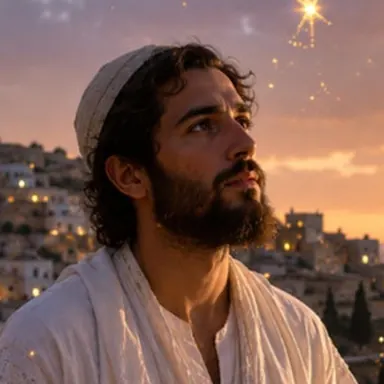
The Holy Ari: Ontology, Liturgy and Historical Influence
14 min read2,796 words
Summary
This text constitutes a broad and in-depth survey of the figure and teaching of Rabbi Yitzchak Luria (the Holy Ari), focusing on the spiritual revolution he brought about in 16th-century Safed. The source presents the metaphysical structure of the Lurianic writings, based on the dramatic concepts of tzimtzum (contraction), the breaking of the vessels and tikkun (repair), which gave cosmic meaning to man's moral responsibility. Alongside the kabbalistic theory, the text details the Ari's practical influence on the wording of the prayers and on the liturgy, such as the Kabbalat Shabbat ceremonies and the kavvanot (mystical intentions) of prayer that penetrated all the communities of Israel. Ultimately, the work highlights how his legacy served as the foundation for later movements such as Hasidism and the Mitnagdim (its opponents), and thereby became a cornerstone in the shaping of modern Judaism.
A Comprehensive Compendium on the Work and Torah Teaching of the Holy Ari: Ontology, Liturgy and Historical Influence
The Historical and Socio-Cultural Introduction to the Rise of the Kabbalah of Safed
The rise of the figure of Rabbi Yitzchak Luria Ashkenazi, known by the appellation the Holy Ari, constitutes one of the most significant turning points in the history of Jewish thought in general and of Hebrew mysticism in particular.[1, 2, 3] In order to understand the power of the innovation of his teaching, one must examine the historical ground on which it grew: the 16th century, a period after the trauma of the expulsion from Spain, in which the Jewish people sought meaning in the distresses of exile and hope for an imminent redemption.[3, 4] The Safed of those days became a lively spiritual center, a refuge for the exiles and a focus of extensive kabbalistic creativity headed by Rabbi Moshe Cordovero (the Ramak), who was the Ari's early teacher.[5, 6, 7]
The Ari was born in Jerusalem in the year 5294 (1534) to an Ashkenazi father and a Sephardic mother, a fact that symbolized the inter-communal fusion that would later characterize his prayer rite and his customs.[1, 3, 7] After his father's death in his childhood, he went down to Egypt and grew up in the home of his wealthy uncle, where he acquired a broad Torah education in the revealed and the hidden Torah.[1, 7] He studied with the great sages of the generation such as Rabbi Betzalel Ashkenazi (author of the "Shita Mekubetzet") and the Radbaz, and became a prodigy in Talmud and halakha even before he turned to the world of the esoteric.[1, 5, 7]
During his stay in Egypt, the Ari began a prolonged period of seclusion lasting seven years on the bank of the Nile, where he delved into the Book of the Zohar and into the writings of the early kabbalists.[7, 8, 9] According to tradition, during this period he merited a revelation of Elijah and direct contact with the upper worlds, experiences that shaped the innovative cosmological system he would later present in Safed.[2, 5, 8]
The Metaphysical Structure: Tzimtzum, Breaking and Tikkun
The core of the Ari's theological innovation lies in a dynamic and dramatic description of the process of creation, which departs from the linear model of the chain of descent of the worlds that characterized the Kabbalah of the Ramak.[6, 8, 11] The Lurianic system is based on three necessary cosmic stages: tzimtzum, the breaking of the vessels and tikkun.[8, 11]
The Doctrine of Tzimtzum and the Empty Space
The Ari presented the concept of tzimtzum (contraction) as an answer to the question of how a finite world can be created within a reality of "Infinite Light" (Or Ein Sof) that fills everything.[3, 4, 12] In contrast to earlier conceptions that saw creation as an expansion of the Divinity, the Ari argued that the first stage of creation is in fact a withdrawal or contraction of the divine light into itself.[3, 12] This act created an "empty space" (tehiru) in which the worlds could come into being.[4, 12]
Into this space there penetrated a thin "line" (kav) of divine light, which constitutes the source of vitality for the worlds that were subsequently emanated.[13, 14] The dispute over the nature of the tzimtzum, whether it is a real ontological change ("literal") or merely a concealment of the light ("not literal"), became one of the most significant intellectual focal points between Hasidism and the Vilna Gaon and his disciples.[15, 16]
The World of Tohu and the Breaking of the Vessels
The next stage in the Lurianic myth is the World of Tohu (chaos), characterized by "many lights and few vessels."[11, 16] In this world, the sefirot appeared as isolated points that did not interact with or become incorporated in one another.[11, 14] The power of the divine light was so great that the vessels intended to contain it could not withstand the pressure and broke.[8, 11, 17]
This event, called "the breaking of the vessels" (Shevirat ha-Kelim), is the cosmological source of the existence of evil, suffering and lack in the world.[9, 12, 17] With the breaking of the vessels, sparks of holiness (nitzotzot) fell into the depths of the "kelipot" (husks), the forces of impurity and of the Sitra Achra (the Other Side).[17, 18, 19] Man's task in the world is "the clarification of the sparks" (birur ha-nitzotzot), that is, the extraction of those particles of light from the kelipot and their return to their holy source.[19, 20]
The World of Atzilut and the System of Partzufim
After the breaking, the process of tikkun (repair) began, the rebuilding of reality within the framework of the World of Atzilut (Emanation).[12, 21] The central innovation here is the transition from individual sefirot to a structure of "partzufim" (configurations, literally "faces"): complex systems of sefirot that act in coordination and harmony.[21] The partzuf represents the ability of the divine system to cope with opposites (such as lovingkindness and judgment) without breaking.[11, 21]
The Ari details five principal partzufim in the World of Atzilut, which parallel the traditional sefirot but have a much broader dynamic depth [14, 21]:
- Arikh Anpin (or Atik Yomin): parallels the sefira of Keter (Crown), represents the supreme will and absolute mercy.[14, 21]
- Abba (Father): parallels the sefira of Chokhmah (Wisdom), represents the primary power of insight and fertilization.[21]
- Imma (Mother): parallels the sefira of Binah (Understanding), represents the power of development, elaboration and the begetting of the worlds.[21]
- Ze'ir Anpin (Z"A): includes the six sefirot from Chesed to Yesod, represents the figure of the Holy One, blessed be He, in the governance of the world.[21]
- Nukva (Malkhut): represents the Shekhinah (Divine Presence), which receives from Ze'ir Anpin and transmits the abundance to the lower worlds.[21]
This system forms the basis of all the Ari's kavvanot of prayer, in which the worshipper intends to unite the various partzufim (for example, the unification of "the Holy One, blessed be He, and His Shekhinah") in order to draw down abundance and vitality to the damaged world.[8, 22, 23]
The Anthology of the Writings: The Role of Rabbi Chaim Vital and the Disseminators of the Teaching
The Holy Ari hardly wrote down his teaching himself, out of a conception that the matters were too living and dynamic to be reduced to paper.[1, 2, 23] Most of what we have is the fruit of the labor of his disciples, foremost among them Rabbi Chaim Vital (Rachu), who was his principal disciple for only two years in Safed.[5, 7, 10] Rachu is considered the most authorized to transmit his teacher's teaching, and he devoted decades to editing the writings.[1, 10]
The teaching of the Ari, as edited by Rachu and his son Rabbi Shmuel Vital, is arranged in the structure of the "Eight Gates" (Shmonah She'arim), which constitute the backbone of kabbalistic study to this day [23, 24]:
In parallel with Rachu, there were other disciples, such as Rabbi Israel Sarug, who spread the Kabbalah of the Ari in Italy and in Europe in a somewhat different version, which included philosophical concepts and a focus on the stages that preceded the tzimtzum ("Derush ha-Malbush," the Doctrine of the Garment).[2, 25] Sarug's influence on the Kabbalah of the Ashkenazim in the first generations was decisive.[25, 26]
His Liturgical Work: The Nusach of the Ari and Changes in Custom
One of the most impressive achievements of the Ari is the penetration of his teaching into the prayer book and the prayer of the ordinary Jew. The Ari did not only propose meditative intentions, but made concrete changes in the text of the prayers and in the order of the commandments.[1, 2]
The Prayer Rite and Practices of Prayer
The Ari used to pray in the Sephardic rite, but introduced emendations into it according to the secrets of Kabbalah.[1] Among the prominent changes:
- Barukh She'amar: insistence on a version of exactly 87 (peh-zayin) words, corresponding to the gematria of "rosh" (head) and other kabbalistic values.[1]
- Kedushat Keter: the recitation of "Keter yitnu lekha" (A crown they shall give You) in the Musaf prayer, a custom that was later accepted among the Hasidim.[1]
- Nefilat Apayim: the innovation of reciting the confession (viduy) and the Thirteen Attributes of Mercy before Nefilat Apayim (falling on the face), a practice that had not been customary before him.[1]
- Piyyutim: the Ari had reservations about medieval piyyutim influenced by Spanish philosophy and preferred ancient piyyutim from the Land of Israel, whose content is closer to the world of the esoteric.[1] Because of this, on the Days of Awe he used to pray in the Ashkenazi synagogue in Safed.[1]
Kabbalat Shabbat and Everyday Practices
The familiar ceremony of "Kabbalat Shabbat" (Welcoming the Sabbath) is to a great extent a product of the Ari's circle in Safed.[9] The Ari and his disciples would go out to the fields surrounding the city on the eve of the Sabbath to welcome the Shekhinah, dressed in white garments.[1, 7, 9] His hymns for the Sabbath, written in Aramaic (such as "Azamer Bishvachin," "Asader Lisudata" and "Bnei Heikhala"), became an inseparable part of the Sabbath meals in many communities, and his name is alluded to in them in the initial letters of the verses.[1]
His personal practices included extra care in immersion in the mikveh (especially on the eve of the Sabbath), studying Torah lying down or sitting in particular ways, and a high spiritual sensitivity to the souls of the righteous and to the world of reincarnations.[2, 9, 27] He was considered to possess an exceptional power of spiritual sight, able to identify the root of a person's soul from his forehead or the features of his face.[2, 3]
The Ethical Revolution: Tikkun Olam and Personal Responsibility
The Ari's most significant contribution to Jewish thought is the transformation of mysticism into an instrument of moral and social responsibility.[4, 8, 17] In his system, the religious act is not merely the fulfillment of a personal obligation, but a cosmic action that can delay or hasten the redemption.[8, 17]
Tikkun Olam in the Lurianic Mirror
The concept of "tikkun" received an activist meaning with the Ari: the world is broken, and man is the only one who can repair it.[4, 11, 17] Every commandment is an opportunity to release a spark of holiness from the kelipot and return it to the World of Atzilut.[19, 20] This conception gave deep existential meaning to life in exile: exile is not merely a punishment, but a mission; the Jews were scattered among the nations in order to gather the sparks dispersed in all corners of the earth.[4, 7]
Reincarnation of Souls and Personal Destiny
Through the "Gate of Reincarnations" (Sha'ar ha-Gilgulim), the Ari offered a solution to questions of justice and suffering.[2, 23, 24] According to his teaching, souls return to the world in order to complete repairs that they did not manage to carry out in previous lives.[2, 3] This understanding created a sense of personal mission for every person: to know what the specific "tikkun of his soul" is and to act to achieve it.[4, 8]
The Ari's Influence on the Following Generations: From Hasidism to the Gra
After the Ari's early death at the age of 38, his Kabbalah became the dominant system in the Jewish world.[1, 3, 9] In the 18th century, it served as the central ground on which the two great and opposing movements in Eastern Europe grew: Hasidism and the Mitnagdim.[6, 15]
Lurianic Kabbalah in the Mirror of Hasidism
Hasidism, led by the Baal Shem Tov, adopted the Ari's fundamental concepts (tzimtzum, breaking, sparks) but gave them a psychological and existential interpretation.[6, 8] Instead of a focus on complex unifications and difficult meditative intentions ("spiritual technology"), Hasidism placed the emphasis on the service of God in joy, in devekut (cleaving to God) and in emotional prayer, in which the clarification of the sparks is also carried out.[8, 28] The teaching of Hasidism turned Lurianic metaphysics into a way of life accessible to the masses.[8, 28]
The Vilna Gaon and the Preservation of Speculative Kabbalah
On the other hand, the Vilna Gaon (the Gra) saw himself as a faithful continuer of the speculative and precise study of the writings of the Ari.[29, 30] The Gra and his disciples (such as Rabbi Chaim of Volozhin) focused on interpreting the metaphysical structure and on continuing the tradition of the kavvanot as it had been handed down from Rachu.[15, 29] The great dispute over the nature of the tzimtzum (literal meaning versus concealment of the light) marked the theological boundary between the two movements, with each claiming fidelity to the Lurianic source.[15]
Summary and Conclusions
The work and teaching of the Holy Ari represent one of the mighty achievements of the Jewish spirit. In a period of national and religious breakdown, the Ari succeeded in creating a system of thought that not only explains the cause of the destruction and the exile, but grants every individual the power and ability to take an active part in the rebuilding of the world.[4, 8, 17]
Central conclusions that emerge from the analysis:
- A transition from description to dynamics: the Ari transformed Kabbalah from a system describing the Divinity into a system describing processes of breaking and repair, and thereby gave it a dramatic and existential dimension.[6, 11]
- Human responsibility: the doctrine of the clarification of the sparks placed man at the center of the cosmic arena, and turned every commandment and blessing into an act of decisive metaphysical importance.[17, 19, 20]
- A fusion of traditions: the figure of the Ari, as one who combined Ashkenazi origin with Sephardic culture, succeeded in uniting the Jewish world around a shared prayer rite and customs based on the esoteric teaching.[1, 3, 7]
- A foundation for modern movements: without Lurianic Kabbalah, movements such as Hasidism or the Mussar movement, which drew their vitality from the conception of "tikkun olam" and "the clarification of the sparks," could not have grown.[6, 8, 15]
The legacy of the Ari continues to live in the prayer books, in the Sabbath songs and in the study of the esoteric teaching, which is ever expanding in our generation, and constitutes testimony to the power of spiritual thought to shape historical and social reality over hundreds of years.[4, 9]
Sources30
- 1.האר"י – חב"דפדיה, chabadpedia.co.il/index.php?title=האר"י&mobileaction=toggle_view_desktop
- 2.האר"י – ויקיפדיה, he.wikipedia.org/wiki/האר"י
- 3.Isaac ben Solomon Luria | History | Research Starters - EBSCO, ebsco.com/research-starters/history/isaac-ben-solomon-luria
- 4.Isaac Luria and Kabbalah in Safed | My Jewish Learning, myjewishlearning.com/article/isaac-luria-kabbalah-in-safed/
- 5.רבי יצחק לוריא האר"י הקדוש - ה' אב - חלומות של צדיקים, halomothasidiim.co.il/sidra/רבי-יצחק-לוריא-הארי-הקדוש-ה-אב/
- 6.מה חייבים לדעת כדי להבין את קבלת האר"י הקדוש? | הרב גיא אלאלוף - YouTube, youtube.com/watch?v=-o3g51Zbiog
- 7.Isaac Luria - Wikipedia, en.wikipedia.org/wiki/Isaac_Luria
- 8.Lurianic Kabbalah – Learn Kabbalah, learnkabbalah.com/lurianic-kabbalah/
- 9.The Ari: Rabbi Isaac Luria and the Revolution of Kabbalah - Hoshen Tours, hoshen-tours.com/destinations/upper-galilee/the-ari-rabbi-isaac-luria/
- 10.כתבי האר"י - ויקיפדיה, he.wikipedia.org/wiki/כתבי_האר"י
- 11.שיחת השבוע 1426 | תיקון השבירה - צעירי אגודת חב"ד, chabad.org.il/Magazines/Article.asp?ArticleID=10494&CategoryID=1846
- 12.קבלה - ויקיפדיה, he.wikipedia.org/wiki/קבלה
- 13.שער ההקדמות, דרושי אדם קדמון א׳ | ספריית ספריא, sefaria.org.il/Sha'ar_HaHakdamot,_Adam_Kadmon.1
- 14.אדם קדמון (קבלה) - ויקיפדיה, he.wikipedia.org/wiki/אדם_קדמון_(קבלה)
- 15.התקשרות 821 | הגר"א במשנת הרבי - חב"ד, chabad.org.il/Magazines/Article.asp?ArticleID=6744&CategoryID=1387
- 16.היצר הרע חזק ועוצמתי, היצר הרע נחמד וחלש... בואו להכיר את רעיון העלאת ..., he.chabad.org/library/article_cdo/aid/3593618/jewish/-.htm
- 17.השבירה, התיקון והאדם – לפי תורת האר"י | חיבורים בספריא, sefaria.org.il/sheets/216074
- 18.ניצוצות (קבלה) - ויקיפדיה, he.wikipedia.org/wiki/ניצוצות_(קבלה)
- 19.היצר הרע חזק ועוצמתי, היצר הרע נחמד וחלש... בואו להכיר את רעיון העלאת הניצוצות - בית חב"ד, he.chabad.org/library/article_cdo/aid/3593618
- 20.מושגים בחסידות | זדונות נעשות כזכויות - צעירי אגודת חב"ד, chabad.org.il/Concepts/Item.asp?ArticleID=114&CategoryID=200
- 21.עולם האצילות - ויקיפדיה, he.wikipedia.org/wiki/עולם_האצילות
- 22.כתבי הארי רבי חיים ויטאל - Daily Zohar, dailyzohar.com/wp-content/uploads/2015/09/shaar-hakavanot.pdf
- 23.האר"י – ויקיפדיה, he.wikipedia.org/wiki/גורי_האר"י
- 24.קבלה, כתבי האר"י וחיים ויטאל | ספריית ספריא, sefaria.org.il/texts/Kabbalah/Arizal and Chaim Vital
- 25.ישראל סרוג – ויקיפדיה, he.wikipedia.org/wiki/ישראל_סרוק
- 26.הסוד השמור שהפך לנחלת הכלל: על קבלת האר"י - BeitChabad.com - בית חב"ד, he.chabad.org/library/article_cdo/aid/3011005/jewish/-.htm
- 27.דרכי ישרים, הנהגות ישרות מ״ז | ספריית ספריא, sefaria.org.il/Darkhei_Yesharim,_Hanhagot_Yesharot.47
- 28.תורת חב"ד | בין קבלה לחסידות, chabad.org.il/Articles/Article.asp?ArticleID=1881&CategoryID=793
- 29.הגאון מווילנא - חב"דפדיה, chabadpedia.co.il/index.php/הגאון_מווילנא
- 30.הגאון מווילנה - ויקיפדיה, he.wikipedia.org/wiki/%D7%94%D7%92%D7%90%D7%95%D7%9F_%D7%9E%D7%95%D7%95%D