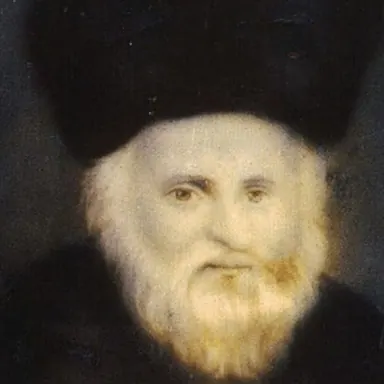
The Work and Torah Teaching of the Gra of Vilna: A Comprehensive Analysis of His Method of Study, the Esoteric World, the Struggle against Hasidism and His Historical Legacy
21 min read4,280 words
Summary
This source offers a broad and in-depth survey of the figure of the Vilna Gaon, examining his formative influence on the Orthodox Torah world in the modern era. The text analyzes the revolution in his method of study, which replaced complex pilpul with a striving for textual precision and for the plain meaning (peshat), alongside his extensive engagement with the esoteric teaching and his positive attitude to the study of secular sciences as an aid to understanding the Torah. Central chapters are devoted to the controversy against Hasidism, which the Gra conducted out of fear of deviation from tradition and from halakha, and to his practical legacy, which found expression in the founding of the Volozhin Yeshiva and in the immigration of his disciples to the Land of Israel. The aim of the work is to show how a combination of extreme scholarship, forceful spiritual leadership and national vision laid the intellectual and demographic infrastructure of the Lithuanian world and of the renewed Jewish settlement.
Extended Biography: Childhood, His Family and His Ascetic Way of Life
Rabbi Eliyahu ben Shlomo Zalman, known throughout the Jewish world as the Gra (the Gaon Rabbi Eliyahu) or "the Gaon and Chasid," was born on 15 Nisan 5480 (23 April 1720) in the village of Seltz near Brisk, in a region that was then part of the Polish-Lithuanian Commonwealth [cite: 1]. His family claimed descent from the spiritual leaders of Vilna; his father, Rabbi Shlomo Zalman, and his mother, Treina, were connected to an illustrious family network [cite: 1]. His grandfather, Yissachar Dov, was the son of Rabbi Eliyahu Chasid, who was married to the granddaughter of Rabbi Moshe Rivkes, author of the halakhic work "Be'er ha-Golah," and was the son of Rabbi Moshe Kremer, who served as rabbi of Vilna [cite: 1]. These family ties connected the Gra to "the Chaver Yosef" and to the scholarly elite of those days [cite: 1].
Already in his earliest childhood the Gra stood out as an exceptional prodigy who had no need of the ordinary courses of study [cite: 1]. At only six years old he delivered a complex sermon in the Great Synagogue of Vilna, a sermon his father had taught him and to which he added an independent and original pilpul meant to test the limits of his intellectual ability [cite: 1]. At seven he went to live for three months in the town of Keidan with the town's rabbi, Rabbi David Katzenellenbogen, where he studied with him and with Rabbi Moshe Margalit, author of the foundational commentary "Penei Moshe" on the Jerusalem Talmud [cite: 1]. At this age the Gra had already conceived a unique halakhic novella that was later printed in his work "Shenot Eliyahu" [cite: 1]. At the age of ten the Gra reached a spiritual crossroads, when he decided to study entirely independently without teachers and guides, and in this period he became attached to Rabbi Aryeh Leib, who later served as av beit din (head of the rabbinic court) of Tchechanovitz [cite: 1].
At a young age the Gra married Chana, daughter of the scholar Yehuda Leib of Keidan [cite: 1]. Chana took upon herself the full burden of managing the household and raising the children, with the declared aim of freeing her husband from every material concern and enabling him to devote all his time to study [cite: 1]. All eight of the Gra's children were born to him by his wife Chana [cite: 1]. After her death in 5543 (1782), the Gra took as his second wife Gittel, daughter of Meir Luntz of Chelm, who was also a widow [cite: 1]. The Gra had four brothers who also turned to Torah paths: Rabbi Moshe, Rabbi Avraham (author of the book "Ma'alot ha-Torah"), Rabbi Yissachar Ber and Rabbi Meir [cite: 1].
At about the age of twenty the Gra set out on a wandering journey through Poland and Germany, passing through the cities of Lissa, Berlin and perhaps even Amsterdam, until he returned to Vilna in 5505 (1745) [cite: 1]. He consistently refused to serve in an official rabbinic post in Vilna or in any other community, out of a desire to keep away from authority, publicity and public honor, and out of fear that occupation with communal needs would harm the continuity of his study [cite: 1]. The leadership of the Vilna community, which saw an enormous privilege in his residing in the city, allotted him a meager monthly stipend for his livelihood [cite: 1].
The Gra's way of life was marked by extreme and ascetic diligence: he slept only two hours a day, divided into four half-hours, so as not to sleep more than "shitin nishmin" (sixty breaths) continuously [cite: 1]. His principal disciple, Rabbi Chaim of Volozhin, testified that when the Gra struggled to crack a difficult problem, he would refrain from putting food in his mouth for consecutive days, and his body would become emaciated and tormented until he found the longed-for answer [cite: 1]. The Gra died on 19 Tishrei 5558 (9 October 1797), during Chol HaMoed Sukkot, at the age of 77, and was buried in the Jewish cemetery in Shnipishok [cite: 1, 2].
Methodology of Study and Ruling: Textual Emendations, Peshat and the Confrontation with Pilpul
The Gra's revolution in study marked a sharp transition from the method of pilpul and chillukim (hair-splitting distinctions) that was customary in the yeshivas of Poland and Ashkenaz, toward analytical, philological study and an uncompromising striving for the plain meaning of the text [cite: 1, 3]. The Gra recognized that most of the difficulties and contradictions that occupied the scholars of his generation stemmed from corrupt readings of the literature of the Sages that had crept into the printed editions through unqualified copyists [cite: 1]. Therefore, he devoted a considerable part of his work to emending and clarifying the readings in Talmudic and Midrashic literature [cite: 1, 4]. The Gra clarified the texts of the Babylonian Talmud, the Jerusalem Talmud, the Mishnah, the Tosefta and the halakhic Midrashim, and turned them into a clear teaching free of corruptions [cite: 1, 4].
Until the age of forty the Gra wrote himself, but afterwards he focused his work on delivering his teaching orally and dictating it to his disciples, most of his books being edited from their notes [cite: 1, 4]. His disciple Rabbi Chaim of Volozhin testified that all the works the Gra left are no more than "like a drop against the great sea" compared with the actual breadth of his wisdom [cite: 1]. His most important halakhic work is "Biur ha-Gra" (the Gra's Commentary) on the four parts of the Shulchan Arukh [cite: 5]. This work is marked by extreme brevity, and at times it includes only dense source references that link the ruling of the Shulchan Arukh directly to the source passage in the Gemara or in the halakhic Midrash, out of a conception that halakha is not detached from its primary sources [cite: 5].
To understand how the Gra worked in dismantling the halakhic text and returning it to its Tannaitic and Amoraic source, one can examine his commentary on the first paragraph of the Shulchan Arukh, Orach Chaim, which deals with rising in the morning and strengthening oneself like a lion for the service of the Creator [cite: 6]:
This rigorous method aroused profound halakhic discussions among the decisors of later generations, first and foremost Rabbi Shmuel HaLevi Wosner in his responsa work "Shevet ha-Levi" [cite: 3]. Wosner labored greatly to decipher the Gra's rulings, observing that the Gra changed the understanding of the halakhic text through the force of his emendations [cite: 3]. He notes that at times the Gra emends the Tosefta in a way that completely reverses its words or establishes it as an individual opinion (such as the opinion of Ben Teima), which raises interpretive difficulties [cite: 3].
Nevertheless, Wosner stresses that even when the Gra's emendation appears puzzling in light of the sources that were before him, it is founded on his holy spirit and his great knowledge [cite: 3]. In the world of practical ruling, "Shevet ha-Levi" notes that although the Gra, the Taz and the Magen Avraham tend to be stringent in certain matters, in actual practice people have been accustomed to be lenient in accordance with the majority of decisors, since the Gra's stringencies are intended for one who wishes to sanctify himself and do not always constitute the root of the law that applies equally to everyone [cite: 3].
Besides the commentary on the Shulchan Arukh, the Gra composed "Shenot Eliyahu" on Seder Zera'im, "Eliyahu Rabbah" on Seder Tohorot, and commentaries on tractate Avot [cite: 5]. Another halakhic work presenting his practical rulings is "Ma'aseh Rav," which was written by his attendant and documented the Gaon's personal practices [cite: 5]. However, Rabbi Chaim of Volozhin expressed some reservation about the book's absolute reliability, and noted in his introduction that many practices appearing in it had never been seen by him, which shows the complexity of documenting the Gra's rulings in actual practice [cite: 5].
The Esoteric Teaching: Kabbalah, Sifra di-Tzeniuta and the Tzimtzum Controversy
The Gra combined in his personality a complete mastery of both the revealed and the hidden Torah, and regarded Kabbalah as an inseparable part of the soul of the Torah [cite: 1, 7]. He began his engagement with Kabbalah already at the age of nine, and in his maturity composed "Biur ha-Gra le-Sifra di-Tzeniuta" (the Gra's Commentary on Sifra di-Tzeniuta), a unique and profound work considered the cornerstone of his kabbalistic system [cite: 1, 4]. Within this commentary the Gra dealt with the question of revealing and calculating the End, while adjuring those who know the secret not to reveal it in public [cite: 4]. Other works, such as "Yahel Or" on the Book of the Zohar, were collected from various manuscripts that he left behind [cite: 7]. The Gra also engaged much with "Sefer Yetzirah," the ancient mystical work attributed to Abraham our forefather, which is mentioned in the Gemara in Sanhedrin as the instrument by means of which Amoraim such as Rava, Rabbi Chanina and Rav Oshaya created living beings [cite: 7, 8].
One of the sharpest theological debates that divided the world of the kabbalists in the 18th century, and set the Gra in head-on confrontation with Hasidism, revolved around the understanding of the Ari's concept of tzimtzum (contraction) [cite: 9]. This concept describes how the Ein Sof (the Infinite) cleared a space within itself in order to enable the creation of the world [cite: 9]. Hasidism, and especially Chabad Hasidism, fully supported the approach that "the tzimtzum is not literal" [cite: 9]. In their view, the Divinity is present everywhere physically and there is no void empty of it ("lit atar panui minei," there is no place empty of Him), and the tzimtzum is nothing but a perceptual concealment from the standpoint of the creatures [cite: 9].
Against this, the Gra and his disciples saw in this conception a grave danger leading to pantheism and to a complete blurring between Creator and creature. The Gra held the view that the tzimtzum must be understood literally insofar as it concerns our material world, in order to prevent the thought that Divinity is found in lowly, despicable or impure things [cite: 9]. For him, transcendent separation is a necessary condition for preserving the purity of the divine concept and the validity of the halakhic system that distinguishes between the holy and the profane.
This conception of accepting the words of the Sages and the spiritual sources literally also found expression in the Gra's attitude to rationalist philosophy. In his commentary on Yoreh De'ah (section 179, sub-paragraph 13), the Gra sharply attacks Maimonides (Rambam), who wrote that amulets and demons are falsehood and vanity [cite: 10]. The Gra charges that "philosophy led him astray," and argues that Greek rationalism caused him to deny the real existence of these spiritual forces, which are mentioned throughout the Talmud and the Midrashim [cite: 10]. According to the Gra, the words of the Sages must not be turned into parables and hollow figures of speech; rather, one must understand that they have an objective and real spiritual existence [cite: 10].
The Great Controversy against Hasidism: Background, Motives and the Consequences of the Bans
The Gra's opposition to Hasidism was not a merely intellectual struggle, but an all-embracing social and religious campaign intended to cut off what he perceived as a grave deviation from Jewish tradition [cite: 11, 12]. The roots of the public controversy go back to the rabbinic assembly of the "Council of Four Lands" in 5517 (1757), at which it was decided to proclaim a ban against the Baal Shem Tov and his movement [cite: 12]. The Gra joined this struggle with the full force of his authority, while Hasidic historiography claims that part of his extreme position stemmed from false rumors and false testimony brought before him by zealots, who swore before him that the Hasidim had eaten and drunk in the midst of the fast of Tisha B'Av and had even danced with a little girl [cite: 12].
Beyond these rumors, weighty theological and sociological reasons underlay the Gra's opposition:
Fear of casting off the yoke of halakha: Hasidism drew the common people close and raised their standing, which according to the opponents brought in its wake contempt for the honor of the Torah and of those who study it [cite: 12]. The changes in the wording of the prayers, the abandonment of the accepted times of prayer, and the ecstatic outward behavior were perceived as undermining the accepted boundaries of halakha [cite: 11].
- The division of communities and heresy: in 5532 (1772) an independent Hasidic minyan known as "the Karliner minyan" was established in Vilna, led by R. Isser and the Maggid R. Chaim [cite: 11]. The heads of the community in Vilna, backed by the Gra, decided to disperse this minyan and to excommunicate its leaders [cite: 11]. When the Maggid R. Chaim came to ask the Gra's forgiveness, the Gaon answered him in harsh language: "My honor is forgiven you, but as for the honor of the Omnipresent and the honor of the Torah, God forbid that this iniquity be atoned for you until you die," and added that this was heresy for which there is no repentance [cite: 11].
- Burning of writings and excommunication: the court in Vilna ordered that the Hasidic writings be burned at the gate of the synagogue, that R. Isser be humiliated, and that sharp letters of warning be sent to all the large communities [cite: 11]. In these letters the Hasidim were accused of neglecting Torah study, changing the wording of the prayers and treating transgressions lightly [cite: 11].
The war against Hasidism grew so sharp that a proclamation was published forbidding marriage ties with Hasidim, defining their bread as the bread of idolaters and their wine as libation wine, and in extreme cases it even led to physical harm to Hasidim (such as the story of the Rashbatz of the town of Sventzian) [cite: 12]. The campaign reached its peak in 5559, when denunciations by opponents to the authorities of the Russian Empire led to the arrest of the Alter Rebbe, Rabbi Shneur Zalman of Liadi, on a charge of treason, an imprisonment that ended on 19 Kislev [cite: 12].
In the Gra's eyes, the opposition was absolute and there could be no talk of a merger or compromise between the paths; every attempt to accept a Hasidic idea was perceived as abandoning the path of truth [cite: 13]. Over the years, despite the persecutions, many of the opponents became Hasidim themselves, and others changed their attitude from hatred to love and esteem [cite: 12].
His Attitude to the Secular Sciences and His Work "Ayil Meshulash"
The Gra held a unique approach in the Torah landscape of Eastern Europe in his attitude to the secular sciences [cite: 1]. He supported the study of the exact sciences, among them mathematics, astronomy (chokhmat ha-tekhunah) and geometry, and saw in them necessary tools for understanding the depth of the commandments of the Torah [cite: 1]. Direct testimony to this is his writing of the book "Ayil Meshulash," which deals with geometry, trigonometry and astronomy [cite: 4, 14]. This book represents an exceptional facet of the Gra's activity, since it is the only work he wrote with his own hands as a complete and orderly book, whereas his other books were written as glosses or as summaries of lessons by his disciples [cite: 4, 14]. The book was first printed from his manuscript in 1833 in Vilna and Grodno [cite: 4, 14].
The Gra drew a sharp distinction between the humanities and the natural sciences [cite: 1]. While he rejected metaphysical philosophy on the grounds that it distorts the plain meaning of the verses and introduces foreign opinions, he praised the exact sciences and called them "perfumers and cooks" that help in understanding the Torah [cite: 1, 10]. With the Gra's encouragement and under his guidance, "Sefer Euclidus" (the Elements of geometry) was translated into Hebrew by Rabbi Baruch Schick of Shklov in 5540 (1780) [cite: 1]. The Gra held that a person lacking knowledge of these sciences will lack "a hundred measures" in understanding the divine wisdom contained in the Torah and its commandments [cite: 1].
The Volozhin Yeshiva and the Institutionalization of His Scholarly Path: In-Depth Study, Breadth of Knowledge and "Nefesh ha-Chaim"
The Gra's teaching was grounded and turned into an institutionalized educational model through his foremost disciple, Rabbi Chaim of Volozhin (7 Sivan 5509 – 14 Sivan 5581) [cite: 2, 15]. In 1802 Rabbi Chaim founded the "Etz Chaim" yeshiva in the town of Volozhin, which earned the title "mother of the yeshivas" and shaped the Lithuanian yeshiva world [cite: 2, 15, 16]. The yeshiva was established under the direct guidance of the Gra with the aim of creating a supreme Torah center that would restore the world of scholarship and serve as a counterweight to Hasidism [cite: 16].
The yeshiva set strict admission requirements, accepting only students who were able to study a page of Gemara with Rashi and Tosafot independently [cite: 16]. The method of study combined in-depth analysis with broad coverage for breadth of knowledge: the students studied the Talmud at the pace of a page a day, and reviewed each page twelve times on average [cite: 16]. On Fridays the time was devoted to studying the commentary of the Rosh on the five pages learned during the week [cite: 16]. Many of the students came to the yeshiva already in command of the entire Talmud at a young age [cite: 16].
Volozhin was run as a "yeshiva without interruption," with shifts of study around the clock [cite: 16]. In keeping with the tradition of the Gra, the yeshiva opposed Hasidism and rejected the systematic study of mussar [cite: 16]. During the tenure of the Netziv of Volozhin, who was an active member of "Hibbat Zion," secret Zionist societies were founded in the yeshiva, such as "Nes Ziona" (led by Rabbi Isser Zalman Meltzer) and "Netzach Yisrael" [cite: 16]. The yeshiva was eventually closed on 5 Shevat 5652 (1892) because of pressure from the Russian government to introduce secular studies [cite: 16].
The theological infrastructure of this scholarly world was set out in Rabbi Chaim's book "Nefesh ha-Chaim" [cite: 17, 18]. In Gate 4 of the work Rabbi Chaim presents a religious ideology that sets Torah study as the very highest value, loftier even than the performance of commandments and mystical cleaving (devekut) [cite: 18]. The intellectual study of halakha is perceived as the most direct and strongest channel of connection to the Holy One, blessed be He [cite: 17, 18].
Moreover, the book makes clear that the Torah is the glue that sustains the whole of physical reality: if the world were empty for a single moment of contemplation of Torah, all the worlds would be destroyed and return to chaos and void [cite: 18]. This cosmic conception magnified the prohibition of "bittul Torah" (neglect of Torah study) into a tangible existential danger, and made absolute diligence the metaphysical duty of the yeshiva student [cite: 18].
The Vision of Zion and Immigration to the Land of Israel: Foundations of the Renewed Settlement
The Gra's aspiration to go up to the Land of Israel, which did not succeed in his own case, became a great historical enterprise through his disciples, the "Perushim," who laid the foundations for the renewal of Jewish settlement in Jerusalem and in the four holy cities [cite: 2, 19, 20]. The background to their immigration stood in sharp contrast to the tragic immigration attempt of Rabbi Yehuda HeChasid in 5461 (1700): Rabbi Yehuda HeChasid died a few days after his arrival, his group broke up under the burden of heavy debts, and the Ottoman authorities forbade Ashkenazi Jews to live in Jerusalem for more than a hundred years [cite: 21]. The historical turning point came in 5530 (1770) following a great spiritual awakening in Vilna under the influence of the Gra [cite: 21].
In 5541 (1780), on the second day of Rosh Hashanah, Rabbi Binyamin Rivlin of Shklov delivered a messianic sermon in the Great Synagogue, in which he called for the "Return to Zion" and stirred the founding of the "Chazon Zion" (Vision of Zion) movement [cite: 22]. The aim of the movement was to prepare the ground for the year 5600 (1840), a year perceived as the year of redemption according to the Book of the Zohar [cite: 22]. The plan included restoring the Divine Presence by bringing "sixty myriads" (600,000) of Jews to Jerusalem in order to overcome "the prince of Esau," and establishing the center of Torah in the Land [cite: 22]. The path to redemption was paved through practical work: immigration, building the Land, and redeeming Jerusalem through charity [cite: 22].
The organized immigration took place in three main waves beginning in 5568 [cite: 21]:
- The first group (5568 – 1808): went up under the leadership of the kabbalist Rabbi Menachem Mendel of Shklov [cite: 21].
- The second group (5569 – 1809): went up under the leadership of Rabbi Saadia of Shklov [cite: 21].
- Further groups: included leaders such as Rabbi Shmuel of Shklov and Rabbi Chaim Katz [cite: 21].
The immigrants faced a hard series of sufferings, plagues and earthquakes, and lost prominent leaders such as Rabbi Azriel, whose family returned to the diaspora in shock [cite: 21, 23]. Nevertheless, they established the "Kollel HaPerushim," which enabled Ashkenazi immigrants who were not Hasidim to settle in the Land independently [cite: 19].
In Tiberias Rabbi Israel of Shklov composed his halakhic work "Pe'at ha-Shulchan," which for the first time arranged and codified the commandments dependent on the Land according to the rulings of the Gra, and became the halakhic code of the entire settlement [cite: 23].
During the 19th century, the Perushim and their descendants in Jerusalem led the trend of moving out beyond the walls, established the "Bikur Cholim" hospital (1857), founded the "Etz Chaim" Talmud Torah, and were partners in the purchase of the lands of Nebi Samwil, Motza and Petah Tikva (1877–1878) [cite: 19]. Their practical enterprise laid the economic, spiritual and settlement infrastructure of the modern State of Israel [cite: 21].
Summary and Conclusions
The Torah teaching and work of the Gra of Vilna constitute the watershed of Orthodox Judaism in the modern era [cite: 2]. Through an uncompromising combination of rigorous scholarship, philological emendation of readings and striving for the plain meaning, the Gra succeeded in freeing the Torah world from the shackles of artificial pilpul and in setting forth a rich scholarly alternative [cite: 1, 4]. His ideological war against Hasidism defined the boundaries of divine transcendence and preserved the supreme status of halakha and of intellectual Torah study as the axis of cosmic existence [cite: 11, 18].
His legacy, which was translated into the founding of the Volozhin Yeshiva by Rabbi Chaim of Volozhin and into the immigration of the Perushim to the Land of Israel, created the educational and demographic structures that sustain the Torah world and the Jewish settlement in the Land to this very day [cite: 2, 16, 19].
Sources23
- 1.הגאון מווילנה - ויקיפדיה, he.wikipedia.org/wiki/הגאון_מווילנה
- 2.הגר"א – הגאון מווילנה - אוצרות המקדש האבודים, otzrothamikdash.co.il/sage/הגרא-הגאון-מווילנה/
- 3.הגר"א במשנת 'שבט הלוי' / הרב יהושע ענבל - מכון שלמה אומן, machonso.org/hamaayan/?gilayon=58&id=1716
- 4.ספרי הגר"א - ויקיפדיה, he.wikipedia.org/wiki/ספרי_הגר"א
- 5.כתבי הגר"א – ויקישיבה, yeshiva.org.il/wiki/index.php/כתבי_הגר"א
- 6.ביאור הגר"א על אורח חיים א - ויקיטקסט, he.wikisource.org/wiki/ביאור_הגר"א_על_אורח_חיים_א
- 7.קבלה | ספריית ספריא, sefaria.org.il/texts/Kabbalah
- 8.הקדמה – ספר היצירה - עולמות, olamot.net/shiurim/הקדמה-ספר-היצירה/
- 9.צמצום (קבלה) – ויקישיבה, yeshiva.org.il/wiki/index.php/צמצום_(קבלה)
- 10.גניזת הדעת - הרב מיכאל אברהם, mikyab.net/שות/גניזת-הדעת/
- 11.ההתנגדות לחסידות - ויקיפדיה, he.wikipedia.org/wiki/ההתנגדות_לחסידות
- 12.ההתנגדות לתורת החסידות - חב"דפדיה, chabadpedia.co.il/wiki/ההתנגדות_לתורת_החסידות
- 13.האם באמת אפשר לשלב בין החסידות להתנגדות? - הקיבוץ הקדוש, hakibbutz.org.il/9387
- 14.איל משולש - ויקיטקסט, he.wikisource.org/wiki/איל_משולש
- 15.חיים מוולוז'ין - ויקיפדיה, he.wikipedia.org/wiki/חיים_מוולוז'ין
- 16.ישיבת וולוז'ין – ויקישיבה, yeshiva.org.il/wiki/index.php/ישיבת_וולוז'ין
- 17.בלבבי משכן אבנה (שוורץ)/חלק ה - ויקיטקסט, he.wikisource.org/wiki/בלבבי_משכן_אבנה_(שוורץ)/חלק_ה
- 18."ביטול תורה" – מימי התלמוד ועד לישיבות ימינו - צריך עיון, iyun.org.il/sedersheni/bitul-torah-development-and-significance/
- 19.עליית תלמידי הגר"א - ויקיפדיה, he.wikipedia.org/wiki/עליית_תלמידי_הגר"א
- 20.אגרת הגר"א - ויקיפדיה, he.wikipedia.org/wiki/אגרת_הגר"א
- 21.סיפורם של מנהיגי "עליית תלמידי הגר"א" - הגיבורים הנשכחים - הקיבוץ הקדוש, hakibbutz.org.il/2038
- 22.תולדות עליית תלמידי הגר"א ויישובם בארץ הקודש - קדושת ציון, kedushastzion.org/תולדות-עליית-תלמידי-הגרא-ויישובם-בארץ/
- 23.עליית תלמידי הגר"א – מרכז מורשת הרמב''ם, harambam.org.il/gra-disciples/