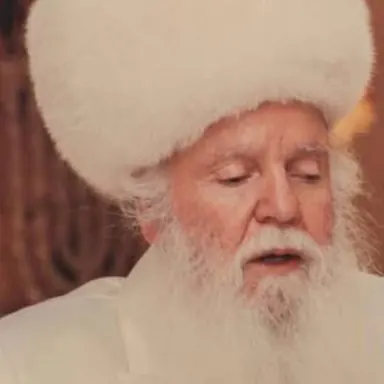
A living bridge between deep holiness and public, national responsibility at the holiest and most sensitive place in the world.
Biography
Rabbi of the Western Wall and head of the Beit El (kabbalists') yeshiva; he combined hidden service with practical management and sensitivity to all of Israel.
includes 4 inspiration linksThe generations follow the Rambam’s introduction to the Mishneh Torah. A dashed line is inspiration, not direct transmission.
The Sentinel of the Secret Chambers: The Biographical, Mystical, and Geopolitical Legacy of Rabbi Meir Yehuda Getz
12 min read·2,416 words
Summary
The text surveys the multidimensional portrait of Rabbi Meir Yehuda Getz, a unique figure who fused traditional rabbinic authority with military service, general education and deep engagement with the esoteric Torah. The biographical timeline highlights his move from Tunisia to Israel, where he served as Rabbi of the Western Wall and the Holy Places and led the restoration of the kabbalists' yeshiva "Beit El." The source's narrative focuses on his spiritual aspiration to uncover the hidden places of the Temple Mount, and at its climax on the political drama surrounding the uncovering of Warren's Gate and the search for the Ark of the Covenant in the underground tunnels. Ultimately, the article seeks to commemorate the rabbi's legacy as a guardian of the walls of Jerusalem, who succeeded in uniting public and security work with an ascetic way of life and prayer at the point closest to the Holy of Holies.
Biographical Foundations and the North African Rabbinic Milieu
The life of Rabbi Meir Yehuda Getz represents a rare synthesis of traditional North African rabbinic authority, modern secular education, active military service, and esoteric Jerusalem Kabbalah.[1] Born on August 15, 1924 (15 Av 5684), in the Tunisian town of Menzel Bouzelfa, Getz was raised in an environment saturated with classical scholarship.[2] He was the third of four brothers born to Rabbi Tzemach Getz, who descended from a distinguished rabbinic lineage, and Simha-Messauda, a direct descendant of the revered eighteenth-century commentator Rabbi Chaim ibn Attar, the Ohr HaChaim.[2] Shortly after his birth, the family relocated to Tunis, where he commenced his formal education at the "Or HaTorah" Talmud Torah.[1, 2] Displaying an early inclination toward intellectual synthesis, Getz successfully demanded that the institution incorporate French language instruction alongside sacred studies, a request that signaled his lifelong capacity to navigate both sacred and mundane spheres.[2] He advanced his religious studies under the tutelage of Rabbi Yehoshua Pitoussi, who would later serve as the Chief Rabbi of Safed.[1]
The historical convulsions of World War II profoundly shaped his personal trajectory. During the Axis occupation of Tunisia, Getz was conscripted by Nazi forces into a grueling forced labor battalion in the port city of Bizerte.[1] On the festival of Tu B'Shvat in 1943 (5703), exploiting the chaos of an Allied air raid, he escaped captivity by disguising himself in a military uniform he had acquired, fleeing on foot to his family home.[1] This narrow escape prompted a lifelong vow to celebrate Tu B'Shvat annually as a personal day of deliverance.[1]
Following the war, at the age of nineteen, Getz married his distant relative, Esther-Silvette Guez, and settled in Nabeul, where he balanced commercial work as a shop clerk with advanced academic pursuits, studying law via correspondence with the Sorbonne University in Paris.[1] In 1946 (5706), at the age of twenty-two, he received formal rabbinic ordination and was appointed communal rabbi of Souk El-Arba'a.[1] In this post, he served as a multi-faceted spiritual leader, functioning simultaneously as rabbi, cantor, ritual circumciser (mohel), slaughterer (shochet), and marriage registrar.[1] Concurrently, he emerged as a prominent Zionist organizer, encouraging Hebrew education, advocating for emigration to Israel, and encouraging local Jewish youth to train in self-defense and firearms.[1] His organizational acumen caught the attention of the Jewish Agency, leading to an assignment in France, where he managed an educational facility for the Youth Aliyah movement.[1]
Pioneers of the Galilee: Secular Integration and the Catalyst of Loss
Upon his immigration to Israel in 1949 (5709), Getz initially resided in Haifa before accepting a comprehensive rabbinic appointment in the northern agricultural cooperative of Kerem Ben Zimra.[1] In the Galilee, he modeled a pioneer lifestyle, serving as the local rabbi, cantor, mohel, and shochet, while also founding and directing the "Benayahu" agricultural elementary school.[1] His integration into the state apparatus deepened in 1952 when he enlisted in the Israel Defense Forces, completed an officers' course, and was appointed as the security coordinator for the Marom HaGalil regional council.[1]
The turning point of his life occurred during the Six-Day War of 1967. His second son, Avner, a paratrooper in the reserve forces, was killed in action during the intense hand-to-hand combat to liberate the Old City of Jerusalem.[1] Despite his profound grief, Getz famously remarked: "Woe to me that this happened to me, and blessed am I that I merited my son falling for the liberation of Jerusalem".[1] Driven by a desire to reside near his son's final resting place on Mount Herzl, Getz and his wife relocated to Jerusalem.[1] His administrative capability and spiritual stature attracted national recognition, and in 1969 (5729), Minister of Religions Zerach Warhaftig appointed him as the official Rabbi of the Western Wall, a jurisdiction that was later expanded to encompass all Holy Sites in Israel.[1] Decades later, Getz would also endure the loss of another son, Yair, who was tragically killed in a truck accident, and was subsequently laid to rest alongside him on the Mount of Olives.[1]
The Restoration of Yeshivat Beit El and Kabbalistic Devotion
In Jerusalem, Getz submerged himself in the study of Jewish mysticism, aligning himself with the great kabbalists of the city, most notably Rabbi Ovadia Hadaya.[1] Rabbi Hadaya had been forced to relocate the historic Yeshivat HaMekubalim "Beit El" from the Old City to the New City following the Jordanian occupation of the Jewish Quarter in 1948.[1] Following the reunification of the city, Getz worked to reclaim and reconstruct the original three-hundred-year-old sanctuary of the yeshiva in the Jewish Quarter—initially established by Rabbi Gedaliah Hayon and famously led by the master kabbalist Rabbi Shalom Sharabi (the Rashash).[1] Recognizing his expertise in both the open (nigleh) and concealed (nistar) dimensions of the Torah, the rabbinic leadership appointed Getz as the Rosh Yeshiva of Beit El.[1]
His personal conduct was defined by ascetic rigor. He adopted a highly structured routine, retiring for sleep only between the evening prayer (Maariv) and midnight.[1] At midnight, he descended into the subterranean chambers of the Western Wall to recite Tikkun Chatzot (the Midnight Liturgy) directly opposite the estimated location of the Holy of Holies, studying kabbalistic texts there until the sunrise prayer (Vatikin).[1] After completing his administrative duties as Rabbi of the Western Wall, he dedicated his afternoons to teaching at Yeshivat Beit El.[1]
Despite his personal asceticism, Getz advocated a philosophy of domestic harmony and peace. He maintained strict entrance requirements for Yeshivat Beit El, making a student's admission contingent upon the maintenance of peace within their home (Shalom Bayit).[1] In his private life, he modeled this behavior by showing profound respect for his wife, establishing a custom of presenting her with a gift or piece of jewelry at the start of every Hebrew month (Rosh Chodesh).[1]
Getz left behind a significant corpus of written works spanning kabbalistic theory, biblical commentary, and historical documentation.[1, 2] His primary kabbalistic work, Reshpey Esh ("Flashes of Fire"), is a commentary on the esoteric intentions (kavanot) of the Rashash, structured around the classical systems of Rabbi Isaac Luria (the Ari) and Rabbi Chaim Vital.[1] Written in dense, classical rabbinic style, Reshpey Esh remains a core text for advanced students at Yeshivat Beit El, studied under the guidance of his student, Rabbi Yisrael Avichai.[1] His other works include Gitzei Torah ("Sparks of the Torah"), a volume of homiletical and mystical commentaries on the Pentateuch, and Kuntres HaKotel ("The Western Wall Treatise"), which outlines the halakhic history of the site.[2] He also composed specialized essays on domestic harmony (Ma'amar Shalom Bayit), the sanctity of the Land of Israel (Ma'amar Eretz Yisrael), and the spiritual significance of Jerusalem (Ma'amar Yerushalayim), alongside two liturgical poems written during and after the Six-Day War.[2]
The Archeology of Redemption: The Gate of the Priests and the Warren's Gate Crisis
The most historically complex chapter of Getz’s tenure began in the early 1970s with the systematic excavation of the Western Wall Tunnels, a project he initiated and directed.[3] In 1971 (5731), workers uncovered a massive sealed gate along the Western Wall.[3] Getz identified this structure as the "Gate of the Priests," believing it to be the ancient portal through which ritually impure priests departed the Temple Mount complex.[3] His historical calculations suggested that this gateway lay on a direct trajectory to the subterranean chambers where King Josiah had hidden the Ark of the Covenant before the destruction of the First Temple.[3] According to the Mishnah, the Ark had been safely hidden "in winding underground chambers" (be-matmoniyot akalkalot).[3] Eager to pursue this discovery, he drafted a letter to the Lubavitcher Rebbe, Rabbi Menachem Mendel Schneerson, in New York.[3] The Rebbe responded with a firm warning, stating that the sanctity of the Temple Mount must be strictly guarded and that any subterranean excavations beneath the holy site should be suspended.[3] Getz accepted this ruling and paused the project.[3]
However, the situation changed dramatically in August 1981 (5741). During ongoing preservation and clearance works, excavators accidentally breached a wall adjacent to "Warren’s Gate"—a subterranean portal named after the nineteenth-century British archaeologist Charles Warren.[3, 4] This gateway was a key entrance to the Temple Mount during the late Second Temple period, famously documented by Josephus.[5] Behind the breached wall lay a massive cavern, measuring approximately 28.5×5.5 meters with a height of 10.70 meters, which had functioned as a water cistern (designated as Cistern 30 in Warren's survey).[5] In ancient times, this chamber served as a subterranean passage from which people climbed to the Mount via stairs.[5]
Getz believed this cavern was a key to the Temple's ancient foundations and a direct pathway to the hidden Ark.[3] He immediately organized operations to pump out the water and mud that filled the chamber.[3] Because of the sensitive nature of the site, the work was kept quiet, but news of the excavation gradually leaked to political figures and eventually appeared in the national media.[3]
The public revelation of the excavation triggered an immediate geopolitical crisis, drawing protests from Islamic authorities (the Waqf) and sparking concerns of widespread civil unrest.[3] Tensions escalated when Waqf workers breached the cistern from an entrance on top of the Temple Mount.[3] Getz rushed to the site, where he found himself facing an angry crowd.[3] Armed with his personal sidearm, he held his ground until yeshiva students and security forces arrived to secure the area.[3] To prevent further escalation, the Israeli government intervened.[3] Workers from the Waqf built a concrete wall approximately 3 to 4 meters thick across the middle of the cavern.[3] Concurrently, Israeli authorities ordered the entrance sealed from the Western Wall side, permanently closing the passage and ending Getz's efforts to locate the Ark.[3, 4]
The Halakhic Debate and the Structural Sanctity of the Getz Synagogue
The closure of Warren's Gate did not end spiritual activity at the site. Instead, it led to a significant halakhic discussion regarding the boundaries of the Temple Mount and the status of subterranean spaces.[5] The central question was whether entering the gateway of Warren's Gate violated the strict prohibition against ritually impure individuals (teme'im) entering the Temple Mount complex.[5]
To address this issue, Getz hosted a detailed meeting inside the tunnels with the Sephardic Chief Rabbi (Rishon LeZion), Rabbi Ovadia Yosef, and the prominent halakhic authority, Rabbi Eliezer Waldenberg.[5] According to Getz's personal diaries, the three scholars spent two hours analyzing the structural layout and halakhic status of the gateway and the chambers beyond.[5] This historic meeting is discussed in Rabbi Shmuel Rabinowitz's "Shu"t Sha'arei Zion" (Volume 3, Chapter 6).[5]
The rabbinic consensus turned on the concept of "under the archway" (tachat ha-aguf).[5] Rabbi Ovadia Yosef ruled that the gateway arch itself did not share the full sanctity of the Temple Mount's inner courts.[5] Consequently, they permitted:
Unlimited entry into the vestibule of the gate without requiring ritual immersion (tevilah).[5]
The continuation of excavation and reinforcement work within the gateway structure.[5]
The establishment of a permanent synagogue directly adjacent to the sealed entrance.[5]
Following this ruling, Getz established a small, narrow synagogue directly in front of the sealed Warren’s Gate.[4, 5] Located beneath the Muslim Quarter of the Old City, this sanctuary sits exactly 97 meters from the estimated historical site of the Holy of Holies, making it the closest prayer space to Judaism's most sacred point.[6] The physical layout of the synagogue consists of vaults leaning on the Western Wall, creating a shape resembling the Hebrew letter Dalet (ℸ).[6] The system of eastern vaults next to the Wall forms an elongated gallery of approximately 15×2 meters.[6] The southern vault reaches a height of 6.84 meters and contains a sealed water opening at the top, while the northern vault stands at 3.45 meters.[6] This elongated space opens into a square main hall measuring 4.0×4.0 meters.[6]
│
├──►
│ │
│ └──►
│ │
│ └──►
│ │
│ └──► (Suspected Path to Hidden Ark)
│
(Concrete Barrier Built)
│
▼
(Est. 97 meters from Holy of Holies)
The synagogue operates under strict administrative guidelines managed by the Western Wall Heritage Foundation.[6, 7] Access to this subterranean sanctuary is highly regulated to preserve its sacred character and comply with physical safety protocols.[7]
Synthesis and Final Legacy
Rabbi Meir Yehuda Getz passed away on September 18, 1995 (23 Elul 5755), following a sudden heart attack.[1] His passing occurred shortly after he completed the reconstruction of the Yeshivat Beit El building in the Jewish Quarter.[1] He was laid to rest on the Mount of Olives.[1]
His written legacy includes his personal diary, the twelve-volume Western Wall Diary (Yoman HaKotel HaMa'aravi).[2] This diary documents twenty-eight years of administrative and spiritual work, detailing excavations, meetings with world leaders, and his search for the Ark of the Covenant.[2] This work was later compiled by author Simcha Raz into the 502-page biography Rav HaKotel.[8] Through his structural discoveries, halakhic decisions, and mystical scholarship, Getz remains a central figure in the modern history of the Western Wall.[1]
Guardian of the Walls and of the Hidden Treasures of the Secret: The Work, Thought and Torah Teaching of Rabbi Meir Yehuda Getz
23 min read·4,536 words
Summary
The text surveys the rich life story of Rabbi Meir Yehuda Getz, a multidimensional figure who connected the worlds of halakha, the esoteric and practical Zionism in the State of Israel. The survey follows his growth in Tunisia, through his immigration to the Land and his military service, up to his long tenure as Rabbi of the Western Wall and head of the kabbalists' yeshiva "Beit El." Special emphasis is placed on his distinctive kabbalistic teaching, which advocates combining Torah with work and service in the IDF, alongside a record of the historic struggle to uncover the Western Wall tunnels and to locate the Ark of the Covenant. The aim of the source is to present the legacy of a spiritual leader who saw the redemption of Jerusalem and devotion to the whole of the Jewish people as the purpose of his work, while combining personal asceticism with deep public involvement.
The figure of Rabbi Meir Yehuda Getz represents an extraordinary fusion of halakhic authority, public leadership, mystical depth and Zionist-pioneering activism in the State of Israel of the twentieth century.[1, 2, 3] Rabbi Getz, who united in his personality the worlds of the revealed and the hidden Torah, served for about twenty-eight years as Rabbi of the Western Wall and the Holy Places, and at the same time led the historic kabbalists' yeshiva "Beit El" in the Old City of Jerusalem.[1, 4, 5] This report analyzes in depth the course of his life, the distinctive foundations of his kabbalistic thought, his public and scientific enterprises, and the historic struggles he waged over uncovering the hidden places of Jerusalem.[1, 2, 3]
✦
Beginnings in Tunisia: The Growth of a Torah Scholar and Jurist in the Shadow of the War
Rabbi Meir Yehuda Getz was born on 15 Av 5684 (August 15, 1924) in the town of Menzel Bouzelfa in Tunisia, to a family that combined working the land with a distinguished rabbinic lineage.[1, 2] His mother, Simha-Messauda, was a descendant of Rabbi Chaim ben Attar, author of the holy "Ohr HaChaim" commentary on the Torah, and his father was Rabbi Tzemach Getz, a scion of a well-known rabbinic family.[1, 4] In his childhood the family moved to the city of Tunis, where he was educated at the "Or HaTorah" Talmud Torah and displayed an exceptional talent, which led him to demand, successfully, that French-language studies be included alongside sacred studies.[1, 4] He studied with the great Torah scholars of Tunisia, foremost among them Rabbi Yehoshua Pitoussi, who later immigrated to the Land of Israel and served as rabbi of the city of Safed.[1, 4] In his youth Rabbi Getz stood out for his aptitude for languages, and he developed a thorough command of ten different languages, among them Hebrew, Arabic, Ladino, German, Esperanto, Yiddish, Latin, Romanian, Italian and Turkish.[1]
The period of the Second World War brought with it harsh upheavals; in 1944 Rabbi Getz was taken for forced labor by the forces of Nazi Germany in the city of Bizerte.[1] Even under the harsh conditions of servitude he preserved his identity and looked after the Jewish needs of his fellow inmates, and even secretly wrote a Scroll of Esther under the noses of the German guards.[1] On Tu B'Shvat 5703, in the midst of a British bombing of the area, he took advantage of the turmoil and escaped from the camp dressed in a soldier's uniform he had obtained, and made his way home on foot, a distance of about 60 kilometers.[1] In the wake of the miracle of his rescue, he vowed to celebrate the day of Tu B'Shvat every year.[4]
At the age of 19 he married Esther-Silvette, née Guez, and the two set up their home in the town of Nabeul.[1, 4] Alongside his work for a living, he pursued law studies by correspondence at the prestigious Sorbonne University in Paris.[1, 4] In 5706 (1946), at the age of only 22, he was ordained as a rabbi, and the following year he was certified as a lawyer and notary.[1, 4] He was appointed rabbi of the town of Souk El-Arba'a (Jendouba) in northwestern Tunisia, and served there at the same time as cantor, mohel, shochet and marriage registrar.[1, 4] In this role he drew the children closer to Torah study and worked energetically within the Zionist movement, influencing members of his community to immigrate to the Land of Israel and encouraging the young people to train in self-defense and in the bearing of arms.[1] After the establishment of the State, he answered the call of the Jewish Agency and moved to Grenoble in France, where for about a year he directed a Youth Aliyah institution and imparted to his charges (among them the future Rabbi Yitzchak Chaim Peretz) Torah, Zionism and love of the Land.[1]
✦
The Galilee Period and the Move to Jerusalem: Crisis and Bereavement as a Spiritual Springboard
At the end of 5709 (1949) Rabbi Getz immigrated to Israel with his wife and their four children.[1] At first they were housed in the Halisa transit camp in Haifa, where the rabbi worked as a simple laborer in relief work of the Jewish National Fund, and later, thanks to his command of languages, he was appointed a clerk in the Ministry of Labor.[1] A few months later he was called to serve as rabbi, cantor, mohel and shochet in the moshav "HaHar HaAdom" (whose name was later changed to Kerem Ben Zimra) in the Upper Galilee.[1, 6] In this moshav he directed its spiritual life, founded the "Benayahu" agricultural elementary school and served as its first principal.[1, 4] In 1952, although he was exempt from compulsory service as the father of four children, he volunteered for the IDF, completed a mortar commanders' course and an officers' course, and reached the rank of lieutenant colonel as commander of a 120 mm mortar battery and as security coordinator of the Marom HaGalil region.[1, 6] His varied activity earned him in 1956 a special tribute from the President of the State as one of the "Chosen of the Year".[1]
The event that fundamentally changed the course of his life took place during the Six-Day War in 1967.[1, 6] His second son, Avner-Shimon, who fought as a paratrooper in the 55th Brigade, fell in the historic battle at Bab a-Sahira (the Muslim cemetery near Herod's Gate) during the fighting for the liberation of Jerusalem.[1, 6] Despite the immense pain, the rabbi received the news with mighty faith and told his family that woe to him that this had happened to him, but fortunate was he to have merited that his son fell for the liberation of Jerusalem.[1, 6] Following the death of their son, the rabbi and the rebbetzin decided to move their home to Jerusalem in order to live near their son's grave on Mount Herzl.[1, 6] In 1971 they were among the first families to settle in the liberated Jewish Quarter, in a house that had served in the nineteenth century as a Sephardic Talmud Torah.[1, 6]
Rabbi Getz left behind a large family that has taken an active part in shaping Israeli society and public service.[1] The family's legacy combines wide-ranging work in security, municipal affairs and law.[1]
Rabbi Getz's Family and His Prominent Descendants
✦
His Torah and Kabbalistic Teaching: His Distinctive Way of Study and the Three Paths
Rabbi Getz's Torah teaching was marked by an exceptional breadth of horizons and by drawing directly on a wide range of halakhic and kabbalistic traditions.[3] Even before he began to delve into the teaching of the Ari and the Rashash (Rabbi Shalom Sharabi), he devoted many years to the systematic study of foundational books from every corner of the world of Jewish thought.[3] He studied in depth the books "Me'or VaShemesh" on the Torah, the "HaSulam" commentary of Rabbi Yehuda Ashlag on the Zohar, all the writings of the Baal Shem Tov, the books of Komarno Hasidism, the books of the Gra, the "Leshem Shevo VeAchlama" books of the kabbalist Rabbi Shlomo Elyashiv, as well as the books of Chabad Hasidism, and especially the teaching of the Alter Rebbe, the Baal HaTanya.[3]
Rabbi Getz went through a significant crisis in his study when he was studying in chavruta (as a study partner) with Rabbi Margaliot in the north of the country.[3] The two felt a deep difficulty in understanding the words of the Ari and in applying them in practice, to the point of feeling that they had reached a dead end.[3] Rabbi Getz decided to persevere and to delve in once more, relying on the saying of the Sages that a Torah scholar who does not see a sign of blessing in his study for five years will never see it.[3] He testified that it was precisely his persistence in passing the five-year mark that opened new gates of understanding before him, and he began to see immense blessing in the study of the esoteric.[3]
Rabbi Getz's intellectual conduct was marked by absolute integrity and an uncompromising pursuit of the truth.[3] He used to summarize in writing every lesson and topic he taught.[3] However, when he discovered in the course of his studies that the conclusions he had reached in his writings did not accord precisely in spirit with the spirit of the holy books he had received from his teachers, he did not hesitate to set aside all his old writings completely, and began to write his teaching anew in humility and self-effacement.[3] He wrote his principal kabbalistic work, "Reshpey Esh," out of a deep sense of longing and a quest for pure truth.[3] The rabbi noted in his introduction that it was the merit of the fallen of the Six-Day War, among them his son Avner Shimon, that stood by him and lit his path to an understanding of the secrets of the Torah.[3] Alongside this work, the rabbi wrote "Gitzei Torah," a distinctive kabbalistic commentary on the weekly Torah portions, "Kuntres HaKotel," and halakhic and philosophical essays on Jerusalem, the Land of Israel and domestic harmony, and he also composed two poems on Jerusalem that reflect the experience of the passage from destruction to redemption.[1]
In the introduction to his book "Reshpey Esh," Rabbi Getz presents a systematic and deeply philosophical distinction between three main paths in the esoteric wisdom.[3] This distinction serves as a key to understanding his conception of the role of the kabbalist in the modern generation.[3]
A Comparison of the Three Paths of Kabbalah in Rabbi Getz's Teaching
In addition to his deep study of the esoteric Torah, Rabbi Getz displayed an impressive openness to the sciences and to external wisdom.[3] He devoted a considerable part of his free time to the study of fields such as astronomy, medicine, philosophy and nature, and held the view that an understanding of the general sciences is an essential aid to understanding the depth of the Torah.[3] He used to cite in support the well-known saying of the Gra that to the extent that a person lacks knowledge of the wisdoms of the world, he will lack a hundred measures in the wisdom of the Torah.[3] This openness and his charismatic personality made a powerful impression on non-Jews as well; on one occasion he held debates and philosophical discussions with a Christian priest and French thinker, who declared to him at the end of their meetings that if he continued to converse with him, he himself would end up becoming a Jew.[3]
✦
The Restoration of the Kabbalists' Yeshiva Beit El and His Spiritual Practices
The kabbalists' yeshiva "Beit El" was founded in 5493 (1733) in the Jewish Quarter of Jerusalem by Rabbi Gedaliah Hayon, and over the generations it became a magnet for kabbalists from all over the world.[5, 7] After the destruction of the Quarter in the War of Independence, the yeshiva continued to operate partially in the Yegia Kapayim neighborhood under the leadership of Rabbi Ovadia Hadaya.[5] In 1973 Rabbi Getz initiated the restoration of the historic, abandoned building in the Jewish Quarter and re-established the branch of the yeshiva in the Old City, which he headed until his last day.[1, 5] Rabbi Getz invested all his energy in building the yeshiva, on both the spiritual and the physical side, and only three days before his death he had the privilege of taking part in the dedication of the magnificent restored building on its original site.[1, 4] After his death, his foremost disciple, Rabbi Yisrael Avichai, was appointed to continue his path as head of the yeshiva.[1, 5]
Rabbi Getz drew up for the yeshiva a distinctive and revolutionary admission code, which reflected his conception that the study of Kabbalah requires full partnership in the building of the nation and in practical life.[3] This code was based on two uncompromising conditions for the acceptance of students [3]:
Active service in the IDF: Rabbi Getz saw the State of Israel as the beginning of the flowering of our redemption, and believed that one who does not share in the defense of the people and the Land cannot be a true partner in the mystical processes of redemption.[3] Beyond that, he held that the experience of military service instills in a person self-sacrifice, devotion and the effacement of self for the good of the community, qualities that form an essential psychological foundation for entering the gates of the esoteric Torah free of personal and egoistic motives.[3]
Economic independence ("one who enjoys the toil of his hands"): the rabbi required the students of the yeshiva to engage in gainful work that would enable them to support their families with dignity.[3] In his view, a person who supports himself is a free person who does not depend on the kindness of others or on institutional stipends, and in this way his intellectual and spiritual freedom to express his opinions and the truths of the Torah without fear is preserved.[3]
Rabbi Getz's daily routine was marked by strict abstinence, asceticism and iron self-discipline.[2, 4] He made do with very few hours of sleep, and slept only in the few hours between the evening prayer (Arvit) and midnight.[4] Every night, exactly at midnight, he would rise to recite "Tikkun Chatzot" opposite the site of the Holy of Holies in the Western Wall tunnels, where he wept over the exile of the Shechinah and studied Torah and Kabbalah without interruption through the morning watch until the Shacharit prayer at sunrise (ke-vatikin).[2, 4] After a demanding workday at the Western Wall plaza, he would go to teach at the "Beit El" yeshiva until the evening prayer.[4] To withstand the enormous physical and spiritual load of this daily routine, he made a point of keeping physically fit and did gymnastic exercises every day in his private room.[2]
Despite his personal asceticism, Rabbi Getz utterly rejected tense or gloomy conduct at home.[4] He stressed to his family and his students that peace and family harmony come before everything, and he made the acceptance of students to the yeshiva conditional on the candidate's having "shalom bayit" (peace in the home).[4] He treated his wife with wondrous respect and intense love; the two shared one plate and one set of cutlery at every meal, and the rabbi made a point of giving her a piece of jewelry or a special gift every Rosh Chodesh as a token of appreciation for her support of his enterprises.[2, 4]
✦
His Tenure as Rabbi of the Western Wall and the Writing of the "Western Wall Diary"
In 5729 (1969) Rabbi Getz was appointed by the then Minister of Religions, Dr. Zerach Warhaftig, to serve as Rabbi of the Western Wall, and his appointment was later extended to Rabbi of the Holy Places in the Land of Israel.[1, 4] In this role he was the central address for every halakhic, public and administrative matter at the Western Wall plaza for about twenty-eight years.[1] He was known by the nickname "the social worker of the Western Wall" because of his warm and loving attitude toward every person; he devoted long hours to helping the needy, handed out money and loans to people in need, many of which were never repaid, and even looked after the welfare and livelihood of Arab beggars and guards who worked in the area.[2] The rabbi acted out of a deep moral conviction that every person is created in the image of God, and this although he had lost his son in battle against Arab forces.[2]
Throughout all the years of his tenure, Rabbi Getz kept the "Western Wall Diary" with Sisyphean and meticulous diligence.[1, 2] The diary, which extends over 12 thick volumes and some 3,600 pages in all in his own handwriting, is a historical and personal document of unique value.[1, 2] The writing of the diary began a week after his appointment and continued without interruption until three days before his death.[2]
In the volumes of the diary the rabbi used to record exact times and dates, often every two hours.[2] He documented an extraordinary combination of subjects [1, 2]:
Daily and operational events at the plaza, such as sewage bursts, power outages, the coordination of prayers, security incidents and garbage removal.
Meetings with state leaders, prime ministers, presidents and ambassadors from Israel and abroad who visited the Western Wall.
A detailed description of the course of the archaeological excavations in the Western Wall tunnels, which he closely accompanied and guided.
Complex public and halakhic struggles to preserve the unifying character of the Western Wall in the face of interest groups, among them archaeologists, various religious movements, the Women of the Wall and politicians.
The diary reveals Rabbi Getz's tremendous efforts to prevent disputes and to preserve the Western Wall as a place of national consensus that welcomes every Jew, whoever he may be.[2] Today the association "Beit HaRav Getz," established by members of his family to preserve his legacy, is leading a major project to publish the volumes of the diary for the general public.[1, 2]
✦
The Uncovering of the Western Wall Tunnels and the Historic Drama of Warren's Gate (1981)
Rabbi Getz was among the initiators and leaders of the uncovering of the Western Wall tunnels, which he saw as a kind of "time tunnel" connecting the people of Israel directly to the glory days of Jerusalem in the Second Temple period.[2, 8] He believed with perfect faith that finding the Ark of the Covenant and the Temple vessels, which according to the Mishnah and tradition were hidden away "in winding underground chambers" beneath the Temple Mount, would bring an end to the exile and the coming of the Messiah.[9, 10]
Despite his enthusiasm, the great rabbis of the generation more than once dissuaded him from engaging directly in these searches.[10] In 1976 he sought to begin targeted excavations to locate the Ark, but Rabbi Tzvi Yehuda Kook (the Ratziyah) stopped him, saying "Do not pry".[10] A detailed request he sent to the Lubavitcher Rebbe in New York was answered with an emphatic reply in the Rebbe's own handwriting, which determined that the plan to dig tunnels beneath the Temple must be cancelled entirely, even where there is only a remote double doubt (sfek-sfeika) of harming the sanctity of the place.[9] The Rebbe explained that the people of Israel are not spiritually ready for this discovery, and expressed grave concern for the life of Rabbi Getz himself.[10] Rabbi Getz accepted the Rebbe's opinion and shelved the plans for several years.[9]
The Discovery and the Secret Excavation
The turning point came on 20 Tammuz 5741 (July 22, 1981).[10] During routine clearance work in the tunnels, an ancient stone wall was breached, revealing an arch that had been part of an ancient gate from the Second Temple period (known as "Warren's Gate") and a huge underground hall behind it.[10] Rabbi Getz was urgently summoned to the site by the work manager.[2, 10] On seeing the hall flooded with water and mud, the rabbi was seized with immense emotion; according to his topographical calculations, the gate, which he called the "Gate of the Priests," led in a straight line to the place where the Ark of the Covenant was hidden beneath the Holy of Holies.[9, 10] In his diary he described how he sat there helplessly for a long hour, with burning tears streaming from his eyes, until he gathered his courage and entered the space in tremendous awe to recite "Tikkun Chatzot".[2, 10]
Out of a sense of historic mission, Rabbi Getz decided to continue excavating and clearing the hall "at any cost," writing in his diary the dramatic words: "I have come to kill and to be killed".[10] He obtained the secret consent of the Chief Rabbis, Rabbi Shlomo Goren and Rabbi Ovadia Yosef, to the establishment of a synagogue in the space that had been uncovered.[10] On the advice of Rafi Eitan, then the Prime Minister's adviser on counter-terrorism, it was decided to conceal the excavation from Prime Minister Menachem Begin, in order to spare him political pressures that would force him to halt the operation.[10]
The removal of the moldy water and mud from the huge cistern (Cistern No. 30 of the explorer Charles Warren) met with many technical difficulties.[9, 10] Since it was not possible to use the regular fire services, for fear that the secret would be leaked by Arab firefighters, members of Kibbutz Sde Eliyahu and volunteers from the Ministry of Religions were recruited for the work.[10] They removed the mud by hand, bucket after bucket and wheelbarrow after wheelbarrow, under the close, daily supervision of Rabbi Getz.[10]
The Leak and the Violent Clash with the Waqf
After about a month of secret excavation, the breach of the wall became known to archaeologists who opposed the move, and the mayor of Jerusalem, Teddy Kollek, leaked the excavation to the media.[10] The publication provoked an enormous international storm and threats of riots from Israeli Arabs and the Arab states.[9, 10] The government ordered the work stopped, but the drama reached its climax at noon on 4 Elul 5741 (September 3, 1981).[10] Men of the Muslim Waqf took advantage of the quiet in the tunnels, let themselves down from the pavement of the Temple Mount through the opening of the water cistern into the hall, and smashed the wooden barriers that the Jews had put up, with the aim of sealing the gate with concrete from the inside.[9, 10]
The policemen at the scene fled, and Rabbi Getz was left alone facing dozens of Arab rioters, who hurled stones, blocks and iron bars at him.[9, 10] The rabbi drew his personal pistol, stood in the opening and warned them not to advance.[9] When his wife, Rebbetzin Esther, arrived at the scene and implored him to flee to save his life, the rabbi answered her calmly: "Your son Avner was killed here, and I too, your husband, am prepared to fall here".[10] Later, students of the "Ateret Cohanim" yeshiva arrived and secured the place at his side against the rioters.[9, 10]
In the end, the police arrested, of all people, the Jewish demonstrators.[10] By direct order of Prime Minister Menachem Begin and Interior Minister Yosef Burg, and under heavy pressure from the United States Ambassador Samuel Lewis, the gate was completely closed and sealed by pouring a thick concrete wall, about four meters thick, on both sides of the Wall.[9, 10] The blocking of the gate caused Rabbi Getz the deepest disappointment and a severe spiritual crisis.[10] He compared the feeling to the destruction of the Temple and wrote in his diary with great pain:
"All the hammer blows of the Arabs inside the tunnel, who are apparently sealing the inside of the wall with thick concrete... are like the thrust of a sword into my wounded heart".[10]
His daughter Lili testified that it took him a long time to recover from the shattering of his great dream of bringing the Temple vessels and the Ark of the Covenant to light and hastening the redemption.[10]
✦
His Death, Commemoration and Legacy for Generations
On 23 Elul 5755 (September 18, 1995), only three days after he had the privilege of fulfilling his great aspiration and dedicating the restored permanent building of the kabbalists' yeshiva "Beit El," Rabbi Getz suffered a heart attack and passed away.[1, 4] He was buried in a mass funeral in the cemetery on the Mount of Olives, near the holy places in which he had worked and which he had guarded for half a century.[1]
Rabbi Getz's work and legacy are commemorated today in a variety of ways that express Israeli society's appreciation of his unique figure:
The Rabbi Meir Yehuda Getz Steps: the stairs leading from the Western Wall plaza toward the Jewish Quarter and the Jaffa Gate were named after him.[1]
The Rabbi Getz Synagogue: the magnificent synagogue inside the Western Wall tunnels, opposite the site of the Holy of Holies, which was established at his initiative, was named after him after his death.[1]
Beit HaRav Getz and the commemoration association: his historic home in the Jewish Quarter serves today as a center for hospitality, tours and study for groups and visitors.[1] In 2015 the association "Beit HaRav Getz" was founded to connect Israeli society with his figure, and in 2025 his personal and professional archive was deposited for preservation and research.[1]
Figure of the Year of State-Religious Education: in 5778 (2018) Rabbi Getz was declared the "Figure of the Year" of state-religious education, and his life story and teaching were studied in kindergartens and schools throughout the country.[1]
Literature and documentary film: his life story was commemorated in the comprehensive biography "Rav HaKotel" by Simcha Raz (extending over 502 pages) and in the documentary film "Ish HaEmunah" (Man of Faith), produced by Adir Zik and Yael Alon.[1, 11, 12]
Rabbi Meir Yehuda Getz remains in the national memory as a symbol of complete spiritual leadership, a life lived in constant and fruitful tension between the hidden and the revealed, between theoretical thought and pioneering action, and between the private pain of bereavement and absolute self-sacrifice for the people of Israel, its Torah and its Land.[1, 2, 3]