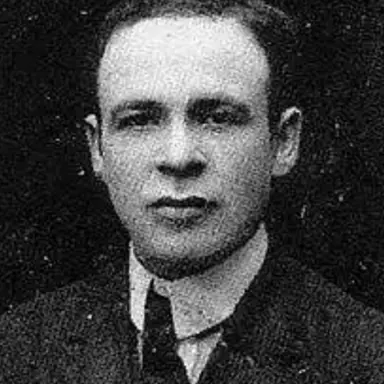
The Sage Shoshani: A Historical, Existentialist and Textual Analysis
20 min read3,916 words
Summary
This source offers a multidimensional analysis of the mysterious figure of "Mr. Shoshani," a phenomenal genius and wanderer who deeply influenced the greatest philosophers of the twentieth century while concealing his biographical identity. The text surveys the historical theses regarding his identity, with emphasis on his identification as Hillel Perlman, a disciple of Rabbi Kook (the Ra'ayah), and details his intellectual network of connections with figures such as Elie Wiesel and Emmanuel Levinas. The central part of the work is devoted to his pedagogical and hermeneutic teaching, known as the "pedagogy of the shard and the pearl," which demands of the learner an active effort to dive into the depth of textual meaning beyond the revealed words. Finally, the article examines the contents of his personal notebooks, which reveal a rare combination of higher mathematics and physics with Kabbalah and radical Biblical interpretation, and sketches the portrait of an intellectual who sought absolute freedom of thought on the margins of society.
The Torah Teaching, Pedagogical Work and Research Aspects of the Sage Shoshani: A Historical, Existentialist and Textual Analysis
Introduction and Historical Context: The Man Who Became a Riddle
Mr. Shoshani remains one of the most mysterious, mesmerizing and influential figures in Jewish and general thought in the twentieth century.[1, 2] He combined inconceivable mastery of all the sources of Torah, Talmud, halakha and Kabbalah with complete command of the exact sciences, modern Western philosophy, classical literature and at least thirty different languages.[3, 4, 5] Despite his immense influence on the greatest philosophers and men of letters of his generation, Shoshani chose to live as a homeless wanderer, neglected in his outward appearance and without possessions, while zealously concealing the details of his identity and his personal writings.[1, 4, 5]
For decades intensive attempts were made to decipher the riddle of Shoshani's life and identity, with the director Michael Greenspan devoting an entire decade, between 2013 and 2023, to journeys of meetings and comprehensive investigations around the world.[6, 7] This research yielded the documentary film "The Riddle of Shoshani," which won the award for best documentary of 2023 and revealed extensive aspects of his life.[7] The historical research and the latest discoveries in his handwriting present two main theses regarding his origin and his true name.[4, 7] The central thesis, supported by prominent researchers such as Moshe Nachmani and Dr. Yael Levin, identifies him as Rabbi Hillel Perlman, a Lithuanian prodigy and distinguished disciple of Rabbi Kook (the Ra'ayah).[3, 4] By contrast, certain archival findings propose an alternative narrative identifying him as Mordechai Ohana (or Ohanuna), a native of Marrakesh in Morocco.[7]
A Comparison of the Hypotheses of Biographical Identity
Significant physical evidence for the Hillel Perlman thesis was found on the flyleaf of the Kabbalistic book of the Ramchal "Klach Pitchei Chokhmah" ("138 Openings of Wisdom") (Warsaw), where his explicit signature appears in pencil: "This book belongs to me, Hillel Perelman, who studies in the Pri Etz Chaim Yeshiva in Mea Shearim," alongside a rare stamp bearing the inscription "Hillel Perelman Yerush."[9] This discovery gives an authentic glimpse into his first days in the Land as a young boy of about 14 or even less, which confirms the legends of his genius in Kabbalah already in childhood, similar to the testimony that he knew the entire "Sifra di-Tzniuta" by heart at the age of six.[9] An interesting linguistic connection proposed by Rabbi Shimon Shlomo Zilber shows that the name "Hillel Perelman" in full Yiddish spelling has the gematria value 606, exactly the numerical value of the letters Shin-Vav-Shin (שו"ש), and thus the name "Shoshani" means "Shosh-ani" ("I am Hillel Perlman").[9]
Historical research reveals a dramatic and obscure chapter about Shoshani's studies in his youth at Rabbi Kook's yeshiva in Jaffa, which operated on the upper floor of the 'Shaarei Torah' workshop building around 1900.[9] This yeshiva, which was characterized by deep engagement with the hidden Torah and with the concealed writings of Rabbi Kook (the Ra'ayah), was deliberately kept secret by its graduates, and the historical research on it is still in its infancy.[8, 9] Recently the official stamp of the yeshiva was discovered, constituting the only physical remnant of it.[9] In this period Shoshani studied in havruta with Rabbi Yechiel Michal Kibelevich (who left a moving testimony about Rabbi Kook) and Rabbi Meir Goldberg, alongside other prominent students such as the initiator Asher Rivlin (founder of "the Religious Scouts") and Avraham Yosef Herzfeld.[9] The extensive correspondence between Rabbi Kook and Shoshani at the beginning of the First World War, together with letters of Rabbi Kook (the Ra'ayah) that call Perlman "the groom" and describe him as "sharp, learned, complete and of many understandings," establish the deep theological and personal bond between them.[4, 9] The history of this institution is documented at length in the book "Her Gates Are Locked" (Sha'areha Ne'ulim).[9]
During the various stations of his life Shoshani was hospitalized for a certain period in the "Bikur Cholim" hospital in Jerusalem, and his name was recorded in the institution's register of patients.[9] The journalist David Giladi (the grandfather of Yair Lapid) even met him on the deck of a ship and published his astonished impressions of his genius and his extraordinary personality.[4, 9] The person closest to him in those days is described as R. Menachem Perlman, who knew Shoshani and his secrets better than anyone.[9]
The Intellectual Network and the Influence on Twentieth-Century Thinkers
Shoshani's work as a teacher left an indelible mark on a series of famous thinkers, who saw in him a rare teacher who completely changed their lives and thought.[1, 10] He did not regard himself as the creator of a closed philosophical system but as a pedagogical channeler who awakens the learner to independent, skeptical and uncompromising thinking.[5, 11]
The Network of Influence and the Main Disciples
Emmanuel Levinas: the renowned French philosopher is considered one of Shoshani's most prominent and most influenced disciples.[4, 5] Levinas called him a "wondrous and cruel teacher," and emphasized that it was Shoshani who opened before him the gates of the Talmud and gave him the foundation for his philosophical-ethical readings.[4, 5] Because of his neglected appearance and lack of hygiene, Levinas's wife did not agree that he teach in their home, and the two held their marathon Talmud lessons on the platforms of the Paris metro.[4] From the notebooks it emerges that Shoshani dealt extensively with the "philosophy of ethics," an engagement that directly influenced the Levinasian formulation of infinite responsibility for the other.[5]
Elie Wiesel: the Nobel Peace Prize laureate described Shoshani in his autobiography and in his books as a Kabbalistic and mysterious figure whose age or origin no one knew, and defined him as a wandering Jew who looked like a beggar but held in his mind all the treasures of the human spirit.[4, 5] Wiesel admired his ability to quote by heart from the Indian Vedas alongside the Zohar.[5] After Shoshani's death, Wiesel published a moving eulogy in the newspaper "Hatzofe" and met with Shoshani's nephew to verify his identity as Hillel Perlman.[4, 5]
Prof. Shalom Rosenberg: one of the foremost thinkers in Israel and former head of the Department of Jewish Thought at the Hebrew University.[5] Rosenberg studied with Shoshani in South America and was by his side in his final moments in Durazno, Uruguay, during a seminar for Bnei Akiva trainees and religious teachers.[5] It was Rosenberg who rescued and donated dozens of Shoshani's notebooks to the National Library, with the understanding that they constitute the only primary source of writing that he left behind.[5]
Yehuda Léon Askénazi (Manitou) and André Neher: leading thinkers in post-war French Jewry, who absorbed from Shoshani the methodology of dynamic reading, which breaks down the external verbal structure in order to expose the conceptual potential contained within it.[1, 10]
Prof. Zvi Bacharach: the prominent historian and researcher who studied with Shoshani during the latter's stay at Kibbutz Be'erot Yitzchak, testimony indicating that Shoshani spread his teaching also among young pioneering and religious communities in Israel.[7, 11]
The period of the Second World War shaped some of the mythical dimensions of his figure as a rescuer of lives and as one who himself was saved in miraculous ways.[7] After his fiancée Sarah Avitbol was shot to death before his eyes in Paris by the Germans, Shoshani fled to Switzerland.[4, 7] So as not to be handed back to the Nazis, he feigned madness and was diagnosed with psychopathic neurosis.[7] His best-known encounter with the Gestapo occurred when he was arrested on suspicion of being a Jew.[7] Shoshani insisted that he was a Muslim, and to verify his version the Germans brought the Imam of Paris to examine him.[7] According to the testimony of Dr. Michel Goldberg, after a profound two-hour theological and philosophical conversation about the Quran, the Imam emerged moved and declared before the Nazi officer that the man was a devout Muslim, adding that he had never learned about Islam as he had learned from Shoshani's mouth in those two hours.[7]
His Pedagogical and Theoretical Teaching: The Pedagogy of the Shard and the Pearl and the Renewed PaRDeS
Shoshani's Torah teaching was not formulated in systematic essays but in a living encounter and in an uncompromising hermeneutic methodology.[5, 11] For him, understanding the hidden and the secret does not pass through mystical experiences, ecstasy or loss of mind, but precisely through the paths of reason, wisdom and the intellectual capacity for dismantling and rebuilding.[11]
The Pedagogy of the Shard and the Pearl
In his interpretation of the opening of the Torah portion Toldot, Shoshani analyzes the Talmudic aggadah on the discussion between Rabbi Yochanan and Rabbi Chiyya bar Abba, in which Rabbi Yochanan said: "Had I not lifted the shard for you, you would not have found the pearl beneath it."[11] From this story Shoshani formulated a system of seven rigid pedagogical laws that define the proper dynamic between teacher and student.[11]
According to this conception, the teacher's role is limited solely to removing the external obstacle, the shard that covers the truth, and he is in no way permitted to point directly at the pearl itself.[11] The learner is required to be an active diver, who understands by his own power how to lift the shard, dive to the depth and discover the deep meaning.[11] Independent discovery is the sole condition for understanding the true value of wisdom.[11] Even when the student errs in the course of learning and raises a mere shard in the mistaken belief that it is a pearl, the teacher is forbidden to supply him with the correct answer.[11] The teacher's role remains to continue removing the mental shards surrounding him, to guide him to decide what is correct, and to enable him to reach the true pearl himself.[11] Hence arises Shoshani's demand of his students not to remain with the shard, that is, with the external charm of the stories and aggadot, but to dive into the words themselves, to turn them over, to examine them meticulously and to discover what lies beyond them.[11]
The Four Levels of PaRDeS in the Interpretation of the Sage Shoshani
Shoshani's hermeneutics offers a renewed structural definition of the four levels of PaRDeS, which shifts the weight from the accepted definitions to a sophisticated philosophical process of decoding and decision-making by the reader.[11]
The search for the hidden in Shoshani does not go beyond language but takes place within it.[11] His way of study passes through a meticulous dismantling of words and the discovery of the infinite space of meanings within them.[11] In interpreting the verse in Proverbs (1:28): "Then they shall call upon me, but I will not answer; they shall seek me early, but they shall not find me," Shoshani explains that the learners will search for the letter nun (נ) and will not find it.[12] This interpretation hints at his approach whereby the simple precedes the complex in spiritual rank, just as the wise precedes the fool, the good precedes the bad, and the whole precedes the defective.[12] Logic in Shoshani is essentially precision and order, based on a sharp distinction between the secondary and the essential and between the complicated and the simple.[12] Shoshani saw the entire world as a collection of texts that must be interpreted again and again, and held the position that in every single verse there are two million four hundred thousand possible interpretations.[7]
The Textual Structure and the Spatial Codes of the Notebooks
The personal notebooks that Shoshani left behind serve as material testimony to his unique method of study and writing.[1, 5] These are texts extremely difficult to decipher, in which the hidden outweighs the revealed.[5] The writing is dense, lacking connecting words and full of allusions and acronyms only, which makes it very difficult to connect and to understand the ideas continuously.[1, 11] Shoshani used to emphasize certain parts of the quotations, omit other parts or join together entirely different sources.[1] Many sources, and especially Biblical verses, are not cited in their wording but by means of a numerical reference to their exact location or brief keywords.[1]
The spatial organization of the pages is sophisticated and dynamic.[1] Although most of the lines are written horizontally, Shoshani integrated notes and supplements written vertically, and divided the pages into separate units by means of dividing lines and large spaces, apparently intended to allow later completion of the material.[1] In several of the notebooks he deliberately skipped entire pages in order to leave room for future expansion of the topic.[1]
For the purpose of writing shorthand and intellectual encoding, Shoshani borrowed distinct graphic symbols from the world of logic and mathematics, which appear throughout his paragraphs.[1]
The System of Graphic Symbols in Shoshani's Notebooks
Attempts to decipher the notebooks have encountered enormous difficulties over the years, and only in recent years, following the archive's donation to the National Library, have researchers and scholars begun to decipher them systematically.[1, 5] Michael Greenspan, in the course of his work on his film, made use of advanced computer analyses and of experts such as Rabbi Uri Sharki, Elimelech Huna and Akiva Kahana, in order to break through the cloak of encryption and reveal parts of the life story and thought of Shoshani.[7]
A Close Reading of the Deciphered Notebooks: A Multidisciplinary Inquiry
A meticulous study of the deciphered notebooks presents a phenomenal integration between fields of knowledge that are considered contradictory in classical Western thought, but which converge in Shoshani into one harmonious system.[1, 11]
Notebook 1CH1: The Encounter of Mathematics, Physics and Biology
This notebook (physically marked with the number 2 on its cover) is written in Hebrew and Spanish and contains 60 pages, of which 46 are written on and the rest are blank.[1] It includes complex mathematical calculations whose context is apparently physical, alongside various notes and a separate page containing logic puzzles in Spanish.[1]
In the mathematical field, web users and researchers identified in the notebook solutions of systems of algebraic equations, polynomials, hyperbolic functions, the use of permutations and the presentation of Pascal's triangle.[1] On page 22 appears an expression representing the Fourier series of a triangle wave:
- cos(x)+
- 3
- 2
- cos(3x)
- +
- 5
- 2
- cos(5x)
- noting a small calculation error by Shoshani in defining the denominators.[1] On page 23 appears a treatment of complex numbers of the form a+ib, finding the angle by means of:
- t=arctan(
- b
- a
- )
- a calculation of the distance from the origin, defined in the notebook as R=a
- 2
- +b
- 2
and its polar representation as R(cos(t)+isin(t)).[1] Shoshani discusses group theory, mentions the Persian mathematician al-Khwarizmi (the inventor of the algorithm), presents historical formulas such as Faulhaber's formula, and compiles lists of mathematicians with the years of their discoveries.[1] There also appears an advanced use of logarithm tables to carry out quick calculations, while defining complex operative keys.[1]
In the biological field, pages 17 and 18 contain detailed summaries on cell biology, genetics and molecular biology.[1] Among other things it is written there: "In every cell there are 48 chromosomes," a figure that scientifically corresponds to apes (whereas humans have 46 chromosomes).[1] The sheet of puzzles in Spanish attached to the notebook deals with classic logic problems of truth and falsehood based on liars and truth-tellers with black and blue eyes, alongside a mention of the problem of the Seven Bridges of Königsberg.[1]
Notebook 1CH3: Biblical Hermeneutics, Cosmology and Kabbalistic Theology
This notebook (physically marked with the number 7) deals mainly with interpretations of verses and portions from the Bible, and integrates tables that constitute complex calendar calculations.[1] The notebook opens with an analysis of the book of Deuteronomy (chapter 18, verses 6–8), which deals with the laws of the Levites.[1] Shoshani focuses on the word "your gates," and interprets the words "where he sojourned" as a halakhic determination that "he has no right to rent out."[1] The words "which the Lord shall choose" he interprets as a process carried out "by a prophet with the agreement of all the tribes," and explains that Scripture left the location of the Temple unspecified because it makes no difference which place the tribes choose: wherever they choose by national consensus, there the Divine Presence will rest.[1] The expression "like all his brethren the Levites who stand there" Shoshani interprets as grounding the principle of social equality, which prevents the envy of the veteran Levites toward the new Levite who has just come to serve in the Temple.[1]
On page 2a Shoshani develops the governmental and spiritual structure of Israel by means of the acronym MiShKaN (מ'ש'כ'ן'), and notes that there is an appointment for a judge but no personal appointment to serve in the Temple.[1]
The Structure of Public Leadership in the MiShKaN Model
Shoshani analyzes the concept of self-sacrifice (mesirut nefesh) and proposes that the only true signs of love for God are sacrifice.[1] Whereas sacrificing money is difficult only for a miser, sacrificing life itself is the depth of the love of "and he shall live by them," the realization of "a portion of God from above" in all efforts, without retreating even in situations of danger.[1] The binding of Isaac was intended to "cleanse" the flaws of idolatry of Terach, the father of Abraham.[1]
In discussing the death of Nadav and Avihu, Shoshani explains that performing an act without a command constitutes a grave sin.[1] Pinchas, in his zealous act, acted on his own because Moses had forgotten the halakha, and his act is considered, halakhically, equivalent to a command.[1] In this act Pinchas repaired the sin of Aaron's compromise at the calf (which caused the idolatry of the mixed multitude) and the sin of Nadav and Avihu.[1] Shoshani presents a Kabbalistic hint based on acronyms: Nadav Avihu ≡ Navi Eliyahu, which confirms the tradition that Pinchas is Elijah.[1]
On page 10b Shoshani proposes an astonishing modern cosmological interpretation of the verse "And there was evening and there was morning, one day" (Genesis 1:5), and writes: "Every moment was evening and morning in opposite places," a reference expressing a clear scientific understanding of the global shape of the earth and of geographical time differences.[1] On page 10a he compares Genesis 1:3 with Genesis 1:7, writes the letters gimel and zayin in a flowing script and remarks that "one can see clearly that their forms are the reverse of one another," like a mirror image.[1] He defines night as the time of the absence of light (representing death, blindness and ignorance), evening from the sense of "the things become mixed and are not recognized," and morning from the sense of "and you shall examine every thing by its light" (the ability to distinguish and examine between things in daylight).[1]
Notebook 60: "The Oven of Akhnai" and the Ethics of the Study Hall
This notebook opens with a linguistic inquiry into the phrase "the oven of Akhnai," and moves on to an in-depth discussion of the relations between teacher and student and the limits of morality.[5] Shoshani asks difficult philosophical-ethical questions: why did Rabbi Yehoshua remain silent twice in the miracles of the carob tree and the stream of water, and intervene only when the walls of the study hall were about to fall? [5] Shoshani explains this by an analysis of "increasing loss" [5]:
- In the miracle of the carob tree there is no real loss to society, and therefore there is no need to argue with the miracle.
- In the case of the water flowing backward there is a certain loss, since the water no longer irrigates the fields, but the damage is still tolerable.
- In the falling of the study hall there is an enormous loss and total destruction of the institution of Torah and of society.
Shoshani establishes a value judgment whereby the study hall as an institution is eternal in contrast to the temporary and transient individual.[5] Therefore, the walls reached a compromise: they inclined to fall out of respect for Rabbi Yehoshua but did not fall out of respect for Rabbi Eliezer, to express the structural need to listen to both sides of a dispute.[5]
Another subject that deeply occupied Shoshani in his writings is the verse in Psalms (89:39): "But You have cast off and rejected, You have been wroth with Your anointed."[7] He wondered why the sages who collected the Psalms did not omit this difficult verse from the book of Psalms, and he wrote in his notebooks sentences such as "A person is not held accountable for his anguish," "Here he despairs 39," and "God breaks the covenant," which express his deep existential struggle with questions of destruction, the hiding of the face, and the fragility of the historical covenant.[7]
Summary and Conclusions
The Sage Shoshani represents a revolutionary model of a classical scholar and modern intellectual, who refused to accept upon himself the social conventions of the world of academia or the rabbinate, and chose to live on the margins of society in order to preserve his absolute intellectual freedom.[1, 3, 7] His Torah work was not exhausted in the writing of systematic books, but in the raising of disciples who became leaders of the way in the philosophical and Jewish thought of the twentieth century.[1, 10]
His pedagogical teaching, as it emerges from the laws of "the shard and the pearl," places a radical demand on the learner: the breaking of the external verbal partitions, independent uncompromising thinking, and diving beyond the words, to the place where wisdom and science converge into one theological unit.[1, 11] The deciphering of his notebooks, which is in full swing, continues to reveal the logical, mathematical and Kabbalistic depth of the mysterious genius, and promises to continue enriching our understanding of the expanses of Jewish interpretation and thought in the generations to come.[5, 7, 11]
Sources12
- 1.כתביו של מר שושני, mr-shoshani.co.il/
- 2.מי אתה, מר שושני?, mr-shoshani.co.il/who/
- 3.ארכיון מר שושני » ﬣקיבוץ ﬣקדוש (האתר של משה נחמני), hakibbutz.org.il/category/personalities/mr-shoshani
- 4.מר שושני - ויקיפדיה, he.wikipedia.org/wiki/מר_שושני
- 5.תלמיד של הרב קוק ומורה של לוינס: מי אתה מר שושני? - הספרנים, blog.nli.org.il/chouchani/
- 6.סיפורו המופלא של מר שושני – אדם אמיתי או אגדה יהודית - רשת 13, 13tv.co.il/item/from-the-web-2/conspiracy/kzwpw-903877781/
- 7.חידת שושני – ויקיפדיה, he.wikipedia.org/wiki/חידת_שושני
- 8.4 ראיות הזהב לכך ש: מר שושני = הלל פרלמן - YouTube, youtube.com/watch?v=EfkI5BS-il0
- 9.ספר הקבלה בו למד מר שושני בגיל 14 » ﬣקיבוץ ﬣקדוש (האתר של משה נחמני), hakibbutz.org.il/3261
- 10.אלקטה בשושנים - מרכז קדם, kedemcenter.com/אלקטה-בשושנים/
- 11.מר שושני: המורה החמקמק שלא לימד את התבונה - אלא איך להגיע אליה, heb.hartman.org.il/shoshani-notebooks/
- 12.1CH1 - כתביו של מר שושני, mr-shoshani.co.il/booklets/1ch1/