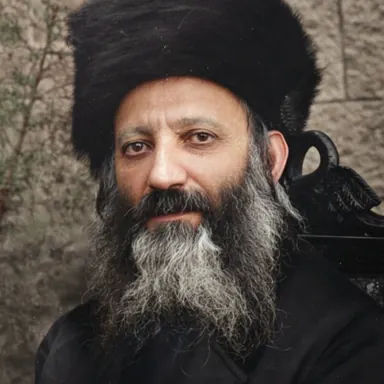
Rabbi Abraham Isaac HaKohen Kook: A Comprehensive Analysis of the Revolution of Holiness in the Period of Revival
18 min read3,567 words
Summary
This comprehensive survey sketches the life and teaching of Rabbi Abraham Isaac HaKohen Kook, presenting his figure as a bridge uniting the tradition of halakha with modernity and the national revival. The text details the spiritual foundation of Rav Kook, which combines Lithuanian scholarship with Hasidic depth, and describes his decisive institutional work in establishing the Chief Rabbinate and the Merkaz HaRav yeshiva. His intellectual work is examined through the fundamental concepts of all-encompassing unity, the repair of the world and the holiness of the pioneering deed, offering a harmonious view of the processes of redemption reflected in the return of the people of Israel to its land. In conclusion, the article stresses the Rabbi's continuing influence on religious-national identity and on the shaping of the spiritual and social character of the modern State of Israel.
The Work, Torah Teaching and Historical Influence of Rabbi Abraham Isaac HaKohen Kook: A Comprehensive Analysis of the Revolution of Holiness in the Period of Revival
The Roots of Formation: The Family and Intellectual Foundation of Rav Kook
The figure of Rabbi Abraham Isaac HaKohen Kook (the Ra'ayah) represents one of the most fascinating meeting points in modern Jewish history, at which ancient scholarly traditions intersected with the winds of nationalism and modernity. Rav Kook was born on 16 Elul 5625 (1865) in the town of Greiva in the Dvinsk district, Latvia.[1] The genetic and spiritual baggage he carried with him was composed of two apparently contradictory influences, which shaped his conception of all-encompassing unity: his father, Rabbi Shlomo Zalman Kook, was a man of halakha from a distinctly "Mitnaged" family, disciples of the Vilna Gaon, whereas his mother, Perel Zlata, was a scion of a family of Chabad Hasidim.[1]
This Chabad influence was not merely a matter of family lineage; in his youth Rav Kook heard Hasidic teachings in the Chabad manner from the mashpia Reb Yechezkel Yanover, and his maternal grandfather, Reb Raphael Felman, was one of the close Hasidim of the "Tzemach Tzedek."[1] This combination of Lithuanian rigor and logical analysis of the Talmud with metaphysical depth and Hasidic feeling laid the foundations for his later system of thought, which sought to unite all the factions and streams of the people of Israel under one spiritual roof.
His studies in the Volozhin yeshiva, under the leadership of the Netziv (Rabbi Naftali Tzvi Yehuda Berlin), constituted a critical period of transition. The Volozhin of those days was a hothouse not only for Torah scholars but also for the first buds of national and Enlightenment thought. Rav Kook stood out as a prodigy and won enormous esteem from his teachers. After his first marriage to Alte Batsheva, daughter of the Aderet (Rabbi Eliyahu David Rabinowitz-Teomim), he entered the world of the communal rabbinate.[1]
His Early Work: Between Halakha and Thought
Rav Kook began his literary path with a purely halakhic work, "Chavash Pe'er," which was published anonymously in 5651 (1891).[2, 6] The book deals with the halakhic obligation to put on tefillin in their exact place, especially the head tefillin, which must be placed on the area of the hair and not on the forehead. This choice of meticulous halakhic detail attests that Rav Kook's path to holiness did not pass through halakhic compromise, but through maximal precision in performing the commandment. Nevertheless, already in "Chavash Pe'er" his tendency to combine "words of exhortation" and kabbalistic influence is evident, with the aim of awakening love for the commandments among the common people and the maskilim alike.[2]
The controversy that arose around the book, especially with Rabbi Ze'ev Wolf Turbowitz, who disputed his conclusions in "Tiferet Ziv," compelled Rav Kook to write the pamphlet "Kelil Tiferet."[2] This polemic demonstrates Rav Kook's integration into the halakhic discourse of his generation as a recognized decisor, using classical scholarly tools to establish his position. At the same time, in Boisk he began writing "Ein Ayah," a wide-ranging commentary on the aggadot of the Talmud (on tractates Berakhot and Shabbat), in which he sought to turn the aggadah from accompanying stories into a systematic body of thought that would respond to the crises of the generation.[7, 8]
The Fateful Encounter with the Land of Israel: Jaffa and the Second Aliyah
Rav Kook's immigration to the Land of Israel on 28 Iyar 5664 (1904) to serve as rabbi of Jaffa and the moshavot was a formative moment in Jewish history.[1] He arrived during the period of the Second Aliyah, when young pioneers imbued with socialist ideology began to arrive, most of whom had distanced themselves from the traditional religious way of life.[3] The reality in Jaffa was completely different from the closed Lithuanian community; secularism had become a dominant element, and the pioneers established secular educational and cultural institutions while changing the paternalistic communal structure into a democratic one.[9]
Rav Kook chose an approach of "drawing hearts closer" and dialogue, out of a deep philosophical conception that saw these pioneers as "souls of Tohu"—souls of tremendous spiritual power that do not find their place in the old religious molds.[3, 10] He identified the divine spark in their self-sacrifice for the building of the Land, and argued that "in the depth of the pioneers' hearts there is a spark of holiness, only the spark must be kindled into flame."[10] For Rav Kook, the national revival was not an incidental secular event, but part of the advance of the redemption, in which nationalism and religion are two sides of the same coin that cannot be separated.[3]
The Journey to the Moshavot (1913): The Practical Encounter between Holy and Profane
One of the most impressive public actions of this period was the "Journey to the Moshavot" (or "the Rabbis' Journey"), held in the winter of 5674 (1913).[3, 11] Headed by Rav Kook and Rabbi Yosef Chaim Sonnenfeld (leader of the Old Yishuv), a delegation of ten rabbis set out to visit twenty-six settlements in the north of the country.[3] The aims were varied: strengthening the observance of the commandments (especially terumot and tithes, the Sabbath and religious education), but also creating an emotional bridge between the rabbinate and the pioneers.[11, 12]
The dynamics of the journey revealed the tension built into Rav Kook's approach. On a visit to Poriya, the rabbis were impressed by the humane attitude of the workers toward a thief who had been caught, and Rav Kook saw in this "a ray of light from the natural uprightness of the Jewish heart."[10] In the moshava of Merhavia, Rav Kook agreed to eulogize two workers who had been killed, an act that aroused controversy since conservative halakha had reservations about eulogizing public Sabbath desecrators.[10] The journey proved that Rav Kook's way, based on sincere appreciation of the deeds of the pioneers alongside insistence on the principles of religion, succeeded in creating a dialogue that other ways could not.[10] The results of the journey produced commitments by the committee of the moshavot to improve religious matters, but its main importance lay in establishing the rabbinate as a relevant factor for the public that was building the Land.[10]
Institutional Architecture: The Chief Rabbinate and the Merkaz HaRav Yeshiva
After the First World War and a short tenure in London, Rav Kook returned to the Land of Israel and was appointed rabbi of Jerusalem.[1] At this stage he moved on to activity on a national scale, understanding that the renewing Yishuv needed spiritual institutions that would parallel the political institutions of the Zionist movement.
The Founding of the Chief Rabbinate of Israel
In 1921 (5681) Rav Kook established the institution of the Chief Rabbinate of Israel, and served as the first Ashkenazi Chief Rabbi.[5, 13] His vision was to establish a body that would be a kind of "Sanhedrin," a supreme religious authority that would unite all of Israel and lead the nation in public and spiritual matters.[5] Rav Kook aspired that the rabbinate would not be merely a bureaucratic body providing religious services, but a moral and spiritual authority influencing the whole of Jewish society in the Land and representing Judaism internally and externally.[5]
The halakhic achievements of the rabbinate in this period included groundbreaking social enactments, which integrated Jewish law into modern reality. The following table details some of the central enactments that shaped personal status in the Land:
Rav Kook encountered fierce opposition from zealous Haredi circles in Jerusalem, who saw in his cooperation with the Zionist and British institutions a betrayal of the values of the "Old Yishuv."[13] Despite this, he continued to establish the rabbinate as a body representing the "general holiness" of the nation.[5]
The Central Universal Yeshiva - Merkaz HaRav
Alongside leading the rabbinate, Rav Kook established the "Merkaz HaRav" yeshiva (the Central Universal Yeshiva) in 1924 (5684) in his home in Jerusalem.[4, 16] The yeshiva was intended to train Torah scholars with a broad outlook, who would be able to cope with the challenges of the generation and serve as a spiritual leadership for the nation returning to its land.[17] The name he gave it, "the Central Universal Yeshiva," expresses his aspiration that it would become a spiritual center for all of world Jewry.[13]
The curriculum proposed by his foremost disciple, Rabbi David Cohen ("the Nazir"), was revolutionary and included the study of the Bible, Hebrew linguistics, history, the geography of the Land of Israel, Jewish philosophy (Philo, Rav Saadia Gaon, the Maharal, the Kuzari) and even scientific subjects such as botany and astronomy as auxiliary tools for understanding the Talmud.[16] Although the program was not implemented in full in its broadest form, the yeshiva was characterized by significant innovations:
- The Hebrew language: The yeshiva championed study and speech in the Hebrew language, in contrast to the Yiddish that was customary in the yeshivot of Europe.[13]
- Studies of faith: An unprecedented emphasis on the study of Jewish thought and philosophy, especially the writings of the Maharal and of Rav Kook himself.[17]
- A national approach: Education toward commitment to all of Israel and to the process of national revival.[17]
After Rav Kook's death, the yeshiva went through difficult periods, but under the leadership of his son, Rabbi Zvi Yehuda Kook, and later Rabbi Avraham Shapira, it became the "flagship" of Religious Zionism and the mother of the yeshivot that spread his teaching.[4, 17, 18]
The Teaching of the "Orot": A Philosophy of Unity and Redemption
The thought of Rav Kook is a wide-ranging system that draws on the wisdom of the Kabbalah but is translated into a modern philosophical language. At the heart of his teaching stands the conception of "all-encompassing unity," according to which all of reality is a manifestation of a single divine vitality striving for constant ascent.[19]
Orot HaKodesh: The Five Foundations of Thought
The book "Orot HaKodesh," edited by Rabbi David Cohen ("the Nazir") from Rav Kook's manuscripts, is considered the deepest and most complex work of his teaching.[19] The book presents a system of thought based on five foundations:
- The general holiness: The assertion that at the foundation of reality there exists a being of holiness that elevates the world toward its purpose.[19]
- The universal vitality: Seeing all life in the world as a manifestation of a unified divine life force striving for ascent.[19]
- The all-encompassing unity: The understanding (drawing on the Kabbalah) that all of reality is one complete unity.[19]
- The general good: The claim that from the vision of unity it becomes clear that everything in reality is good and there is no absolute evil.[19]
- The ascent of the world: The belief that the world is in a constant process of progress and rectification.[19]
This conception led Rav Kook to see even in apparently secular phenomena—such as science, art and nationalism—sparks of holiness that must be clarified and connected to their divine source.[20, 21]
Orot HaTeshuvah: A Return to the True Self
For Rav Kook, the concept of repentance is a broad cosmic and existential concept that goes far beyond regret for an individual sin. In "Orot HaTeshuvah" he defines repentance as a person's return to himself, to the root of his soul, which is naturally a return to God.[22] Repentance is a life force that moves all of creation to return to its ideal state.[23]
Rav Kook divided repentance into different levels:
- Physical repentance: The striving for health, order and normal life, which is the basis for holiness.[23]
- Spiritual repentance: The repair of character traits and thoughts on the personal plane.[24]
- The repentance of the collective: The process of the national revival of the people of Israel in its land, returning to its original culture and identity.[23]
- The repentance of the worlds: The ascent of all of reality from a state of "breaking" to divine unity.[23]
He stressed that precisely out of true repentance one must return to the world and to life, and thereby "restore holiness to its place and enthrone the Shekhinah in the world."[22]
The Halakhic Work: Between Ruling and Innovation
Despite his fame as a thinker, Rav Kook saw himself first and foremost as a man of halakha. His halakhic work is extensive and touches on all parts of the Shulchan Arukh, with special emphasis on the commandments dependent on the Land—a subject that became topical with the return of the people of Israel to its land.
The Books of Responsa (She'elot u-Teshuvot)
Rav Kook left behind a series of books of responsa organized according to the parts of the Shulchan Arukh, characterized by enormous erudition, public responsibility and an approach that tries to connect the details of halakha with its general tendencies:
In the book "Mishpat Kohen," Rav Kook discusses bold issues such as the building of the Temple and the offering of sacrifices before the coming of the Messiah, the prohibition of entering the site of the Temple in the present time, and obligatory wars in the modern era.[15] One of the famous responsa (siman 142) deals with risking oneself for the sake of all of Israel, a subject that became a moral foundation in the activity of the underground organizations and the IDF.[15]
Shabbat HaAretz and the Heter Mechira
Rav Kook stood at the forefront of the halakhic struggle surrounding the Sabbatical year. In order to enable the existence of the young agricultural Yishuv, he established the "heter mechira" (sale permit), while combining it with a mechanism of "otzar beit din" (court storehouse) in order to preserve the holiness of the Seventh Year as far as possible.[15] In his book "Shabbat HaAretz" he laid out the halakhic and conceptual foundation for the Sabbatical year, seeing in it a "Sabbath of the nation" that enables spiritual and social elevation.[26]
The Vision of Vegetarianism and Peace
One of the most unique and universal aspects of Rav Kook's teaching is his attitude toward animals, detailed in the essay "The Vision of Vegetarianism and Peace" (edited by Rabbi David Cohen).[27] Rav Kook argued that the eating of meat is a temporary state of "moral fall" that was permitted to humanity after the Flood as a compromise with human inclination.[28]
According to his vision, "in the time to come" humanity will reach a high moral level at which the need to shed the blood of animals will be abolished.[27] He saw in commandments such as the prohibition of eating terefah and nevelah a revelation of compassion toward animals, and in the commandment of covering the blood an act of "shame and the disgrace of moral baseness" over the very killing.[27, 28] He himself refrained from eating meat on weekdays, and used the permission only on Sabbaths and festivals in order to express the tension between present reality and the ideal aspiration.[27]
Modernity, Science and Art: The Holy within the Profane
Rav Kook presented a complex and open approach toward modernity, which saw in it a tool for revealing new layers of holiness. He did not shrink from new scientific theories, but tried to find their meeting point with the Torah.
Evolution and Faith
Regarding the theory of evolution, Rav Kook argued that it does not constitute a religious problem. On the contrary, he determined that "the theory of evolution... accords with the secrets of the world of the Kabbalah more than all the other philosophical theories."[20] In his view, the idea of the gradual progress of reality is consistent with the belief in the ascent of the world toward divine perfection.[19, 20] He distinguished between the scientific theory and the atheistic interpretation given to it, and stressed that the laws of evolution are an expression of the divine will revealed in nature.[20]
Art as Spiritual Expression
Rav Kook saw art and poetry as tools for expressing the innermost and most penetrating truth. He defined faith as "the song of life" and as "the true speculum of life."[21] In his speech at the opening of the Hebrew University (1925), he expressed the hope that the institution would combine the wisdom of Israel with general wisdom, while using verses of consolation to describe the event.[29] Nevertheless, he warned against disconnection from the religious roots, since "eternal life the profane cannot give" and holiness must remain the central foundation.[10]
The Legacy and Continuity: Rav Kook's Successors
Upon his death on 3 Elul 5695 (1935) after a struggle with cancer, Rav Kook left behind an extensive spiritual legacy and disciples who continued his path in different ways.[30]
- Rabbi Zvi Yehuda HaKohen Kook: His only son, who headed the Merkaz HaRav yeshiva for many years. He was the chief editor of his father's writings (Orot, Iggerot HaRa'ayah) and turned Rav Kook's teaching into an activist political and educational ideology that shaped the settlement movement in Judea and Samaria.[18, 30]
- Rabbi David Cohen ("the Nazir"): His foremost disciple, who edited "Orot HaKodesh" and sought to present Rav Kook's teaching as a complete and systematic Hebrew philosophy.[19, 30, 31]
- Rabbi Yaakov Moshe Charlap: Rabbi of the Sha'arei Chesed neighborhood and a close friend of Rav Kook, who expressed the mystical and Hasidic side of his teaching in his books "Mei Marom."[30]
- Rabbi Yitzhak Arieli: One of the founders of the Merkaz HaRav yeshiva and publisher of new editions of Rav Kook's writings.[2]
Influence on Youth Movements and Institutions
Rav Kook's teaching became the spiritual basis of the "Bnei Akiva" movement, which was founded by one of the students of the yeshiva.[17] Rav Kook himself sent a letter of appreciation to the movement's convention in 5694, in which he blessed the young people with the blessing "strength to you, and radiance of soul from the source of Israel."[32] Rav Kook's teaching is studied today in dozens of hesder yeshivot, higher yeshivot and midrashot for women, and it constitutes the backbone of the religious-national public in Israel.[18]
Summary: The Significance of Rav Kook's Work for the Generations
The work and teaching of Rav Kook represent an unprecedented historical attempt to unite the opposing extremes of Jewish existence in the modern era. He was not afraid of heresy, secularization or modernity, but saw in them spiritual challenges that compel religion to rise higher and expand. In his dialectical approach, he succeeded in being a stringent halakhic decisor on the one hand, and a liberal and universal thinker on the other; a leader of the "Old Yishuv" and of the Haredim (especially during his tenure in Jerusalem) and a soul friend of the secular pioneers in Jaffa.
Rav Kook gave the State of Israel in the making its theological foundation, when he declared that "our state... is the foundation of the throne of God in the world."[22] He left behind a vast library of writings—from pure halakha to mystical poetry—which continue to serve as a focus of research, study and inspiration to this day. His unceasing call for the unity of Israel, for love of all creatures and for the return of holiness to practical life remains the central compass of Religious Zionism and of broad parts of Israeli society seeking a bridge between tradition and renewal.
Sources32
- 1.אברהם יצחק קוק – חב"דפדיה, chabadpedia.co.il/index.php/אברהם_יצחק_קוק
- 2.חבש פאר - ויקיפדיה, he.wikipedia.org/wiki/חבש_פאר
- 3.מסע המושבות - ויקיפדיה, he.wikipedia.org/wiki/מסע_המושבות
- 4.ישיבת מרכז הרב – ויקישיבה - אתר ישיבה, yeshiva.org.il/wiki/index.php/ישיבת_מרכז_הרב
- 5.הרבנות הראשית - מכון הרטמן, heb.hartman.org.il/rabanut-rashit/
- 6.חבש פאר – ויקישיבה, yeshiva.org.il/wiki/index.php/חבש_פאר
- 7.כתבי הרב קוק | כמת התורה בספרים של הרב קוק - ספרי חיים, hbooks.co.il/category/כתבי-הרב-קוק
- 8.עין איה - ויקיפדיה, he.wikipedia.org/wiki/עין_איה
- 9.הרב קוק ו'היישוב החדש' — שיתוף ועימות - מטח, kotar.cet.ac.il/kotarapp/index/Chapter.aspx?nBookID=66806513&nTocEntryID=67033403
- 10.מסע הרבנים, morangalon.com/blank-yrpqm
- 11.מסע הרבנים למושבות - מוזיאון כפר תבור, ica-tavor.co.il/מסע-הרבנים-למושבות/
- 12.מטרות מסע המושבות של רבני ישראל, yeshiva.org.il/midrash/pdf/pdf230/meged171.pdf
- 13.אברהם יצחק הכהן קוק – ויקיפדיה, he.wikipedia.org/wiki/אברהם_יצחק_הכהן_קוק
- 14.הרבנות הראשית לישראל - המכלול, hamichlol.org.il/הרבנות_הראשית_לישראל
- 15.משפט כהן - ויקיפדיה, he.wikipedia.org/wiki/משפט_כהן
- 16.ישיבת מרכז הרב - ויקיפדיה, he.wikipedia.org/wiki/ישיבת_מרכז_הרב
- 17.אודות הישיבה - Mercaz Harav | מרכז הרב, mercazharav.org.il/הישיבה/אודות-הישיבה/
- 18.מרכז הכובד: חלום הילדות של הרב קוק שמומש במלואו בימי בנו - מקור ראשון, makorrishon.co.il/judaism/518433/
- 19.אורות הקודש - ויקיפדיה, he.wikipedia.org/wiki/אורות_הקודש
- 20.הרב אברהם יצחק הכהן קוק - יהדות ואבולוציה, evolution.herzog.ac.il/rav-kuk/
- 21.פסקאות מרכזיות של הרב קוק בנושא אמונה וכפירה - דעת אלוהים, haravkuk.com/2018/09/20/אמונה-וכפירה/
- 22.אברהם יצחק הכהן קוק - ויקיציטוט, he.wikiquote.org/wiki/אברהם_יצחק_הכהן_קוק
- 23.אורות התשובה - ויקיפדיה, he.wikipedia.org/wiki/אורות_התשובה
- 24.יג - אָרְחוֹת תְּשׁוּבָה רוּחָנִיּוֹת וּמַעֲשִׂיּוֹת, פסקה יב. - ישיבת הר ברכה, yhb.org.il/shiurim/02-13-15/
- 25.דעת כהן - המכלול, hamichlol.org.il/דעת_כהן
- 26.מצות ראי"ה, אורח משפט, חבש פאר - מוסד הרב קוק, mosadharavkook.com/shop/מצות-ראיה-אורח-משפט-חבש-פאר/
- 27.חזון הצמחונות והשלום - ויקיפדיה, he.wikipedia.org/wiki/חזון_הצמחונות_והשלום
- 28.חזון הצמחונות והשלום - ויקיטקסט, he.wikisource.org/wiki/חזון_הצמחונות_והשלום
- 29.6-נאום-הרב-קוק-בפתיחת-האוניברסיטה-העברית.docx, otniel.org/wp-content/uploads/2017/11/6-נאום-הרב-קוק-בפתיחת-האוניברסיטה-העברית.docx
- 30.84 שנים לפטירת הראי"ה קוק זצ"ל - ערוץ 7, inn.co.il/news/411831
- 31.אורות הקודש - ספריא, sefaria.org.il/Orot_HaKodesh
- 32.הרב אברהם יצחק הכהן קוק - תנועת בני עקיבא בישראל, bneiakiva.org.il/harav-kuk/